Recovery Device Hygiene: Cleaning Pads, Massage Heads and Shared Gear
Use manufacturer-appropriate cleaning for massage heads, recovery surfaces and personal-use electrical pads without damaging devices.
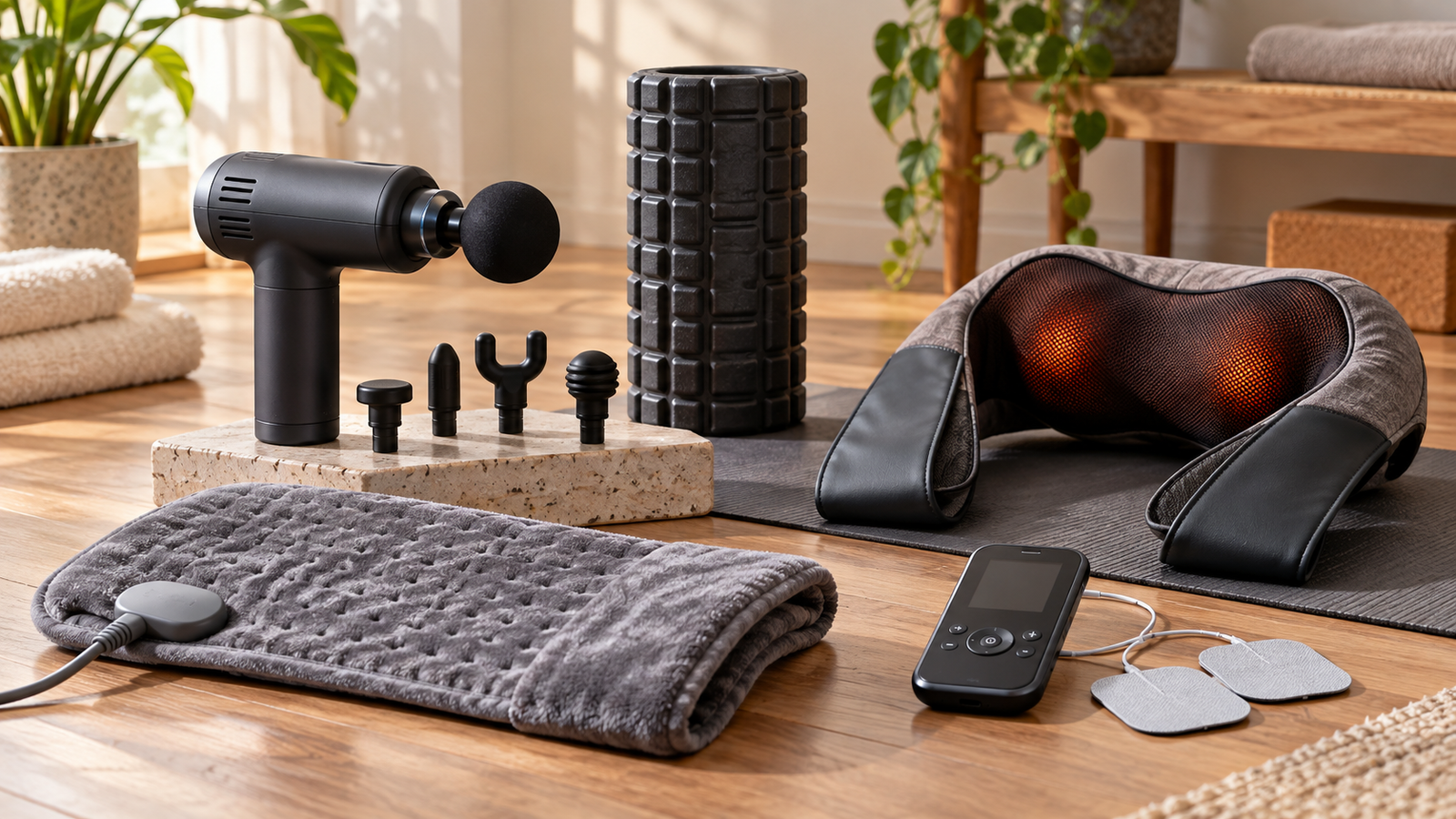
Recovery devices have become increasingly common in home fitness and wellness routines. Massage guns, electric muscle stimulators, heating pads, foam rollers and other accessories are now used for muscle comfort, relaxation and post-workout recovery.
But while people often compare these products based on performance, battery life and price, one important factor receives less attention: hygiene.
A massage gun attachment may come into contact with sweaty skin after a workout. Reusable electrode pads can accumulate skin oils and debris. Foam rollers are frequently placed on floors, while shared recovery equipment may pass between several users.
Over time, inadequate cleaning can contribute to unpleasant odours, skin irritation, contamination and premature deterioration of equipment.
Cleaning incorrectly can create problems too.
Excessive moisture may damage electronic components. Harsh disinfectants can weaken certain plastics, coatings and adhesives. Washing an adhesive electrode pad with an unsuitable product may reduce its ability to stick properly.
The safest approach is to clean each recovery device according to its material, intended use and manufacturer instructions—not to use the same cleaning method for every accessory.
This Physical Glow guide explains how to clean massage heads, maintain reusable electrode pads, sanitize shared recovery accessories and recognize when a component should be replaced rather than cleaned again.
1. Why Recovery Device Hygiene Matters
Recovery tools come into contact with the skin, clothing, hands and surrounding environment.
During use, surfaces may accumulate sweat, skin oils, dead skin cells, dust and other residue.
When equipment is shared, additional microorganisms may transfer between users.
Hygiene Affects More Than Appearance
Regular cleaning can help:
- Remove visible sweat and dirt.
- Reduce unpleasant odours.
- Limit avoidable cross-contamination.
- Maintain comfortable skin-contact surfaces.
- Preserve equipment condition when cleaned correctly.
- Identify worn or damaged components.
However, routine home cleaning does not make a product sterile.
The cleaning method must match the device and the level of hygiene required.
Cleaning vs Disinfecting
These terms describe different processes.
Cleaning physically removes dirt, oils and other material, usually using an appropriate cleaning agent and method.
Disinfection uses an approved chemical or physical process to reduce certain microorganisms on suitable surfaces.
Disinfection may require a specific product, concentration and contact time.
Not every recovery device can tolerate disinfectants.
For many personal accessories, appropriate cleaning and individual use are the main practical considerations.
For shared devices or products used in clinical settings, additional requirements may apply.
2. Different Recovery Devices Require Different Cleaning Methods
Before cleaning, identify which surfaces are intended to contact the skin and whether they contain electrical components.
| Recovery device | Main hygiene concern | Cleaning consideration |
|---|---|---|
| Massage gun | Skin oils and residue on attachments | Clean compatible removable heads |
| TENS/EMS electrode pads | Skin oils, adhesive contamination | Follow pad-specific instructions |
| Heating pad | Sweat and fabric contact | Check whether cover is removable and washable |
| Foam roller | Sweat, dust and floor contact | Use material-compatible cleaning |
| Massage ball | Skin contact and floor debris | Clean according to material |
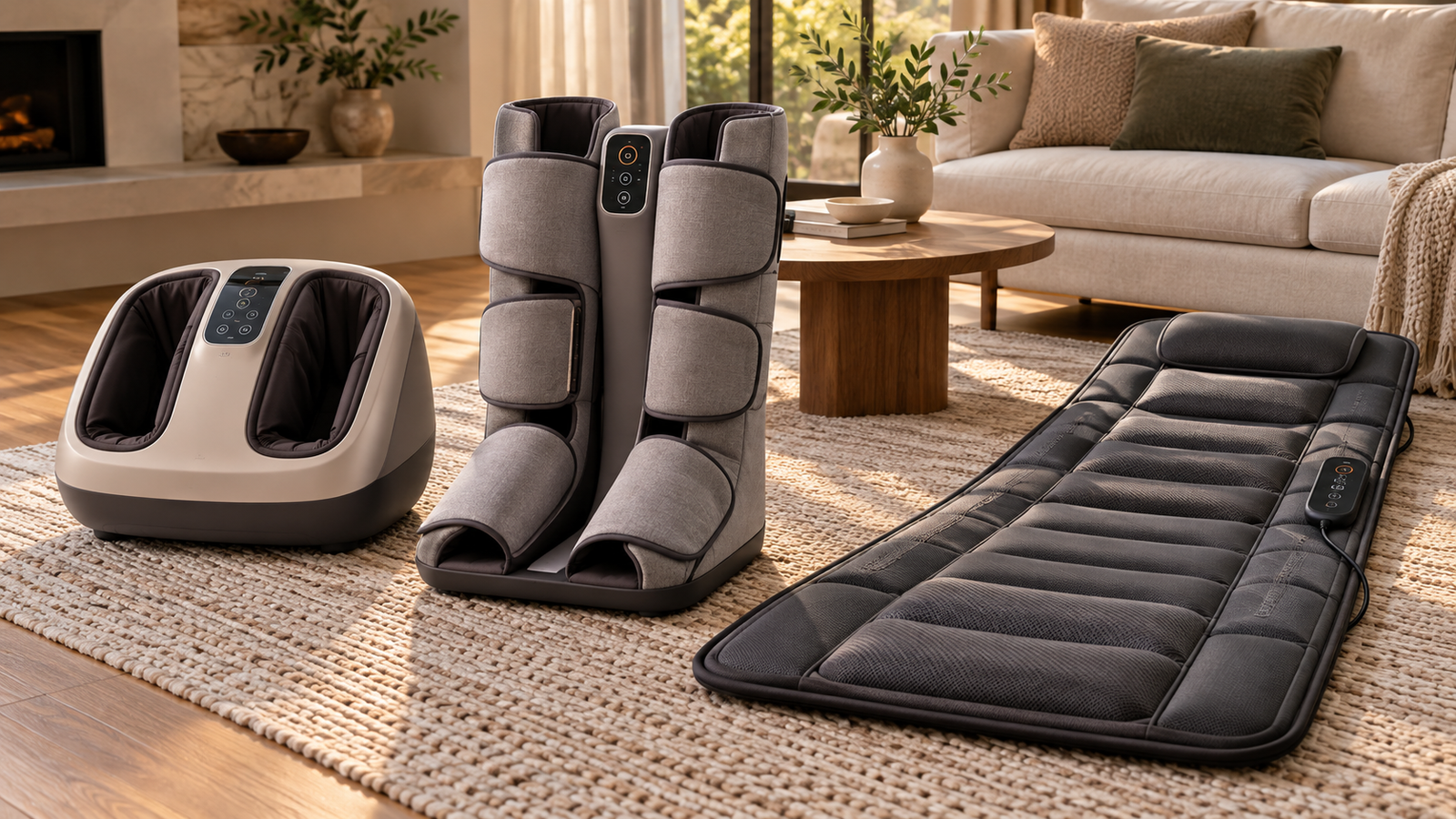
| Compression boots | Skin-contact liners and moisture | Follow textile and electronic-component instructions |
| Electric massager cushion | Fabric, sweat and shared contact | Clean removable covers where permitted |
| Stretching straps | Sweat and fabric contamination | Check washing and drying instructions |
A device’s appearance does not reveal whether it is waterproof, washable or suitable for chemical disinfection.
Always verify the product specifications.
3. Massage Gun Hygiene: Cleaning the Attachments
Massage guns often include several interchangeable attachments.
Common designs include round, flat, bullet-shaped and fork-shaped heads.
These attachments may be made from plastic, foam, silicone or other materials.
Because the attachment contacts the body directly, it deserves regular attention.
Before Cleaning
Turn off the device.
Disconnect it from charging equipment.
Allow it to stop completely.
Remove the attachment only if the manufacturer permits removal for cleaning.
Clean the Attachment
Use the method recommended for that specific material.
Some nonporous attachments may tolerate wiping with a compatible damp cloth.
Other components, especially porous foam attachments, may have different restrictions.
Dry Before Reassembly
Do not reinstall an attachment while moisture could enter the device’s motor or attachment socket.
Inspect During Cleaning
Look for:
- Cracks.
- Deformation.
- Loose surfaces.
- Damaged foam.
- Discolouration.
- Persistent residue.
- An attachment that no longer fits securely.
A damaged attachment may require replacement even if it can still be cleaned.
4. Can You Wash Massage Gun Heads With Water?
The answer depends on the attachment.
Some manufacturers permit washing certain removable silicone or plastic heads.
Others recommend wiping only.
Nonporous Attachments
Smooth plastic or silicone surfaces may be easier to wipe clean.
However, not every plastic or silicone attachment is designed to be submerged.
Foam Attachments
Foam may absorb moisture, depending on its construction.
Immersion can make thorough drying difficult or damage the material.
Metal Attachments
Certain specialized attachments may have additional care requirements.
Avoid assuming that metal components can be cleaned with every household chemical.
What About the Massage Gun Body?
The main device usually contains a motor, battery and electronics.
Do not immerse it in water.
Use only the manufacturer’s approved cleaning procedure.
A removable head being washable does not mean the massage gun itself is waterproof.
5. Cleaning the Massage Gun Handle and Controls
The handle is frequently touched during use and may collect sweat or skin oils.
It can also contact gym bags, floors and other surfaces.
A Practical Cleaning Process
- Switch off and disconnect the device.
- Remove visible residue using an approved cloth.
- Clean the grip and accessible exterior surfaces according to the manual.
- Keep liquid away from charging ports and ventilation openings.
- Allow the device to dry before charging or storing.
What About Disinfectant Wipes?
Only use them if the manufacturer confirms compatibility with the device’s surfaces.
Some disinfectants can damage rubberized grips, coatings or printed markings.
Avoid Spraying Liquid Directly
Spraying cleaning products directly onto the device may allow moisture to enter openings.
If the manual permits a cleaning solution, apply it in the specified manner.
6. TENS and EMS Electrode Pads: Why Cleaning Is Different
TENS stands for transcutaneous electrical nerve stimulation.
EMS commonly refers to electrical muscle stimulation.
These devices use electrodes placed against the skin to deliver electrical stimulation.
Many consumer products use reusable adhesive gel pads.
Their cleaning requirements differ substantially from those of ordinary plastic massage attachments.
Why Electrode Pads Need Special Care
Adhesive pads must maintain suitable contact with the skin.
During use, the gel surface may collect:
- Skin oils.
- Sweat.
- Loose skin cells.
- Lint.
- Dust.
- Cosmetic residue.
Contamination can reduce adhesion.
Poor contact may affect comfort and current distribution.
Can Electrode Pads Be Washed?
Some manufacturers permit limited cleaning using a specific method.
Others instruct users not to wash the electrodes.
Follow the exact pad instructions.
Do not assume that soap, alcohol or ordinary disinfectant is appropriate for the adhesive surface.
Do Not Use Damaged Electrodes
Replace pads that are torn, dried out, contaminated beyond cleaning or no longer adhere correctly.
Do not try to compensate for poor adhesion by increasing stimulation intensity.
7. How to Maintain Reusable Electrode Pads
Proper preparation and storage may help preserve compatible electrode pads.
Before Application
Make sure the skin is clean and dry according to the device instructions.
Avoid applying the electrodes over lotions, oils or creams unless specifically permitted.
After Use
Turn off the stimulation device before removing electrodes.
Remove the pads gently according to the instructions.
Avoid pulling forcefully on the wires.
Protect the Adhesive Surface
Many reusable pads include a protective backing sheet.
Reapply the specified backing after use.
Store Correctly
Use the recommended packaging or storage case.
Avoid exposing pads to excessive heat, dirt or moisture.
Replace When Necessary
Adhesive electrodes have a limited usable life.
Replacement is necessary when the manufacturer’s criteria are met.
Do not share personal adhesive electrodes between users unless the product is specifically designed for such use and an appropriate reprocessing procedure exists.
8. Why Sharing Electrode Pads Is a Hygiene Concern
Reusable adhesive electrode pads contact the skin directly.
The gel surface can accumulate biological residue and may be difficult to clean effectively without damaging it.
Risks of Sharing
Sharing may increase the chance of transferring skin contaminants between users.
It may also reduce adhesive performance.
Better Practice
Use individually assigned compatible electrode pads.
Label or store them separately if multiple household members use the same stimulation unit.
Can the Main TENS Unit Be Shared?
The electronic control unit may be shareable when the manufacturer permits it, provided suitable cleaning and individual accessories are used.
Do not assume the same electrodes should be shared.
Clinical Equipment Is Different
Healthcare settings may use different electrode systems and reprocessing procedures.
Those requirements should not be confused with ordinary household reusable gel pads.
9. Safety Checks Before Using TENS or EMS Devices
Hygiene is only one part of safe electrical stimulation.
Improper use can create risks even when the pads are clean.
Follow Contraindications
TENS and EMS devices may be unsuitable for people with certain implanted electronic devices or particular medical conditions.
Follow device-specific warnings and healthcare guidance.
Avoid Damaged Leads
Check wires, connectors and insulation.
Do not use equipment with exposed conductors or damaged electrical connections.
Avoid Irritated Skin
Do not apply electrodes over broken, infected or significantly irritated skin unless specifically directed by an appropriate clinician using a suitable medical device.
Follow Placement Instructions
Do not improvise electrode placement across the chest, over the front or sides of the neck, or other prohibited areas.
Stop if Skin Irritation Occurs
Redness, burning, itching or blistering may indicate a problem.
Discontinue use and seek advice when symptoms persist or are significant.
10. Foam Roller Hygiene After Home Workouts
Foam rollers are often placed directly on floors and then used against clothing or exposed skin.
They can accumulate sweat, dust and debris.
Why Material Matters
Foam rollers may contain:
- Expanded polypropylene.
- EVA foam.
- Polyethylene foam.
- Other synthetic materials.
- Mixed foam and rigid-core components.
Cleaning compatibility varies.
General Cleaning Principles
Remove loose debris using a suitable method.
Wipe with a compatible cleaning product when permitted.
Avoid soaking materials that are not designed for immersion.
Dry thoroughly before storage.
Textured Rollers
Grooves and raised surfaces may trap debris.
Pay particular attention to these areas while using a manufacturer-approved cleaning method.
When to Replace a Roller
Consider replacement if you notice:
- Cracks.
- Significant surface deterioration.
- Separation of layers.
- Unstable deformation.
- Persistent contamination that cannot be addressed safely.
Discolouration alone does not always mean a roller is unsafe, but structural damage should not be ignored.
11. Massage Balls and Manual Recovery Tools
Massage balls and handheld rollers are generally simpler to maintain than powered devices.
However, surface materials still matter.
Smooth Rubber or Silicone Balls
Some can be cleaned using mild, compatible methods.
Check whether washing or immersion is allowed.
Porous or Fabric-Covered Balls
These may absorb moisture or retain residue.
Follow the manufacturer’s drying and cleaning instructions.
Wooden Massage Tools
Excessive moisture can damage certain wooden products.
Wipe using a suitable method rather than soaking unless the manufacturer permits it.
Metal Massage Tools
Clean and dry according to the product instructions, particularly if coatings or moving parts are present.
Shared Use
When several people use the same massage accessory against exposed skin, cleaning between users is a sensible hygiene measure.
Avoid sharing when someone has an active skin infection, open wound or other condition that increases contamination risk.
12. Heating Pad and Electric Cushion Hygiene
Heating pads and electric massage cushions often contain internal wiring or electronic heating components.
These must be treated differently from ordinary fabric accessories.
Removable Covers
Some products include fabric covers that can be removed and washed.
Follow the label instructions.
Non-Removable Covers
Clean only using the approved method.
Disconnect Power
Unplug the device before cleaning, as directed by the manufacturer.
Never Immerse Unapproved Electrical Components
Water entering a heating pad or powered cushion can create electrical hazards.
Inspect for Damage
Look for:
- Exposed wiring.
- Frayed cables.
- Unusual hot spots.
- Damaged connectors.
- Burn marks.
- Persistent electrical odours.
Stop using equipment with suspected electrical faults.
Let the Device Cool
If the manufacturer requires it, allow the product to cool before cleaning or storing it.
13. Compression Boots and Recovery Sleeves
Pneumatic compression systems use inflatable sleeves connected to a pump.
They may contact the skin directly or be worn over clothing.
Main Hygiene Concerns
- Sweat accumulation.
- Moisture trapped inside sleeves.
- Shared skin-contact surfaces.
- Textile odours.
- Contaminated connectors.
Cleaning the Sleeves
Follow the specific cleaning instructions.
Some outer surfaces may be wiped, while others include removable washable liners.
Do not immerse sleeves containing electrical components or unapproved air connections.
Maintain Tubes and Connectors
Check for:
- Loose fittings.
- Cracks.
- Moisture.
- Physical damage.
Sharing Between Users
Use suitable hygiene procedures and individual liners when the manufacturer recommends them.
Compression devices also have medical contraindications, including certain circulatory conditions.
Follow healthcare guidance where appropriate.
14. Cleaning vs Disinfecting Shared Recovery Gear
When equipment is used by multiple people, hygiene requirements become more important.
However, cleaning and disinfection must remain compatible with the product.
| Situation | General approach |
|---|---|
| Personal massage ball after routine use | Clean as instructed |
| Shared nonporous massage attachment | Clean between users; disinfect if permitted and appropriate |
| Personal reusable electrode pads | Maintain according to pad instructions |
| Shared reusable adhesive electrodes | Avoid sharing unless specifically designed and approved for reprocessing |
| Shared foam roller | Clean between users using a compatible method |
| Removable fabric cover | Launder according to its care label |
| Powered recovery device | Clean exterior without allowing liquid into electronics |
| Equipment exposed to blood or other body fluids | Follow an appropriate contamination-control procedure; do not improvise |
Why Contact Time Matters
A disinfectant may require the surface to remain wet for a specified period to achieve its labelled effect.
Wiping it off immediately may not provide the intended disinfection.
Surface Compatibility Matters Too
A chemical can be suitable for disinfecting a hard countertop but unsuitable for a foam roller or adhesive electrode.
Follow both the disinfectant label and equipment manufacturer’s instructions.
15. What If Someone Has a Skin Infection?
Recovery accessories that contact affected skin may become contaminated.
Examples include some fungal skin infections, bacterial infections or open lesions.
Avoid Shared Contact
Do not share skin-contact tools with someone who has an active contagious skin condition unless an appropriate infection-control process is in place.
Do Not Massage Infected Areas
Avoid using massage guns, balls or other devices directly over infected or inflamed skin.
What About Open Wounds?
Do not use ordinary recovery accessories directly over open wounds.
When Is Medical Assessment Needed?
Seek professional advice for spreading redness, increasing pain, swelling, pus, fever or other signs of significant infection.
Cleaning the equipment is not a substitute for treating an underlying skin condition.
16. Can Sweat Damage Recovery Devices?
Sweat can affect equipment over time, particularly when it accumulates around electrical contacts, metal parts or absorbent materials.
Metal Components
Moisture may contribute to corrosion.
Fabric Covers
Sweat can accumulate and produce odours if cleaning and drying are inadequate.
Foam Surfaces
Some materials may retain residue in textured areas.
Charging Contacts
Moisture or residue can interfere with charging on certain devices.
A Better Routine
After use, clean the relevant surfaces according to the product instructions.
Allow components to dry where required.
Store equipment in a suitable environment.
Avoid charging wet devices or accessories.
17. How to Store Recovery Equipment Hygienically
Even well-cleaned equipment may become contaminated if stored improperly.
Use a Clean Storage Area
Avoid leaving skin-contact attachments directly on dusty floors.
Separate Personal Accessories
Store individually assigned electrodes and other personal-contact components separately.
Keep Moisture Under Control
Do not seal damp fabric accessories in airtight containers.
Avoid Excessive Heat
High temperatures can damage some adhesives, batteries, plastics and elastic materials.
Protect Electrical Components
Keep charging ports, plugs and connectors free from liquid exposure.
Inspect Before Reuse
Storage does not eliminate the need to check condition before the next session.
18. When Cleaning Is Not Enough: Replacement Signs
Some equipment components have a limited service life.
Cleaning may remove surface contamination but cannot restore damaged material or worn adhesives.
| Component | Signs replacement may be needed |
|---|---|
| Adhesive electrode pad | Poor adhesion, tears, drying or contamination |
| Massage head | Cracks, damaged surface or insecure attachment |
| Foam roller | Structural deterioration or persistent contamination |
| Fabric liner | Damage, severe wear or inability to clean adequately |
| Massage ball | Cracking, splitting or deformation |
| Charging cable | Exposed wiring or damaged connector |
| Compression sleeve | Leaks, damaged seams or malfunction |
| Heating pad | Electrical damage, overheating or compromised wiring |
Do Not Use DIY Repairs on Electrical Components
Improvised repairs can create electrical or thermal hazards.
Check Replacement-Part Compatibility
A replacement massage head or electrode pad must be suitable for the exact device.
A component that physically fits may not meet the manufacturer’s specifications.
19. A Practical Post-Workout Cleaning Routine
Most home users do not need a complicated cleaning station.
A simple, consistent process is more useful.
Immediately After Use
Switch off powered equipment.
Disconnect it from power if required.
Place accessories on a clean surface.
Remove Visible Residue
Use the manufacturer-approved method for each component.
Clean Skin-Contact Surfaces
Pay attention to handles, massage heads, rollers and other areas that touched the body.
Dry as Directed
Do not reassemble or store components while improperly wet.
Inspect Equipment
Look for wear, cracks, loose connectors or degraded materials.
Store Properly
Keep accessories away from excessive heat, moisture and contamination.
For shared equipment, perform suitable cleaning between users rather than waiting until the end of the day.
20. Interactive Recovery Device Cleaning Guide
Choose the accessory you need to maintain.
{@body const [device,setDevice]=DIL.useState(“massage”)}
{@body const guidance={
massage:{title:”Massage gun and attachments”,steps:[“Turn off and disconnect the device.”,”Remove attachments only when permitted.”,”Clean compatible surfaces using the approved method.”,”Keep moisture away from the motor, charging port and electronics.”,”Allow components to dry and inspect for damage.”]},
pads:{title:”Reusable electrode pads”,steps:[“Switch off the stimulation device before removal.”,”Handle pads by the designated backing rather than pulling the wires.”,”Clean only if the pad manufacturer permits it.”,”Reapply the protective backing and store as instructed.”,”Replace pads when adhesion or condition deteriorates.”]},
roller:{title:”Foam roller or massage ball”,steps:[“Remove loose dirt and visible residue.”,”Use a cleaner compatible with the material.”,”Avoid immersion unless explicitly permitted.”,”Allow the accessory to dry adequately.”,”Inspect for cracks, wear or persistent contamination.”]},
heat:{title:”Electric heating pad or cushion”,steps:[“Disconnect from power and allow cooling as directed.”,”Check whether the fabric cover is removable.”,”Launder only approved removable components.”,”Do not immerse the electrical assembly.”,”Inspect cables and heating surfaces before reuse.”]}
}}
<box border radius=”lg” padding={3} gap={3}>
Select your recovery device
<radio-group direction=”col” value={device} onChange={setDevice}> <radio value=”massage”>Massage gun</radio> <radio value=”pads”>TENS or EMS electrode pads</radio> <radio value=”roller”>Foam roller or massage ball</radio> <radio value=”heat”>Heating pad or massage cushion</radio> </radio-group> <divider color=”subtle”/> **{guidance[device].title}**
<list marker=”number” gap={2}> {#each guidance[device].steps as step} <list-item>{step}</list-item> {/each} </list> <caption>This guide provides general hygiene reminders. Exact cleaning products, immersion limits, disinfection methods and replacement intervals must come from the manufacturer’s instructions.</caption> </box>
21. How to Choose Recovery Devices That Are Easier to Maintain
Hygiene and maintenance should be considered before purchasing recovery equipment.
A device that is difficult to clean may become inconvenient when used frequently.
Removable Attachments
Removable massage heads can make cleaning easier when the product supports safe removal.
Replaceable Consumables
For TENS and EMS equipment, verify the availability and cost of compatible electrode pads.
Washable Covers
Some heating cushions and compression accessories offer removable fabric covers.
Clear Cleaning Instructions
A manufacturer should specify how to maintain the product safely.
Material Quality
Surfaces should be appropriate for the intended skin contact and cleaning requirements.
Replacement-Part Availability
Consumable pads, tips and attachments may need replacement over time.
Electrical Safety
Look for clear instructions concerning power disconnection, moisture exposure and charging.
Shared Use
If several household members will use the equipment, consider whether the manufacturer permits sharing and provides suitable hygiene procedures.
22. Common Recovery Device Hygiene Mistakes
Mistake 1: Using the Same Disinfectant on Every Product
Different materials have different chemical compatibility.
Mistake 2: Washing a Massage Gun Body
Internal electronics may be damaged by water.
Mistake 3: Cleaning Electrode Pads With Alcohol Without Approval
Solvents may damage the adhesive gel or pad structure.
Mistake 4: Sharing Personal Electrode Pads
Reusable adhesive pads are generally intended for individual use unless specifically designed otherwise.
Mistake 5: Storing Equipment While Damp
Moisture can contribute to contamination, corrosion or material deterioration.
Mistake 6: Ignoring Charging-Port Moisture
Wet contacts may create electrical problems.
Mistake 7: Using Recovery Devices Over Infected Skin
This can aggravate the condition or contaminate equipment.
Mistake 8: Reusing Torn Adhesive Pads
Damaged pads may provide poor or uneven skin contact.
Mistake 9: Spraying Disinfectant Into Device Openings
Liquid can enter electrical or mechanical components.
Mistake 10: Assuming Cleaning Restores Damaged Equipment
Cleaning removes contamination but does not repair worn, cracked or unsafe parts.
23. Frequently Asked Questions
How often should I clean massage gun attachments?
Clean them according to manufacturer guidance and after use when necessary, especially when they contact sweaty skin or are shared.
Can I use alcohol wipes on massage gun heads?
Only if the attachment material and manufacturer instructions permit them.
Can I wash silicone massage heads?
Some may be washable, but compatibility varies. Check the exact product instructions.
Can I put massage gun attachments in the dishwasher?
Not unless the manufacturer explicitly permits dishwasher cleaning.
Can I clean a massage gun with water?
The main electronic device should not be immersed. Use only approved exterior-cleaning methods.
How do I clean sticky TENS pads?
Follow the electrode manufacturer’s instructions. Some pads permit limited cleaning, while others do not.
Can I use soap on TENS electrode pads?
Do not use soap unless explicitly permitted by the manufacturer.
Can I share reusable electrode pads with family members?
Individual electrode pads are preferable. Do not share them unless the product is designed for sharing and an appropriate reprocessing procedure is provided.
How do I know when TENS pads need replacement?
Poor adhesion, damage, drying, persistent contamination or manufacturer-defined end-of-use signs indicate replacement may be needed.
Can I put lotion on my skin before using electrode pads?
Many adhesive electrodes require clean, dry skin. Follow the exact device instructions.
Can foam rollers carry germs?
Shared or contaminated surfaces can carry microorganisms, so appropriate cleaning is important.
Is it safe to disinfect a foam roller?
Only with a method compatible with its material and manufacturer instructions.
How should I clean a heating pad?
Follow the care label and electrical safety instructions. Some have removable washable covers.
Can compression boots be shared?
Some products may support multiple users with appropriate hygiene practices and individual medical suitability. Check the manufacturer’s instructions.
Can I use a massage gun over a rash?
Avoid using recovery devices directly over unexplained, infected or significantly irritated skin.
Can sweat damage a massage gun?
Moisture may affect some components. Follow cleaning and water-resistance instructions.
Should I clean recovery equipment before or after use?
Inspect before use and clean after use as appropriate. Shared equipment may require cleaning between users.
Does disinfecting a device make it sterile?
No. Disinfection and sterilization are different processes.
Can I use essential oils to clean recovery tools?
Do not use oils or other additives unless the manufacturer explicitly permits them.
When should I replace a massage gun attachment?
Replace attachments that are cracked, insecure, significantly worn or otherwise damaged.
24. Final Verdict: Clean the Surface, Protect the Device and Replace Worn Components
Recovery equipment can be a useful part of a home fitness or wellness routine, but hygiene should not be overlooked.
Massage heads need appropriate cleaning after skin contact.
Reusable electrode pads require careful handling to preserve adhesive performance and minimize contamination.
Foam rollers, massage balls and shared accessories should be maintained according to their materials and frequency of use.
Powered products require additional caution because cleaning liquids can damage electrical components.
Avoid using unapproved disinfectants, soaking electronic devices or attempting to restore damaged electrodes with improvised methods.
For shared gear, use appropriate cleaning procedures between users and keep personal skin-contact accessories separate where recommended.
Most importantly, recognize when cleaning is no longer sufficient.
A cracked massage head, damaged electrical cable or worn electrode pad may need replacement rather than another cleaning session.
The best recovery device maintenance routine is simple: use clean equipment, follow manufacturer instructions, inspect regularly and remove damaged components from service.
Good hygiene protects the usability of your equipment and helps make recovery routines more comfortable, consistent and responsible.
Editorial References and Further Reading
- Centers for Disease Control and Prevention (CDC). Cleaning and Disinfecting. https://www.cdc.gov/hygiene/
- US Food and Drug Administration (FDA). Medical Devices. https://www.fda.gov/medical-devices
- National Health Service (NHS). TENS (Transcutaneous Electrical Nerve Stimulation). https://www.nhs.uk/conditions/transcutaneous-electrical-nerve-stimulation-tens/
- US Environmental Protection Agency (EPA). Disinfectants and Surface Compatibility. https://www.epa.gov/pesticide-registration/selected-epa-registered-disinfectants
- Device manufacturer manuals. The primary source for cleaning methods, approved disinfectants, electrode care, component replacement and electrical safety.
Physical Glow Editorial Note: This article provides general consumer wellness, equipment hygiene and maintenance education. It does not prescribe medical electrical stimulation or replace manufacturer instructions. Cleaning compatibility, disinfection requirements and safe-use restrictions vary across products. Seek appropriate professional advice for skin infections, persistent irritation, electrical-device complications or medical conditions that affect device suitability.