How to Choose a Face Toner for Your Skin Type
Learn how to choose a face toner based on skin type, formula, active ingredients and the role you want it to play in your skincare routine.
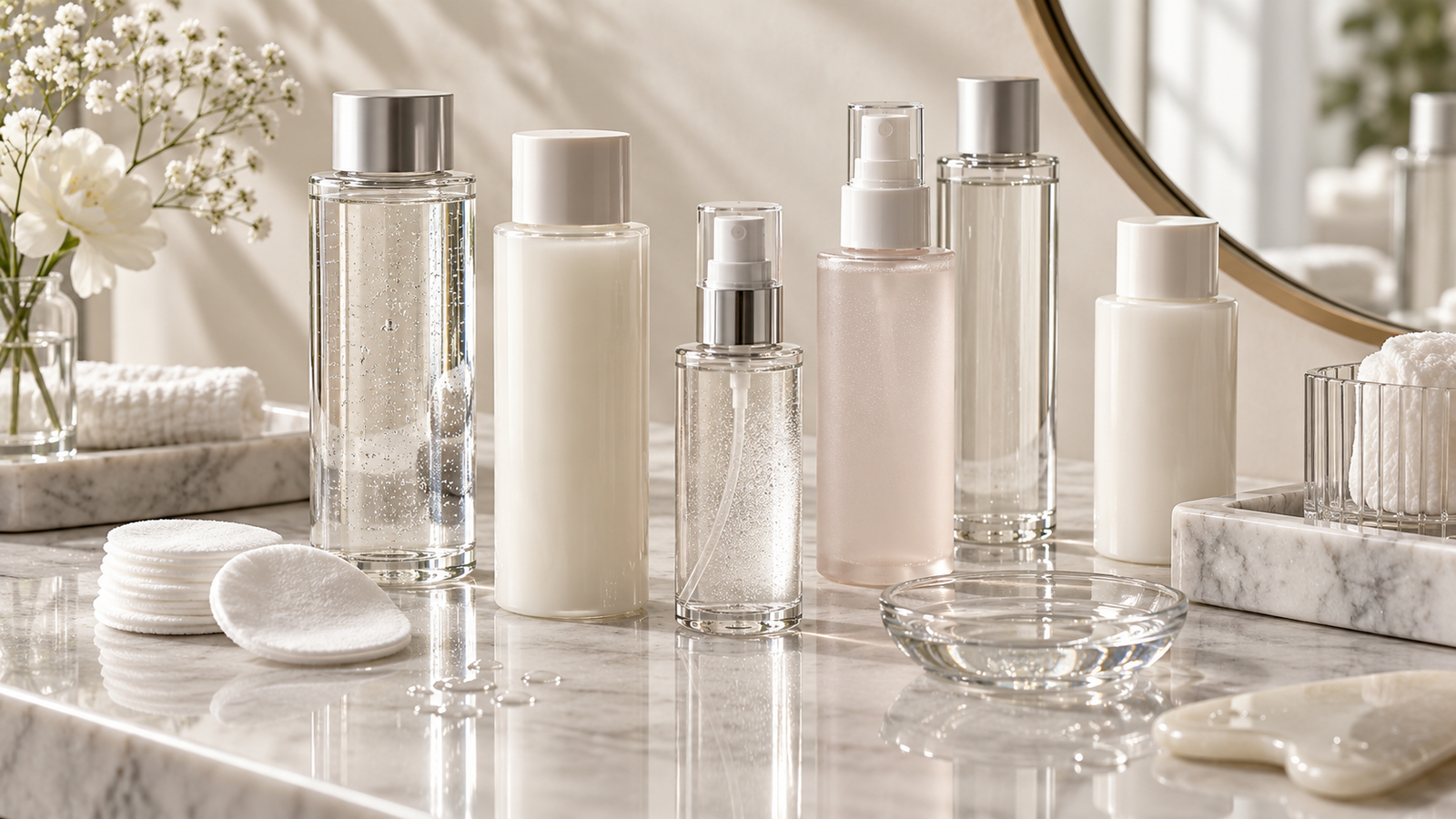
Face toner is one of the most misunderstood steps in a skincare routine. Some toners are designed mainly to add lightweight hydration, others contain exfoliating acids, and richer formulas may sit somewhere between a toner and a light moisturising step.
The right toner is therefore not simply the most popular one. It is the one that serves a clear purpose in your routine, suits your skin type, and works well with the products you already use.
A toner is also optional. If your cleanser, treatment products, moisturiser and sunscreen already meet your skin’s needs, you do not have to add one just because it appears in a multi-step skincare routine.
This guide explains how to choose a face toner based on skin type, ingredients, texture and routine goals.
What Does a Face Toner Actually Do?
Traditional toners were often associated with removing leftover cleanser or making skin feel very clean. Modern toners can serve several different purposes.
Depending on the formula, a toner may help with:
- adding lightweight hydration
- preparing skin for subsequent skincare layers
- supplying humectants or soothing ingredients
- providing gentle chemical exfoliation
- reducing the feeling of tightness after cleansing
- adding a lightweight moisturising layer
- complementing a routine for oily or blemish-prone skin
This is why two products both labelled “toner” can behave very differently.
Before choosing one, determine what you actually want the toner to do.
The Main Types of Face Toner
1. Hydrating Toners
Hydrating toners are generally designed to add water-binding and soothing ingredients without providing heavy moisturisation.
They may contain ingredients such as:
- glycerin
- hyaluronic acid
- panthenol
- beta-glucan
- allantoin
- amino acids
- botanical humectants
These formulas can be useful if your skin feels slightly tight after cleansing or if you prefer layering lightweight hydration underneath a moisturiser.
A hydrating toner should generally leave the skin comfortable rather than extremely dry or squeaky.
2. Exfoliating Toners
Exfoliating toners contain ingredients designed to remove or loosen dead surface skin cells.
Common exfoliating ingredients include:
- glycolic acid
- lactic acid
- mandelic acid
- salicylic acid
- combinations of alpha-hydroxy acids and beta-hydroxy acids
These are closer to treatment products than simple hydrating toners.
An exfoliating toner should not automatically be used every day. Frequency depends on the formula, your skin tolerance and the other active ingredients already present in your routine.
If you already use an exfoliating serum, acne treatment or retinoid, adding another acid product may unnecessarily increase irritation.
3. Toners for Oily or Blemish-Prone Skin
Some toners are marketed specifically for oily or acne-prone skin.
They may include:
- salicylic acid
- niacinamide
- zinc-related ingredients
- soothing botanical extracts
- lightweight humectants
The mistake is assuming oily skin needs a very drying toner.
Removing too much oil or repeatedly using harsh products can leave skin uncomfortable without necessarily solving the underlying cause of oiliness.
Look for formulas that support your routine rather than products that simply make skin feel extremely stripped.
4. Milky or Toner-Moisturiser Formulas
Milky toners have become increasingly common.
These typically have more body than watery toners and may contain:
- emollients
- ceramides
- humectants
- oils in small amounts
- barrier-supporting ingredients
They can appeal to people who want more comfort than a traditional watery toner provides.
However, whether a milky toner can replace moisturiser depends on the formula and your skin. Very dry skin may still benefit from a conventional moisturiser on top.
How to Choose Toner for Your Skin Type
Toner for Oily Skin
If you have oily skin, look for a toner that feels light and does not leave a heavy film.
Useful features can include:
- lightweight texture
- humectants
- niacinamide
- salicylic acid when exfoliation is needed
- non-greasy finish
Avoid automatically choosing the strongest astringent toner available.
Your objective should be managing the routine comfortably, not removing every trace of natural oil.
If clogged pores or blackheads are your main concern, a properly formulated salicylic-acid product may be more relevant than a basic hydrating toner.
Toner for Dry Skin
Dry skin generally benefits more from hydration and comfort than aggressive oil removal.
Look for ingredients such as:
- glycerin
- hyaluronic acid
- panthenol
- beta-glucan
- ceramides
- soothing humectants
Milky toners can also work well for people who prefer a richer feel.
Avoid relying on toner alone if your skin is genuinely dry. Toner can contribute hydration, but a moisturiser is usually the more important step for helping reduce moisture loss.
Toner for Combination Skin
Combination skin can be oily in some areas and dry or normal in others.
In this situation, a simple hydrating toner is often easier to use than an aggressive oil-control formula.
You can then target specific concerns separately.
For example:
- use a hydrating toner across the face
- use salicylic acid only where congestion is a problem
- apply moisturiser according to dryness
You do not necessarily need one product that tries to address every concern at once.
Toner for Sensitive Skin
Sensitive skin usually benefits from simplicity.
Look for:
- straightforward formulas
- hydrating ingredients
- soothing ingredients
- limited unnecessary complexity
- fragrance-free options if fragrance tends to bother your skin
Avoid introducing several new active ingredients simultaneously.
If a toner causes persistent burning, redness, itching or swelling, stop using it.
People with ongoing skin conditions or recurrent reactions may benefit from professional dermatological advice rather than repeatedly experimenting with new active products.
Toner for Acne-Prone Skin
Acne-prone skin does not automatically require toner.
If you want a toner specifically for clogged pores or oily skin, salicylic-acid formulas are commonly used because salicylic acid is oil-soluble and can work within oily pore environments.
However, acne routines can quickly become overloaded.
For example, combining:
- salicylic-acid cleanser
- exfoliating toner
- acne serum
- retinoid
- benzoyl peroxide
may create unnecessary irritation depending on how the products are used.
A simpler routine is often easier to tolerate and evaluate.
Ingredients to Look For in a Face Toner
Glycerin
Glycerin is a humectant that helps attract and retain water within the outer layers of the skin.
It is widely used in hydrating skincare and works well across many skin types.
Hyaluronic Acid
Hyaluronic acid is another common humectant.
It can add lightweight hydration, although the overall formula matters more than the presence of one individual ingredient.
Niacinamide
Niacinamide is used in many skincare products because it can support barrier function and is commonly included in products for oily or uneven-looking skin.
Remember that niacinamide may already be present in your serum or moisturiser, so you do not necessarily need it in every product.
Salicylic Acid
Salicylic acid is a beta-hydroxy acid commonly used for oily, blackhead-prone and congested skin.
It should be treated as an active ingredient rather than simply another hydrating toner component.
Glycolic Acid
Glycolic acid is an alpha-hydroxy acid commonly used for surface exfoliation and improving the appearance of uneven texture.
Higher exfoliating strength is not automatically better.
Start conservatively and avoid unnecessarily combining it with multiple other exfoliating products.
Panthenol
Panthenol is frequently used in soothing and hydrating formulations and can be useful in routines focused on skin comfort.
Ingredients and Formula Features to Be Careful With
There is no ingredient that every person must avoid, but context matters.
High Levels of Exfoliating Acids
If your routine already contains acids, retinoids or other active treatments, another exfoliating toner may make the routine unnecessarily aggressive.
Strongly Drying Formulas
A toner should not need to make your skin feel painfully tight to be effective.
If the product repeatedly leaves your skin uncomfortable, it may not suit your routine.
Fragrance
Many people tolerate fragranced skincare without problems.
Others prefer fragrance-free products because their skin reacts easily or because they simply want to reduce potential sources of irritation.
Choose according to your own tolerance rather than assuming fragrance is automatically good or bad for everyone.
How to Choose Based on Your Main Skin Concern
| Main concern | Toner type worth considering |
|---|---|
| Dehydrated feeling | Hydrating toner |
| Dry skin | Hydrating or milky toner |
| Excess oil | Lightweight hydrating toner |
| Blackheads | Salicylic-acid toner or treatment |
| Rough texture | AHA-based exfoliating toner |
| Sensitive skin | Simple soothing toner |
| Combination skin | Lightweight hydrating toner |
| Barrier-focused routine | Hydrating or milky toner |
| No specific concern | Toner may not be necessary |
The most important point is that the toner should solve a specific problem.
If you cannot identify what it adds to your routine, you may not need one.
How to Use Face Toner Correctly
A basic routine could look like this:
- Cleanse your face.
- Apply toner to clean skin.
- Allow it to spread or absorb comfortably.
- Apply serum or treatment if required.
- Follow with moisturiser.
- Use sunscreen during the daytime.
Most toners can be applied using clean hands.
Cotton pads are useful for certain formulas or personal preferences, but they are not mandatory.
Always follow the instructions for the individual product, particularly with exfoliating toners.
How Often Should You Use Toner?
For a simple hydrating toner, daily use may be appropriate if the product suits your skin.
Exfoliating toners require more caution.
Do not assume that because a product can be used frequently, you personally need to use it that often.
Start at a conservative frequency and watch for:
- persistent redness
- unusual tightness
- flaking
- burning
- increased sensitivity
- uncomfortable dryness
If these appear, reduce or stop the product and reassess the routine.
Can You Use More Than One Toner?
Technically, yes, but it is rarely necessary.
Layering several hydrating toners may simply make the routine longer without creating a meaningful benefit.
Using several exfoliating toners is even less advisable because it can increase the total exfoliating load.
Instead of building a complicated routine, ask what each product contributes.
Every step should have a purpose.
Toner vs Serum: What Is the Difference?
There is no strict universal rule because cosmetic product names are not always used consistently.
Generally:
Toner
Usually lighter and applied immediately after cleansing.
Serum
Usually designed around a more concentrated treatment or targeted skincare function.
However, modern products increasingly overlap.
A hydrating toner and hydrating serum may contain similar ingredients.
You do not necessarily need both.
Toner vs Essence
Essences are generally lightweight leave-on products positioned between toners and serums.
Again, the categories overlap.
Instead of focusing too heavily on the product name, examine:
- ingredients
- texture
- active ingredients
- intended purpose
- where it fits within your routine
The formula matters more than whether the brand calls it a toner, essence or treatment water.
Common Toner Mistakes
Using Toner Because You Think It Is Mandatory
Toner is optional.
Add it because it solves a routine problem, not because a skincare routine diagram says you need one.
Choosing the Strongest Product
More active ingredients do not automatically produce better results.
A product you can use comfortably and consistently may be more useful than one that repeatedly irritates your skin.
Over-Exfoliating
One of the most common routine mistakes is combining too many exfoliating products.
Count the active treatments across your entire routine rather than evaluating each product separately.
Ignoring Your Cleanser
If your face always feels extremely tight after washing, the problem may be the cleanser rather than the absence of toner.
Adding Several New Products at Once
Introducing products gradually makes it easier to identify which one is helping or causing irritation.
How Much Should You Spend on a Toner?
Price alone is not a reliable indicator of toner quality.
A useful toner needs to:
- suit your skin
- contain appropriate ingredients
- fit your routine
- be comfortable enough to use consistently
Premium packaging, imported branding or a long ingredient list do not automatically make a toner better.
Focus on suitability and function first.
A Simple Decision Framework
Before buying a toner, answer these questions:
1. What problem am I trying to solve?
Hydration? Oiliness? Congestion? Texture? Comfort?
2. Does my current routine already address it?
You may already have an appropriate serum or moisturiser.
3. Does the toner contain active ingredients?
If yes, check whether you already use similar actives elsewhere.
4. Does the texture suit my skin?
Light watery toner, exfoliating liquid or milky hydrating formula?
5. Can I use it consistently without complicating my routine?
If the answer is no, a simpler product may be better.
Final Takeaway
The best face toner is not necessarily the one with the longest ingredient list or the strongest active ingredients.
For most people, choosing toner becomes much easier when you first decide what role it needs to play.
Choose:
- hydrating toner when lightweight hydration is the priority
- milky toner when you want more comfort and emollience
- salicylic-acid toner when congestion and oily pores are the main concern
- AHA toner when surface texture and exfoliation are the priority
- simple soothing toner when your routine is sensitive or easily irritated
And if your routine is already working well without toner, there is no need to add one.
If you are currently comparing specific options, continue to our Top 5 Face Toners in India guide, where we compare five different toner formats and explain which type of user each one is best suited for.