How to Choose the Right Concealer for Your Skin and Coverage Needs
Learn how coverage, finish, shade, undertone and skin texture affect which concealer is likely to work best for under-eyes or blemishes.
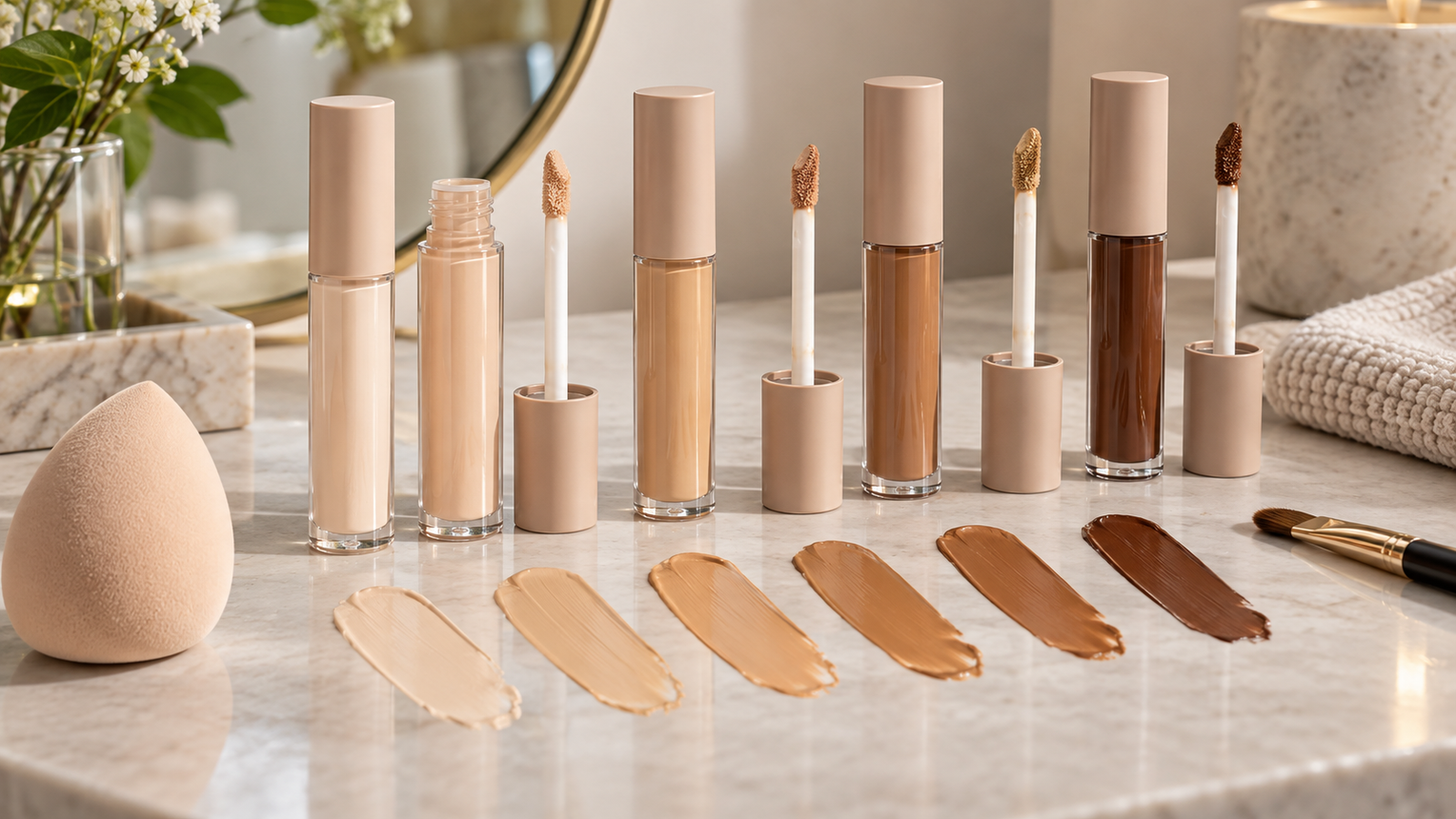
Concealer can be one of the most useful products in a makeup routine, but choosing the right one is not just about finding the fullest coverage.
A concealer has to work with your skin, the area where you plan to use it, the amount of coverage you want, and the makeup products layered underneath and on top of it.
The formula that works beautifully for under-eye darkness may not be the best choice for covering blemishes. A full-coverage concealer can be useful for spot correction, but may look heavy if applied too generously over dry or textured skin.
The right concealer should make the area look more even without becoming the most noticeable part of your makeup.
This guide explains how to choose concealer by coverage, finish, skin type, shade, undertone and application needs.
What Does Concealer Actually Do?
Concealer is designed to provide targeted coverage.
It is commonly used for:
- under-eye darkness
- blemishes
- redness
- pigmentation
- small areas of uneven skin tone
- highlighting selected areas of the face
- correcting areas that foundation did not fully cover
Unlike foundation, concealer is usually applied more selectively.
That means you do not always need the same shade, texture or level of coverage across the entire face.
The Main Types of Concealer
Liquid Concealer
Liquid concealers are among the most versatile options.
They are commonly available in:
- natural finishes
- matte finishes
- hydrating finishes
- medium coverage
- full coverage
They are easy to apply with a wand, brush, sponge or fingertips.
Liquid formulas are often practical for both under-eye use and spot concealing, depending on the finish.
Cream Concealer
Cream concealers usually have a thicker texture.
They can offer:
- stronger coverage
- more precise spot correction
- better control over small areas
However, thick cream formulas can sometimes emphasise dryness or texture if too much is applied.
Stick Concealer
Stick concealers are convenient and portable.
They generally offer:
- direct application
- quick spot coverage
- medium to full coverage
Because they can be richer and more concentrated, blending carefully is important.
Pot Concealer
Pot concealers are often used for:
- blemishes
- pigmentation
- precise correction
They can provide high coverage but may require more controlled application.
Start With the Area You Want to Conceal
The first step is deciding where the product will be used.
Under the Eyes
Under-eye skin is thinner and moves frequently.
A concealer for this area often works best when it is:
- flexible
- easy to blend
- not overly drying
- applied in thin layers
Very heavy or dry formulas may settle into fine lines more visibly.
Blemishes
For blemishes, the priorities are usually:
- close shade match
- good opacity
- precise application
- enough grip to stay in place
A hydrating brightening concealer that works well under the eyes may not be ideal for covering a raised or red blemish.
Redness Around the Nose or Chin
For small patches of redness, a medium-coverage liquid concealer can often work well.
The most important factor is blending the edges so the correction does not create a visible patch.
Pigmentation
Dark spots may need:
- closer shade matching
- stronger coverage
- sometimes colour correction underneath
Applying more product is not always the best solution.
Thin, layered coverage generally looks more natural.
How Much Coverage Do You Need?
Light Coverage
Light coverage works well if you only want to:
- brighten slightly
- reduce minor discolouration
- maintain a natural skin finish
It is usually easier to blend and less likely to look heavy.
Medium Coverage
Medium coverage is the most versatile level for everyday use.
It can help with:
- mild under-eye darkness
- redness
- small blemishes
- uneven tone
It also gives more flexibility because it can usually be layered.
Full Coverage
Full-coverage concealer is useful when you want to conceal:
- stronger pigmentation
- pronounced under-eye darkness
- noticeable blemishes
- more persistent uneven tone
However, full coverage does not mean you need to apply a thick layer.
A highly pigmented product often works better when used sparingly.
Concealer Finish: Matte, Natural or Hydrating?
Matte Concealer
Matte formulas can work well for:
- oily skin
- blemishes
- areas where you want more grip
- long-wear makeup
The downside is that they can emphasise dryness if used heavily.
Natural-Finish Concealer
Natural finishes sit between matte and dewy.
They are often the easiest option for everyday makeup because they can work across multiple areas.
Hydrating or Radiant Concealer
Hydrating concealers are often preferred for:
- dry under-eye areas
- mature-looking skin
- skin that tends to crease when formulas are too dry
However, very luminous concealers may not be ideal for covering raised blemishes because shine can draw attention to texture.
How to Choose Concealer for Your Skin Type
Concealer for Dry Skin
Dry skin usually benefits from formulas that remain flexible.
Look for:
- hydrating textures
- creamy liquid formulas
- natural or radiant finish
- formulas that blend without dragging
Avoid applying thick layers over dry patches.
Good preparation matters too.
A small amount of moisturiser around the area can help create a smoother base.
Concealer for Oily Skin
Oily skin may benefit from:
- natural or matte finishes
- formulas with good grip
- thinner layers
- light setting where needed
The goal is not to remove every trace of luminosity.
Over-powdering oily skin can sometimes make the makeup look heavier without improving wear.
Concealer for Combination Skin
Combination skin may require different techniques in different areas.
For example:
- use a flexible formula under the eyes
- use a more matte formula on blemishes
- set only areas that become oily
You do not necessarily need one concealer for the entire face.
Concealer for Sensitive Skin
Sensitive skin benefits from a cautious approach.
Look for:
- formulas that have worked well for your skin before
- minimal unnecessary complexity
- comfortable texture
- fragrance-free options if fragrance causes irritation for you
If a concealer repeatedly causes:
- burning
- swelling
- rash
- persistent itching
stop using it.
Choosing the Right Concealer Shade
Shade selection is one of the most important parts of getting natural-looking coverage.
You may need different shades for different jobs.
For Blemishes
Choose a concealer that closely matches your skin tone.
A concealer that is too light can make the blemish more visible rather than less.
For Under-Eye Brightening
Some people prefer a concealer slightly lighter than their foundation for a brighter under-eye effect.
However, going too light can create:
- grey-looking areas
- obvious contrast
- an unnatural highlighted patch
For everyday makeup, one shade lighter is often more practical than dramatically brighter concealer.
For Pigmentation
Use a shade that closely matches the surrounding skin.
If the pigmentation is strong, colour correction may be more effective than applying a very thick layer of lighter concealer.
Undertone Matters Too
Concealers can have undertones such as:
- warm
- cool
- neutral
- golden
- peach
- olive
A concealer with the wrong undertone may look noticeable even if the depth appears correct.
For example:
- too pink may look ashy on warm skin
- too yellow may look obvious on cool skin
- too neutral may lack harmony on strongly warm or olive complexions
Where possible, evaluate both depth and undertone.
What Is Colour Correcting?
Colour correctors are designed to neutralise specific tones before concealer is applied.
Common examples include:
Peach or Orange Corrector
Often used for blue or purple under-eye darkness, depending on skin depth.
Green Corrector
Commonly used to reduce the appearance of redness.
Yellow Corrector
Sometimes used for mild purple tones or unevenness.
Colour correcting should be subtle.
If the correcting layer is too thick, you may simply create another colour problem that concealer then has to cover.
Concealer for Under-Eye Darkness
Under-eye concealing works best when you first identify what is creating the darkness.
It may be influenced by:
- pigmentation
- visible blood vessels
- shadow from facial structure
- hollowness
- thin skin
Makeup cannot fully correct structural shadow.
For noticeable pigmentation or blue-purple tones, a small amount of colour correction may help.
Then apply concealer only where needed.
You do not always need to cover the entire under-eye area.
Concealer for Blemishes
When covering a blemish:
- Apply foundation first if you are using it.
- Place a small amount of concealer directly on the blemish.
- Let it sit briefly if the formula benefits from more grip.
- Blend the edges, not the centre.
- Add another thin layer only if necessary.
- Set lightly if needed.
This keeps coverage concentrated where you actually need it.
Should Concealer Go Before or After Foundation?
Both methods can work, but applying foundation first is often more efficient.
Foundation may already cover part of the concern.
You can then use less concealer afterward.
This is especially useful for:
- blemishes
- pigmentation
- redness
Applying concealer first can still work if you prefer that technique or if you are using colour corrector.
How Much Concealer Should You Apply?
Usually less than you think.
A common mistake is drawing large triangles under the eyes or covering entire areas with a thick layer.
A better approach is:
- start with a small amount
- blend
- assess coverage
- build only where needed
Thin layers tend to look smoother and crease less.
How to Blend Concealer
You can blend concealer using:
- fingertips
- sponge
- brush
Each gives a slightly different effect.
Fingers
Body warmth can help blend creamy formulas.
Use tapping rather than rubbing.
Damp Sponge
A sponge gives a softer, more diffused finish.
It can also remove excess product.
Concealer Brush
A brush gives more precision and is especially useful for:
- blemishes
- pigmentation
- detailed spot correction
Should You Set Concealer With Powder?
Not always.
Powder can improve wear but can also emphasise dryness and texture.
Set only where necessary.
For under-eyes:
- use a small amount
- avoid heavy baking if dryness or fine lines are a concern
For blemishes:
- a small amount of powder can help lock the concealer in place
The goal is control, not maximum powder.
Why Does Concealer Crease?
Some movement under the eyes is normal.
Creasing may increase because of:
- too much product
- thick skincare underneath
- very emollient formula
- excess powder
- facial movement
- applying concealer over fine lines
You can reduce visible creasing by using:
- less product
- thinner skincare layers
- flexible formulas
- light setting
Do not expect any concealer to remain completely motionless on moving skin.
Why Does Concealer Look Dry or Cakey?
Common causes include:
- dry skin preparation
- too much product
- overly matte formula
- too much powder
- layering multiple thick products
- applying concealer over flaky skin
Try reducing the amount first before changing the entire routine.
Why Does Concealer Separate?
Separation can happen when:
- skincare is too heavy
- primer and concealer textures do not work well together
- there is excess oil
- too much product is layered
- the base underneath has not settled
Allow each layer to settle before adding the next one.
Concealer vs Foundation
Foundation is designed to even out larger areas of the complexion.
Concealer provides targeted coverage.
You may use:
- foundation alone
- concealer alone
- both together
If your skin tone is fairly even, you may prefer concealer only on selected areas instead of full foundation.
Concealer vs Colour Corrector
These products serve different purposes.
Concealer
Adds skin-toned coverage.
Colour Corrector
Neutralises visible colour before concealer.
You do not need colour corrector unless the discolouration is difficult to conceal naturally.
Common Concealer Mistakes
Choosing a Shade That Is Too Light
This is especially common under the eyes.
Brightening should still look connected to the rest of the face.
Applying Too Much Product
More product does not always mean more natural coverage.
Ignoring Undertone
Correct depth with the wrong undertone can still look mismatched.
Using One Formula Everywhere
The under-eye area and a blemish do not necessarily need the same concealer texture.
Applying Too Much Powder
Heavy powder can make concealer look dry or textured.
Covering the Entire Under-Eye Area
Often, darkness is concentrated in specific areas.
Targeting those areas can look more natural.
Skipping Skin Preparation
Dry, flaky skin can make even a good concealer look uneven.
How to Choose Concealer Based on Your Main Need
| Main need | What to look for |
|---|---|
| Under-eye darkness | Flexible, medium coverage |
| Dry under-eyes | Hydrating or natural finish |
| Blemishes | Skin-matching, higher coverage |
| Oily skin | Natural or matte formula |
| Pigmentation | Medium to full coverage |
| Everyday makeup | Buildable medium coverage |
| Natural makeup | Lightweight flexible formula |
| Long wear | Higher-grip formula |
| Sensitive skin | Comfortable, simple formula |
How Many Concealers Do You Really Need?
Many people only need one.
However, two concealers can be useful if you regularly have different needs.
For example:
- one flexible concealer for under-eyes
- one skin-matching concealer for blemishes
You do not need a large collection unless you genuinely use different shades or formulas.
How Much Should You Spend on Concealer?
Price does not automatically determine performance.
A good concealer should:
- match your skin
- blend well
- provide the coverage you need
- work with your base products
- remain comfortable through the day
A premium product is not automatically better if the shade or texture does not suit you.
Frequently Asked Questions
Should concealer be lighter than foundation?
Not always. For blemishes, a close skin match is usually better. For under-eye brightening, some people prefer a slightly lighter shade.
Can concealer replace foundation?
Yes. Many people use concealer only on selected areas for a lighter makeup look.
Should I use concealer before or after foundation?
Applying foundation first is often practical because it reduces how much concealer you need.
What is the best concealer for dry skin?
Look for flexible, hydrating or natural-finish formulas that do not dry down too aggressively.
What is the best concealer for oily skin?
A natural or matte formula with good grip can work well, especially when lightly set where necessary.
How do I stop concealer from creasing?
Use less product, avoid excessively thick skincare underneath and set lightly only where necessary.
Do I need colour corrector with concealer?
Not always. It can help when strong blue, purple or red tones remain visible through regular concealer.
Final Takeaway
The best concealer is not simply the one with the highest coverage.
Choose based on:
- where you plan to use it
- how much coverage you need
- your skin type
- your preferred finish
- shade depth
- undertone
- how the formula works with the rest of your makeup
For under-eyes, flexibility and comfort often matter more than maximum opacity.
For blemishes and pigmentation, close shade matching and targeted coverage are usually more important than brightness.
Start with a small amount, build in thin layers and only set areas that actually need powder.
If you are comparing specific options, continue to our Top 5 Concealers in India guide, where we compare five concealers for different coverage, finish and everyday makeup needs.