How to Build a Simple Skincare Routine: A Beginner’s Guide
A good skincare routine does not need ten steps. Learn how to build a simple routine around cleansing, moisturizing and daily sun protection, then adapt it to your skin type and needs.
Skincare does not need to involve ten products, complicated ingredient combinations or a different routine for every day of the week.
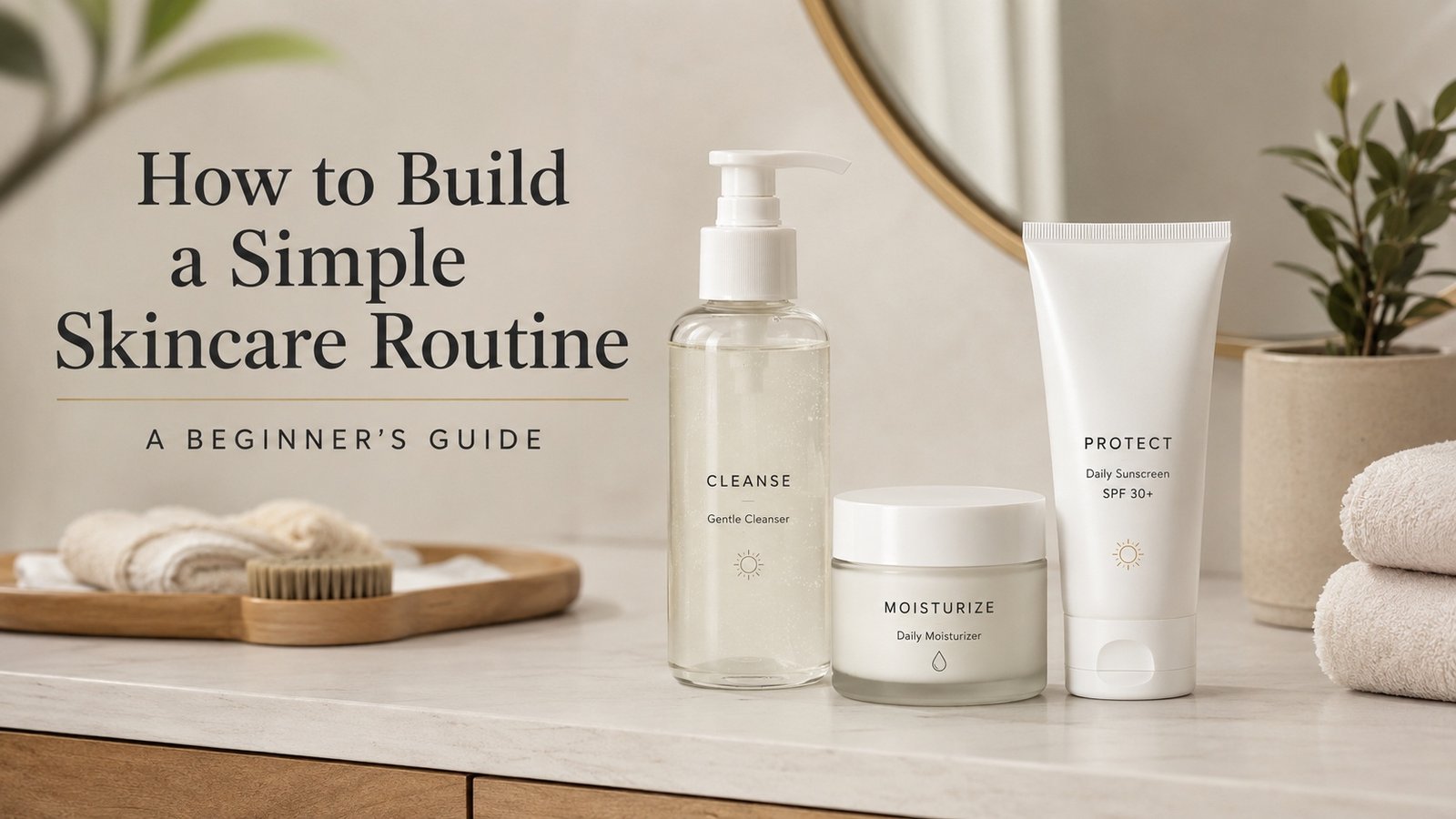
For most beginners, a useful routine starts with three basic jobs:
cleanse → moisturize → protect
Everything else is optional and should solve a specific problem.
That means you can build an effective routine around:
- a gentle cleanser;
- a moisturizer that suits your skin;
- sunscreen during the day.
Once those basics are working consistently, you can decide whether your skin actually needs additional products such as serums, exfoliants or acne treatments.
The goal is not to use as many products as possible.
It is to create a routine that is simple enough to follow consistently and appropriate for your skin.
Start With Your Skin, Not With Products
Before buying anything, consider how your skin normally behaves.
Ask yourself:
- Does my face become noticeably oily during the day?
- Does my skin often feel tight or uncomfortable after cleansing?
- Do I have both oily and dry areas?
- Does my skin become irritated easily?
- Are acne, pigmentation, dullness or dryness particular concerns?
- Am I already using any prescription or dermatologist-recommended treatments?
You do not need to diagnose your skin perfectly.
You simply need enough information to avoid choosing products that clearly work against what your skin needs.
Step 1: Cleanse
Cleansing removes substances that accumulate on the skin, including:
- excess oil;
- sweat;
- dirt;
- sunscreen;
- makeup;
- environmental residue.
But cleansing should not leave your face feeling excessively tight, rough or uncomfortable.
A cleanser that removes everything aggressively is not automatically a better cleanser.
How often should you wash your face?
For many people, cleansing in the evening is particularly useful because it removes sunscreen, makeup and debris accumulated during the day.
A morning cleanse can also be useful, especially if your skin becomes oily overnight.
However, some people with dry or easily irritated skin may prefer simply rinsing with water in the morning and using cleanser at night.
There is no benefit in cleansing repeatedly throughout the day unless there is a specific reason.
Over-cleansing can leave some skin feeling dry or irritated.
How to Choose a Cleanser
The ideal cleanser depends partly on how your skin behaves.
If your skin is oily
Look for a cleanser that removes excess oil without making the skin feel stripped.
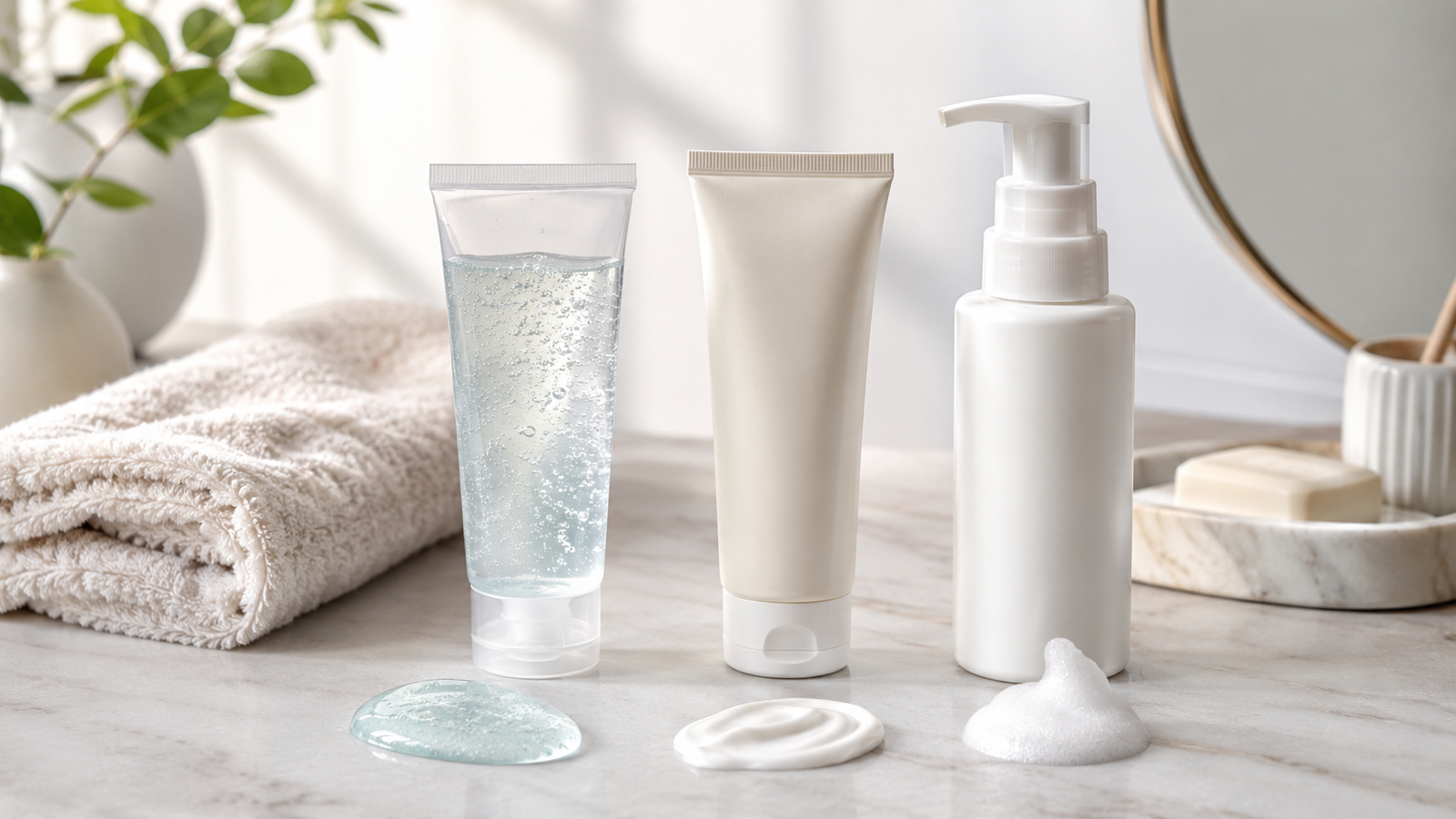
Gel or foaming cleansers can be useful, although the exact formula matters more than the format.
If acne or clogged pores are concerns, some cleansers contain ingredients such as salicylic acid.
You do not necessarily need an active cleanser if a simple gentle cleanser already works well.
If your skin is dry
A creamier or lower-foaming cleanser may feel more comfortable.
Look for a formula that cleans without leaving the skin feeling tight immediately afterward.
If your face feels noticeably dry every time you wash it, your cleanser may be too aggressive or you may be cleansing more frequently than necessary.
If your skin is combination
You may not need separate cleansers for different areas of your face.
Start with a balanced, gentle cleanser and observe how your skin responds.
You can adjust other parts of your routine rather than trying to remove every trace of oil from the T-zone.
If your skin is sensitive-feeling
Keep the formula relatively simple.
If you already know that fragrance or another ingredient causes irritation, check the ingredient list rather than relying only on claims such as “gentle” or “for sensitive skin.”
Introduce new products one at a time so it is easier to identify what caused a reaction.
Do You Need Double Cleansing?
Not everyone does.
Double cleansing generally means using an oil-based cleanser, cleansing balm or similar product first, followed by a water-based cleanser.
It can be useful when you wear:
- heavier makeup;
- water-resistant sunscreen;
- products that are difficult to remove with your normal cleanser.
But if one cleanser removes your sunscreen and makeup effectively without excessive rubbing, there is no requirement to cleanse twice.
More steps do not automatically mean cleaner or healthier skin.
Step 2: Moisturize
Moisturizer helps support the skin’s ability to retain water and can reduce the uncomfortable feeling of dryness or tightness.
Even oily skin can benefit from moisturizer.
The key is choosing a texture and formula that suit you.
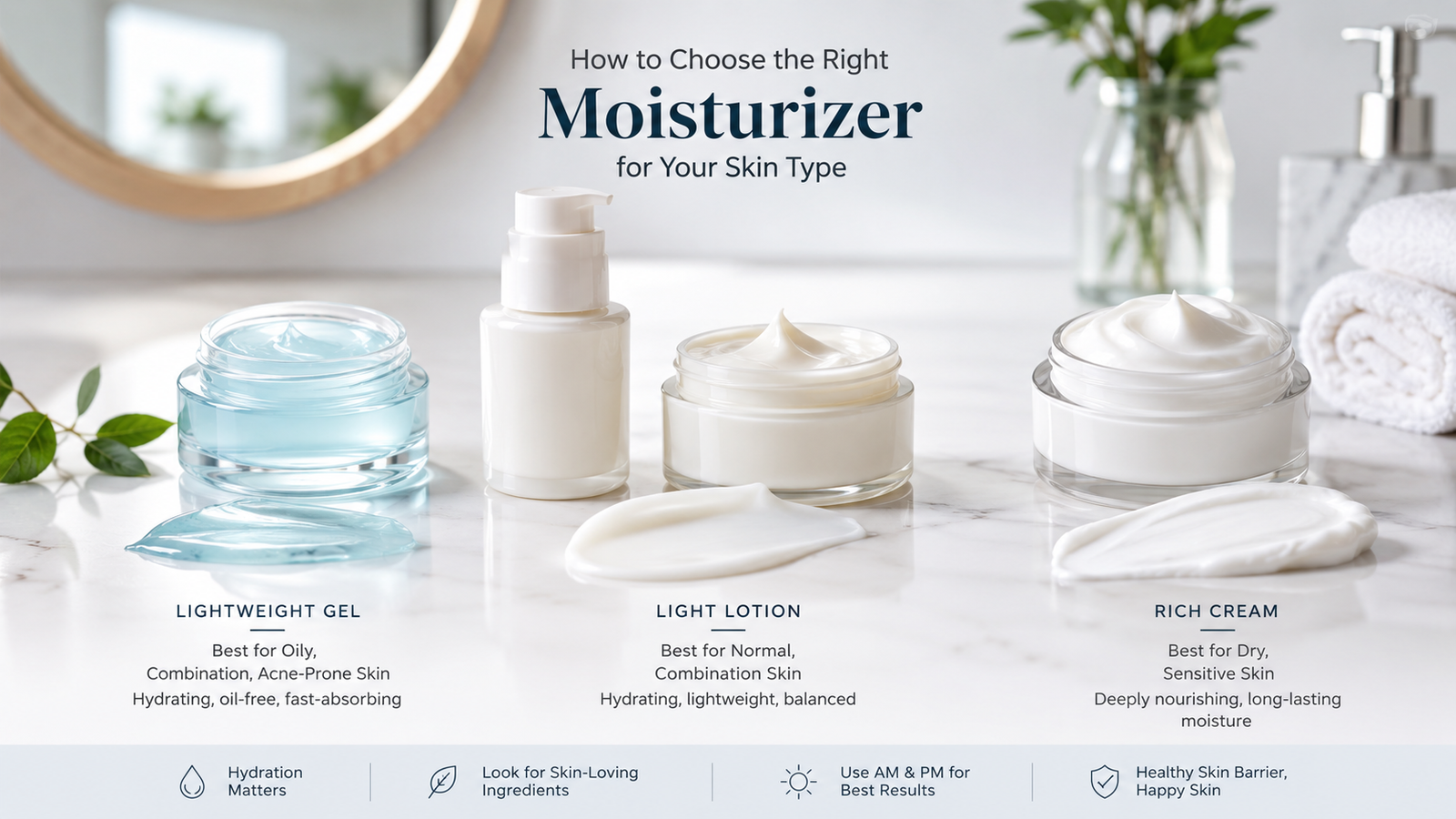
If your skin is oily
You may prefer:
- lightweight lotions;
- gel-creams;
- products that absorb relatively quickly;
- formulas that do not feel heavy under sunscreen or makeup.
Avoid skipping moisturizer automatically just because your skin produces oil.
Oiliness and adequate hydration are not the same thing.
If your skin is dry
You may prefer a richer cream containing ingredients that help attract and retain moisture or support the skin barrier.
Common moisturizing ingredients include:
- glycerin;
- hyaluronic acid;
- ceramides;
- squalane;
- petrolatum;
- various emollient oils and fatty ingredients.
You do not need all of them in one product.
What matters is whether your skin feels comfortable and the moisturizer works well with the rest of your routine.
If your skin is combination
A medium-weight moisturizer may work across the entire face.
You can also use a slightly smaller amount on oily areas and more on areas that feel dry.
If your skin is sensitive-feeling
A simpler moisturizer can be a useful starting point.
You may prefer formulas without ingredients you already know your skin dislikes.
If your skin barrier feels irritated, introducing several active ingredients at the same time is usually less useful than first getting a basic moisturizing routine under control.
When Should You Apply Moisturizer?
Moisturizer is usually applied after cleansing and after any lighter treatment products.
Applying it while the skin is still slightly damp can help trap some water at the surface.
You do not need to wait for your face to become completely dry unless the instructions for another product specifically require it.
Step 3: Use Sunscreen During the Day
For a daytime skincare routine, sunscreen is one of the most important steps.
Regular sun exposure contributes to:
- sunburn;
- uneven pigmentation;
- premature visible skin ageing;
- cumulative ultraviolet damage.
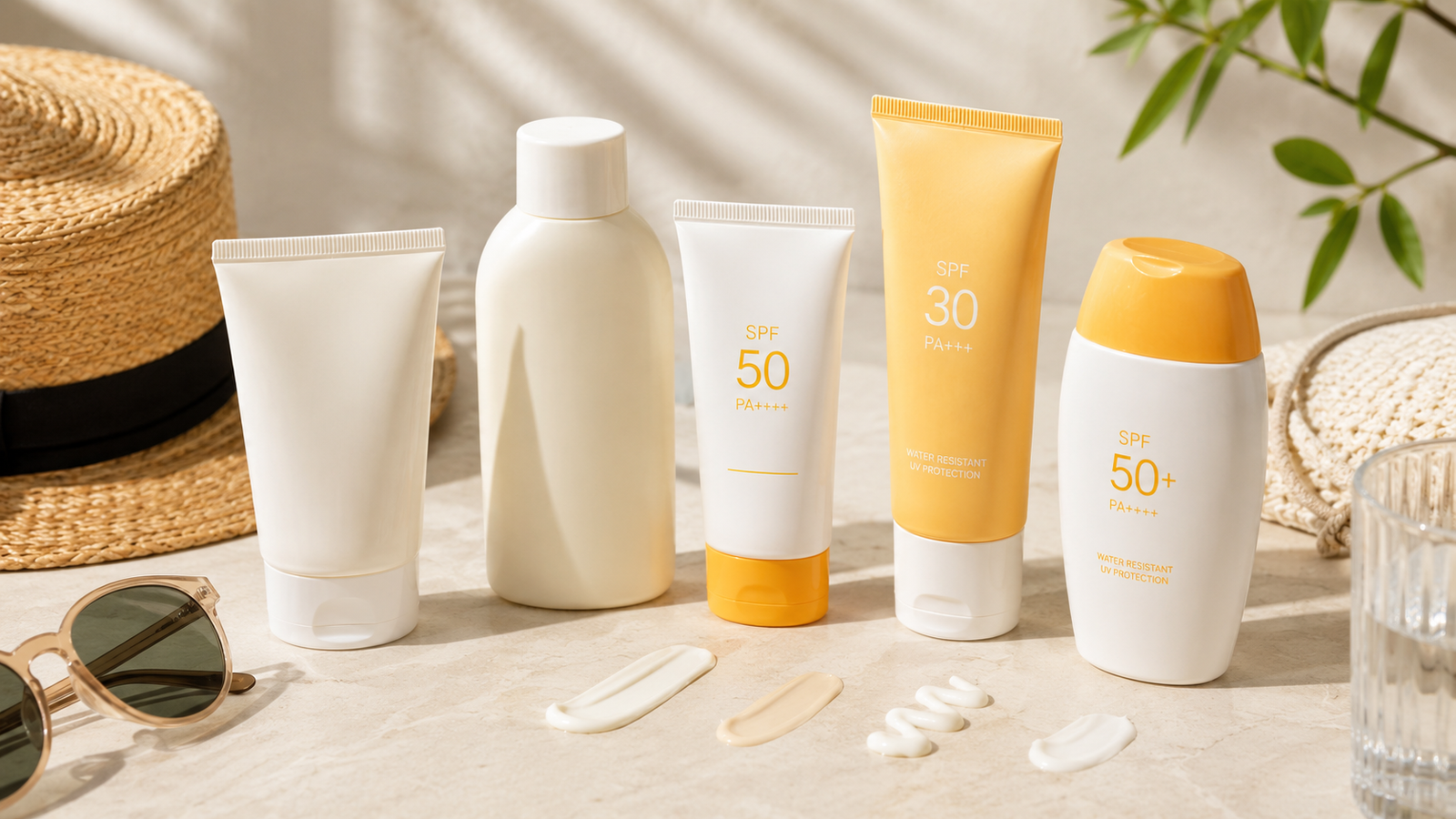
Choose a sunscreen that provides broad-spectrum protection and is comfortable enough that you will actually use it consistently.
For everyday use, SPF 30 or higher is a practical starting point.
Where Does Sunscreen Go in the Routine?
Sunscreen is generally the final skincare step in the morning.
A simple order is:
cleanser → moisturizer → sunscreen
If your sunscreen is moisturizing enough for your skin, you may sometimes find that a separate morning moisturizer is unnecessary.
After sunscreen has settled, makeup can be applied if you wear it.
How Much Sunscreen Should You Apply?
One of the most common sunscreen problems is applying too little.
Follow the amount and application instructions provided with the sunscreen.
Make sure commonly missed exposed areas—such as the ears, neck and hairline—are protected when relevant.
When you are outdoors for extended periods, sweating or swimming, reapplication becomes particularly important.
Morning Skincare Routine for Beginners
A beginner morning routine can be extremely simple.
Step 1 — Cleanse
Use a gentle cleanser if your skin needs it in the morning.
If your skin is dry and comfortable after waking, rinsing with water may be enough for some people.
Step 2 — Moisturize
Apply a moisturizer suited to your skin.
Skip this step only if another product, such as your sunscreen, provides enough moisturization for you.
Step 3 — Sunscreen
Apply sunscreen as your final skincare step before makeup.
That is already a complete morning routine.
You do not need toner, essence, multiple serums and facial oils simply because they appear in other people’s routines.
Evening Skincare Routine for Beginners
Your evening routine can also stay simple.
Step 1 — Remove makeup and sunscreen
If your normal cleanser removes them adequately, use it.
If you wear heavy or water-resistant products, you may prefer a separate makeup remover or first cleanse.
Step 2 — Cleanse
Wash away the day’s residue without excessive scrubbing.
Step 3 — Moisturize
Apply your moisturizer.
That is enough for a basic evening routine.
Once your skin is comfortable with these steps, you can consider adding treatments for specific concerns.
Do You Need a Toner?
Not necessarily.
Modern toners can serve many different purposes.
Some are primarily hydrating. Others contain exfoliating acids or ingredients aimed at oil control.
The category itself is not an essential skincare step.
Ask what the toner actually contributes.
If it does something useful that your current routine does not provide, it may make sense.
If you are using it only because you believe every routine requires a toner, you can probably skip it.
Do You Need a Serum?
Again, not automatically.
A serum is simply a product format that often delivers particular ingredients in a relatively lightweight base.
Serums may target concerns such as:
- hydration;
- pigmentation;
- dullness;
- acne;
- visible signs of ageing.
A serum becomes useful when you can answer:
What specific job do I want this serum to perform?
If you cannot answer that, you probably do not need to add one yet.
When Should You Add Active Ingredients?
Build your basic routine first.
Make sure you have:
- a cleanser you tolerate;
- a moisturizer that keeps your skin comfortable;
- sunscreen you are willing to wear regularly.
Then identify one priority concern.
Examples include:
- clogged pores;
- acne;
- dark spots;
- uneven tone;
- dryness;
- visible texture.
Choose one appropriate treatment rather than starting several at the same time.
This makes it much easier to judge whether the product is helping or irritating your skin.
Introduce New Products Slowly
One of the easiest ways to complicate skincare is to introduce several new products simultaneously.
If your skin then becomes irritated, you may have no idea which product caused it.
A better approach is:
- keep your basic routine stable;
- add one new product;
- use it according to its directions;
- observe how your skin responds;
- add something else only when necessary.
This is especially important with products containing stronger active ingredients.
What Is Patch Testing?
Patch testing means trying a product on a limited area before using it broadly.
It cannot predict every possible reaction, but it may help identify obvious sensitivity.
For products that commonly irritate your skin, follow the manufacturer’s instructions and introduce them cautiously.
If you develop significant burning, swelling, blistering or another concerning reaction, stop using the product.
What Order Should Skincare Products Go In?
There is no universal rule that every routine must follow, but this general order works for many products:
Morning
Cleanser → treatment/serum → moisturizer → sunscreen
Evening
Makeup removal if needed → cleanser → treatment → moisturizer
When using a prescription treatment or a product with specific application instructions, follow those instructions instead of forcing it into a generic sequence.
You also do not need to wait several minutes between every skincare layer unless a product specifically requires it or you find that waiting improves application.
How Many Products Does a Beginner Actually Need?
Three can be enough:
1. Cleanser
To remove oil, dirt, makeup and sunscreen.
2. Moisturizer
To help keep the skin comfortable and support hydration.
3. Sunscreen
For daytime UV protection.
Everything beyond those three should earn its place by solving a clear problem.
A Simple Routine by Skin Type
Oily skin
Morning
- Gentle cleanser
- Lightweight moisturizer if needed
- Sunscreen
Evening
- Cleanser
- Targeted treatment if needed
- Lightweight moisturizer
Do not try to make the skin feel completely oil-free at all times.
Aggressive cleansing can make your routine unnecessarily irritating.
Dry skin
Morning
- Gentle cleanse or water rinse
- Moisturizer
- Sunscreen
Evening
- Gentle cleanser
- Optional hydrating treatment
- Richer moisturizer
Pay attention to comfort rather than chasing a “squeaky clean” feeling.
Combination skin
Morning
- Gentle cleanser
- Balanced moisturizer
- Sunscreen
Evening
- Cleanser
- Treatment only where needed
- Moisturizer
You can adjust the amount of moisturizer or treatment by area rather than creating two entirely different routines.
Sensitive-feeling skin
Morning
- Gentle cleanser or rinse
- Simple moisturizer
- Sunscreen you tolerate
Evening
- Gentle cleanser
- Moisturizer
Introduce optional treatments slowly and only when there is a clear need.
How to Build a Routine for Acne-Prone Skin
Acne-prone skin does not automatically require a large number of products.
Start with the basics:
cleanser → moisturizer → sunscreen
Then consider a targeted acne ingredient if appropriate.
Common acne-focused ingredients include salicylic acid and benzoyl peroxide, while retinoid treatments may also be used in some routines.
These ingredients can cause dryness or irritation, particularly when several are introduced together.
If acne is persistent, painful, causing scarring or not improving with appropriate over-the-counter care, professional medical advice may be more useful than continually adding new cosmetic products.
What About Dark Spots and Uneven Tone?
First maintain consistent sunscreen use.
Without sun protection, pigmentation can become harder to manage.
Then consider one targeted product appropriate for your skin.
Ingredients commonly used in routines targeting uneven tone include:
- vitamin C;
- niacinamide;
- azelaic acid;
- retinoids;
- various exfoliating acids.
You do not need to combine all of them.
Start with one treatment and judge your skin’s response.
What About Dull Skin?
“Dullness” can describe several things:
- dryness;
- surface buildup;
- uneven texture;
- lack of visible radiance;
- uneven pigmentation.
The correct solution depends on the cause.
Sometimes simply improving moisturization makes skin look more comfortable and luminous.
In other cases, an exfoliating or brightening product may be useful.
Avoid assuming that dullness always requires aggressive exfoliation.
Should You Exfoliate?
Exfoliation is optional.
Some people find chemical exfoliants containing ingredients such as AHAs or BHAs useful for concerns including texture, clogged pores or uneven-looking skin.
But more exfoliation is not automatically better.
Overuse can contribute to:
- irritation;
- redness;
- dryness;
- stinging;
- increased sensitivity.
If you introduce an exfoliant, start conservatively and follow the product instructions.
Your routine does not need daily exfoliation simply because a product allows frequent use.
Physical Scrubs vs Chemical Exfoliants
Physical scrubs remove surface cells through friction.
Chemical exfoliants use ingredients such as acids to loosen bonds between surface cells.
Neither category is automatically suitable for everyone.
If physical scrubbing leaves your skin irritated, there is no reason to continue.
Similarly, an acid product that repeatedly causes burning or prolonged irritation is not improving your routine simply because it is technically an “active.”
Do You Need an Eye Cream?
Usually not as an essential beginner step.
The skin around the eyes can be more delicate, but many people can use a suitable facial moisturizer around that area.
Specialized eye products may be useful if you prefer their texture or have a specific concern, but every skincare routine does not require one.
Be particularly cautious with irritating ingredients close to the eyes.
Do You Need Face Oil?
Face oils can add emollience and reduce the feeling of dryness for some people.
They do not replace every function of a moisturizer.
If you enjoy using one, it can usually be applied after or with moisturizer depending on the product.
If your skin is already comfortable without an oil, there is no reason to add one simply because it is popular.
Do Expensive Products Work Better?
Price alone does not tell you whether a skincare product will suit your skin.
A higher price may reflect:
- packaging;
- brand positioning;
- texture;
- fragrance;
- formulation complexity;
- marketing;
- ingredient sourcing.
None of those automatically guarantee better results.
For basic skincare, a simple affordable cleanser, moisturizer and sunscreen can be entirely adequate.
Spend more only when the product offers something you genuinely value.
How Long Should You Try a Routine?
Do not judge every skincare product after one or two applications unless it causes an obvious negative reaction.
Moisturizers and cleansers can often be assessed relatively quickly for comfort.
Changes involving acne, pigmentation or visible texture may take considerably longer.
Avoid constantly changing products because you have not seen dramatic improvement within a few days.
Consistency makes it much easier to understand what is actually helping.
Signs Your Routine May Be Too Complicated
You cannot tell which product is doing what
Too many treatments may make the routine difficult to evaluate.
Your skin regularly stings after applying products
Some active ingredients may tingle slightly depending on the formulation, but persistent or significant discomfort deserves attention.
You are constantly adding products to fix irritation caused by other products
Simplifying may be more useful.
Your routine takes so long that you regularly skip it
A routine that is technically impressive but difficult to maintain is not practical.
You are using multiple products with similar active ingredients
This can increase irritation without necessarily improving results.
Common Beginner Skincare Mistakes
Starting too many products at once
Introduce products gradually.
Using harsh cleansers because oily skin feels “dirty”
Oil production does not mean your skin needs aggressive stripping.
Skipping moisturizer because you have acne
Acne treatments themselves can sometimes be drying.
Using sunscreen only on very sunny days
UV exposure is not limited to days that feel hot.
Constantly switching routines
Frequent changes make it difficult to judge results.
Copying someone else’s entire routine
A product working well for another person does not mean your skin needs it.
Assuming irritation means a product is working
Persistent burning, redness or discomfort is not a requirement for effective skincare.
When Should You Simplify Your Routine?
If your skin suddenly becomes:
- very dry;
- irritated;
- red;
- uncomfortable;
- unusually sensitive;
consider temporarily returning to a basic routine built around:
gentle cleansing → moisturizer → daytime sun protection
Then evaluate which newer products might be contributing.
If symptoms are severe, persistent or concerning, seek appropriate medical advice.
When Should You See a Dermatologist?
Skincare products can help with many cosmetic concerns, but they cannot solve every skin problem.
Consider professional advice for issues such as:
- persistent or severe acne;
- acne scarring;
- unexplained rashes;
- ongoing itching;
- persistent redness;
- painful skin conditions;
- rapidly changing skin lesions;
- pigmentation that concerns you;
- reactions that do not settle after stopping a product.
A skincare routine should support your skin, not delay appropriate medical care.
A Simple Beginner Skincare Checklist
Before adding a product, ask:
1. Do I already have a cleanser that works?
It should clean without consistently leaving your skin uncomfortable.
2. Do I have a moisturizer that suits my skin?
Your skin should feel comfortable rather than excessively greasy or tight.
3. Am I using sunscreen during the day?
Get the basics right before chasing optional treatments.
4. What specific concern am I trying to address?
Choose products because they solve a problem—not because they are trending.
5. Am I already using another product for the same purpose?
Avoid unnecessary duplication.
6. Can I introduce this product gradually?
That makes reactions easier to identify.
7. Will I realistically use this routine consistently?
If not, simplify it.
The Physical Glow Takeaway
A good skincare routine does not need to be complicated.
Start with three fundamentals:
cleanse → moisturize → protect
Use a cleanser that removes what needs to be removed without consistently leaving your skin uncomfortable.
Choose a moisturizer that suits how your skin feels and behaves.
Use sunscreen as the final skincare step during the day.
Only after those basics are working should you add products for specific concerns such as acne, dryness, pigmentation or texture.
Introduce one treatment at a time, pay attention to how your skin responds and avoid adding products simply because they are popular.
The best skincare routine is not the one with the most steps.
It is the one that gives your skin what it needs and is simple enough for you to follow consistently.