How to Choose a Sunscreen for Everyday Use
Learn how to choose a sunscreen you can use consistently every day, with practical guidance on SPF, broad-spectrum protection, texture, water resistance and daily wear. This beginner-friendly guide helps you make a clear, informed choice without unnecessary complexity.
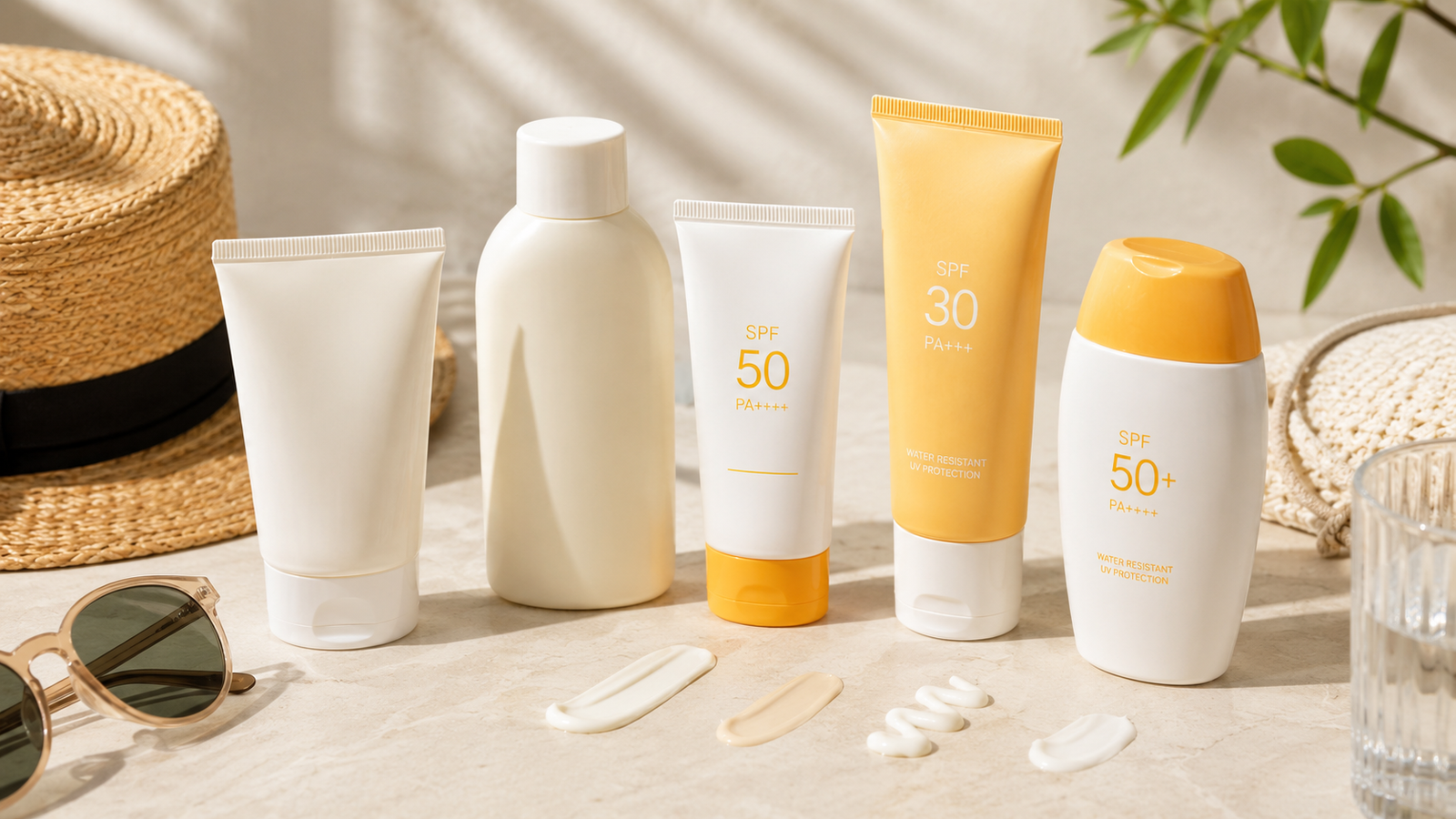
Sunscreen is one of the most important products in a skincare routine because ultraviolet radiation contributes to:
- sunburn;
- premature skin ageing;
- uneven pigmentation;
- worsening of some dark marks;
- skin cancer risk.
But choosing sunscreen can feel unnecessarily complicated.
Labels may mention:
- SPF 30;
- SPF 50+;
- broad spectrum;
- PA++++;
- UVA protection;
- UVB protection;
- mineral filters;
- chemical filters;
- water resistance;
- matte finish;
- gel textures;
- tinted formulas.
The most useful approach is:
choose adequate broad-spectrum protection → find a texture you can comfortably apply in a sufficient amount → match the formula to your skin and environment → reapply when exposure requires it
A theoretically excellent sunscreen that you dislike using is often less useful than a well-formulated sunscreen you can apply consistently.
What Does Sunscreen Actually Protect Against?
Sunlight contains several forms of radiation.
For everyday sunscreen selection, the two most important ultraviolet categories are:
- UVA;
- UVB.
Both can affect the skin.
What Is UVB?
UVB radiation is strongly associated with:
- sunburn;
- direct DNA damage;
- skin cancer risk.
The familiar SPF number mainly reflects protection against UVB-induced redness under standardized testing conditions.
What Is UVA?
UVA penetrates more deeply into the skin and contributes to:
- photoageing;
- pigmentation;
- DNA damage;
- skin cancer risk.
UVA can also pass through ordinary window glass more effectively than UVB.
This is why SPF alone does not tell you everything you need to know about a sunscreen.
You also want adequate UVA protection.
What Does Broad Spectrum Mean?
A broad-spectrum sunscreen is designed to provide protection across both:
- UVA;
- UVB.
Terminology and testing requirements differ between countries.
Depending on the market, UVA protection may be represented through:
- broad-spectrum labelling;
- PA ratings;
- UVA symbols;
- UVAPF values.
For everyday use, look for a sunscreen that clearly indicates meaningful UVA as well as UVB protection.
What Does SPF Mean?
SPF stands for Sun Protection Factor.
It is determined under standardized laboratory conditions.
A common misconception is:
SPF 30 means you can stay in the sun exactly 30 times longer.
Real life is more complicated.
Protection is influenced by:
- how much sunscreen you apply;
- sweating;
- swimming;
- rubbing;
- UV intensity;
- missed areas;
- reapplication.
Think of SPF primarily as a standardized measure that allows you to compare UVB protection under testing conditions.
SPF 15 vs SPF 30 vs SPF 50
Protection increases as SPF rises, but not in a simple linear way.
Higher SPF provides:
- more protection;
- a greater margin for imperfect application.
For everyday sun protection, SPF 30 or higher is a sensible baseline for most people.
SPF 50 or 50+ can be particularly useful when:
- UV exposure is high;
- you spend significant time outdoors;
- pigmentation is a concern;
- your skin burns easily;
- you know you tend to underapply.
Is SPF 50 Twice as Protective as SPF 25?
No.
SPF values should not be interpreted as a direct percentage multiplier in that way.
Higher SPF provides incremental additional protection, but no sunscreen provides complete protection.
This is why sunscreen works best together with:
- shade;
- protective clothing;
- hats;
- sensible sun exposure.
Does SPF 100 Block All UV?
No.
No sunscreen blocks 100% of ultraviolet radiation.
Very high SPF can provide useful additional UVB protection, but it should not encourage:
- longer unprotected exposure;
- skipping reapplication;
- ignoring protective clothing.
Higher SPF does not make you invulnerable to the sun.
What Does PA++++ Mean?
PA ratings are used in several markets to indicate UVA protection.
The system generally progresses from lower to higher UVA protection through:
- PA+;
- PA++;
- PA+++;
- PA++++.
PA++++ represents the highest category within that commonly used rating system.
For someone concerned about:
- pigmentation;
- photoageing;
- high sun exposure;
strong UVA protection is particularly important.
SPF and PA Are Not the Same Thing
SPF mainly reflects UVB protection.
PA reflects UVA protection through a different testing system.
A useful sunscreen should ideally provide strong protection across both.
For example:
high SPF + strong UVA protection
is more informative than focusing on SPF alone.
How Much SPF Do You Need for Everyday Use?
For routine daily use, a broad-spectrum:
SPF 30 or higher
is generally a practical starting point.
Many people prefer SPF 50 because it provides a stronger protection margin.
But SPF number is only one part of the decision.
Also consider:
- UVA protection;
- application amount;
- reapplication;
- comfort.
A beautifully formulated SPF 50 that you apply consistently can be far more useful than a sticky SPF 100 you avoid using.
How Much Sunscreen Should You Apply?
Sunscreens are tested using a standardized application amount of approximately:
2 mg of sunscreen per square centimetre of skin.
Most people do not measure sunscreen this way at home.
A practical rule is to apply a generous, even layer covering all exposed skin.
For the face and neck, people sometimes use the two-finger method as a rough guide:
- a line of sunscreen along two fingers.
But this is only an approximation.
The correct quantity varies depending on:
- product texture;
- finger size;
- area being covered.
The important point is to avoid applying only a few tiny dots and spreading them extremely thinly.
Why Underapplication Matters
If you use much less sunscreen than the amount used during SPF testing, you may receive substantially less protection than the number printed on the bottle suggests.
This is one of the biggest real-world sunscreen problems.
Instead of trying to stretch a tiny amount across:
- face;
- ears;
- neck;
apply enough to create an even film.
Where Should Sunscreen Be Applied?
Commonly missed areas include:
- ears;
- hairline;
- sides of face;
- neck;
- back of neck;
- around the eyes;
- hands.
If exposed, also protect:
- chest;
- arms;
- legs;
- feet.
The area that matters is any skin receiving meaningful UV exposure.
Do You Need Sunscreen on Your Neck?
Yes, if your neck is exposed.
The neck is often forgotten even though it receives significant cumulative UV exposure.
Apply sunscreen to:
- front;
- sides;
- back;
depending on clothing and exposure.
Sunscreen Around the Eyes
You can apply sunscreen around the orbital area if the product is appropriate and does not irritate your eyes.
Some sunscreens sting because of:
- formula migration;
- individual sensitivity;
- specific UV filters.
If this happens, consider a more eye-friendly product around that area.
A sunscreen stick can sometimes provide more controlled application near the eyes.
Avoid putting sunscreen directly into the eye.
How Do Sunscreens Work?
Sunscreens contain UV filters.
These filters interact with ultraviolet radiation so less damaging radiation reaches living skin cells.
Modern filters may primarily:
- absorb UV energy;
- convert it into other forms of energy such as heat.
Some particles also:
- scatter;
- reflect part of the radiation.
The common claim that:
chemical sunscreens absorb UV while mineral sunscreens only reflect it
is an oversimplification.
Both categories involve more complex interactions with UV radiation.
What Are Mineral Sunscreens?
Mineral sunscreens typically use inorganic UV filters such as:
- zinc oxide;
- titanium dioxide.
They are sometimes called:
- physical sunscreens;
- inorganic sunscreens.
Advantages of Mineral Sunscreens
Depending on the formula, they may be useful for people who:
- have sensitive skin;
- prefer inorganic UV filters;
- experience eye stinging with some organic filters.
Zinc oxide can provide broad UVA and UVB coverage when appropriately formulated.
Disadvantages of Mineral Sunscreens
Potential drawbacks include:
- white cast;
- heavier texture;
- dryness;
- difficulty blending.
This is particularly relevant for:
- medium;
- deep;
- very deep complexions.
Modern tinted and micronized formulations have improved cosmetic elegance significantly, but formula quality still varies.
What Are “Chemical” Sunscreens?
The term usually refers to sunscreens using organic UV filters.
Depending on the country, examples may include filters such as:
- avobenzone;
- octocrylene;
- octisalate;
- homosalate;
- bemotrizinol;
- bisoctrizole;
- diethylamino hydroxybenzoyl hexyl benzoate;
- ethylhexyl triazone.
Not every filter is approved in every country.
Regulatory systems differ.
Advantages of Organic-Filter Sunscreens
They can often be formulated into:
- lightweight fluids;
- gels;
- invisible finishes;
- elegant high-protection products.
They may be particularly useful if you dislike:
- white cast;
- thick creams.
Disadvantages of Organic-Filter Sunscreens
Some formulas may cause:
- eye stinging;
- irritation in susceptible skin.
This depends on:
- specific filters;
- fragrance;
- alcohol;
- overall formulation.
Do not assume every organic-filter sunscreen will irritate you because one did.
Mineral vs Chemical Sunscreen: Which Is Better?
Neither category is universally better.
Choose based on:
- protection;
- tolerability;
- cosmetic finish;
- skin type;
- your willingness to use enough.
Consider Mineral Sunscreen If:
- you have very sensitive skin;
- some other sunscreens sting;
- you prefer zinc oxide/titanium dioxide;
- you are comfortable with the finish.
Consider Organic or Hybrid Sunscreen If:
- you want a lightweight texture;
- white cast is a major concern;
- you need cosmetically elegant high protection.
The best sunscreen is the one that provides strong protection and that you can use correctly every day.
What Is a Hybrid Sunscreen?
Hybrid sunscreens combine different types of UV filters.
For example:
- inorganic mineral filters;
- organic UV filters.
This can help manufacturers create formulas balancing:
- protection;
- stability;
- texture;
- transparency.
There is nothing inherently better or worse about being hybrid.
Evaluate the final product.
Sunscreen for Oily Skin
Oily skin often prefers:
- gel;
- fluid;
- lightweight lotion;
- matte or natural finish.
Look for terms such as:
- oil control;
- non-greasy;
- matte;
- lightweight.
But remember that marketing terms are not standardized.
The actual texture matters.
Should Oily Skin Skip Moisturizer Under Sunscreen?
Sometimes.
Many sunscreens already contain:
- humectants;
- emollients.
If your sunscreen keeps your skin comfortable, a separate morning moisturizer may be unnecessary.
A simple routine can be:
cleanser → treatment serum if needed → sunscreen
This can reduce:
- greasiness;
- pilling;
- excess layers.
Sunscreen for Dry Skin
Dry skin often benefits from:
- cream;
- moisturizing lotion;
- hydrating sunscreen.
Useful supporting ingredients may include:
- glycerin;
- hyaluronic acid;
- ceramides;
- squalane;
- emollients.
If sunscreen still feels too dry, use moisturizer underneath.
Sunscreen for Combination Skin
You may prefer:
- lightweight lotion;
- gel-cream sunscreen.
If the T-zone becomes shiny but cheeks feel dry:
- use less moisturizer on T-zone;
- more on cheeks;
- then apply one sunscreen evenly.
Avoid reducing sunscreen amount in oily areas just to control shine.
Instead, modify the skincare underneath.
Sunscreen for Sensitive Skin
Sensitive skin may prefer:
- fragrance-free formulas;
- lower-irritant formulations;
- mineral sunscreen in some cases.
But sensitivity is individual.
Patch testing can be useful.
Stop using a sunscreen if it consistently causes:
- burning;
- persistent redness;
- rash;
- swelling.
Sunscreen for Acne-Prone Skin
Acne-prone skin still needs sunscreen.
This is particularly important because some acne treatments and acne itself can leave:
- post-inflammatory pigmentation.
Look for:
- lightweight texture;
- comfortable finish;
- non-comedogenic claims if helpful.
But no label can guarantee that every acne-prone person will tolerate a product.
Can Sunscreen Cause Acne?
A particular sunscreen may contribute to breakouts for some individuals.
Possible reasons include:
- formula richness;
- occlusion;
- fragrance;
- irritation;
- inadequate cleansing.
If you consistently break out after starting one sunscreen, try another formula rather than abandoning sunscreen entirely.
Sunscreen for Deeper Skin Tones
People with deeper skin tones also need UV protection.
Higher melanin provides some natural protection, but it does not eliminate the risks of:
- UV-related DNA damage;
- photoageing;
- pigmentation;
- skin cancer.
The biggest practical issue is often white cast.
Look for:
- transparent formulas;
- well-formulated organic-filter sunscreens;
- tinted mineral sunscreens.
Why Does Sunscreen Leave a White Cast?
White cast commonly comes from particulate UV filters such as:
- zinc oxide;
- titanium dioxide;
and sometimes other powder components.
The effect is more visible on deeper complexions.
Tinting the sunscreen can help counteract this.
What Is Tinted Sunscreen?
Tinted sunscreen contains pigments that help:
- reduce white cast;
- even visible skin tone.
Some tinted formulas contain:
- iron oxides.
These pigments may provide additional benefit against visible-light-related pigmentation.
Visible Light and Pigmentation
Visible light can contribute to pigmentation in some individuals, particularly in people prone to conditions such as:
- melasma;
- post-inflammatory hyperpigmentation.
Tinted sunscreens containing appropriate pigments such as iron oxides may provide broader protection from visible light than untinted sunscreen alone.
This can be especially relevant for people with:
- medium;
- deep skin tones;
- persistent pigmentation.
Is Tinted Sunscreen Better for Melasma?
Tinted broad-spectrum sunscreen can be particularly useful as part of a melasma-management routine because it may help protect against:
- UVA;
- UVB;
- some visible light.
But melasma often requires a broader treatment plan.
Sunscreen is foundational, not necessarily the only treatment.
Sunscreen for Hyperpigmentation
If dark spots are a major concern, prioritize:
- high SPF;
- strong UVA protection;
- consistent application.
Tinted sunscreen may provide additional visible-light protection.
This is often more useful than continuously adding stronger exfoliants while neglecting sunscreen.
Sunscreen for Rosacea-Prone Skin
Rosacea-prone skin may be sensitive to:
- heat;
- UV;
- certain skincare formulas.
A gentle sunscreen is particularly important.
Some people prefer:
- mineral;
- fragrance-free formulas.
But individual tolerance matters.
If sunscreen repeatedly triggers burning or flushing, try a different formulation.
Sunscreen for Eczema-Prone Skin
Choose:
- moisturizing;
- fragrance-free sunscreen.
Avoid applying highly fragranced or alcohol-heavy formulas to:
- actively inflamed;
- cracked skin.
If eczema is severe, discuss suitable sunscreen and treatment with a healthcare professional.
Sunscreen for Mature Skin
Mature skin often becomes drier.
A moisturizing sunscreen with a:
- cream;
- lotion texture;
may feel more comfortable.
Strong UVA protection is particularly valuable because cumulative UVA exposure contributes to visible photoageing.
Sunscreen for Teenagers
Teenagers can generally use the same fundamental sunscreen principles:
- broad spectrum;
- SPF 30+;
- comfortable texture.
Oily or acne-prone teenagers may prefer:
- gel;
- fluid sunscreens.
A complicated anti-ageing sunscreen is unnecessary.
Sunscreen for Children
Children need effective sun protection.
In addition to sunscreen, prioritize:
- shade;
- clothing;
- hats.
For very young infants, especially those under about six months, physical sun avoidance and protective clothing are generally emphasized; parents should follow pediatric guidance for sunscreen use.
Sunscreen During Pregnancy
Sun protection remains important during pregnancy, particularly because pigmentation concerns can become more noticeable.
If you prefer a simple approach, mineral sunscreens are widely used during pregnancy.
If you have questions about specific UV filters or other active ingredients in a sunscreen, review the exact product with your clinician.
Sunscreen Texture Matters
Sunscreen only works well if you apply enough.
Texture therefore matters enormously.
Common formats include:
- cream;
- lotion;
- gel;
- fluid;
- stick;
- spray.
Each has advantages and disadvantages.
Cream Sunscreen
Best suited to:
- dry skin;
- normal skin;
- people who prefer richer textures.
Advantages:
- moisturizing;
- easy to see where applied.
Disadvantages:
- may feel heavy;
- may become greasy in humid weather.
Lotion Sunscreen
One of the most versatile formats.
It can work for:
- face;
- body.
Depending on the formula, lotions can range from:
- lightweight;
- rich.
Gel Sunscreen
Very popular in hot climates.
Advantages may include:
- lightweight feel;
- fast absorption;
- less greasy finish.
Often useful for:
- oily;
- combination skin.
But the word gel is mainly about texture.
Protection still depends on:
- UV filters;
- formulation;
- correct application.
Fluid Sunscreen
Fluids are usually:
- thin;
- spreadable;
- lightweight.
They can work very well under makeup.
Because they spread so easily, it is also easy to accidentally underapply.
Use enough product.
Shake before use if the instructions say so.
Sunscreen Sticks
Sticks are convenient for:
- travel;
- targeted reapplication;
- around eyes;
- small exposed areas.
But they can be difficult to apply in a sufficiently thick, even layer over the entire face.
Multiple passes may be necessary.
For initial application, a fluid or lotion is often easier to distribute evenly.
Spray Sunscreen
Sprays are useful for:
- body;
- difficult-to-reach areas;
- reapplication.
But coverage can be uneven if applied too lightly.
Do not simply mist the body from far away and assume full protection.
Spray generously and spread if the product directions recommend it.
Spray Sunscreen on the Face
Avoid intentionally inhaling sunscreen spray.
A practical method is:
- Spray into your hands.
- Apply to the face.
Avoid spraying directly into:
- eyes;
- mouth;
- nose.
Follow label instructions.
Sunscreen Powder
Powder SPF products can be convenient for:
- touch-ups;
- reducing shine.
But it is difficult to apply enough powder evenly to achieve the labelled SPF across the face.
Treat powder sunscreen as:
- supplemental;
rather than your primary morning sunscreen.
Sunscreen Cushions and Compacts
Some SPF makeup products come in compact formats.
They may help with reapplication.
But, as with powders, obtaining enough uniform product can be difficult.
Use a properly applied sunscreen as the primary protection layer.
Sunscreen and Makeup
Sunscreen should generally go:
after skincare → before makeup
A common morning sequence:
- Cleanser
- Treatment serum if used
- Moisturizer if needed
- Sunscreen
- Makeup
Allow the sunscreen to settle before foundation.
How Long Should You Wait Before Makeup?
There is no universal exact interval.
Give the sunscreen enough time to:
- form an even layer;
- stop feeling very wet.
Then apply makeup gently.
If the sunscreen label gives specific timing instructions, follow them.
Does Makeup With SPF Replace Sunscreen?
Usually not.
Foundation and powder are typically applied too thinly and unevenly to achieve the labelled SPF.
Makeup SPF can provide:
- supplemental protection.
Use a dedicated sunscreen underneath when reliable sun protection is needed.
Foundation Over Sunscreen
Apply foundation using:
- gentle pressing;
- controlled blending.
Avoid aggressively rubbing for a long time because you may disturb the sunscreen film.
A sponge or gentle brush technique can work well.
Sunscreen Pilling Under Makeup
Pilling occurs when products roll into:
- flakes;
- little balls.
Common causes include:
- too many skincare layers;
- heavy moisturizer;
- incompatible polymers;
- too much rubbing;
- insufficient settling time.
How to Reduce Sunscreen Pilling
Try:
- Use fewer skincare layers.
- Apply smaller amounts of serums.
- Let moisturizer settle.
- Apply sunscreen evenly.
- Avoid excessive rubbing.
- Let sunscreen set before makeup.
Do not reduce the sunscreen amount below adequate coverage just to stop pilling.
Instead, simplify the products underneath.
Sunscreen and Primer
You may use primer over sunscreen.
Sequence:
skincare → sunscreen → primer → makeup
But primer is optional.
If sunscreen already creates a good makeup base, skip it.
This can reduce:
- pilling;
- heaviness.
Sunscreen and Setting Powder
Powder can reduce:
- shine;
- tackiness.
Apply it after sunscreen has set.
If wearing foundation:
sunscreen → foundation → powder
If going without foundation:
sunscreen → allow to set → light powder
can work well.
Sunscreen and Blush
Cream or liquid makeup can be applied over sunscreen.
Try to:
- tap;
- press;
rather than vigorously drag.
The goal is to preserve an even sunscreen layer underneath.
When Should Sunscreen Be Applied?
For outdoor exposure, sunscreen should be applied according to the timing given on the product label.
Many products advise application before sun exposure.
Do not wait until:
- your skin feels hot;
- you are already burning.
Protection should be in place before significant exposure.
How Often Should You Reapply Sunscreen?
When outdoors, a common recommendation is to reapply approximately every:
two hours
and sooner after:
- swimming;
- heavy sweating;
- towel drying;
- significant rubbing.
But follow the specific sunscreen’s instructions.
Water resistance does not mean permanent protection.
Do You Need to Reapply Every Two Hours Indoors?
Not necessarily in every situation.
Reapplication depends on actual exposure.
If you spend most of the day:
- indoors;
- far from windows;
your exposure may be much lower than someone outdoors.
But if you are:
- near strong sunlight through windows;
- repeatedly going outside;
- driving for extended periods;
reapplication becomes more relevant.
Use context rather than treating the clock as the only factor.
Sunscreen Near Windows
Standard glass blocks much of UVB but allows substantial UVA transmission.
If you spend long periods next to a bright window, especially with direct sun exposure, sunscreen can still be useful.
This is particularly relevant for:
- pigmentation;
- photoageing concerns.
Sunscreen While Driving
UVA exposure through side windows can contribute to cumulative exposure.
If you drive frequently during daylight:
- sunscreen;
- protective clothing;
- UV-protective windows where available;
can help reduce exposure.
Do You Need Sunscreen on Cloudy Days?
Yes, UV radiation still reaches the ground through clouds.
Cloud cover can reduce or alter exposure, but it does not eliminate UV.
If you will be outdoors during daylight, sunscreen remains relevant.
Do You Need Sunscreen in Winter?
Yes.
UV exposure occurs year-round.
The intensity changes depending on:
- season;
- latitude;
- altitude;
- weather.
Snow can also reflect UV.
UV Index
The UV Index indicates the intensity of ultraviolet radiation at a particular place and time.
Higher UV Index means greater potential for skin damage.
Checking the UV Index can help guide:
- sunscreen;
- shade;
- clothing;
- timing of outdoor activities.
But routine sunscreen remains useful for people who want consistent protection from cumulative exposure.
Sunscreen at High Altitude
UV exposure increases at higher altitudes.
Activities such as:
- hiking;
- skiing;
- mountain travel;
require particularly careful protection.
Use:
- high SPF;
- strong UVA protection;
- reapplication;
- clothing.
Sunscreen at the Beach
Beach conditions involve:
- strong UV;
- reflection from water and sand;
- swimming;
- sweating.
Choose:
- high SPF;
- broad spectrum;
- water resistance.
Reapply frequently according to the label.
Combine with:
- shade;
- hat;
- protective clothing.
Sunscreen While Swimming
Use a sunscreen specifically labelled:
- water resistant.
Apply according to the recommended timing before entering the water.
Reapply after:
- swimming;
- toweling.
No sunscreen is completely waterproof.
What Does Water Resistant Mean?
Water-resistant sunscreens are tested to maintain a certain degree of SPF protection after controlled water exposure.
The exact labelling system differs by market.
Water resistance is time-limited.
It does not mean:
- waterproof;
- all-day protection.
Always reapply after prolonged swimming or toweling.
Sunscreen for Exercise
If exercising outdoors, choose:
- water-resistant;
- sweat-resistant where appropriately labelled;
- comfortable sunscreen that does not run into your eyes.
Apply before exercise according to instructions.
Reapply after:
- heavy sweating;
- towel wiping.
Sunscreen for Hot and Humid Weather
Hot climates make texture especially important.
Look for:
- fluid;
- gel;
- lightweight lotion;
- matte or natural finish.
For oily skin, simplify the morning routine:
light skincare → sunscreen
rather than stacking several heavy layers underneath.
Sunscreen for Indian Weather
In many parts of India, everyday sunscreen needs to handle:
- strong UV;
- heat;
- humidity;
- sweating.
A practical everyday product often has:
- SPF 30–50+;
- strong UVA protection;
- lightweight texture;
- low white cast;
- comfortable reapplication.
If you spend substantial time outdoors, consider:
- SPF 50+;
- high UVA protection;
- water resistance.
Comfort matters because a sunscreen that feels excessively greasy in hot weather is less likely to be used properly.
Sunscreen for Dry Winter Weather
Switching textures can help.
You may prefer:
- cream;
- moisturizing lotion.
Use moisturizer underneath if necessary.
You do not need the same sunscreen texture in January that you use in peak summer.
Can Sunscreen Replace Moisturizer?
Yes, for some people.
Many sunscreens contain:
- humectants;
- emollients;
- occlusives.
If your skin remains comfortable:
sunscreen alone may function as your morning moisturizing step.
Dry skin may still need moisturizer underneath.
Does Sunscreen Dry the Skin?
Some formulas can.
Potential contributors include:
- high alcohol content;
- matte powders;
- mineral particles.
If sunscreen consistently makes your skin tight, try:
- moisturizer underneath;
- more hydrating formula.
Do not abandon sunscreen because one formula feels dry.
Why Does Sunscreen Make Skin Oily?
Some formulas contain richer emollients or form a shiny protective film.
Try:
- gel;
- fluid;
- matte sunscreen.
You may also be using too many skincare layers underneath.
Simplify first.
Why Does Sunscreen Sting?
Possible causes include:
- individual sensitivity;
- fragrance;
- alcohol;
- certain UV filters;
- damaged skin barrier.
If sunscreen suddenly stings when it previously did not, your skin may be irritated from:
- over-exfoliation;
- retinoids;
- harsh cleansing.
Persistent burning is a reason to switch formulas and assess the skin barrier.
Why Does Sunscreen Sting the Eyes?
This may happen when sunscreen:
- migrates with sweat;
- contains filters your eyes do not tolerate.
Try:
- mineral sunscreen around eyes;
- sunscreen stick;
- more water-resistant formula;
- avoiding application directly on the eyelid margin.
Do not leave a product in place if it causes significant eye irritation.
Sunscreen After Exfoliation
Sunscreen becomes particularly important when using exfoliating ingredients such as:
- AHAs.
An exfoliating routine aimed at improving pigmentation while ignoring UV protection is counterproductive.
A simple morning routine:
- Gentle cleanse
- Moisturizer if needed
- Sunscreen
is often enough.
Sunscreen With Retinoids
If you use a retinoid, consistent sunscreen is an important part of the routine.
Retinoid use may also make irritated skin less tolerant of harsh sunscreen formulas.
Choose something:
- gentle;
- comfortable.
Sunscreen With Vitamin C
A common morning routine is:
- Cleanser
- Vitamin C serum
- Moisturizer if needed
- Sunscreen
Vitamin C does not replace sunscreen.
Antioxidants and sunscreen can complement each other.
Sunscreen With Niacinamide
Niacinamide can be used before sunscreen.
Some sunscreens already contain it.
If so, you may not need a separate niacinamide serum.
Avoid adding skincare steps unnecessarily.
Sunscreen With Acne Treatments
Some acne treatments can make skin:
- dry;
- irritated.
Sunscreen is particularly important when acne marks and pigmentation are concerns.
Choose:
- lightweight;
- non-irritating sunscreen.
Sunscreen After Chemical Peels
After professional procedures, the skin may be more sun sensitive.
Follow the treating professional’s aftercare instructions carefully.
Do not rely on sunscreen alone.
Also use:
- shade;
- protective clothing.
Sunscreen After Laser Treatments
The same principle applies.
Post-procedure skin requires careful UV protection.
Use the sunscreen recommended or approved by your treating professional.
Sunscreen After Shaving
Freshly shaved skin can be more sensitive.
If your sunscreen burns immediately after shaving:
- use a gentler formula;
- allow skin to settle where practical.
Fragrance-free products may help.
Sunscreen and Facial Hair
Beards and moustaches can make even sunscreen coverage more difficult.
Apply carefully around:
- beard line;
- exposed skin.
Dense facial hair may provide some physical coverage, but exposed skin between hair still needs protection.
Sunscreen on the Scalp
The scalp can burn, especially when hair is:
- thinning;
- shaved;
- parted.
Use:
- sunscreen spray or lotion where practical;
- hat;
- scalp-specific SPF products.
Protect the hair part as well.
Sunscreen on the Lips
Lips are exposed to UV radiation.
Use:
- SPF lip balm;
during meaningful outdoor exposure.
Reapply regularly, particularly after:
- eating;
- drinking.
Sunscreen on the Hands
Hands receive significant cumulative sun exposure.
Apply sunscreen to exposed hands.
Remember that:
- handwashing;
removes sunscreen, so reapplication may be necessary.
Sunscreen and Vitamin D
Sunlight contributes to vitamin D production in the skin.
This sometimes leads to the claim that people should avoid sunscreen in order to maintain vitamin D.
That is not a sensible reason to deliberately expose the skin to damaging UV.
Vitamin D status can be addressed through:
- diet;
- fortified foods;
- supplementation when appropriate;
- medical testing when indicated.
Do not use sunburn as a vitamin D strategy.
Does Sunscreen Prevent Tanning?
Sunscreen reduces UV exposure but does not guarantee that absolutely no tanning will occur.
A tan itself is a response to UV exposure and represents skin reacting to radiation.
There is no such thing as a completely risk-free UV tan.
Does a Base Tan Protect You?
A tan provides only limited natural protection and does not replace sunscreen.
Deliberately tanning before a holiday is not an effective substitute for:
- sunscreen;
- clothing;
- shade.
Sunscreen for People Who Rarely Burn
People who tan easily and rarely burn still experience UV-related skin damage.
Burning is not the only indication of harmful exposure.
UVA-related damage can accumulate without obvious sunburn.
Sunscreen for Dark Skin
Dark skin can still develop:
- sun damage;
- pigmentation;
- skin cancer.
Skin cancer may sometimes be detected later in deeper skin tones.
Sunscreen and other protective measures remain relevant across all skin colours.
Is Sunscreen Needed Only to Prevent Skin Cancer?
No.
Sun protection also helps reduce:
- photoageing;
- pigmentation;
- worsening of melasma;
- uneven tone.
This makes sunscreen particularly important in routines aimed at:
- dark spots;
- anti-ageing;
- post-acne pigmentation.
Can Sunscreen Reverse Sun Damage?
No.
Sunscreen primarily helps prevent additional UV damage.
Existing:
- pigmentation;
- wrinkles;
- structural sun damage;
may require other treatments.
Prevention remains one of sunscreen’s biggest advantages.
Sunscreen and Anti-Ageing
Consistent sun protection is one of the most evidence-supported strategies for reducing cumulative photoageing.
UV exposure contributes to:
- collagen degradation;
- pigmentation;
- texture changes.
No luxury anti-ageing serum can fully compensate for ongoing unprotected sun exposure.
Sunscreen and Dark Spots
If you are using products such as:
- vitamin C;
- retinoids;
- acids;
- pigment treatments;
without sunscreen, you may be undermining your progress.
Sun protection should be the foundation of a pigmentation routine.
Does Sunscreen Have to Be Used at Night?
No.
Sunscreen is for protection during UV exposure.
At night:
- cleanse;
- use your normal evening skincare.
There is no reason to sleep in sunscreen.
Should You Wash Sunscreen Off at Night?
Yes.
Remove sunscreen as part of your evening cleansing routine.
For most people, a suitable facial cleanser is enough.
If you use:
- water-resistant sunscreen;
- heavy makeup;
double cleansing may be useful.
Do You Need Double Cleansing for Sunscreen?
Not always.
If one cleanser removes your sunscreen effectively without leaving residue, one cleanse is enough.
Double cleansing may help with:
- water-resistant sunscreen;
- heavy makeup.
A common sequence:
cleansing oil/balm → water-based cleanser
But it is optional.
Can Micellar Water Remove Sunscreen?
It can remove some sunscreen and makeup.
For water-resistant or heavy formulas, follow with a regular cleanser if necessary.
Do not aggressively rub.
Sunscreen Expiry
UV filters and formulations are designed to remain stable for a defined period.
Check:
- expiry date;
- period-after-opening instructions.
Do not rely on expired sunscreen for high-stakes sun exposure.
How Should Sunscreen Be Stored?
Avoid prolonged exposure to:
- extreme heat;
- direct sunlight.
Leaving sunscreen for long periods in a very hot car may affect formulation stability.
Follow the storage instructions.
Why Does Sunscreen Separate in the Bottle?
Some fluid sunscreens naturally require shaking.
If the label says:
shake well
do it before each use.
But if a product has changed unexpectedly in:
- smell;
- texture;
- colour;
especially after improper storage or expiry, replace it.
Does Expensive Sunscreen Protect Better?
Not necessarily.
Protection depends on:
- UV filters;
- formulation;
- SPF/UVA testing;
- correct application.
Premium sunscreens may offer:
- more elegant texture;
- less white cast;
- better makeup compatibility;
- specialized finishes.
These can be valuable because they improve consistency of use.
But an affordable sunscreen with strong tested protection can be excellent.
What Makes a Premium Sunscreen Worth Paying For?
Possibly:
- invisible finish;
- superior texture;
- less eye sting;
- strong UVA protection;
- excellent makeup compatibility;
- better water resistance.
Pay more for a benefit you actually notice—not simply luxury branding.
Is a High SPF Sunscreen Automatically Better?
Not necessarily.
Suppose:
Sunscreen A
SPF 50+, strong UVA protection, comfortable texture.
Sunscreen B
SPF 100, greasy texture you apply too little of.
Sunscreen A may be much more useful in real life.
Protection should be evaluated together with usability.
How to Read a Sunscreen Label
Look for:
1. SPF
Generally SPF 30 or higher for routine use.
2. UVA Protection
Broad spectrum, PA rating or equivalent UVA information.
3. Water Resistance
Important for:
- swimming;
- sport;
- sweating.
4. Application Directions
Follow them.
5. Reapplication Instructions
Important for outdoor use.
6. Skin/Finish Claims
Such as:
- matte;
- hydrating;
- tinted.
Treat these as secondary to protection.
Sunscreen for Everyday Indoor/Outdoor Routine
A practical daily sunscreen might have:
- SPF 30–50+;
- strong UVA protection;
- comfortable finish;
- good makeup compatibility;
- minimal eye irritation.
You do not necessarily need:
- extreme water resistance;
for an ordinary office day.
Sunscreen for Outdoor Sports
Prioritize:
- SPF 50+;
- strong UVA protection;
- water resistance;
- sweat-friendly texture.
Also use:
- hat;
- sunglasses;
- protective clothing.
Reapply after heavy sweating.
Sunscreen for Beach Holidays
Prioritize:
- high SPF;
- strong UVA protection;
- water resistance;
- generous body application.
Bring enough sunscreen.
A tiny facial bottle is not enough for several days of full-body protection.
Sunscreen for Daily Commuting
Choose something you can comfortably use every morning.
A lightweight:
- fluid;
- gel;
- lotion;
may be easier.
If commuting by:
- car;
- scooter;
- walking;
exposed areas such as:
- face;
- neck;
- arms;
- hands;
should be considered.
Sunscreen and Protective Clothing
Sunscreen should not be your only sun-protection strategy.
Clothing can provide highly reliable coverage.
Useful options include:
- long sleeves;
- wide-brim hats;
- sunglasses;
- UV-protective clothing.
Physical coverage also reduces the need to remember sunscreen on every covered area.
What Does UPF Mean?
UPF stands for Ultraviolet Protection Factor and is used for fabrics.
It describes how effectively clothing reduces UV transmission.
UPF-rated clothing can be particularly useful for:
- outdoor sports;
- beaches;
- hiking;
- high UV conditions.
Shade Matters
When UV is strong, seeking shade can substantially reduce exposure.
But shade does not eliminate all UV because radiation can be:
- scattered;
- reflected.
Use several strategies together.
Sunglasses and UV Protection
UV-protective sunglasses help protect:
- eyes;
- surrounding skin.
Choose sunglasses that clearly provide appropriate UV protection rather than judging only by how dark the lenses appear.
Dark lenses without appropriate UV protection are not automatically safer.
Does Sunscreen Need to Be Reapplied Over Makeup?
If you remain outdoors for extended periods, yes, protection needs to be renewed.
This is inconvenient but manageable.
Options include:
- carefully applying fluid sunscreen with sponge;
- sunscreen stick;
- SPF compact;
- spray designed appropriately;
- powder SPF as supplemental protection.
None is perfect.
For prolonged intense exposure, prioritizing protection over perfectly preserved makeup may be necessary.
Reapplying Liquid Sunscreen Over Makeup
One method:
- Dispense sunscreen.
- Use clean sponge or cushion-style applicator.
- Press gently over the complexion.
- Avoid dragging.
This may alter the makeup slightly.
But it can provide more substantial coverage than an extremely light powder application.
Sunscreen Sticks for Reapplication
Sticks are convenient.
Make multiple passes to achieve meaningful coverage.
One very light swipe is unlikely to match the amount used in SPF testing.
Powder SPF for Reapplication
Powder can supplement protection and reduce shine.
But do not rely on a barely visible dusting to recreate full SPF.
It is better considered a convenient additional measure rather than perfect replacement for properly applied sunscreen.
Sunscreen Sprays for Reapplication
Sprays can work well on the body.
Apply enough to cover the area visibly before spreading according to directions.
Avoid inhalation.
For the face, spray into hands rather than directly inhaling a cloud of product.
Sunscreen Myths to Avoid
“Darker Skin Doesn’t Need Sunscreen”
Incorrect.
“SPF 50 Means I Can Stay Outside All Day”
Incorrect.
“Mineral Sunscreen Only Reflects UV”
Oversimplified.
“Chemical Sunscreen Is Automatically Toxic”
Not supported as a general statement.
Approved UV filters are evaluated within regulatory systems.
“You Need Sunscreen Only When It Is Sunny”
Incorrect.
“Makeup SPF Is Always Enough”
Usually not at normal makeup application amounts.
“Waterproof Sunscreen Lasts All Day”
There is no permanent waterproof sunscreen.
“A Tan Protects You”
Only minimally and not adequately.
“You Should Feel Sunscreen Burning”
No.
Persistent irritation is not normal.
DIY Sunscreen
Do not make sunscreen at home from:
- zinc powder;
- coconut oil;
- shea butter;
- essential oils.
Sunscreen effectiveness depends on much more than including a UV-filter ingredient.
Manufacturers must control:
- particle dispersion;
- concentration;
- film formation;
- formulation stability;
- SPF performance.
A homemade mixture has not undergone standardized SPF and UVA testing.
Use properly formulated, tested sunscreen.
Coconut Oil as Sunscreen
Coconut oil should not be used as your primary sunscreen.
Any natural UV absorption it provides is inadequate and unreliable compared with tested sunscreen.
The same applies to:
- olive oil;
- carrot oil;
- seed oils.
“Natural SPF” Claims
Be cautious with products relying primarily on botanical oils without recognized, properly formulated sunscreen filters.
A sunscreen should provide clearly tested:
- SPF;
- UVA protection.
Natural marketing does not replace testing.
Common Sunscreen Mistakes
Applying Too Little
One of the biggest real-world problems.
Applying Only to the Face
Do not forget:
- ears;
- neck;
- hands;
- exposed body.
Focusing Only on SPF
UVA protection matters too.
Skipping Sunscreen on Cloudy Days
UV is still present.
Using Makeup SPF as the Only Protection
Typical makeup amounts are often insufficient.
Not Reapplying During Prolonged Outdoor Exposure
Protection decreases with:
- time;
- sweat;
- water;
- rubbing.
Using a Non-Water-Resistant Formula for Swimming
Choose accordingly.
Continuing a Sunscreen That Constantly Stings
Try another formulation.
Applying Too Many Skincare Layers Under Sunscreen
Can cause:
- pilling;
- greasiness.
Avoiding Sunscreen Because of One Bad Formula
Textures vary enormously.
Using Expired Sunscreen
Especially risky for strong outdoor exposure.
Relying on Sunscreen Alone
Use:
- shade;
- hats;
- clothing;
as well.
A Simple Sunscreen Routine for Oily Skin
Morning
- Gentle cleanser
- Treatment serum if needed
- Skip moisturizer if sunscreen is moisturizing enough
- Lightweight SPF 30–50+ broad-spectrum sunscreen
- Makeup if desired
For outdoor exposure:
- reapply appropriately.
A Simple Sunscreen Routine for Dry Skin
- Gentle cleanse/rinse
- Moisturizer
- Cream or moisturizing broad-spectrum sunscreen
- Makeup
If sunscreen itself is rich enough, reduce the moisturizer underneath.
A Simple Routine for Combination Skin
- Cleanser
- Lightweight moisturizer mainly on dry areas
- Fluid or gel-cream sunscreen over the entire face
- Powder only the T-zone if needed
Do not reduce sunscreen quantity on oily areas.
A Simple Sunscreen Routine for Acne-Prone Skin
- Gentle cleanser
- Acne treatment if used in morning
- Lightweight moisturizer if needed
- Non-greasy sunscreen
- Makeup if desired
At night:
- cleanse sunscreen off;
- continue your acne routine.
A Simple Routine for Hyperpigmentation
Morning
- Cleanser
- Pigmentation/antioxidant serum if used
- Moisturizer if needed
- High-protection broad-spectrum sunscreen
- Consider tinted formula with iron oxides when appropriate
Consistency matters more than constantly changing brightening serums.
A Simple Routine With Retinoid
Morning
- Gentle cleanse
- Moisturizer if needed
- Broad-spectrum sunscreen
Evening
- Cleanser
- Retinoid
- Moisturizer
Sunscreen is an essential partner in a sensible retinoid routine.
A Simple Outdoor-Sport Routine
- Apply high-protection broad-spectrum water-resistant sunscreen.
- Cover exposed areas generously.
- Apply before exposure according to label.
- Wear:
- hat;
- sunglasses;
- protective clothing.
- Reapply according to directions and after heavy sweating.
A Simple Beach Routine
- Apply sunscreen generously before exposure according to label.
- Use:
- SPF 50+;
- broad-spectrum;
- water-resistant formula.
- Cover:
- face;
- ears;
- neck;
- shoulders;
- arms;
- legs;
- feet.
- Seek shade.
- Reapply after swimming/toweling and according to product instructions.
How to Know Whether a Sunscreen Suits You
A good everyday sunscreen should:
- provide adequate tested protection;
- spread evenly;
- feel comfortable;
- not create unacceptable white cast;
- work with your routine;
- make you willing to use enough.
It does not need to feel completely weightless.
Sunscreen forms a protective film, so some sensation may be normal.
The key is whether you can use it consistently.
Signs a Sunscreen Is Too Heavy
You may notice:
- excessive greasiness;
- makeup sliding;
- discomfort.
Try:
- lighter gel;
- fluid;
- reduce moisturizer underneath.
Do not reduce sunscreen amount itself.
Signs a Sunscreen Is Too Drying
You may experience:
- tightness;
- flaky appearance;
- foundation catching.
Try:
- moisturizer underneath;
- hydrating sunscreen.
Signs a Sunscreen Is Irritating
Watch for:
- persistent burning;
- itching;
- rash;
- swelling.
Stop using the product if symptoms persist.
If reactions occur repeatedly with different sunscreens, a dermatologist may help identify:
- allergy;
- sensitive-skin conditions.
Sunscreen Buying Checklist
Before buying, ask:
1. Does it provide broad-spectrum protection?
UVA and UVB both matter.
2. Is the SPF high enough for my routine?
SPF 30+ is a useful everyday baseline; higher protection may be preferable for substantial exposure.
3. How strong is the UVA protection?
Look beyond the SPF number.
4. Can I comfortably apply enough?
Texture matters.
5. Does it leave unacceptable white cast?
Particularly important for deeper skin tones.
6. Is it appropriate for my skin type?
Gel/fluid for oily skin; richer lotion/cream for dry skin.
7. Do I need water resistance?
Important for:
- swimming;
- sport;
- sweating.
8. Does it sting my eyes?
A sunscreen you cannot tolerate around the eyes may be difficult to use properly.
9. Does it work under makeup?
Important for everyday wear.
10. Will I realistically reapply when exposure requires it?
Convenience matters.
When Should You Seek Medical Advice?
Sunscreen is preventive skincare, but professional evaluation is appropriate if you notice:
- a new or changing mole;
- a lesion that does not heal;
- unusual persistent skin changes;
- severe sunburn;
- repeated allergic reactions to sunscreen;
- significant pigmentation or photosensitivity.
A dermatologist can provide individualized guidance.
The Physical Glow Takeaway
Choosing sunscreen becomes much easier when you focus on protection first and texture second.
For everyday use, look for:
- broad-spectrum UVA + UVB protection;
- SPF 30 or higher;
- strong UVA protection;
- a texture you can apply generously and consistently.
Then match it to your routine:
- oily skin → gel, fluid or lightweight matte sunscreen;
- dry skin → moisturizing lotion or cream sunscreen;
- sensitive skin → simple, well-tolerated formula; mineral filters may suit some people;
- deeper skin tones → transparent or tinted formulas with minimal white cast;
- pigmentation concerns → strong UVA protection and consider tinted sunscreen with appropriate pigments;
- sports, swimming or heavy sweating → water-resistant sunscreen.
Most importantly, remember that the number on the bottle only represents the protection achieved when the sunscreen is applied correctly.
A high-protection sunscreen applied too thinly, forgotten around the:
- ears;
- neck;
- hairline;
and never reapplied during a full day outdoors cannot perform as intended.
And sunscreen is only one part of sun protection.
Combine it with:
- shade;
- protective clothing;
- hats;
- sunglasses;
- sensible exposure.
The best everyday sunscreen is not necessarily the most expensive, the most fashionable or the one with the highest number printed on the front.
It is the sunscreen that provides strong tested protection and that you can comfortably use in a sufficient amount, consistently, whenever your skin needs protection from UV exposure.