Toners Explained: Do You Need One and How to Choose It
Learn what toners do, whether you need one and how to choose a suitable formula, with practical guidance on toner purpose, ingredients, skin type and routine compatibility. This beginner-friendly guide helps you make a clear, informed choice without unnecessary complexity.
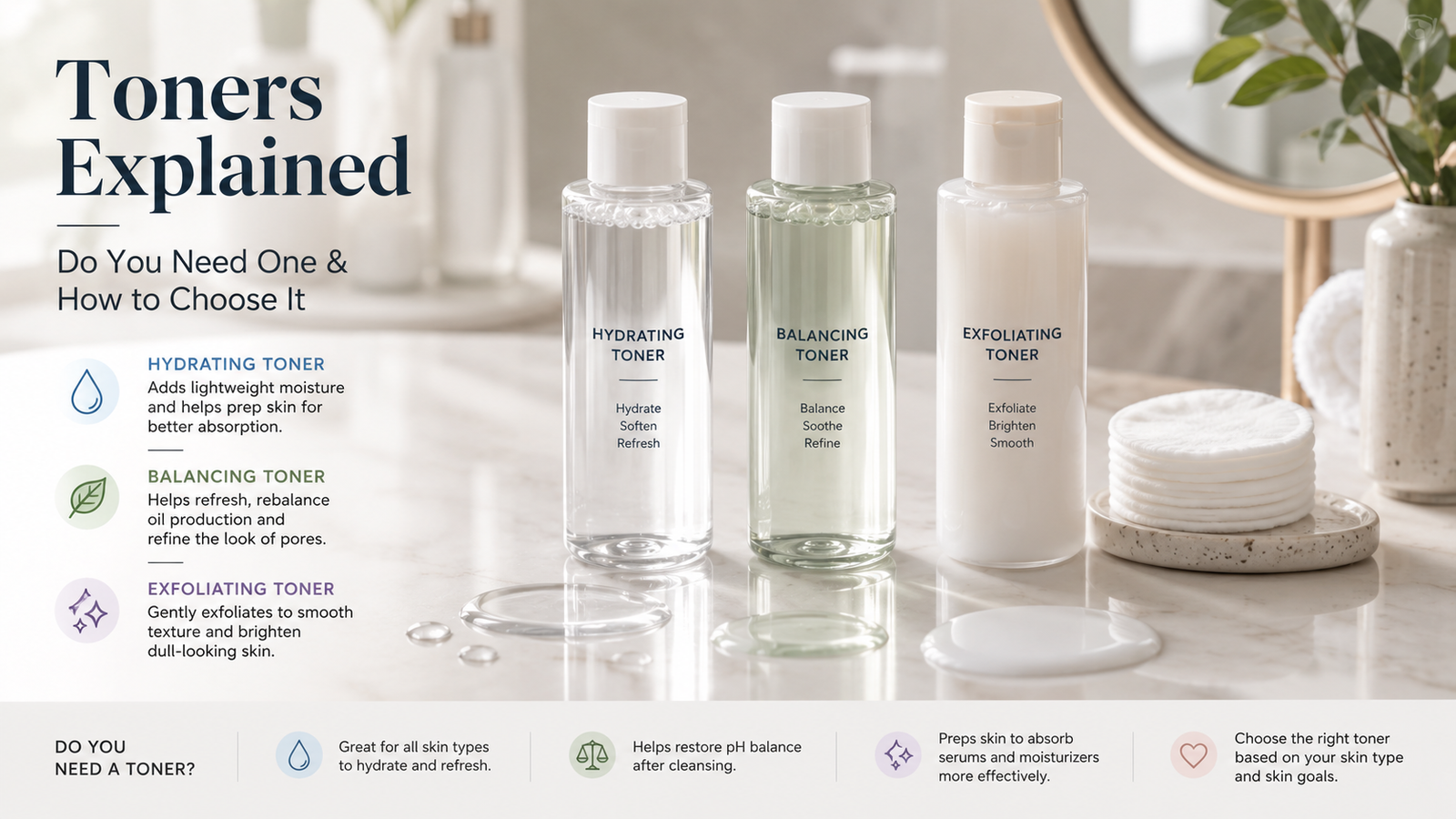
Toner is one of the most confusing skincare categories because the word can describe very different products.
One toner may be designed to:
- hydrate;
- soothe;
- reduce surface oil;
- exfoliate;
- support the skin barrier;
- prepare the skin for later products.
Another may contain strong exfoliating acids and function more like an active treatment.
This is why asking:
“Do I need a toner?”
is not quite the right question.
A better question is:
“Is there a specific job in my routine that a toner would perform better than the products I already use?”
For many people, the answer is:
no
and that is completely fine.
A basic skincare routine can work extremely well with:
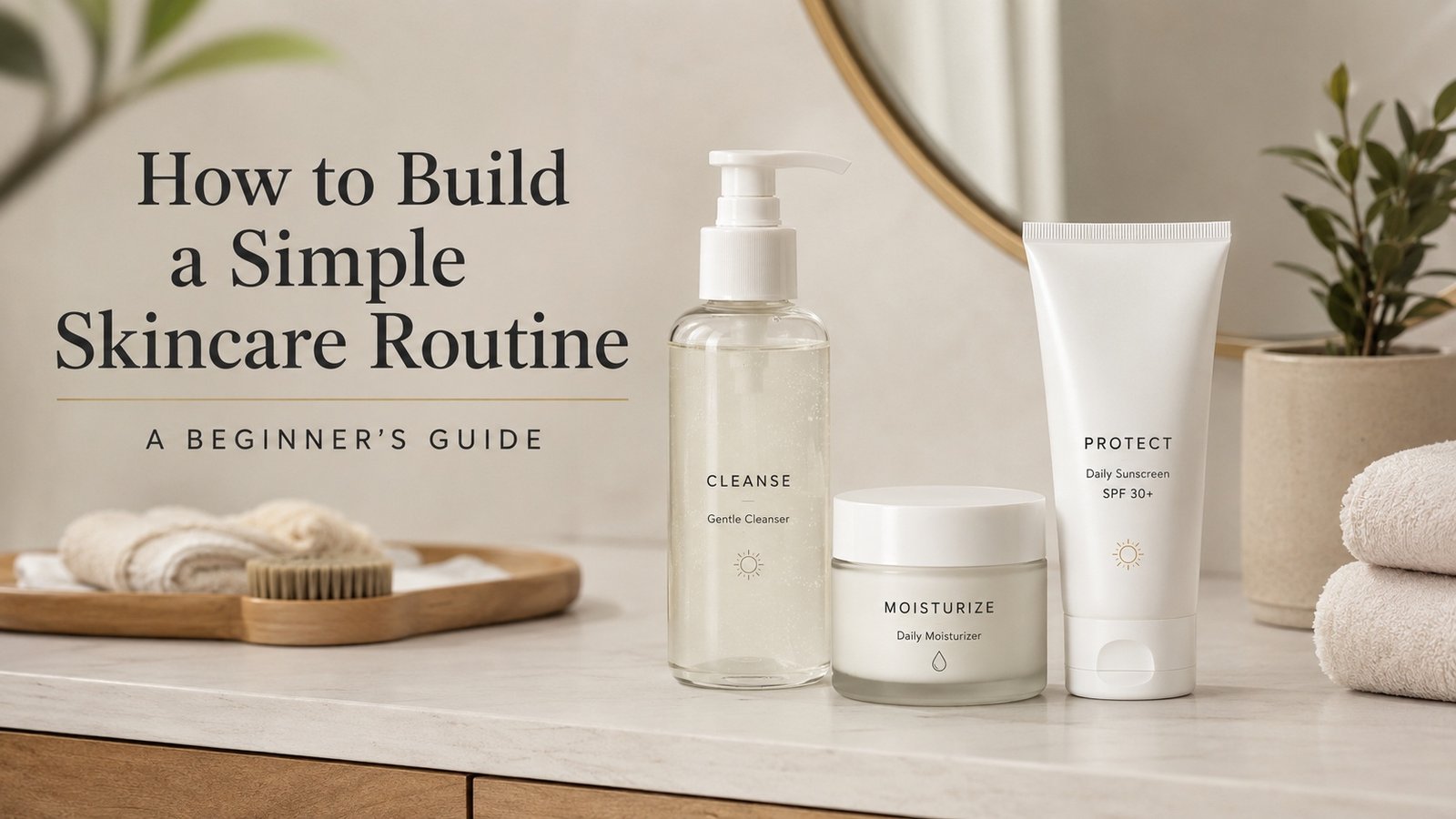
cleanser → moisturizer → sunscreen
Toner is optional.
But when chosen carefully, it can be a useful way to add:
- lightweight hydration;
- soothing ingredients;
- gentle exfoliation;
- targeted oil-control support.
The key is understanding what kind of toner you are actually buying.
What Is a Toner?
A toner is generally a liquid skincare product applied after cleansing and before:
- serums;
- moisturizer;
- sunscreen.
Historically, toners were often associated with strongly astringent formulas designed to remove:
- residual cleanser;
- excess oil;
- makeup.
Many contained high levels of:
- alcohol;
- witch hazel;
- other astringent ingredients.
Modern toners are much broader.
They may now function as:
- hydrating treatments;
- exfoliating liquids;
- soothing products;
- barrier-support products.
The category has changed significantly.
That is why the word toner alone tells you almost nothing about what a product will do.
Do You Actually Need Toner?
No.
Toner is not an essential skincare category.
Your skin does not require:
cleanser → toner → essence → serum → moisturizer
simply because these steps exist.
A toner is useful only when it adds something your existing routine lacks.
For example:
If Your Skin Feels Dry After Cleansing
A hydrating toner may help.
If You Have Clogged Pores
A salicylic-acid toner may function as your exfoliating treatment.
If Your Skin Feels Irritated
A simple soothing toner may provide additional comfort.
If Everything Already Works Well
You probably do not need toner.
Adding products without a clear purpose can increase:
- cost;
- complexity;
- irritation risk.
What Was Toner Originally Used For?
Older cleansers could sometimes leave behind:
- soap residue;
- an alkaline feel.
Traditional toners were designed partly to help remove residue and restore a more comfortable surface.
Modern facial cleansers are generally formulated much more effectively.
This means you usually do not need toner simply to “finish cleansing.”
If your cleanser leaves significant residue, the better solution may be choosing a better cleanser.
Does Toner Remove Leftover Dirt?
It can remove some residual:
- makeup;
- oil;
- debris.
But that should not be its main job.
If a cotton pad remains visibly dirty after toning every evening, your cleansing step may be inadequate.
A toner should not compensate for poorly removed:
- sunscreen;
- makeup.
Use an appropriate cleanser first.
Does Toner Balance Skin pH?
This is one of the most common toner claims.
Skin naturally has a mildly acidic surface environment.
Some older soaps could temporarily raise skin pH significantly.
Modern facial cleansers are often formulated closer to skin-compatible pH ranges.
The skin can also naturally restore its surface pH over time.
Therefore, you generally do not need toner simply to “rebalance pH” after using a well-formulated cleanser.
A toner may still be useful for other reasons.
But pH balancing alone is rarely a compelling reason to add one.
The Main Types of Toners
Modern toners can broadly be divided into:
- hydrating toners;
- soothing toners;
- exfoliating toners;
- astringent/oil-control toners;
- barrier-support toners.
Some products combine several functions.
Understanding the category is more useful than shopping by the word toner.
Hydrating Toners
Hydrating toners are lightweight liquids designed to increase surface hydration.
They often contain humectants such as:
- glycerin;
- hyaluronic acid;
- panthenol;
- beta-glucan;
- propanediol.
They can be useful for:
- dry skin;
- dehydrated skin;
- skin that feels tight after cleansing.
What Does a Hydrating Toner Actually Do?
It provides a thin layer of water and water-binding ingredients.
This may make skin feel:
- softer;
- more comfortable;
- temporarily plumper.
However, water-based hydration can evaporate.
That is why a hydrating toner often works best followed by:
- moisturizer.
Think of it as:
hydration layer → moisturizer to help retain it
rather than complete moisturization by itself.
Do You Need Hydrating Toner and Hyaluronic Acid Serum?
Usually not.
These products may perform very similar jobs.
If your toner already contains:
- glycerin;
- hyaluronic acid;
- panthenol;
and leaves your skin comfortable, a separate hydrating serum may add little.
Try simplifying.
For many people:
hydrating toner + moisturizer
or:
hydrating serum + moisturizer
is enough.
You do not necessarily need both.
Hydrating Toner for Dry Skin
Dry skin can benefit from:
- humectants;
- soothing ingredients.
A useful routine might be:
- Gentle cleanser
- Hydrating toner
- Moisturizer
- Sunscreen in morning
But the moisturizer remains the more important step.
If choosing between:
- expensive toner;
- adequate moisturizer;
prioritize moisturizer.
Hydrating Toner for Oily Skin
Oily skin can also be dehydrated.
A lightweight toner can provide hydration without adding much:
- oil;
- richness.
This may be useful if heavier serums make your skin feel:
- sticky;
- greasy.
Look for:
- glycerin;
- panthenol;
- hyaluronic acid.
Then use a lightweight moisturizer if needed.
What Is Dehydrated Skin?
Dehydration refers to insufficient water in the upper skin layers.
It can occur in:
- dry;
- oily;
- combination skin.
Signs may include:
- tightness;
- dullness;
- fine dehydration lines;
- skin feeling oily but uncomfortable.
Dehydration can be worsened by:
- harsh cleansing;
- excessive exfoliation;
- dry environment.
A hydrating toner can help, but you should also correct the cause.
Soothing Toners
Soothing toners are designed to improve skin comfort.
They may contain ingredients such as:
- panthenol;
- centella asiatica;
- beta-glucan;
- allantoin;
- colloidal oatmeal;
- aloe;
- green tea.
They can be useful when skin feels:
- mildly irritated;
- dry;
- uncomfortable.
Can Soothing Toner Treat Skin Disease?
No.
A soothing toner can improve cosmetic comfort.
It cannot adequately treat conditions such as:
- eczema;
- rosacea;
- dermatitis.
If you have persistent:
- redness;
- itching;
- burning;
- rash;
professional evaluation may be needed.
Centella Toners
Centella asiatica is popular in skincare marketed for:
- soothing;
- barrier support.
Centella-containing toners may be useful for sensitive-feeling skin.
But one botanical extract does not guarantee the product will be gentle.
Check whether the formula also contains:
- fragrance;
- essential oils;
- exfoliating acids.
Aloe Toners
Aloe may provide:
- lightweight hydration;
- soothing sensation.
But aloe does not automatically make a product appropriate for sensitive skin.
A heavily fragranced aloe toner can still irritate.
Judge the whole formula.
Green Tea Toners
Green tea provides antioxidant compounds and may have soothing properties.
It can be a useful ingredient.
But it is not essential.
A toner containing green tea should still be chosen based on:
- overall formula;
- your skin concern.
Exfoliating Toners
Exfoliating toners contain active ingredients such as:
- glycolic acid;
- lactic acid;
- mandelic acid;
- salicylic acid;
- PHA.
Despite being called toner, these should be treated as exfoliating treatments.
That means they require the same caution as:
- acid serums;
- exfoliating pads.
AHA Toners
AHA toners may contain:
- glycolic acid;
- lactic acid;
- mandelic acid.
They are generally used for:
- dullness;
- surface roughness;
- uneven-looking tone.
They can be effective.
But daily use may be too much depending on:
- concentration;
- skin tolerance;
- other products.
Glycolic Acid Toners
Glycolic acid can provide relatively strong surface exfoliation.
It may help improve:
- roughness;
- dullness;
- superficial pigmentation.
But it can also cause:
- stinging;
- redness;
- over-exfoliation.
If you are new to acids, do not assume a popular 7% glycolic toner should automatically be used every evening.
Start slowly.
Lactic Acid Toners
Lactic acid can offer:
- exfoliation;
- humectant properties.
It may be somewhat easier to tolerate than stronger glycolic formulas for some people.
Useful for:
- dry;
- dull;
- mildly textured skin.
But concentration still matters.
Mandelic Acid Toners
Mandelic acid has a larger molecular structure than glycolic acid.
It is often chosen for gentler exfoliation.
It may be useful for:
- uneven tone;
- mild congestion;
- sensitive-feeling skin that does not tolerate stronger AHAs.
Again, gentler does not mean irritation is impossible.
BHA Toners
BHA toners usually contain:
salicylic acid
They can be particularly useful for:
- oily skin;
- blackheads;
- clogged pores;
- acne-prone routines.
Because salicylic acid is oil-soluble, it can work within the oily environment around pores.
Salicylic Acid Toner for Blackheads
This can be one of the more practical toner uses.
A simple routine might be:
Evening
- Cleanser
- Salicylic-acid toner
- Moisturizer
You do not need:
- salicylic cleanser;
- BHA toner;
- separate BHA serum;
all together.
Choose one main salicylic-acid treatment.
PHA Toners
PHA toners may contain:
- gluconolactone;
- lactobionic acid.
They generally provide gentler exfoliation.
They may suit:
- sensitive-feeling skin;
- people new to acids.
They can also provide some humectant effects.
Is Exfoliating Toner Actually a Toner?
From a routine perspective, it is better to think of it as:
an exfoliant in liquid form
rather than a basic toner.
This distinction helps prevent accidentally stacking too many actives.
For example:
glycolic toner + exfoliating serum + retinoid
can create much more irritation than the word toner suggests.
Astringent Toners
Astringent toners are designed to reduce:
- surface oil;
- visible shine.
Traditional formulas often contain:
- alcohol;
- witch hazel.
These can create an immediate feeling of:
- tightness;
- cleanliness.
But that sensation does not automatically mean the skin is healthier.
Alcohol-Based Toners
Some toners contain significant amounts of volatile alcohol.
This can make them:
- fast-drying;
- refreshing;
- effective at reducing surface oil temporarily.
They may work for some very oily skin types.
But they can also cause:
- dryness;
- irritation;
- tightness.
If your skin feels stripped after toner, it is probably not helping your routine.
Does Alcohol in Toner Cause More Oil Production?
The common claim that alcohol “forces the skin to produce extra oil” is oversimplified.
Sebum production is influenced by factors including:
- hormones;
- genetics.
However, aggressive drying can make the skin:
- irritated;
- uncomfortable;
- dehydrated.
So even if it does not directly increase sebaceous-gland output, an overly stripping toner may still be a poor choice.
Witch Hazel Toner
Witch hazel is a botanical ingredient traditionally used for its astringent properties.
It may temporarily reduce the appearance of:
- oiliness.
Some formulations are gentle.
Others contain substantial:
- alcohol;
- fragrance.
If you like witch hazel and your skin tolerates it, there is no requirement to avoid it.
But sensitive or dry skin may prefer something simpler.
Does Toner Shrink Pores?
No.
Pores are normal anatomical structures.
A toner cannot permanently reduce their physical size.
Astringent or oil-control toners may temporarily make pores appear smaller because they reduce:
- surface oil;
- shine.
Exfoliating toners may also reduce the appearance of congestion.
But permanent pore closure is not possible.
Barrier-Support Toners
Some toners are designed specifically to support the skin barrier.
They may contain:
- ceramides;
- panthenol;
- beta-glucan;
- cholesterol;
- fatty acids;
- ectoin.
These products often blur the line between:
- toner;
- essence;
- lightweight serum.
They can be useful for:
- dry;
- sensitive;
- over-treated skin.
Ceramide Toners
Ceramides are important components of the skin barrier.
A ceramide toner may provide lightweight barrier support.
But dry skin may still need a richer moisturizer.
Do not expect a watery ceramide product to replace all:
- emollient;
- occlusive support.
Ectoin in Toners
Ectoin is an ingredient increasingly used in products designed for:
- hydration;
- barrier support;
- environmental-stress protection.
It can be a useful addition.
But you do not need to seek it specifically if your current moisturizer already works well.
Toner vs Essence
These categories overlap significantly.
Toner
Traditionally used after cleansing.
Essence
Often marketed as a lightweight hydrating or treatment layer.
In practice, modern products can be almost identical.
A hydrating toner and essence may contain similar:
- humectants;
- soothing ingredients.
You generally do not need both.
Toner vs Serum
Serums are usually more concentrated or targeted.
A toner is generally:
- thinner;
- lighter.
But modern formulation makes this distinction blurry.
For example:
- salicylic toner;
- salicylic serum;
may perform nearly the same function.
Choose one based on:
- formula;
- strength;
- texture preference.
Toner vs Mist
A face mist is usually sprayed onto the skin.
It may provide:
- hydration;
- refreshment.
A toner is generally applied more deliberately after cleansing.
But again, the formulas may overlap.
You do not need both if they serve the same purpose.
Toner vs Micellar Water
Micellar water is primarily a cleansing product.
It is designed to help remove:
- makeup;
- oil;
- sunscreen.
Toner is generally a leave-on treatment used after cleansing.
Do not confuse the two.
Can Toner Replace Cleanser?
No.
Toner should not be used as the main method for removing:
- heavy makeup;
- sunscreen;
- excess oil.
Use a proper cleanser.
Can Toner Replace Moisturizer?
Usually no.
Hydrating toner adds water-binding ingredients, but most formulas lack enough:
- emollients;
- occlusives;
to adequately reduce water loss in dry skin.
Oily skin in very humid conditions may sometimes feel comfortable with toner alone.
But for many people, moisturizer remains useful.
Can Toner Replace Serum?
Sometimes.
If your toner already provides the active ingredient you want, you may not need a separate serum.
For example:
Toner Contains
- niacinamide;
- panthenol;
- humectants.
You may not need:
- separate niacinamide serum;
- separate hydration serum.
This can simplify the routine substantially.
Can Toner Replace Exfoliant?
Yes, if the toner itself contains a meaningful exfoliating ingredient.
For example:
- glycolic-acid toner;
- salicylic-acid toner.
Treat it as the exfoliating step.
Do not add a separate exfoliant automatically.
Toner for Dry Skin
Look for:
- glycerin;
- panthenol;
- hyaluronic acid;
- beta-glucan;
- ceramides.
Avoid formulas that leave the skin:
- tight;
- squeaky;
- stinging.
A simple routine:
- Gentle cleanser
- Hydrating toner
- Moisturizer
But toner remains optional.
Toner for Oily Skin
You have two main options.
If Oiliness Is the Main Concern
Consider a lightweight hydrating or oil-control toner.
If Congestion Is the Main Concern
Consider salicylic acid.
Avoid aggressively stripping the skin.
Oily skin still benefits from barrier support.
Toner for Combination Skin
You do not need to apply toner uniformly.
For example:
- salicylic toner on T-zone;
- hydrating toner on dry cheeks.
Or use one gentle hydrating formula across the face.
Targeted application can be useful.
Toner for Sensitive Skin
Look for:
- fragrance-free;
- alcohol-free or low-alcohol;
- soothing formulas.
Useful ingredients may include:
- panthenol;
- beta-glucan;
- centella;
- colloidal oatmeal.
Avoid adding an exfoliating toner simply because acids are popular.
Toner for Acne-Prone Skin
Salicylic-acid toner may help:
- clogged pores;
- blackheads.
Niacinamide-containing toner may support:
- oil balance;
- barrier function.
But acne treatment should be chosen according to the type and severity of acne.
Persistent inflammatory acne may require more effective therapies than toner.
Toner for Blackheads
Salicylic acid is the most logical toner ingredient.
Use consistently but not aggressively.
A basic routine:
- Gentle cleanser
- BHA toner
- Moisturizer
Avoid:
- squeezing;
- pore strips;
- scrubbing;
as your main strategy.
Toner for Whiteheads
Salicylic acid may help with closed comedones.
AHAs may also support surface turnover.
But do not combine several acids immediately.
Start with one.
Toner for Dull Skin
Consider:
- hydrating toner;
- mild AHA toner.
Which one depends on the cause.
If Skin Is Dry and Tight
Hydrate.
If Skin Is Rough and Congested
Gentle exfoliation may help.
Do not assume all dull skin needs acid.
Toner for Hyperpigmentation
Some toners contain ingredients such as:
- AHA;
- niacinamide;
- licorice extract;
- tranexamic-acid derivatives depending on formula.
They may support a pigmentation routine.
But sunscreen remains essential.
A brightening toner without sun protection is unlikely to provide the result you want.
Toner for Post-Acne Marks
A mild AHA or niacinamide toner may help.
But deeper skin tones should be particularly careful about over-exfoliation because irritation can worsen:
- post-inflammatory hyperpigmentation.
Use gradual treatment.
Toner for Mature Skin
Mature skin often benefits more from:
- hydration;
- barrier support;
than aggressive astringency.
Look for:
- glycerin;
- panthenol;
- ceramides;
- peptides if desired.
A toner can provide a comfortable lightweight layer before cream moisturizer.
But it is not necessary.
Toner for Dehydrated Skin
This is one of the better uses for toner.
Look for:
- humectants;
- minimal irritants.
Apply after cleansing and follow with moisturizer.
You can even use a slightly richer hydrating toner instead of adding multiple serums.
Toner for Rosacea-Prone Skin
Avoid aggressive:
- alcohol-based;
- exfoliating;
- fragranced toners;
unless you already know they are tolerated.
A simple soothing toner may be comfortable.
But persistent rosacea symptoms require appropriate treatment.
Toner for Eczema-Prone Skin
During active eczema, simplify the routine.
A toner is usually unnecessary.
Prioritize:
- gentle cleansing;
- appropriate moisturizer;
- medical treatment where required.
Do not apply exfoliating toner to:
- cracked;
- inflamed skin.
Toner for Teenagers
Teenagers do not automatically need toner.
If the skin is:
- oily;
- acne-prone;
a salicylic-acid product may be useful.
But the routine should remain simple:
cleanser → acne treatment if needed → moisturizer → sunscreen
Toner is just one possible format for the treatment step.
Toner for Men
Skin concerns determine toner choice, not gender.
If you have:
- oily skin;
- blackheads;
a BHA toner may help.
If your skin feels tight after shaving:
- hydrating/soothing toner may be more appropriate.
Toner After Shaving
Shaving can temporarily make the skin more sensitive.
Avoid strong acid toners immediately afterward if they:
- sting;
- burn.
A soothing toner may be comfortable.
But a simple moisturizer may be enough.
Toner After Waxing or Threading
Avoid strong exfoliating toner immediately after:
- waxing;
- threading.
The skin may already be irritated.
Use:
- gentle;
- fragrance-free products;
until the area is comfortable.
Toner After Sun Exposure
If skin is sunburned, skip exfoliating toner.
Use:
- gentle skincare;
- soothing moisturizer.
Hydrating toner may feel comfortable if it does not sting, but it is optional.
Toner After Chemical Peels
Do not use random toners after professional peels.
Follow your treatment provider’s aftercare instructions.
The skin may be temporarily more vulnerable to:
- acids;
- alcohol;
- fragrance.
Toner After Microneedling or Laser
Again, follow professional aftercare.
A routine normally tolerated by intact skin may be inappropriate immediately after procedures.
Toner With Vitamin C
You can use toner before vitamin C.
For example:
cleanser → hydrating toner → vitamin C → moisturizer → sunscreen
But the toner is optional.
Avoid using a strong exfoliating toner with acidic vitamin C if your skin becomes irritated.
Toner With Niacinamide
This combination is generally easy to use.
But check for duplication.
If your toner already contains a useful concentration of niacinamide, you may not need a separate serum.
Toner With Retinoids
Hydrating toner can work well before a retinoid.
Example:
- Cleanser
- Hydrating toner
- Allow skin to dry if your retinoid requires dry application
- Retinoid
- Moisturizer
Strong exfoliating toner plus retinoid may cause irritation.
Use on separate nights when necessary.
Toner With AHA or BHA
If your toner already contains:
- AHA;
- BHA;
it is your exfoliating step.
Do not automatically follow it with another acid serum.
Toner With Benzoyl Peroxide
If you use benzoyl peroxide for acne, a hydrating toner may help with:
- dryness.
But adding an exfoliating toner can create extra irritation.
Keep the routine focused.
Toner With Azelaic Acid
A hydrating toner can be used before azelaic acid.
An exfoliating toner may be too much for some skin types.
If stinging increases, simplify.
Toner With Moisturizer
This is one of the simplest combinations.
Apply:
toner → moisturizer
The moisturizer helps reduce water loss after the toner.
Should Toner Go on Wet or Dry Skin?
Hydrating toner can generally be applied to:
- slightly damp;
- dry skin.
Exfoliating toner is often best applied according to the manufacturer’s directions, frequently to:
- clean;
- dry skin.
Follow the product instructions.
Should You Apply Toner With Hands or Cotton Pad?
Both can work.
Applying With Hands
Advantages:
- less product waste;
- less friction.
Method:
- Pour a small amount into clean palm.
- Press or pat onto skin.
This works particularly well for hydrating toners.
Applying With Cotton Pad
Advantages:
- convenient for watery formulas;
- can provide even distribution.
But the pad also introduces some:
- physical friction;
- product absorption.
Do not scrub.
For exfoliating toner, gentle wiping is enough.
Do Cotton Pads Make Toner More Effective?
No.
They are simply an application tool.
The toner works because of the ingredients in the formula.
Aggressive wiping does not increase effectiveness.
Can You Spray Toner?
Some toners come in mist bottles.
This can work well for:
- hydration;
- refreshment.
Make sure enough product reaches the skin evenly.
Avoid inhaling spray unnecessarily.
How Much Toner Should You Use?
Enough to lightly cover the skin.
You do not need to:
- soak the face;
- saturate multiple cotton pads.
A thin even layer is generally enough.
More toner does not mean more benefit.
How Often Should You Use Toner?
Frequency depends completely on toner type.
Hydrating Toner
Can often be used:
- once;
- twice daily;
if tolerated.
Exfoliating Toner
May be used:
- once or twice weekly initially;
- more frequently only if appropriate and tolerated.
Astringent Toner
Use cautiously.
If it causes persistent tightness, reduce or discontinue.
Can You Use Toner Twice a Day?
Hydrating toner: often yes.
Strong acid toner: not necessarily.
Do not judge frequency by the product category.
Judge it by the ingredients.
Can You Use Toner Every Day?
Yes, if it is a gentle hydrating toner.
An exfoliating toner may not need daily use.
Your skin does not benefit from forcing daily exfoliation simply because a product is called toner.
What Is the “7 Skin Method”?
The 7 Skin Method involves applying multiple layers of hydrating toner.
The idea is to build:
- hydration;
through repeated thin layers.
You do not literally need seven layers.
For some people, two or three thin applications can feel:
- plumping;
- hydrating.
But seven layers may simply create:
- stickiness;
- unnecessary product use.
Use as many layers as actually improve your skin.
Can Layering Toner Replace Moisturizer?
Usually not for dry skin.
Several water-based layers still may not provide enough:
- emollience;
- occlusion.
Follow with moisturizer if your skin needs it.
Toner in Hot and Humid Weather
Lightweight hydrating toners can feel comfortable in heat.
Oily skin may prefer:
toner → sunscreen
in the morning if sunscreen provides enough moisturization.
Avoid heavy layering.
Toner in Cold Weather
Dry winter air may make hydrating toner more useful.
But follow it with:
- cream;
- richer moisturizer.
A watery toner alone will usually not provide enough protection from water loss.
Toner in Air-Conditioned Environments
Air conditioning can contribute to dryness.
A hydrating toner can provide an additional layer.
But the most important step remains adequate:
- moisturizer.
Can Toner Be Used During the Day?
Yes.
A mist-style toner can be used for refreshment.
But repeatedly spraying water-rich products onto the face without moisturizer may not help much if the environment is very dry.
Hydration needs to be retained.
Can Toner Be Used Over Makeup?
Some hydrating mist toners can be sprayed over makeup.
This may provide:
- temporary freshness.
But it is not necessary.
A heavy spray may disturb:
- foundation;
- powder.
Does Toner Help Makeup Apply Better?
Hydrating toner may improve:
- skin softness;
- surface hydration.
This can make makeup sit more smoothly on dry skin.
But moisturizer is usually more important.
If makeup is still patchy, address:
- skin preparation;
- foundation compatibility.
Toner Before Makeup
A simple routine:
- Cleanser
- Hydrating toner if used
- Moisturizer
- Sunscreen
- Makeup
Allow each layer to settle.
Do not create ten wet skincare layers underneath foundation.
Toner and Sunscreen
Morning order:
cleanser → toner → serum if used → moisturizer if needed → sunscreen
Do not apply toner over sunscreen as part of your initial routine because that may disturb the sunscreen film.
Toner at Night
Night is an easy time to use exfoliating toners.
For example:
Exfoliation Night
- Cleanser
- AHA/BHA toner
- Moisturizer
You do not need multiple additional actives.
Toner and Double Cleansing
If you wear:
- makeup;
- water-resistant sunscreen;
double cleansing may be useful.
Example:
- Cleansing balm/oil
- Water-based cleanser
- Toner if needed
Toner should not function as the third cleaning step simply to keep removing residue.
If cleansing is effective, the toner should primarily treat or hydrate.
Does Toner Close Pores After Cleansing?
No.
Pores do not physically open during cleansing and close afterward.
Cold toner may make skin feel:
- tight;
- refreshed.
That sensation is not literal pore closure.
Does Toner Detox Skin?
No.
Your:
- liver;
- kidneys;
perform major detoxification functions.
A face toner may remove oil or provide skincare ingredients.
It does not “draw toxins” out of the skin.
Does Toner Tighten Skin?
Astringent toners can create a temporary tight feeling.
That is not permanent skin tightening.
Hydrating toners may temporarily make skin appear:
- plumper;
- smoother.
Again, this is not structural tightening.
Does Toner Brighten Skin?
Some can.
Hydrating toners may create temporary brightness by improving:
- surface hydration.
Exfoliating or pigment-focused toners may improve uneven tone over time.
But the ingredient determines the effect, not the toner category.
Does Toner Reduce Acne?
Certain toners can support acne management if they contain useful ingredients such as:
- salicylic acid.
But a generic hydrating toner does not treat acne simply because it says:
- clarifying;
- purifying.
Look for meaningful active ingredients.
Does Toner Reduce Oil?
Astringent or salicylic-acid formulas may reduce:
- surface oil;
- visible shine.
But oil production is influenced by:
- genetics;
- hormones.
Toner cannot permanently stop sebaceous glands from producing oil.
Does Toner Help Blackheads?
A salicylic-acid toner may help manage blackheads over time.
A plain alcohol toner may make the nose feel clean but will not provide the same pore-directed exfoliating effect.
Choose based on mechanism.
Does Toner Help Large Pores?
It can improve the appearance temporarily.
For example:
- BHA may reduce congestion;
- oil-control toner may reduce shine.
But pore size cannot be permanently closed with toner.
Does Toner Help Dark Spots?
Potentially, if it contains:
- AHA;
- niacinamide;
- other pigmentation-support ingredients.
But sunscreen is essential.
Do not expect toner alone to erase pigmentation.
Does Toner Help Fine Lines?
Hydrating toner may temporarily make dehydration lines less visible.
It cannot reverse established structural wrinkles.
For long-term anti-ageing goals, prioritize:
- sunscreen;
- retinoids where appropriate;
- consistent moisturization.
What About Fermented Toners?
Some products contain fermented ingredients.
These may provide:
- humectants;
- antioxidants;
- skin-conditioning compounds.
They can be pleasant formulas.
But fermentation itself does not guarantee superior results.
People with highly reactive skin may also prefer simpler formulas.
Rice Toners
Rice-derived toners are popular for:
- hydration;
- brightening;
- soothing.
They may contain:
- rice extracts;
- fermented rice;
- humectants.
They can work well as hydrating toners.
But do not expect rice water alone to dramatically change pigmentation.
Snail Mucin Toners
Snail secretion filtrate may provide:
- humectant;
- skin-conditioning effects.
It can be useful for hydration.
But if you already use:
- snail essence;
- hydrating serum;
adding another snail toner may be redundant.
Probiotic and Prebiotic Toners
Some formulas are marketed for the skin microbiome.
They may contain:
- ferment lysates;
- prebiotic ingredients;
- postbiotic ingredients.
The science around cosmetic microbiome products is evolving.
Choose based on:
- formulation;
- hydration;
- tolerance;
rather than assuming the word probiotic guarantees better skin.
Niacinamide Toners
Niacinamide is common in toner formulas.
Potential benefits include support for:
- barrier function;
- oil regulation;
- uneven tone.
But concentrations do not need to be extremely high.
If your toner already contains niacinamide, a separate 10% niacinamide serum may be unnecessary.
Vitamin C Toners
Some toners contain:
- vitamin C;
- derivatives.
These can support antioxidant or brightening routines.
But stability matters.
A dedicated well-formulated vitamin C serum may provide a more targeted treatment.
You do not need vitamin C in every skincare step.
Peptide Toners
Peptides can be included in hydrating toner formulations.
They may be a useful bonus.
But peptides are not necessary for the core purpose of toner.
Do not pay substantially more simply because a watery product contains multiple peptides.
Tranexamic-Acid Toners
Some brightening toners include tranexamic acid.
Topical tranexamic acid is used in cosmetic routines targeting pigmentation.
But the effectiveness depends on:
- concentration;
- complete formula;
- consistency.
Sunscreen remains fundamental.
Alpha-Arbutin Toners
Alpha-arbutin may support routines targeting uneven pigmentation.
Again, the toner format is simply the delivery vehicle.
A serum containing the same active could serve a similar role.
Licorice-Extract Toners
Licorice-derived ingredients may provide:
- soothing;
- pigmentation-support benefits.
They can be useful additions.
But botanical extracts should not distract from core formulation quality.
Toner and Fragrance
Fragrance is common in toners because the product is often associated with a:
- fresh;
- spa-like feeling.
But fragrance does not improve:
- hydration;
- exfoliation;
- barrier function.
If your skin is sensitive, fragrance-free toner is often the safer choice.
Toner and Essential Oils
Essential oils may provide:
- fragrance;
- botanical appeal.
Examples include:
- lavender;
- peppermint;
- citrus.
They may also irritate susceptible skin.
A toner does not need essential oils to work effectively.
Toner and Menthol
Menthol creates cooling.
That can feel refreshing on oily skin.
But it can also irritate:
- sensitive;
- rosacea-prone skin.
Cooling sensation does not equal improved skin health.
Toner and Volatile Alcohol
Check ingredients such as:
- alcohol denat.;
- ethanol.
These may be used for:
- oil control;
- quick drying.
Some oily skin tolerates them well.
Dry or sensitive skin may not.
Judge based on the overall formula and how your skin feels after several uses.
“Alcohol-Free” Toners
Alcohol-free usually refers to the absence of volatile drying alcohols.
A product can still contain:
- fatty alcohols;
which are emollient ingredients.
Alcohol-free is not automatically superior, but it can be useful for:
- dry;
- sensitive skin.
Parabens in Toner
Toners are water-based products and need preservation.
Parabens are one type of preservative.
A paraben-free toner still requires another preservative system.
Do not use paraben-free as a shortcut for safety.
“Clean” Toners
Clean beauty lacks one universal scientific definition.
Different brands exclude different ingredients.
A clean-labelled toner is not automatically:
- safer;
- gentler;
- more effective.
Evaluate the actual formulation.
Natural Toners
Natural botanical waters may include:
- rose water;
- witch hazel;
- herbal extracts.
Natural does not automatically mean better tolerated.
Botanicals can cause allergies.
Use based on your skin response.
Rose Water Toner
Rose water may provide:
- light hydration;
- fragrance;
- pleasant sensory experience.
But it is not a strong treatment for:
- acne;
- pigmentation;
- pores.
If you enjoy it and tolerate it, it can be a simple cosmetic step.
DIY Rose Water
Homemade botanical waters can have problems with:
- contamination;
- preservation;
- stability.
Use properly preserved cosmetic products rather than storing homemade water-based preparations for extended periods.
Rice Water Toner at Home
Homemade rice water is popular online.
But home-prepared mixtures are not:
- standardized;
- properly preserved.
Fermentation or storage can increase contamination risk.
A formulated cosmetic is more predictable.
Lemon Juice Toner
Avoid using raw lemon juice as toner.
It can be:
- irritating;
- unpredictable;
- potentially photoreactive.
Use properly formulated skincare acids instead.
Apple Cider Vinegar Toner
DIY vinegar toners can have inconsistent:
- concentration;
- pH.
They may cause:
- irritation;
- chemical injury;
if improperly diluted.
There is little reason to choose vinegar when well-formulated cosmetic acids are available.
Baking Soda Toner
Avoid.
Baking soda is alkaline and can disrupt the skin’s surface environment.
It is not an appropriate facial toner.
Toner and Skin Purging
Hydrating toner should not cause purging.
An exfoliating toner containing:
- AHA;
- BHA;
may influence cell turnover.
But new breakouts can also indicate:
- irritation;
- product incompatibility.
Do not assume every worsening reaction is purging.
Toner and Breakouts
A particular toner may contribute to breakouts if:
- formula does not suit your skin;
- it irritates;
- it is too occlusive in combination with other products.
If breakouts repeatedly appear after starting a toner, remove it and reassess.
Toner and Skin Barrier Damage
Overusing exfoliating or astringent toners can contribute to barrier irritation.
Signs may include:
- moisturizer stinging;
- persistent tightness;
- redness;
- peeling.
If this happens, stop active toners temporarily.
Use:
gentle cleanser → moisturizer → sunscreen
until the skin is comfortable.
How to Introduce a Toner
For a simple hydrating toner:
- start once daily.
If comfortable, use more frequently if needed.
For an exfoliating toner:
- start once weekly;
- then possibly increase to twice weekly according to tolerance and product instructions.
Do not start multiple new products at the same time.
Patch Testing Toner
Patch testing can be useful if:
- your skin is reactive;
- the toner contains acids;
- there are many botanicals.
Apply a small amount to a limited area according to directions.
Watch for:
- burning;
- redness;
- swelling;
- itching.
How Long Does Toner Take to Work?
Depends on purpose.
Hydrating Toner
May improve comfort immediately.
Oil-Control Toner
May reduce visible shine quickly.
Exfoliating Toner
Texture or congestion improvements may take:
- weeks.
Pigmentation Toner
May require:
- several weeks to months.
Do not increase strength because results are not immediate.
What Should Toner Feel Like?
A hydrating toner should generally feel:
- comfortable;
- lightweight.
An acid toner may produce:
- mild temporary tingling;
depending on formula.
But toner should not routinely cause:
- burning;
- prolonged stinging.
Pain is not proof of effectiveness.
What if Toner Makes Skin Tight?
This may indicate:
- too much alcohol;
- excessive astringency;
- over-exfoliation.
If you enjoy the product but experience tightness, reduce use.
If tightness persists, switch to a gentler formula.
What if Toner Feels Sticky?
Hydrating toners may contain high levels of:
- glycerin;
- other humectants.
Try:
- using less;
- fewer layers.
If it remains uncomfortable, choose a lighter product.
What if Toner Pills Under Other Products?
Possible causes include:
- too much toner;
- polymer-heavy formula;
- layering several similar products.
Allow it to dry or settle.
Use smaller amounts.
If pilling continues, simplify the routine.
Does Expensive Toner Work Better?
Not necessarily.
Many basic toner functions rely on inexpensive ingredients such as:
- glycerin;
- panthenol;
- salicylic acid.
Luxury toners may offer:
- elegant textures;
- botanical blends;
- fragrance;
- premium packaging.
But they are not automatically more effective.
When Is a Premium Toner Worth It?
Possibly if you genuinely prefer its:
- texture;
- finish;
- formulation;
- sensory experience.
But toner is an optional step.
Do not overspend on it at the expense of:
- sunscreen;
- moisturizer;
- proven treatment products.
What Makes a Good Toner?
A good toner should have:
Clear Purpose
Hydrate, soothe, exfoliate or control oil.
Appropriate Strength
Especially for acid products.
Good Tolerability
No persistent irritation.
Useful Ingredients
Matched to your concern.
Simple Integration
It should fit easily into your routine.
No Redundant Function
It should not simply duplicate three products you already own.
How Many Toners Do You Need?
For most people:
zero or one
is enough.
Someone with combination skin might use:
- hydrating toner;
- occasional exfoliating toner.
But you do not need:
- hydrating toner;
- brightening toner;
- pore toner;
- calming toner;
- exfoliating toner;
all at once.
Choosing Your First Toner
If you are new to toner and simply want additional comfort:
choose a hydrating toner.
Look for ingredients such as:
- glycerin;
- panthenol;
- beta-glucan.
If your main concern is blackheads:
choose a salicylic-acid toner.
If your main concern is dullness:
consider a gentle AHA toner.
Do not choose a product just because the packaging says:
pore tightening
or:
deep cleansing
without checking what it actually contains.
A Simple Hydrating-Toner Routine
Morning
- Gentle cleanser or rinse
- Hydrating toner
- Moisturizer if needed
- Sunscreen
Evening
- Cleanser
- Hydrating toner
- Moisturizer
That is enough.
A Simple Toner Routine for Oily Skin
Morning
- Cleanser
- Lightweight hydrating toner if desired
- Sunscreen
Selected Evenings
- Cleanser
- Salicylic-acid toner
- Lightweight moisturizer
Avoid daily aggressive stripping.
A Simple Toner Routine for Dry Skin
- Gentle cleanser
- Hydrating toner
- Richer moisturizer
Optional:
- repeat a second thin toner layer if it genuinely improves comfort.
A Simple Routine for Combination Skin
- Cleanse.
- Apply salicylic toner only to:
- nose;
- forehead;
- chin;
if needed.
- Hydrating toner or no toner on cheeks.
- Moisturize.
You do not need identical treatment everywhere.
A Simple Routine for Sensitive Skin
- Gentle cleanser
- Fragrance-free soothing/hydrating toner if desired
- Simple moisturizer
- Sunscreen in morning
Skip toner entirely during:
- active irritation.
A Simple Routine for Blackheads
Two or Three Evenings Weekly, Depending on Tolerance
- Cleanser
- Salicylic-acid toner
- Moisturizer
Other evenings:
cleanser → moisturizer
Do not add a separate scrub.
A Simple Routine for Dull Skin
Once or Twice Weekly Initially
- Cleanser
- Mild AHA toner
- Moisturizer
Morning:
- sunscreen.
Increase frequency only if needed and tolerated.
A Simple Routine With Retinoid
Retinoid Night
- Cleanser
- Hydrating toner if desired
- Retinoid
- Moisturizer
Exfoliation Night
- Cleanser
- AHA/BHA toner
- Moisturizer
Keeping these on separate nights can reduce irritation.
Common Toner Mistakes
Thinking Toner Is Mandatory
It is not.
Using Toner to Compensate for Poor Cleansing
Fix the cleanser instead.
Buying Based on “Pore Tightening” Claims
Pores cannot be permanently closed.
Using Strong Alcohol Toner on Dry Skin
Can worsen discomfort.
Treating Exfoliating Toner Like Hydrating Toner
Acids require controlled frequency.
Using Acid Toner Every Day Immediately
Start slowly.
Applying Several Exfoliating Products Together
Count the whole routine.
Using Toner Until the Cotton Pad Comes Away Perfectly Clean
Your toner should not become a second round of aggressive cleansing.
Buying Multiple Hydrating Steps
Toner and serum may duplicate each other.
Assuming Tingling Means Effectiveness
It does not.
Using DIY Lemon or Vinegar Toners
Choose formulated skincare instead.
Toner Buying Checklist
Before buying, ask:
1. Why do I want a toner?
Hydration, soothing, exfoliation or oil control?
2. Is another product already doing that job?
If yes, toner may be redundant.
3. What type of toner is it?
Hydrating or active?
4. Does it contain AHA or BHA?
Treat it as an exfoliant.
5. Does it contain high levels of alcohol?
Relevant if your skin is dry or sensitive.
6. Does it contain fragrance or essential oils?
Relevant for reactive skin.
7. Am I already using a retinoid or acne treatment?
Avoid unnecessary irritation.
8. Can I use it consistently without discomfort?
That matters more than trendiness.
9. Does it simplify or complicate my routine?
Simpler is often better.
10. Would a better moisturizer or treatment serum solve the problem more directly?
If yes, prioritize that instead.
When Should You Stop Using a Toner?
Stop or reduce use if you develop:
- persistent burning;
- redness;
- rash;
- peeling;
- severe tightness.
If your skin becomes irritated after introducing an acid toner:
- discontinue it;
- simplify your routine.
If symptoms persist despite stopping the product, seek appropriate dermatological advice.
When Should You See a Dermatologist?
A toner cannot adequately treat every skin concern.
Professional advice may be useful for:
- persistent acne;
- painful cystic acne;
- significant hyperpigmentation;
- rosacea;
- eczema;
- unexplained chronic redness;
- repeated skincare reactions.
Do not keep changing toners when the underlying issue may require diagnosis or treatment.
The Physical Glow Takeaway
Toner is optional skincare, not a mandatory step between cleansing and moisturizing.
The right question is not:
“Which toner should everyone use?”
It is:
“What specific job do I need a toner to perform?”
Choose according to purpose:
- dry or dehydrated skin → hydrating toner with humectants such as glycerin or panthenol;
- sensitive-feeling skin → simple soothing toner with minimal irritants;
- blackheads or clogged pores → salicylic-acid toner;
- dullness or rough texture → gentle AHA toner;
- oily skin → lightweight hydration or carefully chosen oil-control treatment rather than aggressive stripping.
And remember:
- toner does not permanently shrink pores;
- toner does not need to “restore pH” after every modern cleanser;
- toner should not replace proper cleansing;
- hydrating toner usually does not replace moisturizer;
- exfoliating toner counts as an active exfoliant;
- burning and extreme tightness are not signs that toner is working better.
For many people, the best routine remains:
cleanser → moisturizer → sunscreen
with treatment products added only when necessary.
If a toner makes your routine:
more comfortable → more targeted → easier to maintain, it can be worth using.
If it simply adds another bottle without improving your skin, you can skip it completely.