Cardio Training Explained: How to Choose the Right Cardio Equipment
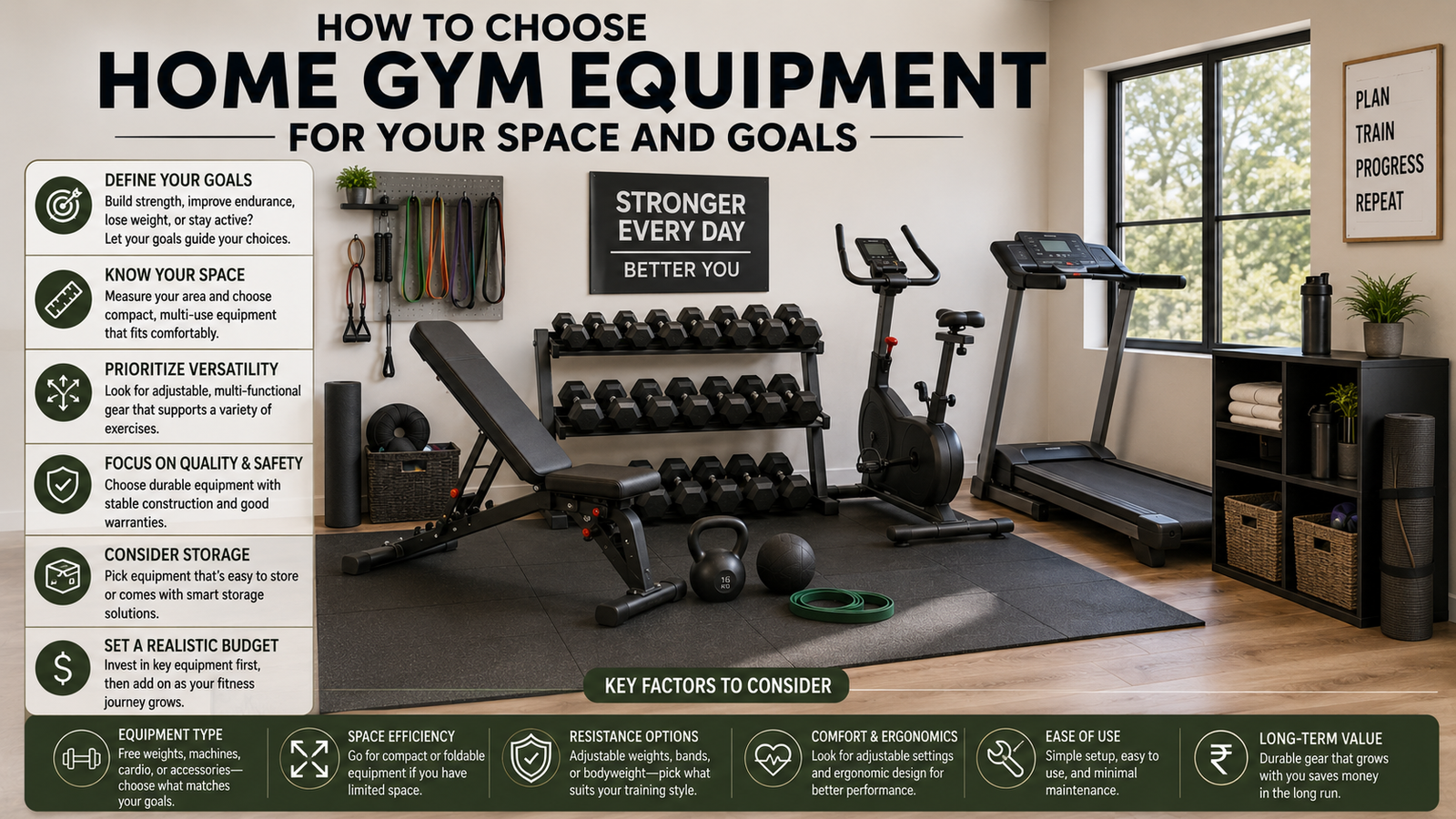
Learn how common cardio equipment differs and how to choose what suits your training, with practical guidance on fitness goals, impact level, space, workout preference and budget. This beginner-friendly guide helps you make a clear, informed choice without unnecessary complexity.
Cardio training can improve:
- cardiovascular fitness;
- endurance;
- work capacity;
- energy expenditure;
- general physical conditioning.
But choosing cardio equipment is often more difficult than deciding that you want to exercise.
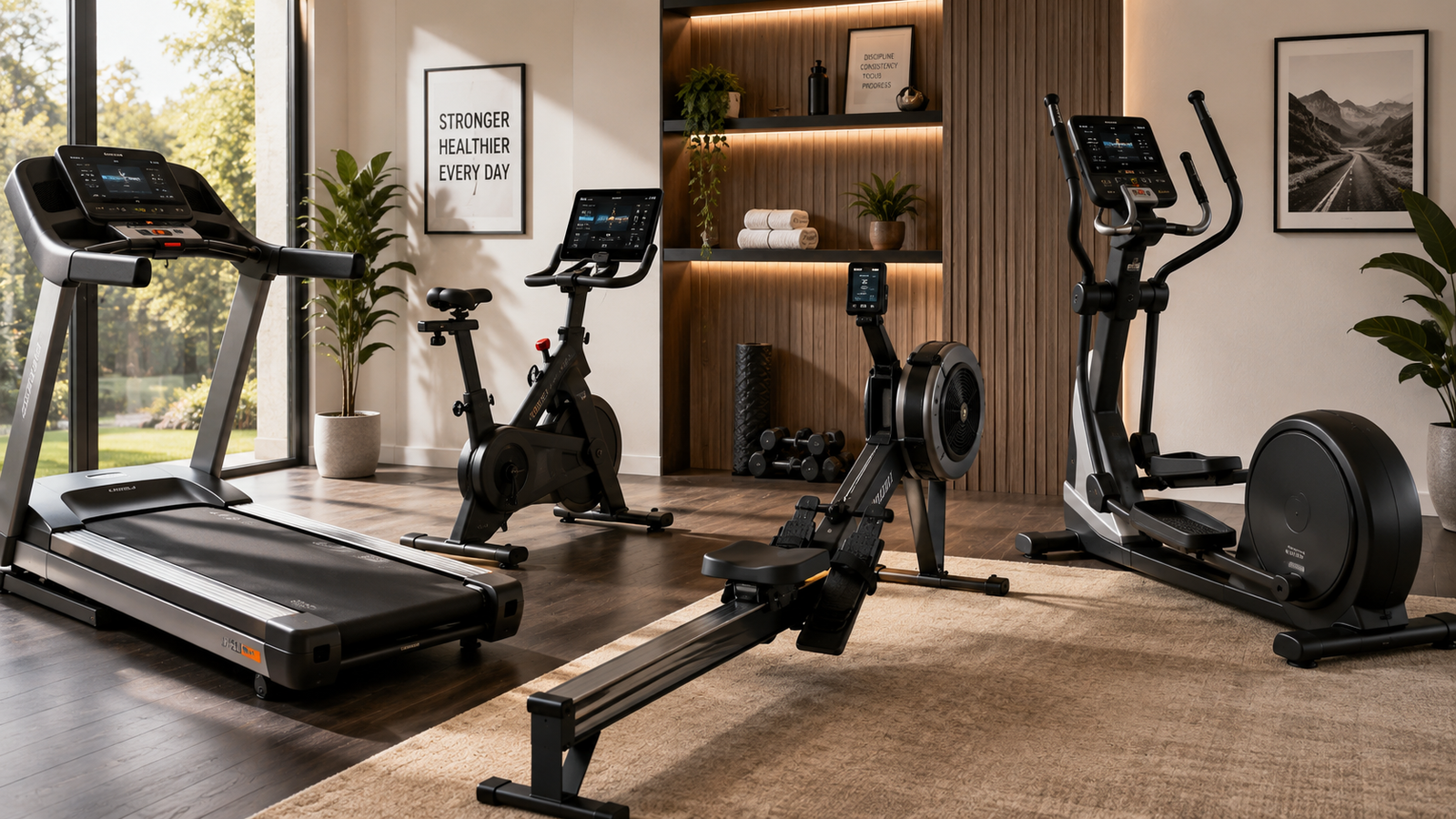
A treadmill, exercise bike, rowing machine, elliptical trainer and stepper can all provide effective cardiovascular workouts, yet they feel very different and place different demands on the body.
The right choice depends on:
your goal → current fitness level → joint tolerance → available space → preferred movement → budget → how consistently you will actually use the equipment
The best cardio machine is not necessarily the one that:
- burns the most calories;
- has the largest screen;
- offers the most resistance levels;
- costs the most.
It is the one that lets you train consistently at an appropriate intensity while fitting realistically into your routine.
What Is Cardio Training?
Cardiovascular exercise involves sustained activity that increases the demand on your:
- heart;
- lungs;
- circulatory system;
- working muscles.
Common examples include:
- walking;
- running;
- cycling;
- rowing;
- stair climbing;
- swimming;
- elliptical training;
- jumping rope.
Cardio can be performed:
- indoors;
- outdoors;
- with equipment;
- without equipment.
You do not need a machine to improve cardiovascular fitness.
Cardio equipment simply provides a controlled and convenient way to perform repetitive exercise.
What Does Cardio Training Improve?
Regular aerobic exercise can support:
- heart and circulatory health;
- aerobic capacity;
- stamina;
- blood-pressure management;
- metabolic health;
- body-weight management;
- mood;
- sleep;
- general physical function.
The exact benefit depends on:
- training intensity;
- duration;
- frequency;
- progression;
- overall health.
Cardio is not only for weight loss.
It is an important component of general fitness.
Cardio vs Strength Training
These are complementary rather than competing forms of exercise.
Cardio Training
Primarily develops:
- aerobic fitness;
- endurance;
- cardiovascular capacity.
Strength Training
Primarily develops:
- muscular strength;
- muscle mass;
- force production.
A balanced program may include both.
You do not need to choose between being:
- strong;
- cardiovascularly fit.
Do You Need Cardio Equipment?
No.
You can perform effective cardio through:
- outdoor walking;
- running;
- stairs;
- hiking;
- dance;
- sports;
- bodyweight circuits.
Cardio equipment becomes useful when you want:
- predictable conditions;
- indoor convenience;
- measurable resistance or speed;
- easier intensity control;
- year-round training.
It can be particularly valuable if:
- weather is unreliable;
- outdoor space is limited;
- you prefer exercising at home.
Start With Your Primary Goal
Before choosing equipment, ask:
What do I want the machine to help me do?
Different goals may favour different machines.
General Fitness
Most machines can work.
Choose the one you enjoy using.
Walking
Treadmill is the most obvious choice.
Running
Treadmill.
Low-Impact Cardio
Consider:
- exercise bike;
- elliptical;
- rowing machine depending on technique and tolerance.
High-Intensity Intervals
Useful options include:
- exercise bike;
- rowing machine;
- treadmill;
- air bike.
Full-Body Cardio
Rowing machines and some cross-trainers involve more upper-body participation.
Compact Home Training
Consider:
- folding treadmill;
- compact bike;
- stepper;
- jump rope depending on needs.
Joint-Friendly Exercise
Stationary cycling and elliptical training may feel more comfortable for some people.
There is no single machine that wins every category.
The Most Important Factor: Will You Use It?
This sounds simple, but it is often ignored.
Imagine two machines:
Machine A
Technically offers exceptional calorie expenditure and training versatility.
But you dislike using it.
Machine B
Provides slightly less training variety, but you enjoy it and exercise four times per week.
Machine B is likely the better purchase.
Consistency usually matters more than theoretical superiority.
Before buying, try the movement if possible.
Ask:
- Do I enjoy it?
- Can I imagine doing it for 20–40 minutes?
- Does anything hurt?
- Does the machine feel awkward?
Main Types of Cardio Equipment
Common categories include:
- treadmills;
- exercise bikes;
- rowing machines;
- elliptical trainers;
- steppers;
- jump ropes;
- air bikes;
- stair-climber machines;
- compact walking pads.
Each has different strengths and limitations.
Treadmills
Treadmills allow indoor:
- walking;
- jogging;
- running.
They are among the most versatile cardio machines because these movements are familiar to most people.
Who Is a Treadmill Best For?
A treadmill can be ideal if your main goal is:
- walking indoors;
- running;
- improving running fitness;
- incline walking.
It is also useful if you want easy control over:
- speed;
- incline;
- workout duration.
Advantages of Treadmills
They can provide:
- familiar movement;
- adjustable intensity;
- incline training;
- walking and running;
- structured intervals.
They are particularly useful for people who already enjoy:
- walking;
- running.
Disadvantages of Treadmills
Potential drawbacks include:
- large footprint;
- higher noise;
- substantial weight;
- electricity use;
- greater maintenance;
- higher cost.
Running also involves impact.
For some people with:
- joint discomfort;
- balance limitations;
another machine may feel more comfortable.
Incline Walking
Incline walking increases exercise demand without requiring running.
It may increase:
- heart rate;
- lower-body effort.
This makes treadmill incline useful for people who want higher-intensity walking.
But steep incline also increases demand on:
- calves;
- Achilles region;
- hips.
Progress gradually.
Walking Pads
Walking pads are compact treadmill-style devices designed primarily for walking.
They are often:
- thinner;
- lighter;
- easier to store.
Some can be used beneath standing desks.
Who Should Consider a Walking Pad?
Useful if your main goal is:
- increasing daily movement;
- light walking;
- compact indoor exercise.
They may be less suitable for:
- serious running;
- high-speed intervals;
- steep incline training.
Check the manufacturer’s:
- maximum speed;
- user-weight limit;
- intended use.
Exercise Bikes
Stationary bikes allow indoor cycling.
Common types include:
- upright bikes;
- recumbent bikes;
- indoor cycling/spin-style bikes;
- air bikes.
Cycling is often attractive because it is relatively low impact.
Upright Exercise Bikes
These resemble a traditional bicycle position.
They can provide:
- moderate-to-hard cardio;
- compact footprint;
- adjustable resistance.
Useful for:
- general fitness;
- interval training;
- home cardio.
Recumbent Bikes
Recumbent bikes provide:
- larger seat;
- back support;
- more reclined position.
They may feel more comfortable for people who prefer:
- additional stability;
- lower balance demands;
- supported posture.
They are often used for:
- lower-impact exercise;
- rehabilitation-style settings.
But suitability depends on the individual’s condition and professional advice where necessary.
Indoor Cycling Bikes
These are designed for more performance-oriented cycling.
They often offer:
- heavier flywheels;
- more adjustable riding positions;
- higher resistance;
- standing cycling capability.
They work well for:
- structured cycling sessions;
- high-intensity intervals.
Air Bikes
Air bikes use a fan for resistance.
Many involve:
- arms;
- legs.
Resistance generally increases as you push harder.
They are popular for:
- intervals;
- conditioning;
- short intense workouts.
They can be extremely demanding.
They are not necessarily the best choice for someone who wants:
- quiet;
- gentle;
- long-duration exercise.
Advantages of Exercise Bikes
Common advantages:
- relatively low impact;
- compact compared with treadmills;
- good for intervals;
- easier to control intensity;
- generally quieter.
Disadvantages of Exercise Bikes
Potential issues include:
- saddle discomfort;
- limited weight-bearing exercise;
- posture discomfort if poorly adjusted;
- less full-body involvement on standard bikes.
Correct bike setup matters.
Rowing Machines
Rowing machines simulate a rowing stroke.
The movement involves:
- legs;
- hips;
- trunk;
- arms.
This makes rowing a relatively full-body cardio option.
Who Should Consider a Rowing Machine?
It may suit people who want:
- cardiovascular training;
- significant muscle involvement;
- interval options;
- low-impact foot contact.
But rowing technique matters substantially.
Poor technique can increase stress on:
- lower back;
- shoulders.
What Muscles Does Rowing Use?
The rowing stroke involves:
- quadriceps;
- glutes;
- hamstrings;
- back;
- shoulders;
- arms;
- trunk.
However, rowing should not be thought of as a complete substitute for strength training.
It creates muscular demand, but the training stimulus differs from progressive resistance exercise.
Types of Rowing Resistance
Common rowing machines use:
- air;
- magnetic;
- water;
- hydraulic resistance.
Each creates a different feel.
Air Rowers
Air resistance responds strongly to effort.
Advantages:
- dynamic resistance;
- popular among performance users.
Potential drawback:
- noise.
Magnetic Rowers
Use magnetic resistance.
Advantages may include:
- quieter operation;
- smooth resistance.
They are often attractive for home environments.
Water Rowers
Use water tanks to create resistance.
They are often valued for:
- smooth feel;
- rowing-like sound.
Potential disadvantages include:
- size;
- tank maintenance;
- weight.
Hydraulic Rowers
Often more compact.
They may be useful where:
- storage space;
- cost;
are major concerns.
But movement feel can differ from larger air or water systems.
Elliptical Trainers
Elliptical trainers allow a gliding movement without the repeated impact associated with running.
They commonly involve:
- legs;
- moving handles for arms.
Who May Prefer an Elliptical?
Useful for people who want:
- steady cardio;
- low-impact movement;
- full-body participation;
- indoor exercise.
They can be particularly useful if running feels uncomfortable but you still want a standing cardio exercise.
Advantages of Ellipticals
Potential advantages:
- lower impact than running;
- smooth motion;
- adjustable resistance;
- upper-body participation.
Disadvantages of Ellipticals
Potential drawbacks:
- large footprint;
- machine stride may not fit everyone;
- movement feels less natural to some users.
Stride length is particularly important.
A very short stride can feel cramped for taller users.
Front-Drive vs Rear-Drive Ellipticals
Ellipticals may position the main drive system:
- front;
- rear;
- centre.
This influences:
- movement path;
- machine dimensions;
- feel.
There is no universally superior design.
Trying the machine is more useful than assuming one drive location is automatically better.
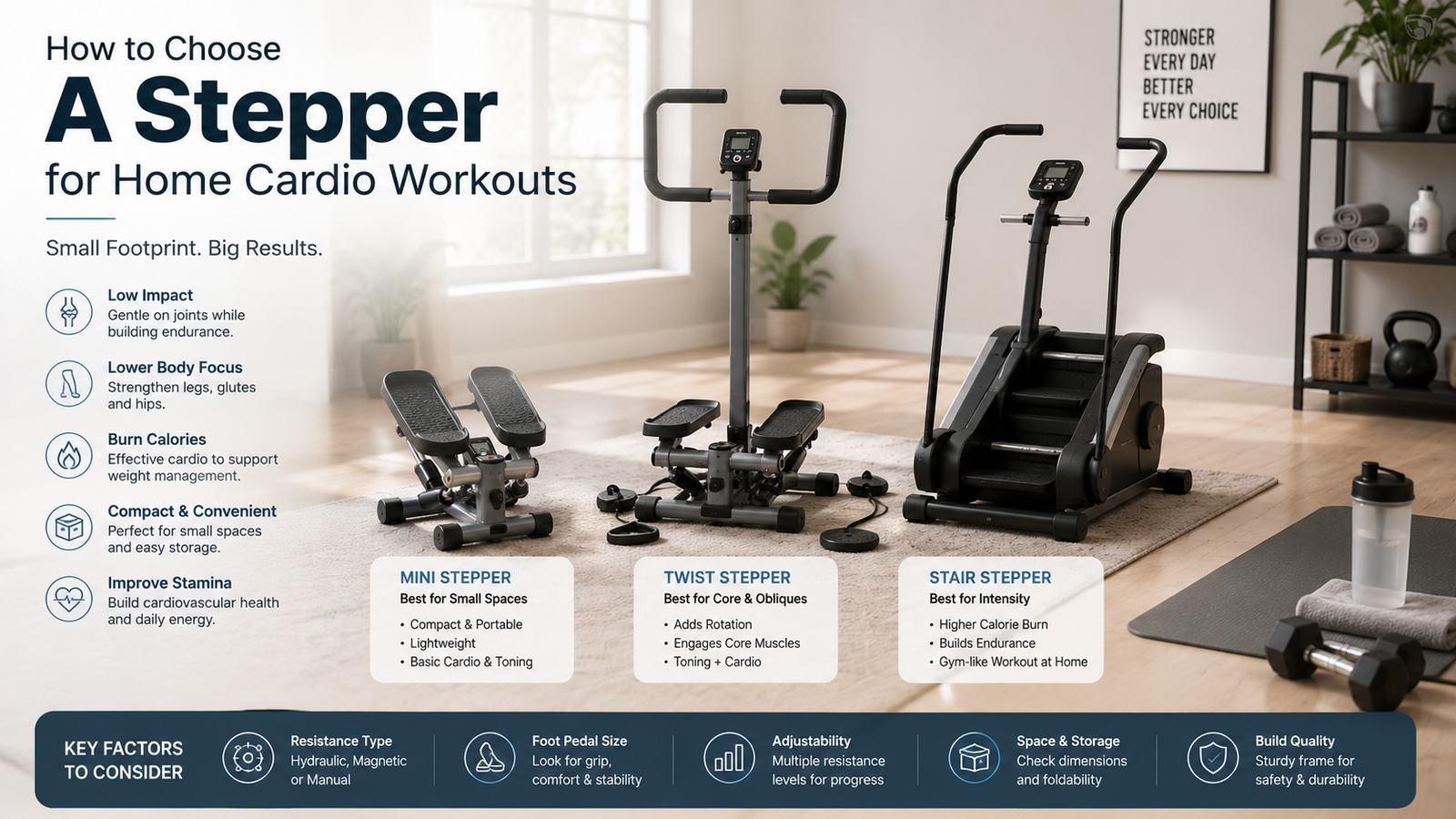
Steppers
Steppers simulate stair-climbing movements.
Compact versions may have two pedals.
Larger stair-climber machines may use rotating stairs.
They can create substantial lower-body demand.
Who Should Consider a Stepper?
Useful if you enjoy:
- stair-style cardio;
- short challenging sessions;
- compact equipment.
They place considerable work on:
- quadriceps;
- glutes;
- calves.
Compact Mini Steppers
Mini steppers are inexpensive and space-efficient.
They may work for:
- basic home cardio;
- short workouts.
But they typically offer less:
- stability;
- resistance control;
- workout variety;
than full-size machines.
Stair Climbers
Full stair-climbing machines can create intense cardiovascular demand.
They are common in commercial gyms.
Advantages:
- high effort without running speed;
- strong lower-body involvement.
Potential disadvantages:
- high fatigue;
- large machine size;
- balance demands.
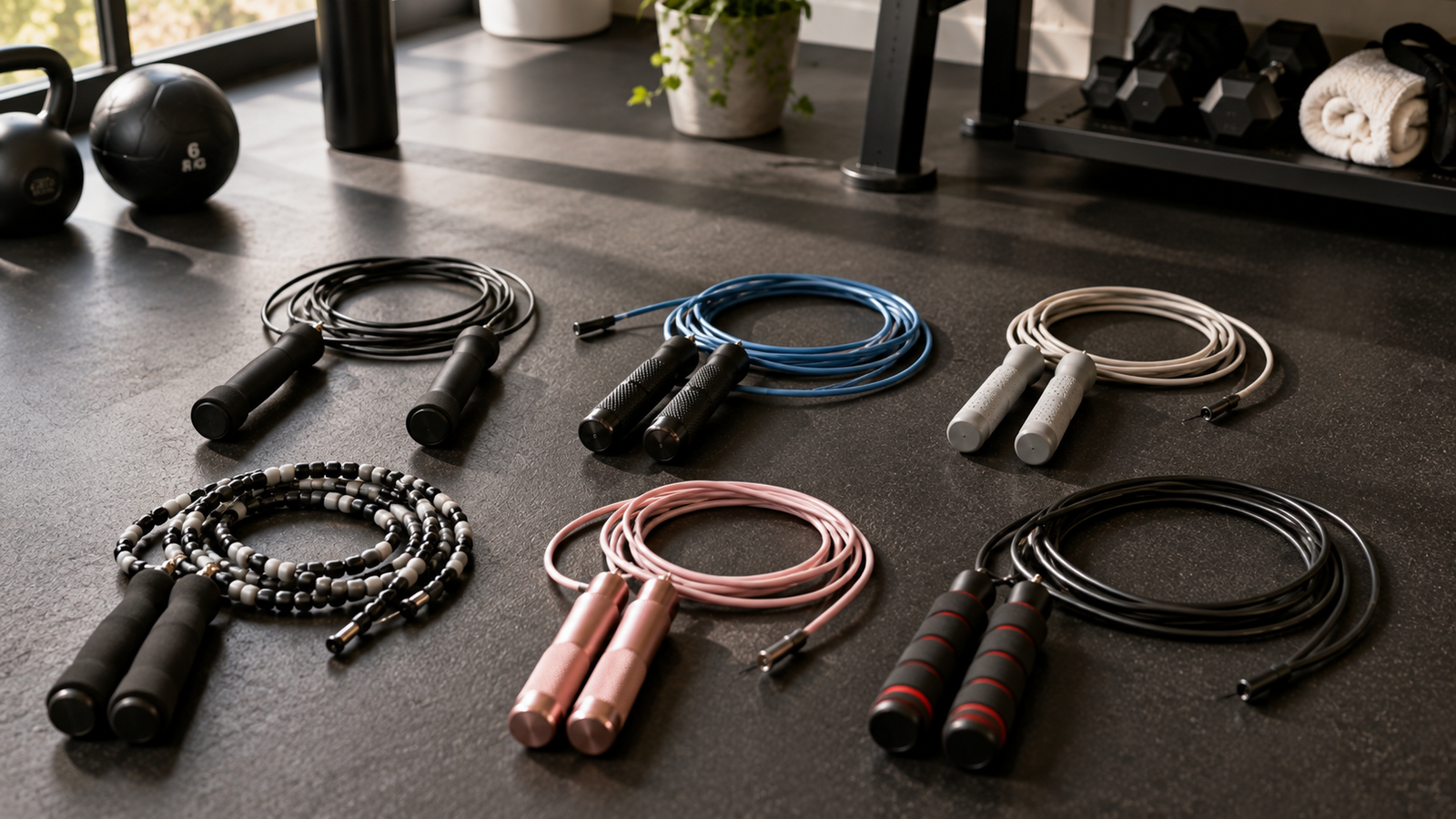
Jump Ropes
A jump rope is technically cardio equipment too.
It is:
- inexpensive;
- portable;
- extremely compact.
It can provide highly effective cardiovascular exercise.
Who Should Consider a Jump Rope?
Useful if you want:
- short intense cardio;
- portability;
- minimal equipment.
However, jumping is higher impact.
It may not suit people with certain:
- joint concerns;
- balance issues.
Technique and progressive volume matter.
Cardio Equipment and Impact
Impact refers to forces generated when the body contacts the surface.
Higher-Impact Options
Typically:
- running;
- jumping rope.
Lower-Impact Options
Typically:
- cycling;
- elliptical;
- rowing.
Lower impact does not mean:
- easier;
- less effective.
A hard cycling or rowing session can be extremely demanding without repeated running impact.
Which Cardio Machine Burns the Most Calories?
This question is less useful than it appears.
Energy expenditure depends on:
- body size;
- intensity;
- duration;
- fitness level;
- machine resistance;
- technique.
For example, a hard rowing session may burn more energy per minute than easy treadmill walking.
But 45 minutes of enjoyable walking may use more total energy than 10 minutes on a rower you hate.
Choose based on:
- sustainable effort;
- duration;
- consistency.
Do not buy equipment based only on a manufacturer’s calorie display.
Are Machine Calorie Counts Accurate?
Usually they should be treated as estimates.
Machines may calculate calories using:
- speed;
- resistance;
- user weight;
- heart rate;
- generic formulas.
Actual energy expenditure varies.
Use the number primarily for:
- rough comparison between your own workouts;
rather than as an exact measurement of calories burned.
Cardio Equipment for Weight Loss
No machine independently causes weight loss.
Body-weight change is influenced by overall energy balance over time.
Cardio can contribute by increasing:
- energy expenditure;
- activity level.
But sustainable weight management also involves:
- food intake;
- strength training;
- sleep;
- daily movement;
- consistency.
Choose cardio equipment you can use regularly rather than chasing the highest advertised calorie burn.
Cardio Equipment for General Health
For general health, almost any equipment can work if it allows you to achieve:
- moderate;
- vigorous aerobic exercise;
appropriately.
A simple treadmill, bike or elliptical can be enough.
You do not need elite performance equipment to improve cardiovascular fitness.
Cardio Equipment for Beginners
Beginners should prioritize:
- stability;
- easy controls;
- manageable intensity;
- comfortable movement.
Good starting options often include:
- walking treadmill;
- exercise bike;
- elliptical.
Rowing can also work but requires learning technique.
Best Cardio Equipment for Older Adults
There is no single best machine for every older adult.
Important considerations include:
- balance;
- joint comfort;
- cardiovascular health;
- mobility;
- experience.
Possible options include:
- recumbent bike;
- upright bike;
- treadmill walking with appropriate support;
- elliptical if comfortable.
People with medical or mobility concerns should seek individualized advice before beginning demanding exercise.
Cardio Equipment for Joint Sensitivity
People with joint discomfort may prefer lower-impact machines such as:
- stationary bike;
- elliptical.
Rowing may also reduce repeated impact but introduces significant hip and knee flexion and requires technique.
A machine should not cause persistent:
- sharp pain;
- worsening joint symptoms.
If it does, stop and assess the issue.
Is Running Bad for Your Knees?
Running is not automatically harmful to healthy knees.
Many people run regularly without developing knee damage from running itself.
Injury risk is influenced by factors such as:
- training volume;
- progression;
- previous injuries;
- strength;
- technique;
- body tolerance.
If running causes persistent pain, another cardio mode may be more appropriate while the issue is evaluated.
Cardio Equipment for Back Problems
This depends heavily on the nature of the problem.
Some people find:
- walking;
- recumbent cycling;
comfortable.
Others may not tolerate prolonged:
- sitting;
- rowing flexion.
Do not select equipment based on a generic claim that one machine is “best for bad backs.”
For persistent or diagnosed spinal problems, seek professional guidance.
Cardio Equipment for Knee Problems
Again, the specific condition matters.
Cycling may feel easier for some people because it reduces impact.
But incorrect:
- saddle height;
- resistance;
can still irritate knees.
An elliptical can also be comfortable for some users.
Pain should guide reassessment.
Cardio Equipment During Rehabilitation
Exercise equipment is often used in rehabilitation, but the choice should depend on:
- injury;
- surgery;
- stage of recovery;
- clinician instructions.
Do not assume a machine is safe for rehabilitation simply because it is described as:
- low impact.
Cardio Equipment for Running Training
If you are training for running, treadmills provide the most specific indoor movement.
Useful features include:
- adequate motor power;
- stable running deck;
- sufficient belt length;
- incline adjustment.
Cycling or rowing can be useful for cross-training, but they do not fully replace running-specific conditioning.
Cardio Equipment for Cycling Fitness
Indoor cycling bikes are the most specific choice.
Look for:
- adjustable seat height;
- fore-aft adjustment;
- handlebar adjustment;
- smooth resistance.
A poorly fitted exercise bike can create discomfort.
Cardio Equipment for Cross-Training
Cross-training means using a different exercise mode to complement your primary sport.
Examples:
Runner
May use:
- bike;
- elliptical;
- rower.
Cyclist
May use:
- treadmill walking;
- rowing.
Cross-training can add cardiovascular work while changing the repetitive loading pattern.
Cardio Equipment for High-Intensity Interval Training
HIIT alternates periods of:
- high effort;
- recovery.
Machines particularly suited to intervals include:
- air bike;
- stationary bike;
- rower;
- treadmill.
The ideal choice depends on your skill and conditioning.
Beginners do not need maximal all-out intervals.
What Is HIIT?
High-intensity interval training involves repeated periods of relatively intense work separated by:
- easier movement;
- rest.
For example:
30 seconds hard → 90 seconds easy
The precise structure varies.
HIIT is efficient but demanding.
It is not automatically superior to steady-state cardio.
Does Every Cardio Workout Need to Be HIIT?
No.
Moderate steady exercise is extremely useful.
Examples:
- 30-minute walk;
- 40-minute bike ride;
- easy rowing.
Trying to perform maximal intervals every day can create:
- excessive fatigue;
- poor recovery.
Use high intensity strategically.
What Is Steady-State Cardio?
Steady-state cardio involves maintaining relatively consistent effort for a continuous period.
Examples:
- brisk walking;
- easy cycling;
- moderate elliptical training.
It is useful for:
- aerobic fitness;
- recovery-friendly training;
- building endurance.
Zone 2 Training
The term “Zone 2” commonly refers to a moderate aerobic intensity based on certain heart-rate or physiological models.
In practical terms, it is often an effort where:
- breathing is elevated;
- conversation is still possible in short sentences.
Exact physiological Zone 2 assessment can require more than a generic heart-rate formula.
Do not obsess over a perfect number.
Consistent moderate aerobic exercise is the main principle.
Heart-Rate Monitoring on Cardio Equipment
Some machines use hand sensors.
Others connect to:
- chest straps;
- watches.
Heart-rate data can help estimate exercise intensity.
But machine hand sensors may be inconsistent.
Chest straps are often more responsive during exercise.
If accurate heart-rate training matters, look for compatibility with external sensors.
Do You Need Heart-Rate Monitoring?
No.
You can monitor intensity using:
- perceived exertion;
- talk test.
For example:
Easy
Comfortable conversation.
Moderate
Breathing noticeably harder but still controlled.
Hard
Talking becomes difficult.
This is often enough for general fitness.
Maximum Heart-Rate Formulas
Formulas such as:
220 − age
are only rough estimates.
Individual maximum heart rate varies significantly.
Do not treat formula results as precise medical limits.
If you have cardiovascular concerns, get individualized guidance.
Resistance Levels
Cardio machines may advertise:
- 8 levels;
- 16 levels;
- 32 levels;
- 100 digital levels.
More resistance levels do not automatically mean better training.
What matters is whether the resistance range provides:
- easy effort;
- moderate training;
- challenging work;
for your fitness level.
Magnetic Resistance
Magnetic resistance is common in:
- bikes;
- rowers;
- ellipticals.
Advantages often include:
- smooth operation;
- relatively low noise;
- lower mechanical contact.
It can be particularly attractive for home use.
Friction Resistance
Some spin bikes use pads that physically contact the flywheel.
Advantages:
- simple design;
- strong resistance.
Potential disadvantages:
- pad wear;
- some maintenance;
- noise.
Air Resistance
Air resistance becomes harder as movement speed increases.
Common in:
- rowers;
- air bikes.
It provides naturally responsive resistance.
But it can be noisy.
Water Resistance
Most common in rowers.
Resistance responds to how aggressively you row.
Advantages:
- smooth feel;
- distinctive sound.
Potential disadvantages:
- heavier machine;
- water-tank maintenance.
Flywheel Weight
Flywheels are common in:
- exercise bikes;
- ellipticals.
A heavier flywheel can contribute to smoother momentum.
But flywheel weight alone does not determine:
- overall quality;
- resistance performance.
Design, bearings and resistance system also matter.
Treadmill Motor Power
For powered treadmills, motor capability matters particularly for:
- running;
- heavier users;
- frequent use.
Manufacturers may list:
- horsepower;
- continuous horsepower;
- peak horsepower.
Peak numbers can be misleading because the treadmill may sustain that output only briefly.
For regular running, focus on:
- continuous performance;
- warranty;
- user-weight rating;
- build quality.
Treadmill Belt Size
Belt dimensions matter.
Walking
A smaller deck may be adequate.
Running
A longer and wider belt usually provides more comfortable stride room.
Tall users or people with long running strides should pay particular attention to:
- belt length.
Do not buy the most compact treadmill possible if your stride will feel restricted.
Treadmill Cushioning
Many treadmills use cushioning systems intended to reduce impact compared with very hard surfaces.
The amount and feel vary.
Some users prefer:
- softer decks.
Others prefer:
- firmer running surfaces.
Try before purchasing if possible.
Incline Range
Treadmills may offer:
- manual incline;
- motorized incline.
Motorized incline is more convenient for interval training.
Incline can increase workout intensity without increasing speed dramatically.
But a machine with extreme incline capability is unnecessary if you only plan to:
- walk casually.
Decline Function
Some premium treadmills can simulate downhill movement.
This may add training variety.
But it is not essential for general fitness.
Do not pay substantially more for decline unless you have a specific reason to use it.
Bike Seat Adjustment
Correct saddle height matters.
A seat that is too low can increase knee flexion.
A seat that is too high may cause:
- hip rocking;
- overreaching.
Many bikes also offer:
- forward/back adjustment.
More adjustability improves the chance of finding a comfortable position.
Bike Handlebar Adjustment
Adjustable handlebars can help accommodate different:
- heights;
- riding styles.
Some home bikes offer limited adjustment.
For frequent training, greater adjustability can significantly improve comfort.
Pedals
Exercise-bike pedals may use:
- simple straps;
- cages;
- clip-in systems.
Beginners usually do not need specialized cycling shoes.
More advanced riders may appreciate compatible pedal systems.
Rowing Machine Rail Length
Rail length affects whether taller users can achieve a comfortable rowing position.
If you are tall, verify the machine’s:
- recommended user height;
- rail travel.
Rowing Handle and Footplates
Look for:
- comfortable handle grip;
- adjustable foot straps;
- stable footplates.
Poor foot positioning can interfere with technique.
Elliptical Stride Length
Stride length is one of the most important elliptical specifications.
A very short stride may feel unnatural for taller users.
A longer stride often feels more comfortable for:
- taller;
- longer-legged users.
Some machines offer adjustable stride.
Elliptical Pedal Spacing
The distance between pedals can influence comfort.
A very wide stance may feel awkward.
Try the machine where possible.
Stepper Pedal Movement
Mini steppers vary in:
- pedal height;
- resistance;
- movement angle.
Some provide side-to-side twisting motion.
Choose based on:
- stability;
- comfort.
Novel movement is not automatically better.
User Weight Capacity
Always check the manufacturer’s weight rating.
The machine should safely support the user.
It is often sensible to choose equipment with some margin rather than operating continuously at the absolute maximum rating.
A higher weight capacity can also sometimes correlate with a:
- stronger frame;
although this is not guaranteed.
Machine Stability
Cardio equipment should feel stable.
During use, excessive:
- rocking;
- wobbling;
- frame movement;
can reduce confidence and safety.
This matters particularly for:
- treadmills;
- ellipticals;
- steppers.
Check whether the machine includes:
- floor levellers;
- stable base rails.
Equipment Dimensions
Measure the actual space before purchasing.
Do not rely on visual impressions from product photos.
Check:
- length;
- width;
- height.
Also account for space around the machine for:
- mounting;
- dismounting;
- ventilation;
- emergency access.
Ceiling Height
This is particularly important for:
- treadmills;
- ellipticals;
- steppers.
Your body rises above the floor because of:
- deck height;
- pedal height.
Tall users in rooms with low ceilings need adequate overhead clearance.
Folding Cardio Equipment
Folding designs can save space.
Common examples:
- folding treadmills;
- folding rowers.
But check:
- folded dimensions;
- machine weight;
- ease of folding.
A 70 kg treadmill that technically folds may still be difficult to move.
Transport Wheels
Wheels can make equipment easier to reposition.
But heavy equipment still requires:
- lifting;
- tilting.
Check whether the machine can realistically be moved by one person.
Equipment Weight
Heavier machines often feel more stable.
But they are harder to:
- carry;
- install;
- move.
Think about:
- stairs;
- apartment access;
- future relocation.
Noise
Noise matters if you live in:
- apartment;
- shared home.
Common noise sources include:
- treadmill foot strikes;
- treadmill motors;
- air resistance fans;
- machine vibration.
Magnetic bikes and rowers are often relatively quiet.
Treadmill Noise
Treadmills can create noise from:
- motor;
- belt;
- foot impact.
Running is louder than walking.
A floor mat may help reduce:
- vibration;
- floor damage.
But it cannot eliminate all sound transfer.
Air Bike and Air Rower Noise
Fan resistance can be loud.
This may not matter in:
- garage gym;
- dedicated room.
It may be less ideal when exercising:
- near sleeping family members;
- in apartments.
Floor Protection
Cardio machines can:
- scratch floors;
- compress carpet;
- vibrate.
A suitable equipment mat can:
- protect flooring;
- improve stability;
- catch sweat.
Choose a mat appropriate for the machine’s weight and dimensions.
Electrical Requirements
Powered treadmills and some advanced machines require:
- electrical outlets.
Check:
- voltage requirements;
- plug type;
- manufacturer recommendations.
Avoid unsafe extension setups.
Manual Treadmills
Manual treadmills use the user’s movement to drive the belt.
Advantages may include:
- no electricity;
- simplified design.
But they can feel significantly different from powered treadmills.
Curved manual treadmills can be especially demanding and expensive.
Try before buying if possible.
Console Displays
Displays may show:
- time;
- distance;
- speed;
- resistance;
- cadence;
- heart rate;
- estimated calories.
For basic training, these metrics are usually enough.
You do not need a large touchscreen for an effective workout.
Large Screens and Entertainment
Premium machines may include:
- touchscreen workouts;
- streaming;
- virtual routes.
These features can improve:
- motivation;
- engagement.
But they may also create:
- higher price;
- subscriptions;
- software dependence.
Ask whether the screen helps you exercise more consistently.
Subscription-Based Cardio Equipment
Some machines integrate deeply with paid memberships.
Before buying, check:
- monthly subscription cost;
- which features remain without subscription;
- whether machine functionality depends on internet access.
A low purchase price may become expensive over several years.
App Connectivity
Machines may connect through:
- Bluetooth;
- Wi-Fi.
They may sync with:
- fitness apps;
- heart-rate monitors;
- training platforms.
Useful if you value data.
Unnecessary if you mainly want:
- start;
- stop;
- resistance control.
Bluetooth FTMS
Some fitness equipment supports Bluetooth Fitness Machine Service, allowing standardized communication with compatible apps.
This can improve integration with training software.
But verify actual compatibility rather than assuming every Bluetooth-enabled machine supports your preferred app.
Built-In Workouts
Machines may include programs such as:
- hills;
- intervals;
- fat burn;
- cardio;
- random.
These can add variety.
But basic manual control is often enough.
Do not choose equipment solely because it has:
- 50 workout modes.
“Fat Burn” Programs
A machine labelled fat burn does not create a special metabolic shortcut.
It usually selects a certain:
- intensity;
- heart-rate target.
Fat loss still depends on overall energy balance.
Choose training intensity based on:
- fitness;
- goals;
- recovery.
Speed Accuracy
For serious runners, treadmill speed accuracy may matter.
Consumer machines may vary slightly from displayed values.
For general fitness, small differences are usually unimportant.
For precise performance training, higher-quality equipment may provide more consistent:
- belt speed;
- calibration.
Distance Accuracy
Machine distance is also an estimate based on:
- belt movement;
- wheel/flywheel calculations.
Use it consistently for tracking your own training.
Do not assume different machine types produce directly comparable distance metrics.
For example:
5 km rowing ≠ 5 km running
physiologically.
Cadence
Cadence measures repetitions per minute.
Examples:
Cycling
Revolutions per minute.
Rowing
Strokes per minute.
Cadence can help structure workouts.
But higher cadence is not automatically harder if resistance is low.
Watts
Some machines display power output in:
- watts.
This is especially useful in:
- cycling;
- rowing.
Power provides a more direct measure of work rate than:
- speed alone.
For performance-focused training, accurate power measurement can be valuable.
Do You Need Power Measurement?
Not for basic fitness.
If your goals are:
- health;
- weight management;
- general endurance;
time and effort level may be enough.
Power metrics become more useful for structured performance training.
Built-In Fans
A cooling fan can make indoor training more comfortable.
This is especially valuable during:
- long sessions;
- hot weather.
But built-in fans are often relatively weak.
A separate room fan may provide better cooling.
Bottle Holders
Simple feature, but useful.
Hydration should be easily accessible during longer sessions.
Check whether the holder fits your normal bottle.
Phone and Tablet Holders
Useful if you plan to:
- follow workout videos;
- watch entertainment;
- use fitness apps.
Ensure the holder does not block important:
- console data;
- controls.
Safety Key on Treadmills
Most powered treadmills include a safety key or emergency-stop system.
Use it.
Attach the clip where intended.
If you fall or move unexpectedly, the key can stop the belt.
Do not remove or bypass safety systems.
Treadmill Handrails
Handrails can help with:
- mounting;
- dismounting;
- balance.
But constantly holding the rails during normal walking can change:
- posture;
- exercise demand.
Use them for safety when needed rather than automatically supporting much of your body weight.
Mounting a Treadmill Safely
A practical method:
- Stand on side rails.
- Start treadmill at low speed.
- Step onto belt.
- Increase speed gradually.
Avoid starting at running speed before stepping on.
Stopping a Treadmill
Reduce speed gradually.
Use:
- stop button;
- safety key if necessary.
Do not jump off a fast-moving belt unless there is an emergency.
Rowing Technique Matters
A basic rowing stroke sequence is:
legs → body → arms
and on recovery:
arms → body → legs
A common beginner mistake is pulling primarily with the arms.
Most power should begin from the:
- legs.
Learning technique improves:
- performance;
- comfort.
Common Rowing Mistakes
These include:
- rounding lower back excessively;
- pulling handle too high;
- overreaching at the catch;
- opening the hips too early;
- using arms before legs.
If rowing causes persistent back pain, stop and review technique.
Cycling Technique
Basic priorities include:
- suitable seat height;
- controlled knee tracking;
- comfortable handlebar position.
Avoid using very high resistance with poor form simply because it feels harder.
Standing on a Spin Bike
Standing cycling can increase intensity.
But it also requires:
- balance;
- bike stability;
- correct resistance.
Do not stand and sprint on equipment not designed for that use.
Elliptical Technique
Maintain:
- upright posture;
- controlled movement.
Avoid leaning heavily on the handles.
If resistance becomes so high that you need to support much of your body weight with your arms, reduce it.
Stepper Technique
Keep movement controlled.
Avoid:
- bouncing;
- leaning heavily on support handles.
Use a resistance level that allows stable movement.
Cardio Equipment and Posture
No cardio machine forces perfect posture.
Poor setup can create:
- rounded back;
- shoulder tension;
- knee discomfort.
Adjust:
- seat;
- handles;
- console position;
where possible.
Comfort should not require unnatural joint positions.
Warm-Up
A warm-up prepares the body for more demanding exercise.
For cardio equipment, this can simply mean:
5–10 minutes at an easier intensity
before increasing:
- speed;
- resistance;
- incline.
You do not need an elaborate warm-up for every moderate workout.
Cool-Down
After hard exercise, gradually reduce intensity.
For example:
5 minutes easy walking or cycling
can allow:
- heart rate;
- breathing;
to decrease progressively.
Stopping abruptly after very intense exercise may feel uncomfortable for some people.
How Long Should a Cardio Workout Be?
There is no single correct duration.
Workouts may range from:
- 10 minutes;
- 20 minutes;
- 30 minutes;
- 60 minutes or more.
The appropriate amount depends on:
- intensity;
- fitness level;
- goals.
Short sessions still count.
Is 10 Minutes of Cardio Worth It?
Yes.
A 10-minute workout is better than no activity.
You can accumulate activity across the day.
For beginners, short sessions can make consistency much easier.
General Aerobic Activity Guidelines
Many public-health recommendations encourage adults to accumulate roughly:
- 150 minutes per week of moderate-intensity aerobic activity;
or an equivalent amount of more vigorous activity, along with muscle-strengthening exercise.
Individual needs vary.
People with medical conditions may require modified recommendations.
How Often Should You Do Cardio?
For general fitness:
- several days per week;
is a practical approach.
You do not need exhausting cardio every day.
Frequency should fit around:
- strength training;
- sport;
- recovery.
Cardio Before or After Strength Training?
It depends on your priority.
Strength Is the Main Goal
Often perform strength training first.
Cardio Performance Is the Main Goal
Cardio may come first.
For basic general fitness, either order can work.
If possible, separate demanding sessions when both performance goals matter.
Does Cardio Kill Muscle Gains?
Moderate cardio does not automatically prevent muscle growth.
However, very high volumes of endurance training can interfere with strength or hypertrophy progress if:
- recovery;
- calories;
- training organization;
are poor.
A balanced amount of cardio and strength training can coexist very well.
Cardio on Rest Days
Light cardio such as walking or easy cycling can be used on recovery days.
Keep intensity low if the goal is active recovery.
A hard interval session is not really a rest day.
Fasted Cardio
Exercising before eating may increase fat utilization during that specific workout.
But it does not automatically produce greater long-term fat loss.
Total energy balance matters more.
Choose fed or fasted training according to:
- comfort;
- performance;
- personal preference.
People with conditions affecting blood glucose should seek individualized advice.
Cardio and Hydration
Drink according to:
- thirst;
- exercise duration;
- temperature;
- sweat rate.
Longer, hotter sessions may require more fluid.
For ordinary short indoor workouts, plain water is usually adequate.
Electrolytes
Electrolyte drinks may be useful during:
- prolonged exercise;
- very hot conditions;
- heavy sweating.
They are not necessary for every 20-minute treadmill session.
Many products also contain:
- sugar;
- sodium.
Use according to actual need.
Cardio and Nutrition
You do not need special pre-workout food for every session.
For a moderate short workout, normal meals may be enough.
For longer or harder exercise, timing:
- carbohydrates;
- fluids;
can influence performance.
Sports nutrition becomes more important as training duration and intensity increase.
Cardio Equipment for Small Apartments
Prioritize:
- dimensions;
- noise;
- foldability;
- weight;
- storage.
Possible options:
- walking pad;
- compact upright bike;
- mini stepper;
- folding rower.
Do not underestimate vibration.
A compact machine can still be loud.
Cardio Equipment for Large Home Gyms
If space is available, choose based on training preference rather than compactness.
You may prefer:
- full treadmill;
- commercial-style bike;
- long-rail rower;
- full-size elliptical.
Larger equipment often provides:
- better stability;
- more adjustability.
What if You Have Room for Only One Machine?
Choose based on your preferred activity.
Love Walking/Running
Treadmill.
Prefer Low Impact
Bike or elliptical.
Want Full-Body Conditioning
Rower.
Want Compact High-Intensity Training
Bike, air bike or stepper depending on space.
Do not choose based on what seems most impressive.
Budget Cardio Equipment
Affordable equipment can work well.
But prioritize safety and durability.
Check:
- frame stability;
- weight capacity;
- warranty;
- service availability.
Avoid paying mainly for:
- screens;
- cosmetic features;
if the core machine is poorly built.
Mid-Range Equipment
This is often the best value category.
You may get:
- better frame;
- smoother resistance;
- improved adjustability;
- stronger warranty.
For frequent home use, spending more on mechanical quality can be worthwhile.
Premium Cardio Equipment
Premium machines may offer:
- commercial-grade construction;
- advanced consoles;
- automatic resistance;
- large displays;
- subscriptions;
- stronger warranties.
These can be worthwhile for:
- high-frequency users;
- serious athletes;
- shared households.
They are unnecessary for someone who simply wants 30-minute walks.
Used Cardio Equipment
Buying used can save significant money.
Inspect carefully.
For treadmills, check:
- belt condition;
- motor sound;
- deck wear;
- incline function.
For bikes/rowers:
- bearings;
- resistance;
- frame;
- electronics.
Also check whether:
- warranty transfers;
- replacement parts are available.
Warranty
A good warranty can indicate manufacturer confidence.
Check separate coverage for:
- frame;
- motor;
- parts;
- electronics;
- labour.
Do not look only at the longest number.
A lifetime frame warranty does not help much if:
- electronics;
- motor;
have minimal coverage.
Service Availability
This matters for heavy equipment.
Before buying, ask:
- Is service available in my city?
- Are replacement parts available?
- Can technicians visit the home?
A machine that cannot be repaired locally can become an expensive storage problem.
Assembly
Some machines require significant assembly.
Large treadmills and ellipticals can be:
- heavy;
- awkward.
Professional installation may be worthwhile.
Check:
- doorway width;
- staircase;
- room access;
before delivery.
Maintenance
Cardio equipment needs some maintenance.
Treadmills
May require:
- belt cleaning;
- lubrication depending on model;
- belt alignment.
Bikes
May require:
- tightening;
- resistance-system checks.
Rowers
May require:
- chain maintenance;
- rail cleaning;
- water treatment for water rowers.
Follow the manufacturer’s schedule.
Treadmill Lubrication
Some treadmill belts require periodic lubrication.
Others are designed differently.
Do not apply random lubricant.
Use:
- approved lubricant;
- manufacturer instructions.
Incorrect lubrication can damage the belt or deck.
Cleaning Sweat
Sweat contains:
- salt;
- moisture.
Over time it can affect:
- metal;
- grips;
- electronics.
Wipe the machine after workouts.
Avoid spraying cleaner directly into electronic consoles.
Power Surge Protection
Check manufacturer recommendations.
Some treadmill manufacturers provide specific electrical guidance.
Use appropriate:
- grounded outlets;
- protection;
rather than improvised electrical setups.
Smart Features vs Core Quality
When comparing machines, prioritize:
- stable frame;
- suitable dimensions;
- comfortable movement;
- appropriate resistance/speed;
- warranty;
- service.
Then consider:
- touchscreen;
- speakers;
- apps.
A beautiful screen cannot compensate for an uncomfortable machine.
Built-In Speakers
Convenient but not essential.
Most users can simply use:
- headphones;
- external speaker.
Do not pay a major premium for audio unless it matters to you.
Fan, Charging Port and Other Extras
Useful extras may include:
- USB charging;
- device tray;
- fan;
- speakers.
These are quality-of-life features.
They should not dominate the purchase decision.
Cardio Equipment and Children
Cardio machines can be hazardous when used unsupervised.
Treadmills in particular contain:
- moving belts;
- pinch points.
Keep children away during use.
Use:
- safety lock;
- key;
- secure storage;
where available.
Cardio Equipment and Pets
Pets can also be injured by moving equipment.
Keep them away from:
- treadmill belt;
- pedals;
- flywheels.
Do not exercise while an animal is moving around the machine.
Emergency Stops
Know how to stop the machine before beginning.
For treadmills:
- locate stop button;
- use safety key.
For bikes and rowers:
- understand how resistance and moving components stop.
Do not wait for an emergency to learn the controls.
Cardio Equipment for People With Heart Conditions
Exercise is often beneficial, but people with known cardiovascular disease may need individualized guidance regarding:
- intensity;
- heart-rate targets;
- exercise type.
If you have diagnosed heart disease or significant cardiovascular symptoms, follow medical advice rather than relying on generic machine programs.
When to Stop Exercising
Stop and seek appropriate medical assessment if exercise produces concerning symptoms such as:
- chest pain;
- fainting;
- severe unexplained breathlessness;
- new neurological symptoms;
- significant heart palpitations associated with dizziness.
Ordinary exertion causes:
- faster breathing;
- increased heart rate.
But severe or unusual symptoms should not be pushed through.
Exercise and Dizziness
If you feel dizzy:
- slow down;
- stop safely;
- sit or lie down if necessary.
Possible causes range from:
- overheating;
- dehydration;
to medical issues.
Persistent or recurrent exercise-related dizziness deserves professional evaluation.
Pain During Cardio
Muscular effort is normal.
Sharp pain is not a goal.
Persistent pain in:
- knee;
- hip;
- ankle;
- back;
- shoulder;
may indicate poor setup, inappropriate progression or another issue.
Do not assume pain means the workout is effective.
How Hard Should Beginners Exercise?
Start at an intensity where you can maintain:
- controlled breathing;
- stable technique.
A useful beginner session:
- 5-minute easy warm-up
- 15–20 minutes moderate exercise
- 5-minute easy cool-down
Increase gradually.
How to Progress Cardio Training
Change one variable at a time:
- duration;
- speed;
- resistance;
- incline;
- frequency.
For example:
Week 1
20 minutes.
Week 2
25 minutes.
Week 3
30 minutes.
You do not need to increase everything every week.
Progressive Overload in Cardio
Cardio also benefits from gradual progression.
You can increase:
- training time;
- distance;
- resistance;
- speed;
- interval difficulty.
But progression should remain sustainable.
Every session does not need to beat your previous record.
Cardio Plateaus
If fitness stops improving, consider changing:
- duration;
- intensity;
- frequency.
For example:
- one longer easy session;
- one interval session;
- one moderate session.
Variety can provide new stimulus.
Do You Need Multiple Cardio Machines?
No.
One machine can provide plenty of training variety through:
- intervals;
- steady-state;
- resistance;
- incline;
- duration changes.
Buy additional machines only if they meaningfully increase:
- enjoyment;
- training options.
Cardio Equipment Buying Checklist
Before purchasing, ask:
1. What movement do I actually enjoy?
Walking, running, cycling, rowing or climbing?
2. What is my main goal?
General fitness, running, low-impact cardio or intervals?
3. Does the machine feel comfortable?
Try it if possible.
4. Does it fit my body?
Check:
- stride length;
- seat adjustment;
- rail length;
- belt dimensions.
5. Does it fit my home?
Measure:
- floor space;
- ceiling height;
- storage space.
6. Is it quiet enough?
Important for apartments and shared homes.
7. Does the weight capacity provide enough margin?
Follow manufacturer limits.
8. Is the frame stable?
Avoid excessive wobble.
9. Are resistance and speed ranges appropriate?
Do not pay for levels you will never use.
10. Is maintenance practical?
Check service and replacement parts.
11. Does it require a subscription?
Include ongoing costs.
12. Is the warranty good?
Look beyond the frame warranty.
13. Are the smart features genuinely useful?
Prioritize mechanics first.
14. Can I safely get it into the room?
Consider delivery and stairs.
15. Will I realistically use it three months from now?
This may be the most important question.
A Simple Choice by Goal
Walking
Choose:
treadmill or walking pad
Running
Choose:
treadmill
Low-Impact Cardio
Choose:
exercise bike or elliptical
Full-Body Cardio
Choose:
rowing machine
High-Intensity Intervals
Choose:
air bike, exercise bike or rower
Compact Cardio
Choose:
walking pad, upright bike, mini stepper or jump rope
Supported Seated Exercise
Consider:
recumbent bike
provided it suits your individual needs.
A Simple Choice by Space
Very Small Space
Consider:
- jump rope;
- mini stepper;
- compact bike;
- walking pad.
Medium Space
Consider:
- upright bike;
- folding rower;
- folding treadmill.
Dedicated Gym Space
Consider:
- full treadmill;
- elliptical;
- commercial-style bike;
- full rower.
Do not let equipment size consume your room so completely that using it becomes inconvenient.
A Simple Choice by Noise
Quietest Options Often Include
- magnetic exercise bike;
- magnetic rower.
Moderate
- elliptical depending on construction.
Potentially Louder
- treadmill;
- air bike;
- air rower.
Actual noise varies substantially by model and floor structure.
A Simple Choice by Impact
Lower Impact
- cycling;
- elliptical;
- rowing.
Moderate
- incline walking.
Higher Impact
- running;
- jumping rope.
Impact should be matched to:
- joint tolerance;
- training goals.
Example Beginner Treadmill Routine
Warm-Up
5 minutes easy walking.
Main Session
20 minutes brisk walking.
Adjust speed so breathing is elevated but controlled.
Cool-Down
5 minutes easy walking.
Progress by increasing:
- duration;
- slight incline;
before immediately trying to run.
Example Beginner Bike Routine
Warm-Up
5 minutes easy cycling.
Main Session
20 minutes at moderate resistance.
Every 5 minutes:
- increase resistance slightly for 1 minute.
Cool-Down
5 minutes easy cycling.
Focus on smooth pedalling.
Example Beginner Rowing Routine
First learn technique.
Then:
Warm-Up
5 minutes easy rowing.
Main Session
10 rounds:
- 1 minute moderate;
- 1 minute easy.
Cool-Down
5 minutes easy.
Keep stroke quality more important than speed.
Example Beginner Elliptical Routine
Warm-Up
5 minutes low resistance.
Main Session
20 minutes moderate effort.
Keep:
- upright posture;
- controlled stride.
Cool-Down
5 minutes easy.
Increase resistance gradually over several weeks.
Example Beginner Stepper Routine
- 3–5 minutes easy.
- 10–15 minutes moderate stepping.
- Short rest if needed.
- Gradually extend time.
Avoid leaning heavily on supports.
Common Cardio Equipment Mistakes
Buying the Machine With the Highest Calorie-Burn Claim
Those numbers are estimates.
Buying Equipment You Do Not Enjoy
Consistency suffers.
Choosing Based on Screen Size
Mechanics matter more.
Ignoring Space Measurements
A machine can overwhelm a room.
Ignoring Ceiling Clearance
Especially with:
- treadmill;
- elliptical;
- stepper.
Ignoring User-Weight Rating
This is a safety issue.
Buying an Underpowered Treadmill for Regular Running
Walking and running have different demands.
Choosing a Bike Without Proper Adjustment
Poor fit can create discomfort.
Buying a Rowing Machine Without Learning Technique
Technique matters.
Assuming Low Impact Means Easy
Cycling and rowing can be extremely intense.
Exercising Hard Every Day
Recovery still matters.
Trusting Machine Calories as Exact
Use them only as estimates.
Paying for Subscription Features You Will Not Use
Include ongoing cost.
Ignoring Warranty and Local Service
Repairs matter with large machines.
Increasing Intensity Too Quickly
Progress gradually.
How to Test Cardio Equipment Before Buying
If possible, spend more than 30 seconds on it.
Try:
- easy pace;
- moderate pace;
- higher resistance.
Check:
Comfort
Does anything feel awkward?
Stability
Does the machine wobble?
Controls
Can you change settings easily?
Noise
Is it acceptable?
Ergonomics
Can you reach handles and controls naturally?
Movement Quality
Does it feel smooth?
A machine can look excellent online yet feel wrong for your body.
Online Shopping for Cardio Equipment
When buying online, pay close attention to:
- assembled dimensions;
- machine weight;
- user-weight capacity;
- belt/stride/rail dimensions;
- resistance system;
- warranty;
- installation;
- return policy;
- local service.
Do not rely entirely on:
- star rating;
- product photos.
Read recurring complaints regarding:
- noise;
- stability;
- electronics;
- after-sales service.
Reviews and Ratings
Ratings can be helpful but require context.
A machine may receive poor reviews because of:
- shipping damage;
- incorrect assembly;
- software problems;
rather than exercise performance.
Look for repeated patterns.
One isolated complaint should not carry the same weight as hundreds of consistent reports.
Return Policy
Cardio machines are difficult and expensive to return.
Check:
- return period;
- return shipping;
- restocking charges;
- whether assembled equipment can be returned.
This matters much more than with small fitness accessories.
Installation and Delivery
Large equipment may require:
- room-of-choice delivery;
- professional assembly.
Confirm whether basic delivery means only:
- building entrance;
- ground floor.
A treadmill left downstairs may be impossible to move safely without help.
Is Commercial-Grade Equipment Necessary at Home?
Usually not.
Commercial machines are designed for:
- many users;
- long daily operating hours.
Home equipment can be excellent for individual use.
Commercial-grade construction becomes valuable if:
- several people train daily;
- you require exceptional durability;
- budget and space allow.
The Cheapest Machine Is Not Always the Best Value
A very inexpensive machine that:
- shakes;
- breaks;
- feels uncomfortable;
may become unused quickly.
Value means balancing:
- price;
- durability;
- comfort;
- expected usage.
Spending slightly more on core build quality can be worthwhile.
The Most Expensive Machine Is Not Automatically Best Either
Premium features can include:
- giant screens;
- live classes;
- automated adjustments.
If you only want:
- 30-minute walking sessions;
you may gain nothing from those features.
Buy according to use case.
When Should You Seek Professional Guidance?
Before beginning a demanding cardio program, medical or exercise-professional guidance may be appropriate if you have:
- known cardiovascular disease;
- significant respiratory disease;
- serious balance problems;
- recent surgery;
- major joint problems;
- unexplained exercise-related symptoms.
You may need individualized recommendations for:
- intensity;
- exercise type;
- progression.
The Physical Glow Takeaway
Choosing cardio equipment becomes much easier when you stop asking:
“Which machine burns the most calories?”
and instead ask:
“Which machine lets me train consistently, comfortably and progressively?”
A simple guide:
- walking or running → treadmill;
- low-impact seated cardio → exercise bike;
- full-body conditioning → rowing machine;
- low-impact standing cardio → elliptical;
- stair-style lower-body conditioning → stepper or stair climber;
- portable high-intensity cardio → jump rope;
- short demanding intervals → air bike or rower.
Then evaluate the machine itself:
- fit → can it accommodate your height and body size?
- stability → does it feel secure?
- space → will it realistically fit your home?
- noise → will it work in your environment?
- resistance/speed → does it provide enough progression?
- service → can it be repaired locally?
- warranty → are the important components covered?
- subscription → are there ongoing costs?
Most importantly, do not buy cardio equipment because it appears to be the most advanced option.
The best cardio machine is the one that makes it realistic for you to:
start → exercise regularly → increase gradually → keep training months and years later.
Consistency will usually matter far more than:
- screen size;
- calorie estimates;
- number of resistance levels;
- premium branding.
Choose the movement you can actually build into your life, then choose the equipment that allows you to perform that movement safely and reliably.