How to Choose Fitness Accessories for Your Goals
Learn how to choose fitness accessories for your goals, with practical guidance on training goals, workout style, space, durability and everyday usefulness. This beginner-friendly guide helps you make a clear, informed choice without unnecessary complexity.
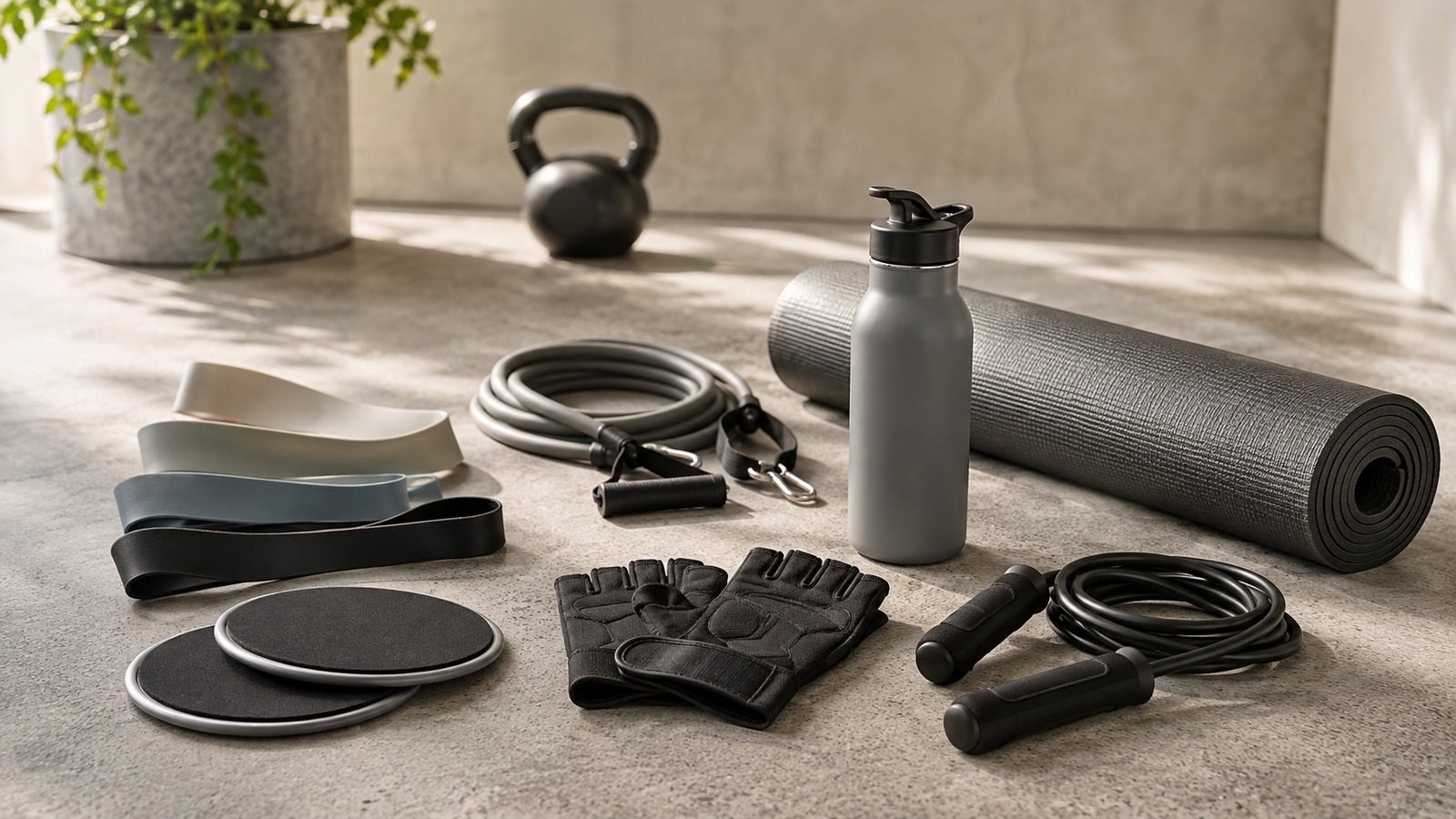
Fitness accessories can make workouts more effective, comfortable and convenient—but only when they solve a real problem.
It is easy to buy:
- resistance bands;
- gloves;
- lifting straps;
- jump ropes;
- sliders;
- mats;
- belts;
- foam rollers;
- grip tools;
- balance accessories;
without knowing whether they actually fit your training.
A better approach is:
define your training goal → identify what is limiting you → choose the smallest useful accessory → use it consistently
The goal is not to own more equipment.
It is to choose accessories that genuinely improve your workouts.
Start With Your Training Goal
Before buying anything, decide what you are primarily trying to achieve.
Common goals include:
- building strength;
- improving cardiovascular fitness;
- training at home;
- improving mobility;
- supporting yoga or stretching;
- improving grip;
- making workouts more comfortable;
- adding exercise variety;
- supporting recovery.
One accessory may be extremely useful for one goal and almost irrelevant for another.
For example:
- resistance bands can be valuable for home strength work;
- a jump rope can be useful for conditioning;
- lifting straps may help during heavy pulling exercises;
- sliders can add challenge to bodyweight training.
Start with the goal—not the product.
Do You Actually Need Fitness Accessories?
Not necessarily.
You can build an effective fitness routine with very little equipment.
For example:
Walking or running
You may mainly need:
- suitable footwear;
- comfortable clothing;
- hydration when necessary.
Bodyweight training
You can perform:
- squats;
- lunges;
- push-ups;
- planks;
- step-ups;
without specialized accessories.
Gym strength training
The gym may already provide most of the equipment you need.
Accessories become useful when they:
- improve grip;
- increase exercise options;
- solve a comfort issue;
- make training more portable;
- support a specific movement.
Do not buy an accessory simply because it appears in someone else’s gym bag.
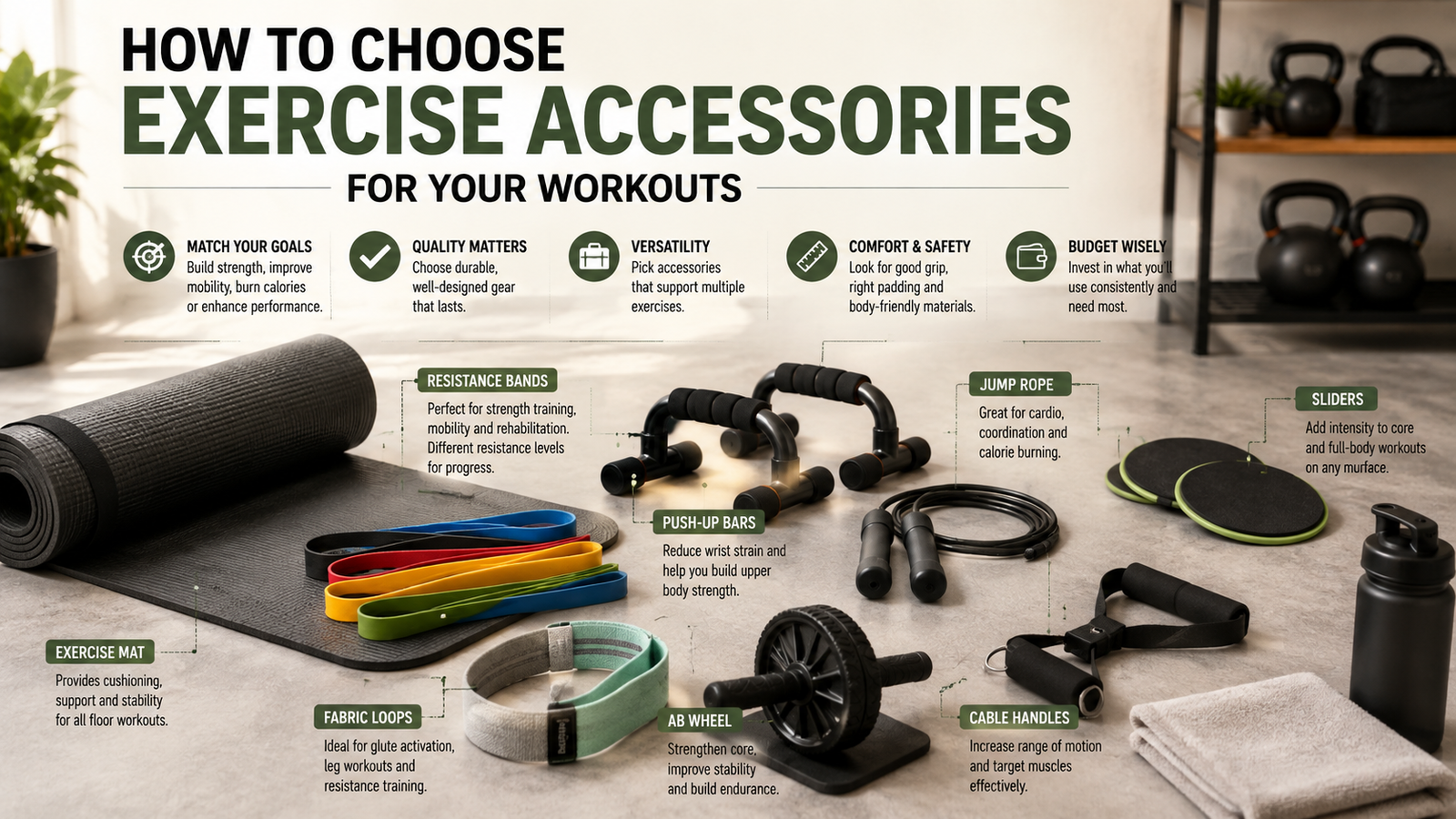
Resistance Bands
Resistance bands are among the most versatile fitness accessories.
They can be used for:
- strength training;
- warm-ups;
- mobility drills;
- rehabilitation-style movements;
- assistance exercises;
- home workouts.
But not all bands are the same.
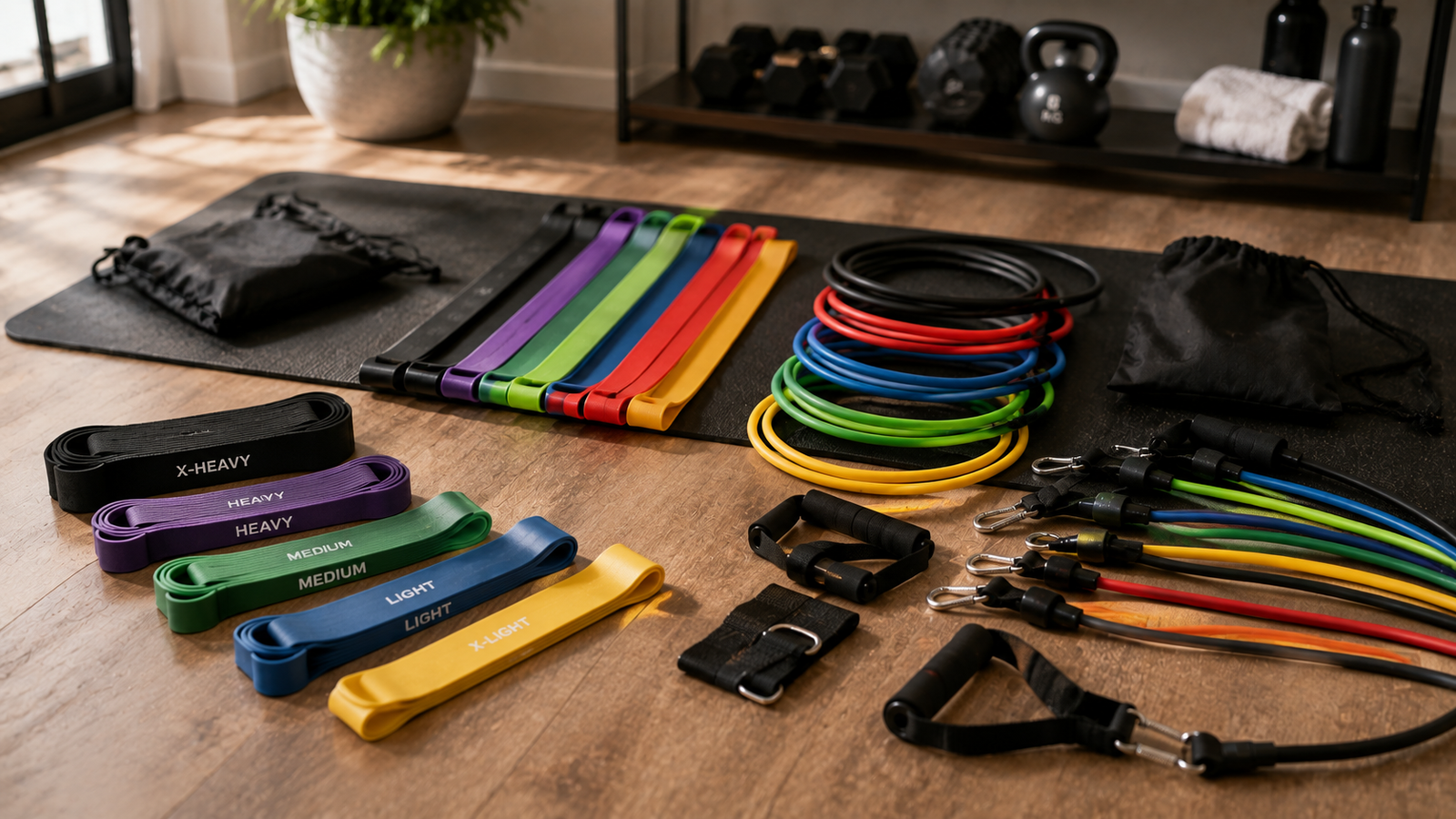
Mini Loop Bands
Mini bands are short loops commonly placed around:
- thighs;
- knees;
- ankles;
- wrists.
They are often used for:
- lateral walks;
- hip-abduction work;
- glute activation;
- shoulder exercises.
What to look for
Consider:
- resistance level;
- width;
- material;
- tendency to roll;
- durability.
Fabric mini bands often feel different from rubber or latex bands.
Neither is automatically better.
Long Loop Resistance Bands
Long continuous loops can be used for:
- assisted pull-ups;
- rows;
- presses;
- squats;
- mobility work;
- stretching.
They usually provide more exercise variety than mini bands.
Resistance increases as the band stretches
This means band resistance is not constant.
The farther you stretch the band, the more tension it generally creates.
That feels different from lifting a fixed dumbbell.
Tube Bands With Handles
These usually include:
- elastic tubes;
- handles;
- sometimes door anchors;
- sometimes ankle straps.
They can be useful for people who want a more cable-machine-like training experience at home.
Possible exercises include:
- rows;
- chest presses;
- curls;
- triceps work;
- shoulder exercises.
Check the attachment system
If you use a door anchor, make sure:
- the door is secure;
- the anchor is positioned correctly;
- the band is not damaged;
- the setup cannot suddenly release.
How to Choose Resistance Level
Do not simply buy the strongest band.
Use resistance that allows you to maintain good technique.
A useful set may include:
- light;
- medium;
- heavy;
rather than one extremely strong band.
Different exercises require different resistance.
For example, you may need:
- light resistance for shoulder work;
- medium resistance for rows;
- heavier resistance for lower-body exercises.
Inspect Bands Regularly
Resistance bands can wear out.
Look for:
- cracks;
- thinning;
- tears;
- damaged seams;
- fraying.
Replace a damaged band.
A band snapping under tension can cause injury.
Exercise Mats
A fitness mat can make floor-based exercise more comfortable.
Useful for:
- mobility work;
- stretching;
- yoga;
- core exercises;
- bodyweight workouts.
But mat thickness matters.
Thicker mats
Can provide more cushioning for:
- knees;
- elbows;
- spine.
However, very thick mats can feel unstable during standing exercises.
Thinner mats
Can provide:
- better connection with the floor;
- more stability;
- easier balance.
The best thickness depends on what you do most.
Yoga Mat vs Exercise Mat
They overlap, but they are not always identical.
Yoga mats often prioritize:
- grip;
- stability;
- contact with the floor.
General fitness mats may prioritize:
- cushioning;
- comfort during floor exercises.
If you perform mainly yoga, grip may matter more than thickness.
If you mostly perform:
- sit-ups;
- stretches;
- rehabilitation exercises;
additional cushioning may be more comfortable.
Jump Ropes
Jump ropes are compact and relatively inexpensive cardio tools.
They can support:
- conditioning;
- coordination;
- footwork;
- warm-ups.
But they are not appropriate for everyone.
Repeated jumping creates impact.
People dealing with:
- joint pain;
- certain injuries;
- balance problems;
may need a lower-impact alternative.
Choosing Jump Rope Length
Rope length should roughly match your height and skill level.
Too short:
- catches your feet easily;
- forces awkward movement.
Too long:
- drags excessively;
- slows rotation.
Many ropes are adjustable.
That makes them easier to customize.
Speed Ropes
Speed ropes generally use:
- thin cables;
- lightweight handles;
- smooth bearings.
They are designed for faster rotation.
They can be useful for:
- double-unders;
- conditioning;
- advanced rope work.
They may be less forgiving for beginners.
Weighted Jump Ropes
Weighted ropes add resistance.
They may:
- increase upper-body involvement;
- slow rotation;
- provide stronger feedback.
But heavier does not automatically mean better.
Use a weight you can control safely.
Exercise Sliders
Sliders are small discs placed under:
- hands;
- feet.
They reduce friction against the floor.
This allows movements such as:
- sliding lunges;
- mountain climbers;
- hamstring curls;
- body saws;
- plank variations.
They are inexpensive and take almost no storage space.
Check Floor Compatibility
Some sliders are designed for:
- carpet.
Others for:
- hard floors.
Using the wrong surface can make them:
- ineffective;
- too slippery;
- unsafe.
Check the product design before buying.
Workout Gloves
Workout gloves are mainly used for:
- grip comfort;
- reducing friction;
- limiting callus formation.
They do not automatically make you stronger.
Padding
More padding can improve comfort but may reduce direct contact with the bar.
Some lifters prefer minimal padding.
Others prefer thicker protection.
Fit
Gloves should fit securely without:
- excessive bunching;
- sliding;
- restricting finger movement.
Poorly fitting gloves can make grip worse.
Do You Need Workout Gloves?
No.
Many people prefer training with bare hands.
Gloves are a personal choice.
They may be useful if:
- calluses bother you;
- equipment feels uncomfortable;
- you prefer extra grip texture.
Lifting Straps
Lifting straps wrap around the wrist and bar.
They are commonly used for pulling exercises such as:
- deadlifts;
- rows;
- Romanian deadlifts;
- heavy shrugs.
Their main purpose is to reduce grip as the limiting factor.
When Are Straps Useful?
Imagine your back and hamstrings can continue working, but your hands cannot hold the bar.
Straps can allow the target muscles to continue training.
However, if you always rely on straps, your grip may receive less training.
One approach is:
- perform lighter sets without straps;
- use straps only for heavier or higher-volume work.
Wrist Wraps
Wrist wraps are different from straps.
Wraps support the wrist during exercises such as:
- bench press;
- overhead press;
- some heavy pressing movements.
They do not attach your hands to the bar.
They may help some lifters maintain a more comfortable wrist position under heavy loads.
But they do not correct poor technique.
Lifting Belts
Weightlifting belts are commonly used during heavy exercises such as:
- squats;
- deadlifts;
- overhead movements.
A belt provides a surface for the abdominal muscles to brace against.
It does not physically hold your spine in place.
Do Beginners Need a Lifting Belt?
Usually not immediately.
Beginners generally benefit more from learning:
- breathing;
- bracing;
- exercise technique;
- load progression.
A belt becomes more useful when training intensity increases and you understand how to brace properly.
Belt Width and Thickness
Powerlifting-style belts may be:
- thick;
- rigid;
- similar width all around.
Other belts may taper toward the front.
The right design depends on:
- body shape;
- exercise;
- comfort;
- training style.
A belt that is extremely uncomfortable may interfere with training.
Ankle Straps
Ankle straps attach to:
- cable machines;
- resistance bands.
They can be useful for:
- hip abduction;
- hip extension;
- leg exercises.
Look for:
- secure attachment;
- comfortable padding;
- strong stitching;
- durable hardware.
If the attachment point fails under tension, it can become dangerous.
Barbell Pads
Barbell pads are commonly used during:
- hip thrusts;
- sometimes squats.
They provide cushioning between the bar and body.
For hip thrusts, padding can substantially improve comfort.
For squats, some people use pads while others prefer learning a comfortable bar position without one.
Either can be reasonable depending on the exercise and individual preference.
Grip Pads
Grip pads are small pieces of:
- rubber;
- leather;
- synthetic material;
placed between the hand and bar.
They provide:
- grip;
- callus protection;
without covering the whole hand.
They can be an alternative to gloves.
Chalk
Chalk helps absorb moisture from the hands and can improve friction.
It is commonly used for:
- deadlifts;
- pull-ups;
- climbing;
- kettlebells.
Forms include:
- block chalk;
- powder chalk;
- liquid chalk.
Check gym rules
Some gyms do not allow loose chalk because it creates mess.
Liquid chalk may be more acceptable.
Push-Up Handles
Push-up handles raise the hands from the floor.
They can:
- allow a neutral wrist position;
- increase range of motion;
- provide grip.
Some people find them more comfortable if floor push-ups bother their wrists.
But they can also increase exercise difficulty because of the deeper range.
Ab Wheels
An ab wheel is a compact core-training tool.
It can be effective but requires:
- trunk control;
- shoulder stability;
- proper technique.
Beginners should not necessarily start with full standing or extended rollouts.
Progressions may begin with:
- kneeling rollouts;
- shorter range;
- controlled repetitions.
If your lower back collapses excessively, reduce the range.
Suspension Trainers
Suspension trainers use straps anchored overhead or to a secure support.
Exercises can include:
- rows;
- presses;
- squats;
- lunges;
- core work.
They are highly portable.
But anchor security is critical.
Always make sure the attachment point can handle your weight and movement forces.
Pull-Up Bands
Long resistance bands can provide assistance during pull-ups.
Heavier bands generally provide more assistance.
As you become stronger, you can progress toward:
- lighter assistance;
- fewer assisted repetitions;
- unassisted pull-ups.
Use a secure setup because bands can snap or slip.
Pull-Up Bars
Doorway pull-up bars can be useful in home workouts.
But construction varies.
Before using one, check:
- door-frame compatibility;
- installation;
- maximum load;
- movement;
- grip security.
Never assume every door frame can safely support one.
Parallettes
Parallettes are small elevated bars.
They can be used for:
- push-ups;
- L-sits;
- handstand work;
- dips on some designs;
- calisthenics.
They also allow a neutral wrist position.
Look for:
- stable base;
- strong construction;
- appropriate height;
- grip comfort.
Step Platforms
Step platforms are useful for:
- step-ups;
- cardio routines;
- elevated push-ups;
- split squats;
- mobility work.
Adjustable platforms offer more versatility.
But make sure:
- the feet lock securely;
- the surface is non-slip;
- the platform does not wobble.
Balance Boards
Balance boards challenge:
- coordination;
- ankle control;
- stability.
They can be useful for specific training goals.
But they are often overused.
You do not need unstable surfaces for every exercise.
For strength training, a stable surface generally allows:
- greater force;
- better control;
- safer loading.
Use instability intentionally, not because it looks advanced.
Stability Balls
Stability balls can be used for:
- core exercises;
- mobility;
- some rehabilitation exercises.
Correct size matters.
When sitting on the ball, your hips and knees should generally be in a comfortable position.
Use it on a non-slip surface.
Avoid loading it beyond its rated capacity.
Mini Exercise Balls
Small Pilates-style balls can provide feedback during:
- core work;
- hip exercises;
- mobility;
- Pilates.
They are inexpensive and easy to store.
You do not need them unless your exercise program actually uses them.
Foam Rollers
Foam rollers are often categorized as recovery tools but can also be used in warm-ups and mobility sessions.
They may provide temporary improvements in:
- perceived muscle tightness;
- range of motion.
They do not permanently lengthen muscles or “break up toxins.”
Choose based on:
- density;
- size;
- texture;
- target area.
Massage Balls
Massage balls provide more localized pressure than foam rollers.
Useful for areas such as:
- glutes;
- upper back;
- feet.
Avoid rolling directly over:
- bones;
- injured tissue;
- sensitive nerves.
More pressure is not automatically better.
Hand Grippers
Hand grippers train grip strength.
They come in:
- fixed resistance;
- adjustable resistance.
They may be useful for people specifically trying to improve:
- hand strength;
- crushing grip.
But grip training can also come from:
- deadlifts;
- carries;
- pull-ups;
- hangs.
Do not assume you need dedicated grip equipment.
Wrist and Forearm Trainers
Some accessories specifically train:
- wrist flexion;
- extension;
- forearms.
They may be useful for:
- certain sports;
- rehabilitation programs;
- grip-focused training.
For general fitness, they are optional.
Weighted Vests
Weighted vests add load to exercises such as:
- walking;
- step-ups;
- squats;
- push-ups.
They can make simple movements harder without holding weights.
But added load also increases stress.
Start conservatively.
Do not immediately use a very heavy vest.
Ankle Weights
Ankle weights add resistance around the lower leg.
They can be useful for certain controlled exercises.
However, wearing heavy ankle weights during:
- running;
- long walks;
can change mechanics and increase stress.
Use them selectively rather than all day.
Wrist Weights
Similar principle.
They may add light resistance during certain exercises.
But they are not necessary for cardiovascular training.
If added weight makes your movement awkward, stop using it.
Weighted Jump Rope vs Regular Rope
Choose based on your goal.
Regular or Speed Rope
Better for:
- coordination;
- faster jumping;
- conditioning.
Weighted Rope
Better for:
- slower controlled rotations;
- greater upper-body involvement.
Beginners usually benefit from learning technique before adding much weight.
Exercise Bands With Door Anchors
Door anchors expand band exercise options.
You can perform:
- rows;
- pulldowns;
- chest presses;
- triceps extensions.
Always attach the anchor according to the manufacturer’s directions.
Whenever possible, position it so the door closes toward the frame rather than pulling open under load.
Portable Home Workout Kits
Many brands sell kits containing:
- bands;
- handles;
- ankle straps;
- door anchor;
- sliders;
- jump rope.
These can be convenient.
But count how many pieces you will genuinely use.
A smaller high-quality kit can be better than a huge collection of low-quality accessories.
Choosing Accessories for Strength Training
If strength is your goal, accessories that may be useful include:
- resistance bands;
- lifting straps;
- wrist wraps;
- belt;
- chalk;
- gloves;
- barbell pad.
But these should support fundamental training.
Your main priorities remain:
- progressive resistance;
- exercise technique;
- recovery;
- consistency.
Accessories cannot replace those.
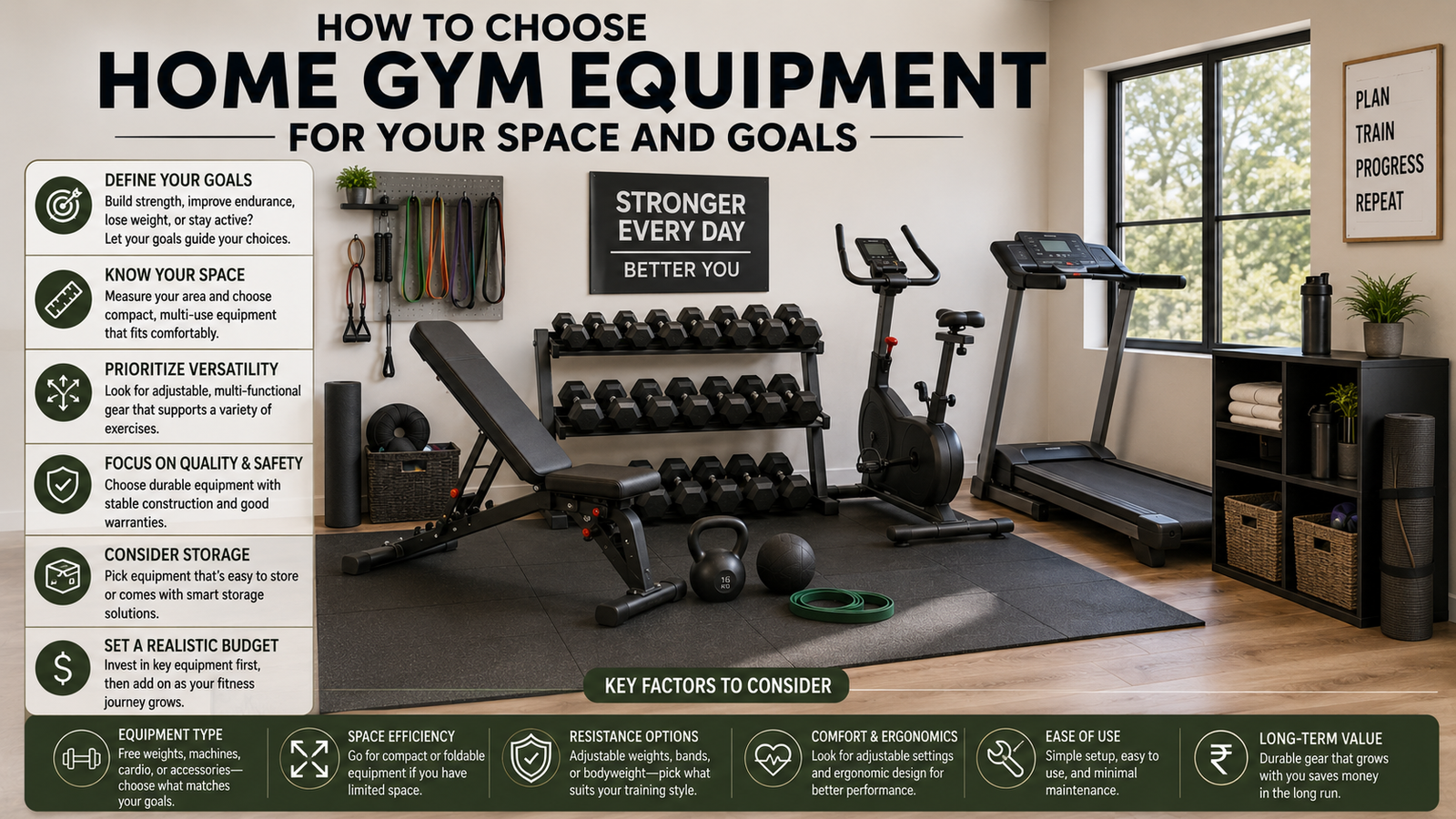
Choosing Accessories for Home Workouts
For limited space, prioritize versatility.
A practical home setup might include:
- Exercise mat
- Resistance bands
- Adjustable dumbbells if budget permits
- Jump rope if appropriate
- Sliders
That can support a surprisingly large number of exercises.
Do not fill your home with equipment before learning what you actually enjoy using.
Choosing Accessories for Cardio
Possible options:
- jump rope;
- step platform;
- heart-rate monitor;
- fitness tracker;
- hydration bottle.
But cardio does not require accessories.
Walking, running and cycling can all be done with minimal equipment.
Choosing Accessories for Yoga
Useful accessories may include:
- yoga mat;
- blocks;
- strap;
- bolster.
These can make poses more accessible.
Using a block is not “cheating.”
Props help you adapt the pose to your current mobility.
Choosing Accessories for Mobility
Useful tools include:
- resistance bands;
- yoga straps;
- foam rollers;
- massage balls;
- mobility sticks.
The goal should be controlled movement, not forcing your joints into extreme range.
Choosing Accessories for Recovery
Possible tools include:
- foam rollers;
- massage balls;
- massage guns;
- stretching straps.
But recovery is built mainly around:
- adequate sleep;
- appropriate training load;
- nutrition;
- hydration;
- rest.
Accessories are supplementary.
Fitness Trackers
Wearable trackers can record:
- steps;
- heart rate;
- sleep;
- workouts;
- GPS routes.
They can provide motivation and trends.
But do not treat consumer data as perfectly accurate.
Calories burned, for example, are estimates.
Use trends rather than obsessing over individual numbers.
Heart-Rate Monitors
Chest straps generally measure electrical heart activity and can provide more responsive heart-rate data during exercise than many wrist devices.
They may be useful for:
- endurance training;
- structured heart-rate zones.
But recreational exercise does not require one.
Gym Towels
Simple but useful.
A small gym towel can:
- wipe sweat;
- cover benches;
- improve hygiene.
Choose something:
- absorbent;
- washable;
- easy to carry.
Wash it after use.
Water Bottles
Hydration accessories matter mainly because they make drinking convenient.
Consider:
- capacity;
- leak resistance;
- cleaning;
- insulated vs non-insulated;
- portability.
A complicated bottle is not necessarily better.
The best bottle is one you actually carry.
Shaker Bottles
Useful if you regularly mix:
- protein powder;
- powdered supplements.
Look for:
- leak-resistant lid;
- easy cleaning;
- wide opening;
- durable mixing mechanism.
Protein shakes are optional.
A shaker bottle is only useful if it fits your nutrition routine.
Gym Bags
Choose a bag based on what you actually carry.
Useful features include:
- shoe compartment;
- water bottle pocket;
- wet-clothing section;
- strong zipper;
- washable interior.
More compartments are not automatically better.
Headphones
Music can improve workout enjoyment for some people.
For training, consider:
- secure fit;
- sweat resistance;
- battery life;
- awareness of surroundings.
Be particularly cautious using noise-cancelling headphones while:
- running near traffic;
- cycling outdoors;
- training in environments where you need to hear others.
Phone Armbands and Running Belts
Useful for:
- phone;
- keys;
- cards.
Choose based on:
- stability;
- comfort;
- sweat resistance.
A running belt may feel less restrictive than an armband for some people.
Workout Timers
Interval timers can support:
- HIIT;
- circuits;
- rest periods.
You may not need dedicated equipment.
A phone or smartwatch can perform the same function.
Avoid buying another device if something you already own does the job.
Smart Fitness Accessories
Some accessories now connect to apps.
Examples include:
- smart jump ropes;
- connected resistance systems;
- digital grip tools.
Ask whether connectivity provides real value.
If you stop using the app, does the accessory still work?
That is often a useful question.
Check Product Durability
Fitness accessories experience:
- pulling;
- sweat;
- impact;
- friction.
Look for:
- reinforced stitching;
- strong buckles;
- quality rubber;
- solid handles;
- reliable attachment points.
This matters particularly for items under tension.
Check Weight Limits
Some equipment has clear load limits.
Examples include:
- suspension trainers;
- pull-up bars;
- benches;
- step platforms;
- resistance systems.
Never assume an accessory can safely handle any weight.
Follow manufacturer specifications.
Latex Allergies
Many resistance bands contain natural latex.
If you have a latex allergy, look for:
- latex-free synthetic alternatives.
Check product materials carefully.
Cleaning Fitness Accessories
Accessories can collect:
- sweat;
- bacteria;
- oils;
- dust.
Clean:
- mats;
- gloves;
- bands;
- bottles;
- straps;
according to their material and manufacturer guidance.
Let items dry fully before storing them.
Storage Matters
A product you cannot easily access may stop being used.
Useful storage options include:
- wall hooks;
- small baskets;
- band racks;
- gym bags;
- compact shelves.
When building a home workout setup, consider storage before buying more equipment.
Avoid Buying Complete Sets Immediately
You may see large accessory bundles containing 10–20 items.
They can seem like better value.
But if you use only:
- mat;
- one band;
- jump rope;
the rest becomes clutter.
Start smaller.
Expand only when you identify a genuine training need.
Do Premium Accessories Matter?
Sometimes.
Higher-quality accessories may offer:
- stronger materials;
- better stitching;
- improved grip;
- smoother mechanisms;
- better warranty.
But price is not always a sign of quality.
For simple products such as:
- sliders;
- basic mats;
mid-range options may be perfectly adequate.
Spend more where failure matters.
For example:
- load-bearing straps;
- pull-up bars;
- suspension equipment;
deserve more attention to construction quality.
Do Accessories Make Workouts More Effective?
They can.
But effectiveness comes from how they are used.
A resistance band sitting in a drawer does nothing.
A cheap band used consistently within a structured program can be more useful than expensive equipment used twice.
The hierarchy should be:
training plan → consistency → technique → appropriate resistance → accessories
Not:
accessories → accessories → more accessories
Common Fitness Accessory Mistakes
Buying Before You Have a Routine
Build the habit first.
Using Accessories to Make Exercises Look Advanced
More complexity does not mean better training.
Choosing Maximum Resistance
Use resistance you can control.
Ignoring Wear and Damage
Inspect bands and straps regularly.
Buying Large Bundles
Choose what you genuinely need.
Forgetting Storage
Clutter makes equipment less likely to be used.
Trusting Gadgets More Than Your Body
Trackers provide estimates.
Pay attention to:
- fatigue;
- pain;
- recovery;
- performance.
A Minimal Fitness Accessory Setup
For someone training at home, a very practical starting set could be:
1. Exercise Mat
Useful for:
- floor exercises;
- mobility;
- stretching.
2. Resistance Bands
Provide portable resistance.
3. Water Bottle
Makes hydration convenient.
4. Optional Jump Rope
For cardio if jumping is appropriate for you.
5. Optional Sliders
Add variety to bodyweight exercises.
That is already enough for many workouts.
A Strength-Training Accessory Setup
For gym-based lifting:
Start With
- water bottle;
- towel.
Add Only If Needed
- chalk;
- straps;
- gloves;
- wrist wraps;
- belt.
You do not need every lifting accessory simply because experienced lifters use them.
A Yoga and Mobility Setup
A simple setup:
- Yoga mat
- Two blocks
- Strap
Optional:
- bolster;
- foam roller;
- massage ball.
These basic tools cover most beginner needs.
Questions to Ask Before Buying
Before purchasing any fitness accessory, ask:
1. What exercise will I use this for?
Name the exercise.
2. What problem does it solve?
Grip, comfort, resistance, portability?
3. Can I already perform the exercise without it?
You may not need it.
4. Will I use it every week?
If not, reconsider.
5. Is it safe under load?
Check materials and limits.
6. Can I store it easily?
Particularly important for home gyms.
7. Is it easy to clean?
Sweat and shared use matter.
8. Does something I already own perform the same function?
Avoid duplication.
When Should You Replace Fitness Accessories?
Replace accessories when you notice:
- cracks;
- tears;
- loose stitching;
- rust;
- damaged clips;
- stretched bands;
- unstable handles;
- worn grip surfaces.
Do not continue using load-bearing equipment after structural damage appears.
When Should You Get Professional Guidance?
A trainer or physiotherapist may be useful if:
- you are returning after injury;
- you have persistent pain;
- you are unsure how to use resistance safely;
- an exercise repeatedly causes discomfort;
- you need a rehabilitation-specific accessory.
Buying another accessory is not always the solution to pain.
Sometimes technique or exercise selection needs to change.
The Physical Glow Takeaway
Fitness accessories should support your training, not define it.
Start with your goal.
Then choose only the tools that solve a real problem.
For home workouts, versatile accessories such as:
- resistance bands;
- exercise mats;
- sliders;
- jump ropes;
can provide substantial value without taking much space.
For strength training, accessories such as:
- lifting straps;
- gloves;
- wrist wraps;
- belts;
can be useful when there is a clear reason to use them.
For mobility and recovery:
- foam rollers;
- massage balls;
- straps;
can complement your routine.
But the fundamentals remain more important:
consistent training → good technique → progressive overload → adequate recovery
The best fitness accessory is not the one with the most features.
It is the one you actually use because it makes your training simpler, safer or more effective.