How to Choose the Right Yoga Mat for Your Practice
Learn how to choose the right yoga mat for your practice, with practical guidance on thickness, grip, material, size, cushioning and portability. This beginner-friendly guide helps you make a clear, informed choice without unnecessary complexity.
A yoga mat looks simple, but small differences in:
- thickness;
- grip;
- texture;
- material;
- density;
- length;
- width;
- weight;
can significantly change how comfortable and stable your practice feels.
A mat that works well for:
- restorative yoga;
may feel too soft for:
- balance poses.
A very thin travel mat may provide excellent floor contact but become uncomfortable for:
- knees;
- wrists;
- hips.
A smooth mat may feel pleasant during gentle stretching but become slippery during:
- Vinyasa;
- hot yoga;
- sweaty workouts.
The practical way to choose a yoga mat is:
identify your practice style → choose the right balance of cushioning and stability → evaluate grip → select a suitable material → check dimensions and portability → consider cleaning and durability → then compare price
The best yoga mat is not automatically:
- the thickest;
- the stickiest;
- the most expensive;
- the heaviest;
- the most eco-marketed.
It is the mat that provides enough:
traction → support → comfort → stability
for the way you actually practice.
What Does a Yoga Mat Actually Do?
A yoga mat creates a dedicated surface between your body and the floor.
Its main functions include:
- improving grip;
- providing cushioning;
- defining your practice area;
- creating a cleaner personal surface;
- reducing direct contact with hard flooring.
Depending on the mat, it may also provide some:
- impact reduction;
- insulation from cold floors.
A yoga mat is not designed primarily as:
- crash protection;
- thick exercise flooring.
Its most important job is usually creating a stable, grippy surface.
Do You Need a Yoga Mat?
Not always.
Some forms of mobility or stretching can be performed on:
- carpet;
- gym flooring;
- grass;
- another stable surface.
But a yoga mat usually improves:
- hand traction;
- foot traction;
- comfort;
- hygiene.
If you practice yoga regularly, owning your own mat is usually worthwhile.
Yoga Mat vs Exercise Mat
These are not always the same.
Yoga Mat
Usually prioritizes:
- grip;
- stability;
- moderate cushioning.
Exercise Mat
May prioritize:
- thicker padding;
- comfort for floor exercises.
An exercise mat may be better for:
- sit-ups;
- general floor workouts;
- rehabilitation exercises.
But if it is very soft, it may feel unstable during:
- standing balance poses;
- lunges;
- downward dog.
Yoga Mat vs Pilates Mat
Pilates often involves more:
- lying;
- rolling;
- kneeling.
Pilates mats are therefore often:
- thicker;
- more cushioned.
For yoga, excessive thickness can reduce stability.
Start With the Type of Yoga You Practice
Your practice style should influence mat selection.
Hatha Yoga
Usually benefits from:
- moderate grip;
- moderate cushioning.
Vinyasa Yoga
Prioritize:
- stronger grip;
- stability;
- sweat management.
Hot Yoga
Prioritize:
- wet grip;
- sweat-resistant surface;
- easy cleaning.
Restorative Yoga
Comfort may matter more than maximum traction.
Yin Yoga
A little extra cushioning can improve comfort during:
- long-held poses.
Ashtanga
Strong dry and wet grip can be important because of:
- repeated transitions;
- sweating.
Beginner General Yoga
A balanced all-purpose mat is usually best.
Thickness Is One of the Biggest Decisions
Yoga mats vary from extremely thin travel mats to thick cushioned mats.
Common categories may include roughly:
- 1–2 mm;
- 3–4 mm;
- 4–5 mm;
- 6 mm+.
Exact product descriptions vary.
Thin Yoga Mats: Around 1–2 mm
These are usually designed for:
- travel;
- portability.
Advantages
- lightweight;
- compact;
- strong floor feedback;
- good balance stability.
Disadvantages
- limited knee cushioning;
- limited wrist comfort;
- may feel harsh on hard floors.
For everyday home practice, they may be too minimal unless you already prefer a thin surface.
Standard Yoga Mats: Around 3–5 mm
This range works well for many people.
It usually provides a useful compromise between:
- comfort;
- stability.
For a first mat, this is often the safest category to consider.
Thicker Mats: Around 6 mm or More
These provide additional cushioning.
Useful for people who prioritize comfort around:
- knees;
- hips;
- spine.
Potential Disadvantages of Thick Mats
A very thick mat can make balance positions feel less stable.
During poses such as:
- tree pose;
- warrior III;
- standing balance;
the foot may sink slightly.
This creates additional instability.
Thickness vs Density
Thickness alone does not determine cushioning.
A:
- 5 mm dense rubber mat;
may feel firmer than a:
- 5 mm soft foam mat.
Density affects:
- compression;
- stability;
- durability.
This is why two mats with the same thickness can feel completely different.
Firm Cushioning vs Soft Cushioning
Firm Mat
Better for:
- balance;
- standing poses;
- stable hand placement.
Soft Mat
Better for:
- gentle floor work;
- kneeling comfort.
For general yoga, firm cushioning usually provides the better compromise.
How Thick Should a Beginner Yoga Mat Be?
For most beginners:
around 4–5 mm
is a practical starting point.
It provides enough cushioning for:
- knees;
- hands;
without creating excessive instability.
But personal comfort matters.
Yoga Mat for Sensitive Knees
You have several options.
Option 1
Choose a slightly thicker mat.
Option 2
Use a folded section of the mat under the knee.
Option 3
Use:
- folded blanket;
- knee pad.
This allows you to keep a stable mat while adding cushioning only when needed.
More Thickness Is Not Always the Best Knee Solution
If only one or two poses irritate the knees, buying an extremely thick mat may compromise the entire practice.
Localized padding may be better.
Yoga Mat for Wrist Discomfort
A thicker mat does not automatically solve wrist discomfort.
Very soft mats may actually make the hands:
- unstable.
Wrist comfort can also depend on:
- hand position;
- gradual loading;
- pose modification.
Use:
- blocks;
- wedges;
- elevated surfaces;
where appropriate.
Grip Is Often More Important Than Thickness
One of the most common complaints about yoga mats is:
my hands keep slipping
especially during:
- downward dog;
- plank;
- lunges.
Grip depends on both:
- surface texture;
- material.
Dry Grip
Dry grip describes traction when:
- hands;
- feet;
are relatively dry.
This matters during:
- Hatha;
- slower practices;
- ordinary indoor yoga.
Wet Grip
Wet grip describes traction when the mat becomes:
- sweaty;
- humid.
This is particularly important for:
- hot yoga;
- Vinyasa;
- Ashtanga.
Some mats perform extremely well when dry but become slippery when wet.
Others are specifically designed to improve grip with moisture.
Sticky Mats
The term “sticky mat” generally refers to a mat with high surface friction.
It does not mean the mat should literally feel coated in adhesive.
A good grippy surface helps prevent:
- hands sliding forward;
- feet sliding backward.
Can a Mat Be Too Grippy?
Yes.
During flowing practice, you sometimes need the feet to:
- reposition;
- pivot.
An extremely tacky mat may make transitions feel less smooth.
The ideal grip depends on your practice.
Grip and Skin
Some people naturally have:
- dry hands;
- sweaty hands.
This changes which surfaces feel secure.
A mat that one user considers extremely grippy may feel slippery to another.
Sweaty Hands
If your palms sweat heavily, prioritize:
- open-cell rubber;
- polyurethane-style top surfaces;
- mats marketed for wet grip.
A yoga towel may also help.
Yoga Towels
A mat towel sits over the yoga mat.
Useful for:
- hot yoga;
- heavy sweating.
Benefits
- absorbs sweat;
- improves hygiene;
- can increase wet traction.
Limitations
Some towels slide when:
- completely dry.
They may grip better once slightly damp.
Do You Need a Yoga Towel?
Not for ordinary practice.
Consider one if you regularly experience:
- heavy sweating;
- hot-yoga conditions.
Surface Texture
Mats may feel:
- smooth;
- lightly textured;
- heavily textured.
Smooth Mats
Can feel comfortable and premium.
May provide strong grip if the material itself is:
- high friction.
Textured Mats
Texture creates mechanical traction.
Useful when:
- hands sweat;
- surface material is less naturally sticky.
Very Rough Texture
Can irritate:
- hands;
- knees;
during long sessions.
Grip should not require discomfort.
Raised Patterns
Some mats use:
- ridges;
- geometric textures.
These may improve traction but can leave impressions on:
- skin.
Alignment Lines
Some yoga mats include printed or embossed:
- centre lines;
- hand markers;
- foot markers.
Are Alignment Lines Useful?
They may help beginners understand:
- symmetry;
- hand spacing;
- foot position.
But they are not necessary.
Bodies have different:
- limb lengths;
- proportions.
Do not force your hands or feet onto markings if the position feels wrong.
Material Matters
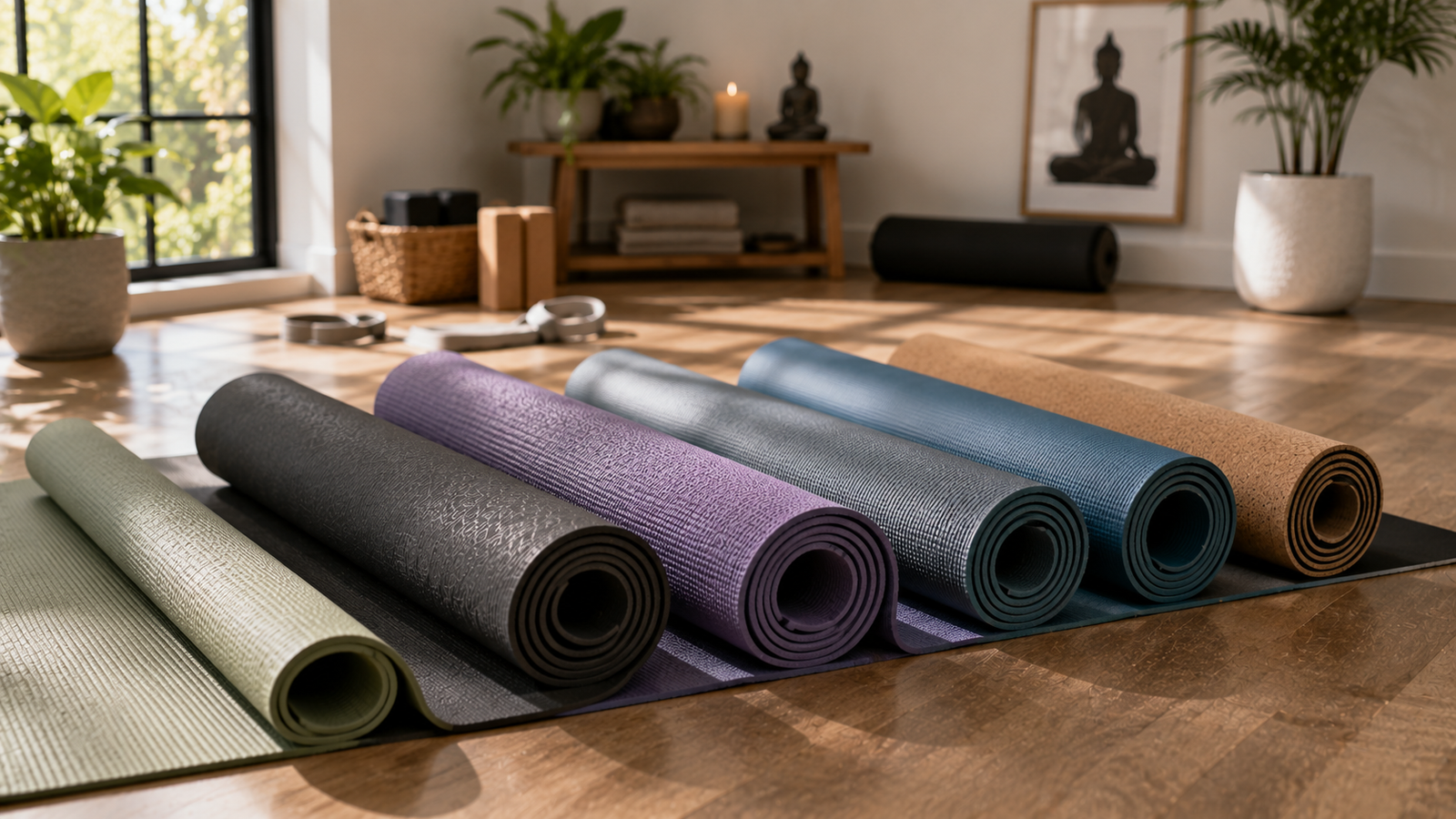
Common yoga mat materials include:
- PVC;
- TPE;
- natural rubber;
- cork;
- polyurethane-top composites;
- jute;
- cotton.
Each has trade-offs.
PVC Yoga Mats
PVC has historically been common because it can provide:
- strong grip;
- durability;
- low cost.
Advantages
- widely available;
- durable;
- often good dry grip;
- relatively inexpensive.
Disadvantages
- environmental concerns;
- may contain additives depending on manufacturer;
- not biodegradable.
If you choose PVC, buying a durable mat and using it for years is generally more sensible than frequently replacing inexpensive mats.
TPE Yoga Mats
TPE stands for thermoplastic elastomer.
It is common in modern lightweight mats.
Advantages
- lightweight;
- usually soft;
- relatively affordable;
- available in many textures.
Disadvantages
Durability varies.
Some TPE mats may:
- stretch;
- dent;
- wear;
faster than dense rubber or PVC.
Is TPE Automatically Eco-Friendly?
No.
“Eco-friendly TPE” is broad marketing language.
Environmental impact depends on:
- exact material;
- manufacturing;
- lifespan;
- recyclability.
Do not assume every TPE product is automatically environmentally superior.
Natural Rubber Yoga Mats
Natural rubber is popular in premium yoga mats.
Advantages
- excellent traction;
- dense stable cushioning;
- strong floor grip.
Disadvantages
- heavier;
- rubber smell;
- more expensive;
- may degrade with sun/heat;
- unsuitable for some people with latex allergy.
Natural Rubber and Latex Allergy
Natural rubber may contain latex proteins.
People with known latex allergy should avoid assuming the mat is safe.
Choose a specifically:
- latex-free alternative.
Rubber Mat Weight
Dense rubber is heavy.
A full-size mat may weigh several kilograms.
Excellent for:
- home;
- studio.
Less convenient for:
- commuting;
- travel.
Rubber Odour
New natural-rubber mats often have a noticeable smell.
This may decrease with:
- airing;
- time.
If you are very sensitive to smells, check reviews before buying.
Cork Yoga Mats
Cork is often bonded to a base layer such as:
- rubber;
- TPE.
Advantages
- natural surface feel;
- often improves grip as moisture increases;
- comfortable texture.
Disadvantages
When completely dry, some cork mats may feel less sticky than high-grip rubber or polyurethane surfaces.
Quality also depends heavily on the underlying base.
Cork for Hot Yoga
Cork can work particularly well for people who:
- sweat;
- practice in warm environments.
Moisture may improve traction.
Cork Surface Durability
Low-quality cork layers may:
- flake;
- peel.
Check construction and reviews.
Polyurethane-Top Yoga Mats
Some premium mats use an absorbent or high-friction polyurethane surface over:
- rubber;
- another base.
Advantages
- excellent grip;
- strong performance with sweaty hands;
- smooth premium feel.
Disadvantages
- can stain;
- require careful cleaning;
- may wear or scratch;
- usually expensive.
PU Surface Care
Avoid harsh cleaners unless approved.
Some polyurethane surfaces can absorb:
- skin oils;
- lotion.
This may affect appearance and grip.
Jute Yoga Mats
Jute fibres may be blended into:
- rubber;
- polymer surfaces.
Advantages
- textured grip;
- natural-fibre component;
- distinctive feel.
Disadvantages
- rougher;
- may irritate sensitive skin.
Best for users who like a strongly textured surface.
Cotton Yoga Mats
Traditional cotton yoga rugs are still used in some practices.
Advantages
- breathable;
- washable;
- natural fibre.
Disadvantages
- less cushioning;
- may move on smooth floors;
- grip behaves differently from rubber mats.
They are often best used by experienced practitioners or over another surface.
Yoga Rugs
Frequently used in:
- Ashtanga;
- hot practice.
They absorb sweat.
Many users place them over:
- standard mat.
Material and Allergies
If you have sensitivities, check:
- latex;
- natural rubber;
- dyes;
- fragrances.
A strong “natural” label does not guarantee allergy compatibility.
Off-Gassing and New Mat Smell
New mats may have an odour from:
- rubber;
- foam;
- manufacturing compounds.
What Should You Do?
Unroll the mat in a:
- well-ventilated area.
Allow it to air according to manufacturer guidance.
Do Not Attempt Extreme DIY Odour Removal
Avoid soaking or applying strong chemicals unless the manufacturer recommends them.
You could damage:
- grip;
- surface;
- adhesives.
Mat Length
Standard yoga mats are often around:
- 170–185 cm.
Taller users may prefer longer options.
How Long Should Your Mat Be?
Ideally, you should be able to lie down with most or all of your:
- head;
- feet;
on the mat.
A few centimetres of extra length can improve comfort.
Tall Users
Consider extended mats around:
- 190–215 cm;
depending on availability.
This provides more room during:
- floor poses;
- transitions.
Shorter Users
A standard-length mat is usually sufficient.
An extra-long mat will still work, but adds:
- weight;
- storage bulk.
Mat Width
Standard widths are often around:
- 60–68 cm.
Wider mats provide more space.
Who Benefits From a Wide Mat?
- broader users;
- people who dislike feeling confined;
- mobility practices with larger lateral movements.
Disadvantages of Extra-Wide Mats
- heavier;
- harder to carry;
- may not fit studio spacing.
If practicing in crowded classes, check local space expectations.
Extra-Large Yoga Mats
Some products are almost like:
- exercise-area mats.
Useful for:
- home mobility;
- couples;
- mixed exercise.
But they may be less practical for traditional studio yoga.
Mat Weight
This matters more than many buyers expect.
Lightweight Mat
Good for:
- studio travel;
- commuting.
Heavy Mat
Better for:
- stability;
- home use.
Home Yoga Mat
Weight is less important.
You can choose a dense premium mat without worrying about carrying it daily.
Studio Yoga Mat
If you walk, cycle or use public transport, weight becomes important.
A 3 kg mat can become annoying after repeated commuting.
Travel Yoga Mat
Travel mats may weigh under:
- 1–1.5 kg;
depending on model.
They can fold or roll compactly.
Travel Mat Trade-Off
You sacrifice:
- cushioning;
- sometimes durability;
for portability.
A travel mat is often best as a second mat, not necessarily your only one.
Foldable Yoga Mats
Some thin mats can fold into:
- luggage.
This is convenient.
But repeated folding may create:
- creases.
Check whether the product is designed for folding.
Mat Roll Diameter
Thicker mats create larger rolls.
This affects:
- storage;
- carrying.
Yoga Mat Bags
A bag protects the mat during:
- transport.
Useful features include:
- ventilation;
- strap;
- pockets.
Not essential for home use.
Yoga Mat Straps
A simple carrying strap can be enough.
It may also double as a:
- stretching strap;
depending on design, though dedicated yoga straps often provide better control.
Mat Floor Grip
The underside of the mat should stay securely on the floor.
A mat that slides as a whole is unsafe.
Top Grip vs Bottom Grip
These are different.
Top Grip
Prevents:
- hands;
- feet;
from slipping.
Bottom Grip
Prevents the mat itself from sliding.
A good yoga mat needs both.
Smooth Tile Floors
Require strong underside traction.
Rubber-backed mats usually perform well.
Wooden Floors
Also require good floor grip.
Make sure the mat does not:
- leave residue;
- stain;
the floor.
Carpet
Yoga mats can feel unstable over thick carpet because the base compresses.
A firmer floor is usually better for:
- balance.
Yoga Mat Over Carpet
Possible on low-pile carpet.
But standing poses may feel less stable.
Outdoor Yoga
A mat can be used outdoors, but conditions affect performance.
Grass
May create:
- uneven support;
- moisture.
The mat also gets dirty quickly.
Concrete
Very hard.
A somewhat thicker mat may improve comfort.
Sand
A normal mat can shift.
For beach yoga, a:
- towel;
- yoga rug;
may sometimes be more practical.
Sunlight
Some materials, especially:
- natural rubber;
can degrade under prolonged direct sunlight.
Do not leave mats outdoors unnecessarily.
Heat
Avoid storing mats in extremely hot:
- cars;
- balconies.
Heat can cause:
- warping;
- material breakdown.
Cold
Very cold mats may become:
- stiff.
Allow them to reach a comfortable temperature before practice.
Yoga Mat for Hot Yoga
Hot yoga creates specific demands.
Prioritize:
- wet grip;
- sweat management;
- easy cleaning.
Option 1 — High-Grip Mat
Choose a surface designed to perform well when sweaty.
Option 2 — Mat + Yoga Towel
A common combination.
The towel absorbs:
- moisture.
Avoid Closed, Non-Absorbent Slippery Surfaces
If sweat pools on top, traction may decrease significantly.
Hot Yoga Mat Cleaning
Clean after every sweaty session.
Do not leave it:
- rolled;
- wet.
This encourages:
- odour;
- microbial growth.
Yoga Mat for Vinyasa
Prioritize:
- strong grip;
- moderate thickness;
- good stability.
The mat needs to handle repeated transitions.
Yoga Mat for Hatha
A balanced all-purpose mat works well.
Moderate:
- cushioning;
- grip.
Yoga Mat for Yin
Long-held floor positions may benefit from:
- slightly more cushioning.
But you can also add:
- blanket;
- bolster;
instead of buying an extremely thick mat.
Yoga Mat for Restorative Practice
Comfort matters more than maximum grip.
A softer mat may work well.
Props often provide most of the support.
Yoga Mat for Ashtanga
Because practice may become sweaty, prioritize:
- strong traction;
- durable surface.
Some practitioners add:
- yoga rug.
Yoga Mat for Beginners
A beginner should generally prioritize balance rather than specialization.
Look for:
- 4–5 mm thickness;
- reliable grip;
- stable density;
- standard or slightly longer size;
- easy cleaning.
Yoga Mat for Strength-Based Yoga
If your practice includes many:
- planks;
- push-up transitions;
- standing poses;
choose a firmer, grippier mat.
Yoga Mat for Mobility Work
A yoga mat works well for mobility drills.
You may prefer a slightly wider mat if your routine includes:
- 90/90 transitions;
- wide-knee movements;
- floor rotations.
Yoga Mat for Pilates
If Pilates is your main activity, a thicker mat may be more comfortable.
If you do both yoga and Pilates, look for a medium-thickness compromise or use:
- additional padding;
during Pilates.
Yoga Mat for General Floor Exercise
For workouts involving:
- burpees;
- dumbbells;
- dynamic conditioning;
a yoga mat may be too narrow or fragile.
Consider a dedicated:
- exercise mat;
- rubber flooring.
Do Not Drop Dumbbells on a Yoga Mat
Heavy equipment can:
- cut;
- dent;
- tear;
the mat.
Yoga mats are not protective weight-room flooring.
Wearing Shoes on a Yoga Mat
Most yoga practice is performed:
- barefoot.
Shoes can increase wear.
If using the mat for shoe-based workouts, check whether it is designed for:
- footwear.
Barefoot Grip
Your feet should feel secure without needing to:
- curl toes;
- tense excessively.
Socks
Ordinary socks can be slippery.
If you prefer socks, use:
- yoga grip socks;
with textured soles.
Grip Socks
Useful for:
- hygiene;
- cold environments;
- studio classes.
But they change foot contact.
They are optional.
Should You Practice Barefoot?
Most yoga is traditionally and practically performed barefoot because it improves:
- floor contact;
- grip.
But use whatever setup is safe and comfortable for you.
Mat Compression
Press your thumb into the mat.
If the surface collapses easily and stays compressed, it may feel unstable under:
- feet;
- hands.
Dense Mats
Usually rebound quickly and maintain:
- structure.
This often indicates better durability.
Soft Foam Mats
Can feel comfortable initially.
But repeated pressure may create:
- dents;
- tears.
Edge Curling
Some mats develop curled edges.
This can create:
- trip hazards.
Why Mats Curl
Possible causes:
- storage;
- thin material;
- heat;
- manufacturing memory.
Reducing Curl
Rolling the mat in the opposite direction for a short period may help if manufacturer allows.
Store according to product guidance.
Mat Stretching
Some soft mats stretch under pressure during:
- lunges;
- downward dog.
This can make practice feel unstable.
Dense rubber or high-quality PVC often resists this better.
Mat Bunching
A mat should stay flat.
Bunching is more common with:
- thin travel mats;
- yoga rugs.
A grippy underside helps.
Durability
A frequently used yoga mat may experience:
- hand abrasion;
- foot pressure;
- sweat;
- rolling;
- cleaning.
Material quality strongly affects lifespan.
Signs of Wear
- peeling;
- flaking;
- cracking;
- thinning;
- loss of grip;
- permanent stretching.
Peeling Surface
Some soft foam mats begin shedding small pieces.
Once substantial peeling begins, replacement may be appropriate.
Grip Loss
A mat that was once secure but becomes consistently slippery despite correct cleaning may be worn.
Compression Marks
Minor marks are normal.
Deep permanent dents may indicate material breakdown.
How Long Should a Yoga Mat Last?
There is no universal lifespan.
A quality mat may last:
- several years;
with normal home use.
A thin inexpensive mat used daily may wear much sooner.
Durability vs Sustainability
A product that lasts many years may have a lower practical environmental impact than repeatedly replacing:
- poorly durable “eco” mats.
Longevity matters.
Environmental Claims
Yoga mats are often marketed with terms such as:
- eco-friendly;
- non-toxic;
- biodegradable;
- sustainable.
These terms need context.
“Eco-Friendly” Is Not a Standard Material
Ask:
- what is the mat made from?
- how durable is it?
- can it be recycled?
- where is it produced?
Broad labels alone tell you little.
Natural Rubber
Renewable in origin.
But processing, transport and durability still matter.
Cork
Renewable material when responsibly sourced.
But most cork mats also contain another:
- backing material.
Judge the complete product.
Recyclability
Many yoga mats are difficult to recycle through normal household systems.
Check whether the brand offers:
- take-back;
- recycling programs.
Buying Less Can Be More Sustainable
A durable mat used for many years is generally preferable to regularly replacing mats because of:
- fashion;
- colour trends.
Yoga Mat Smell
Different materials produce different odours.
Natural Rubber
Often noticeable initially.
PVC
May also have a new-product smell.
TPE
Usually lighter, but varies.
Airing a New Mat
Unroll it in:
- ventilated indoor space.
Allow the smell to dissipate naturally.
Do not leave natural rubber in direct sunlight for long periods.
Cleaning Your Yoga Mat
Proper cleaning improves:
- hygiene;
- grip;
- lifespan.
How Often Should You Clean It?
Depends on use.
Light Home Practice
Wipe as needed and clean regularly.
Sweaty Practice
Clean after each session.
Shared Studio Environment
More frequent cleaning is sensible.
Basic Cleaning Routine
- Unroll mat.
- Wipe with appropriate damp cloth or cleaner.
- Remove sweat and dirt.
- Allow it to dry completely.
- Roll only when dry.
Mat Cleaner
Use products approved for your mat material.
Some brands recommend:
- water only;
- diluted mild soap;
- specialized cleaner.
Do Not Use Strong Cleaner Automatically
Alcohol, bleach, essential oils or harsh detergents can damage some mat surfaces.
They may reduce:
- grip;
- colour;
- material integrity.
Essential Oils
Often included in DIY yoga-mat cleaners.
But oils can make some surfaces:
- slippery;
- stained.
They may also irritate sensitive skin.
Use only if manufacturer approves.
Vinegar
Diluted vinegar is sometimes used for cleaning, but not every mat material tolerates it well.
Follow the care instructions.
Machine Washing
Most yoga mats should not be placed in a washing machine unless explicitly designed for it.
Agitation can damage:
- material;
- adhesives.
Shower Washing
Similarly, soaking some mats can damage layered construction.
Do not assume “washable” means:
- fully soakable.
Drying
Air dry completely.
Avoid:
- tumble dryers;
- heaters;
- radiators.
High heat can warp materials.
Direct Sun Drying
Some mats tolerate brief sunlight.
Natural rubber can deteriorate with excessive UV exposure.
Manufacturer guidance takes priority.
Do Not Roll a Wet Mat
This traps moisture.
Potential consequences:
- odour;
- microbial growth.
Mat Odour After Practice
Usually caused by:
- sweat;
- moisture;
- insufficient drying.
Clean and fully air dry.
Mat Stains
Sweat, oils and lotions can leave marks.
Some premium absorbent mats stain more easily.
This may be cosmetic.
Hand Lotion Before Yoga
Heavy creams can reduce:
- hand grip.
If your hands frequently slip, avoid applying lotion immediately before practice.
Body Oils
Similar issue.
Oil transferred to a mat can reduce traction.
Cleaning an Open-Cell Mat
Open-cell surfaces absorb moisture.
Advantages:
- strong grip.
Disadvantages:
- require careful cleaning;
- may stain.
Avoid soaking unless allowed.
Closed-Cell Mats
Closed-cell materials absorb less moisture.
Advantages:
- easier cleaning;
- better resistance to sweat absorption.
Disadvantages:
- may become slippery with sweat.
Open-Cell vs Closed-Cell
Open Cell
Better for:
- sweaty grip.
Closed Cell
Better for:
- easy maintenance.
Neither is universally better.
Shared Yoga Mats
Studio mats are used by many people.
If using a shared mat:
- clean according to studio procedures.
Using your own mat offers greater control over:
- hygiene;
- maintenance.
Yoga Mat Hygiene and Skin
A dirty mat may accumulate:
- sweat;
- skin oils;
- dirt.
Regular cleaning is particularly useful if your face contacts the mat during:
- child’s pose;
- prone poses.
Shoes and Outdoor Dirt
If a mat is used outdoors, clean before indoor use.
Double-Sided Mats
Some mats provide two surfaces with different:
- textures;
- colours;
- grip characteristics.
Are Double-Sided Mats Useful?
They can be.
For example:
- one smooth side;
- one textured side.
But make sure both sides are actually designed for:
- body contact.
Reversible Mats
Often simply provide aesthetic choice.
Not necessarily different performance.
Mat Orientation
Some mats have a specific:
- top;
- bottom.
Using them upside down may reduce:
- grip;
- floor stability.
Check instructions.
Alignment Markings
Use them as references, not rules.
For example, hand position in downward dog depends on:
- body proportions;
- comfort.
Mat Colour
Colour does not affect yoga performance.
But very light colours may show:
- stains;
- dirt;
more easily.
Dark mats may show:
- chalky sweat residue.
Choose according to preference.
Printed Mats
Printed designs can make the practice space feel more personal.
But check whether the print affects:
- surface grip.
Low-quality printed layers may wear.
Embossed Patterns
Usually last longer than surface printing.
Yoga Mat Design and Distraction
A visually complicated mat may make alignment markings harder to see.
This is mostly personal preference.
Travel and Studio Carrying
If you commute often, calculate total weight:
mat + water bottle + clothes + blocks
A heavy premium mat can create a surprisingly cumbersome bag.
Carry Strap Length
Should allow comfortable:
- shoulder carry.
A strap that is too short may make a thick mat awkward.
Mat Bag Ventilation
Important after sweaty classes.
Avoid sealing a damp mat in an airtight bag for hours.
Storage at Home
Store:
- clean;
- dry.
Common options:
- rolled vertically;
- horizontal shelf;
- wall rack.
Store Rolled Rather Than Folded Unless Designed Otherwise
Repeated folding can create:
- creases;
- weak points.
Rolling Direction
Some mats tend to curl if always rolled the same direction.
Follow manufacturer guidance.
Do Not Store Under Heavy Objects
This can create:
- permanent dents;
- flattening.
Pets and Yoga Mats
Pets may scratch or chew soft mats.
Store out of reach if necessary.
Children and Mats
Yoga mats are generally simple, but small pieces from peeling foam should not be accessible to young children.
Replace severely deteriorating mats.
Yoga Mat Around Dumbbells or Kettlebells
Keep weights beside rather than directly on the mat when possible.
Heavy metal edges can:
- dent;
- tear.
Yoga Mat Under a Weight Bench
Not ideal.
A weight bench can compress or tear the mat.
Use:
- proper gym flooring.
Yoga Mat Under Cardio Machines
Not recommended unless specifically designed for equipment.
Machine mats are denser and more durable.
Yoga Mat and Balance Training
A moderately firm mat provides slight instability compared with:
- hard floor.
If your balance is poor, practice near:
- wall;
- support.
Very Soft Mats and Balance
They amplify instability.
This is not automatically beneficial.
Training balance on a stable surface is usually the safest starting point.
Yoga Mat for Older Adults
Prioritize:
- good floor grip;
- clear edges;
- moderate cushioning.
A very thick unstable mat may increase difficulty when standing.
Yoga Mat for People With Joint Sensitivity
Consider:
- 5–6 mm dense mat;
- extra knee pad.
This preserves stability while adding comfort.
Yoga Mat for Larger Bodies
Look for:
- wider dimensions;
- longer dimensions;
- dense material.
A dense mat is less likely to compress excessively.
Yoga Mat for Tall Users
Extra length can significantly improve comfort during:
- savasana;
- plank;
- floor transitions.
Yoga Mat for Children
Choose an age-appropriate size with:
- non-slip base;
- easy-to-clean surface.
Avoid unnecessary strong fragrances or deteriorating foam.
Yoga Mat During Pregnancy
A mat with strong:
- floor grip;
- stable cushioning;
can be useful.
Avoid extremely soft surfaces that make balance more difficult.
As pregnancy progresses, balance changes may make nearby support helpful.
Yoga Mat for Hypermobile Users
Extreme cushioning is not necessarily beneficial.
A stable surface can make it easier to focus on:
- muscular control.
Avoid chasing greater range simply because the mat feels comfortable.
Mat and Knee Alignment
A yoga mat does not correct technique automatically.
Use:
- props;
- modifications;
where needed.
Mat and Wrist Position
Grip can help keep the hands stable.
But persistent wrist pain may still require:
- reduced load;
- technique modification;
- professional assessment.
Grip Loss During Downward Dog
Before replacing the mat, check:
- hand sweat;
- lotion;
- mat cleanliness;
- surface orientation.
A dirty surface can become much more slippery.
New Mat Slipperiness
Some mats require an initial:
- break-in period.
Surface manufacturing residue can also affect grip.
Breaking In a Yoga Mat
Follow manufacturer recommendations.
Some users simply practice on it regularly.
Avoid aggressive:
- salt scrubbing;
- chemical treatment;
unless specifically recommended.
Salt Scrubbing
Certain traditional PVC mats are sometimes broken in with salt.
This should not be generalized to all materials.
On some modern surfaces, it can cause damage.
Grip Improves With Use
Some durable mats become slightly grippier as the surface wears in.
Others lose grip over time.
It depends on material.
Hand and Foot Placement
The mat should not require excessive force to prevent sliding.
If you constantly tense the toes or fingers to remain stable, traction may be inadequate.
Sweating and Room Humidity
A mat may behave differently in:
- air-conditioned studio;
- humid room.
This is important in warmer climates.
Yoga Mats in Indian Conditions
In India, common considerations may include:
- hot summers;
- humid monsoon weather;
- indoor dust;
- sweaty practice;
- storage in warm rooms.
For frequent home practice, practical priorities often include:
- reliable wet grip;
- easy cleaning;
- resistance to humidity;
- suitable ventilation after use.
Monsoon Humidity
Do not roll the mat while damp.
Humidity slows drying.
Allow airflow before storage.
Hot Balconies
Avoid leaving mats exposed to:
- intense heat;
- direct sunlight;
especially natural-rubber mats.
Dust
Dust reduces surface grip.
A quick wipe before practice may help if the mat is stored in an open room.
Air Conditioning
Cold dry rooms may reduce sweating, changing how certain surfaces grip.
Again, personal experience matters.
Price Categories
Yoga mats range from very inexpensive to premium.
Budget Mats
Often made from:
- PVC;
- basic TPE;
- foam.
Advantages:
- affordable;
- good for beginners testing yoga.
Potential disadvantages:
- lower durability;
- weaker grip;
- stretching;
- peeling.
Mid-Range Mats
Often provide the best balance.
You may gain:
- better density;
- better texture;
- stronger grip;
- improved durability.
Premium Mats
May use:
- natural rubber;
- polyurethane surfaces;
- premium manufacturing.
Advantages can include:
- excellent grip;
- durable construction;
- better dimensions.
But premium pricing does not guarantee the perfect mat for your body or practice.
Do You Need an Expensive Yoga Mat?
No.
A beginner can practice effectively on an affordable mat if it provides:
- secure traction;
- adequate cushioning.
Upgrade when you identify a real limitation.
When Premium Mats Make Sense
Consider one if you:
- practice frequently;
- sweat heavily;
- want long durability;
- know your preferred thickness/material.
Price per Year of Use
A ₹6,000 mat lasting six years may ultimately cost less per year than replacing a ₹1,000 mat annually.
Durability matters.
But High Price Does Not Guarantee Longevity
Some premium high-grip surfaces wear faster because they prioritize:
- performance;
- absorbency.
Read care instructions.
Online Buying
Because you cannot physically feel the surface, check:
- thickness;
- dimensions;
- weight;
- material;
- grip descriptions;
- care instructions.
Product Reviews
Look for repeated comments regarding:
- slipperiness;
- rubber smell;
- curling edges;
- peeling;
- heavy weight;
- difficult cleaning.
Repeated practical complaints are often more useful than overall rating alone.
Reviews for Your Practice Type
A hot-yoga user’s opinion is more useful if you also practice:
- hot yoga.
Someone doing gentle stretching may have very different grip requirements.
Return Policy
Some mats may not be returnable after:
- use;
- unwrapping.
Check policy if you are unsure about:
- texture;
- smell;
- thickness.
Try a Mat in Person
If possible:
- stand on it;
- place hands in downward-dog position;
- kneel;
- test balance.
This reveals more than squeezing it with your fingers.
How to Test Mat Grip
Place palms on the mat.
Lean gradually forward.
Your hands should feel:
- secure.
If they slide immediately while dry, the mat may not suit you.
How to Test Cushioning
Kneel with normal body weight.
Ask:
- comfortable?
- too hard?
- sinking excessively?
How to Test Stability
Stand on one foot.
A good general yoga mat should not feel like:
- thick foam mattress.
How to Test Floor Grip
Push gently sideways with one foot.
The mat itself should not:
- slide;
- wrinkle.
How to Test Size
Lie down fully.
Check whether:
- head;
- feet;
fit comfortably.
Common Yoga Mat Buying Mistakes
Buying the Thickest Mat Available
May compromise stability.
Choosing Only by Colour
Performance matters more.
Ignoring Wet Grip
Important for sweaty practice.
Buying Natural Rubber Despite Latex Allergy
Check materials.
Choosing a Heavy Mat for Daily Commuting
Transport becomes annoying.
Buying a Travel Mat as Your Only Mat
May provide too little cushioning.
Assuming “Eco-Friendly” Means High Quality
Material and durability still matter.
Buying a Very Cheap Foam Mat for Daily Vinyasa
May stretch or tear quickly.
Ignoring Mat Length
Tall users may feel cramped.
Ignoring Cleaning Instructions
Some premium surfaces need specific care.
Common Yoga Mat Use Mistakes
Practicing on a Dirty Mat
Reduces grip.
Using Heavy Hand Lotion Before Practice
Can make the surface slippery.
Rolling the Mat While Wet
Encourages odour.
Leaving It in a Hot Car
Can damage material.
Drying Natural Rubber in Strong Sun
May accelerate deterioration.
Wearing Shoes on a Mat Not Designed for Them
Can cause wear.
Using It Under Heavy Gym Equipment
Yoga mats are not equipment flooring.
Cleaning With Harsh Chemicals
May damage traction.
How to Choose a Yoga Mat Step by Step
Step 1 — Identify Your Practice
Gentle yoga, Vinyasa, hot yoga, Yin or mixed?
Step 2 — Choose Thickness
For most users:
- around 4–5 mm.
Choose more only when cushioning is a major priority.
Step 3 — Prioritize Grip
Especially if you sweat.
Step 4 — Choose Material
Consider:
- weight;
- allergy;
- durability;
- cleaning.
Step 5 — Check Mat Density
Firm support is usually preferable to very soft foam.
Step 6 — Choose the Right Length
Tall users should consider extended sizes.
Step 7 — Consider Width
Standard is enough for most users.
Step 8 — Check Mat Weight
Important if commuting.
Step 9 — Review Care Instructions
Make sure maintenance fits your routine.
Step 10 — Consider Longevity
A durable mat may provide better value.
A Simple Choice by Yoga Style
Beginner General Yoga
Choose:
4–5 mm all-purpose grippy mat
Vinyasa
Choose:
firm mat with strong dry and wet grip
Hot Yoga
Choose:
high wet-grip mat or mat + yoga towel
Yin
Choose:
moderately cushioned mat
Restorative
Choose:
comfortable mat + props
Ashtanga
Choose:
durable high-grip mat, with yoga rug if desired
A Simple Choice by Material
Budget + Durable
PVC.
Lightweight
TPE.
Premium Grip + Stability
Natural rubber.
Sweaty Practice
PU-top or suitable open-cell surface.
Hot Yoga / Natural Surface Preference
Cork.
Traditional Practice
Cotton yoga rug.
A Simple Choice by Thickness
1–2 mm
Travel.
3–4 mm
Firm and stable.
4–5 mm
Best all-round range for many users.
6 mm+
Extra cushioning where needed.
A Simple Choice by Portability
Home Only
Weight matters little.
Choose:
- dense;
- durable mat.
Studio Commute
Choose a lighter mat.
Frequent Travel
Choose thin foldable or compact travel mat.
A Simple Choice for Sensitive Knees
Instead of automatically buying a very soft mat:
moderately cushioned stable mat + dedicated knee padding
can provide a better overall experience.
A Simple Choice for Sweaty Hands
Prioritize:
- wet grip;
- absorbent surface;
- yoga towel option.
Avoid relying only on dry-store testing.
A Simple Choice for Tall Users
Choose an extended-length mat so you can comfortably lie:
- head to heel;
without constantly repositioning.
A Simple Choice for Small Homes
A normal rollable mat is already highly space efficient.
You rarely need a specialized folding mat unless:
- travel;
- storage;
is exceptionally limited.
Example Beginner Setup
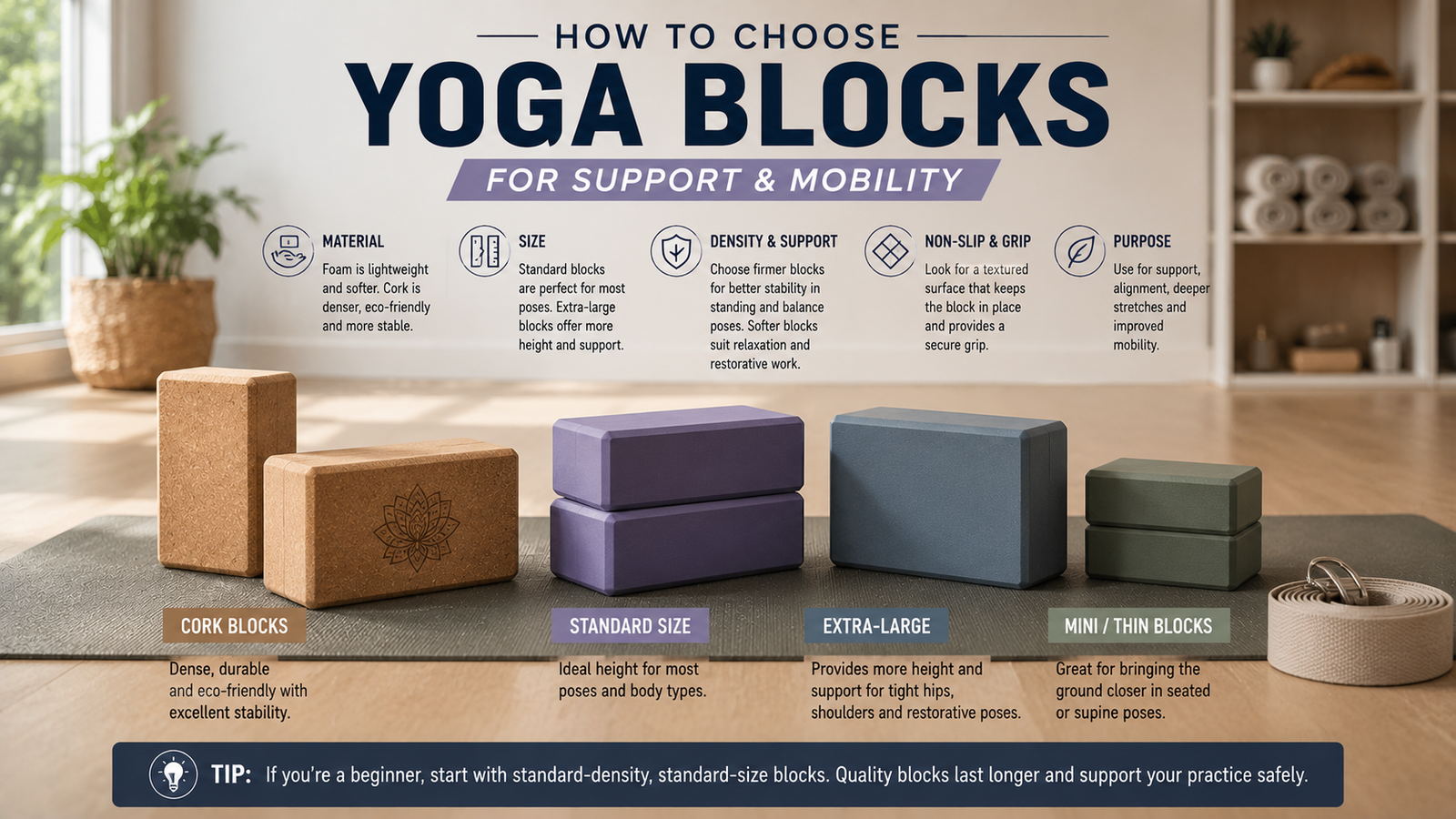
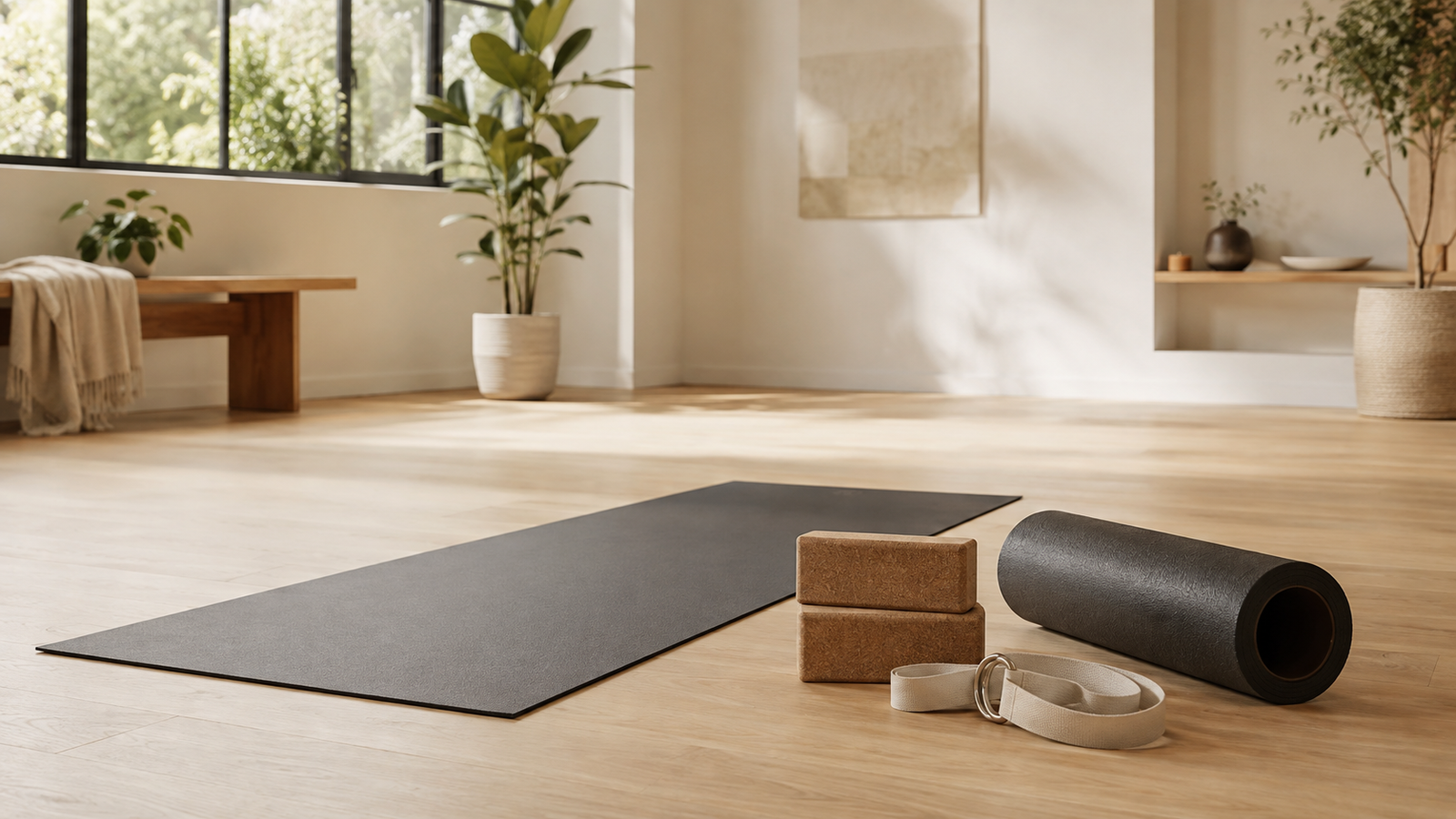
You may need only:
- one 4–5 mm yoga mat;
- two yoga blocks;
- one strap.
This is enough for a wide range of beginner:
- yoga;
- mobility;
- stretching.
Example Hot-Yoga Setup
- high-grip mat;
- yoga towel;
- small hand towel;
- water bottle.
Clean and dry everything after class.
Example Home Mobility Setup
- slightly wider mat;
- blocks;
- strap;
- foam roller where useful.
Example Travel Setup
- 1–2 mm travel mat;
- lightweight strap.
Use hotel towels or local props where appropriate.
Yoga Mat Buying Checklist
Before buying, ask:
1. What style of yoga do I practice most?
This affects grip and cushioning.
2. How much do I sweat?
Wet grip may be essential.
3. Do I need extra knee cushioning?
Consider density as well as thickness.
4. Is the mat too soft for balance?
Stable footing matters.
5. Is the surface grippy when dry?
Test if possible.
6. Is it designed to remain grippy when wet?
Important for hot yoga.
7. What is the mat made from?
PVC, TPE, rubber, cork or another material?
8. Do I have a latex allergy?
Avoid natural rubber where relevant.
9. Is the mat long enough?
Especially for taller users.
10. Is the width comfortable?
Wider mats provide more space.
11. How much does the mat weigh?
Important for commuting.
12. Does the underside grip the floor?
The whole mat should remain stable.
13. Does the mat stretch under pressure?
Excessive movement is undesirable.
14. Does it have a strong new-material smell?
Consider ventilation and sensitivity.
15. How should it be cleaned?
Make sure the routine is practical.
16. Can the material tolerate sweat and humidity?
Important for frequent practice.
17. Does it require special maintenance?
Premium surfaces sometimes do.
18. How durable is the surface?
Check for peeling complaints.
19. Will I use it mainly at home or carry it daily?
Weight may change the decision.
20. Does the mat make me feel stable and comfortable enough to practice regularly?
The most important question.
When Should You Replace a Yoga Mat?
Consider replacement when the mat develops:
- significant peeling;
- deep cracks;
- severe stretching;
- areas worn extremely thin;
- persistent loss of traction;
- damage that makes the surface uneven.
Cosmetic:
- stains;
- discoloration;
do not automatically require replacement.
Loss of Grip
Before replacing the mat:
- Clean it correctly.
- Allow it to dry fully.
- Avoid lotion before practice.
- Confirm you are using the correct side.
If grip remains poor, the surface may be worn.
Permanent Odour
Deeply absorbed sweat may eventually create persistent smell.
If repeated correct cleaning does not solve it and the mat is heavily used, replacement may be reasonable.
When Should You Seek Professional Guidance?
A yoga mat can improve comfort, but it cannot solve persistent physical symptoms.
Seek appropriate professional assessment if yoga repeatedly causes:
- joint pain;
- numbness;
- tingling;
- significant wrist pain;
- persistent knee pain;
- instability.
A qualified yoga instructor can also help modify poses using:
- blocks;
- straps;
- blankets;
so you do not rely on an excessively thick mat to solve every positioning issue.
The Physical Glow Takeaway
The right yoga mat should make your practice feel more secure, not more complicated.
For most beginners and general yoga users, a practical starting point is:
a firm 4–5 mm mat with reliable grip, enough length for your body and a surface you can clean easily.
Then adjust according to your practice:
- Vinyasa or strength-based yoga → prioritize grip and stability;
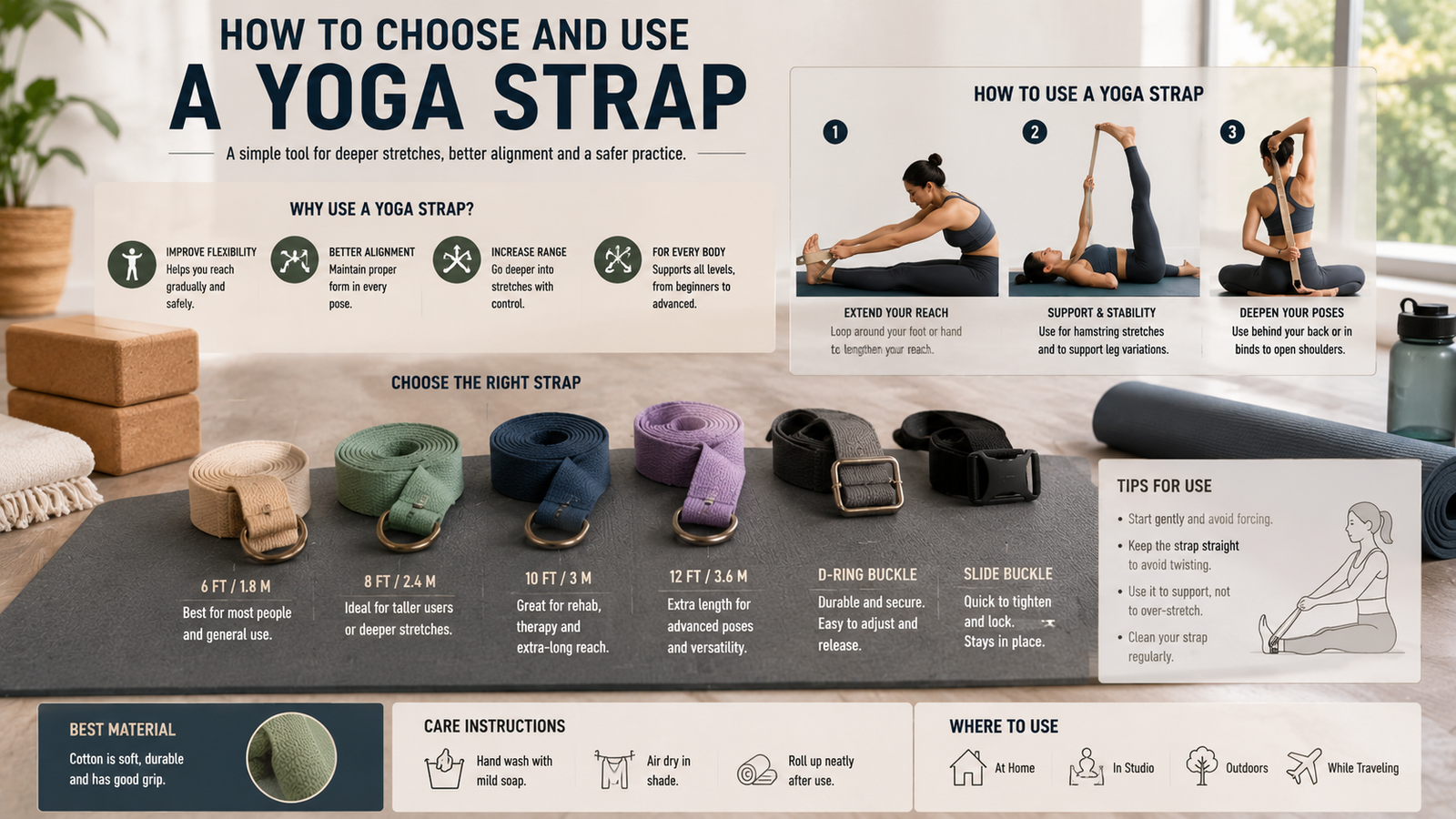
- hot yoga → prioritize wet traction and sweat management;
- Yin or restorative practice → prioritize comfort and cushioning;
- travel → prioritize low weight and compact size;
- sensitive knees → use moderate cushioning plus additional knee support when needed;
- tall users → choose an extended-length mat.
Material also changes the experience:
- PVC → durable and often affordable;
- TPE → lightweight and soft;
- natural rubber → dense, stable and highly grippy;
- cork → useful natural-feeling surface, particularly for sweaty practice;
- polyurethane-top mats → strong grip but often higher maintenance.
Do not choose thickness alone.
A dense:
- 4 mm mat;
may provide better support than a soft:
- 6 mm mat.
And do not assume the most expensive mat will automatically be best.
What matters is whether your mat gives you:
secure hands → stable feet → enough joint comfort → enough space → confidence to move.
Once you find that balance, the mat should largely disappear from your attention.
You should be able to focus on:
- breathing;
- movement;
- balance;
- mobility;
rather than constantly adjusting your hands because they are slipping or avoiding poses because the floor feels uncomfortable.
Choose a mat that fits the practice you actually do, care for it properly and use it consistently. That matters far more than chasing the thickest, trendiest or most technically complicated mat available.