What to Pack for a Home Workout or Gym Session
A practical packing checklist for gym and home workouts: choose useful hydration, clothing and support accessories without unnecessary equipment purchases.

Starting a fitness routine does not mean you need to buy an expensive collection of workout accessories.
A comfortable pair of shoes, suitable clothing, drinking water and the right equipment for your planned exercises may be enough.
However, once you begin visiting a gym regularly or following structured home workouts, a few practical accessories can make your sessions more organised.
Should you carry a gym bag? Do you need a protein shaker? Are knee supports necessary? And should beginners include ankle weights in their workout equipment?
The best workout kit is not the one with the most accessories. It is the one that contains what you genuinely need for your training routine.
This guide explains what to pack for a gym session, which accessories are useful for home exercise and how to avoid unnecessary fitness purchases.
Why a Simple Workout Kit Is Often Better
Fitness equipment is available in almost every category, from resistance bands and yoga mats to lifting accessories and wearable devices.
Many products are useful in the right circumstances.
However, buying equipment before understanding your training requirements can lead to wasted money and unused accessories.
For example, someone beginning basic bodyweight exercises at home may not need a large gym bag, lifting straps or adjustable ankle weights.
Similarly, a person attending a gym with all the necessary exercise equipment may only need personal essentials.
Before purchasing accessories, consider:
- What type of exercise will you perform?
- Will you train at home or at a gym?
- How long will each session last?
- What equipment is already available?
- Do you need to carry clothes or shoes?
- Which accessories solve a genuine problem?
Answering these questions can help you create a smaller, more practical fitness kit.
Essential Items for a Gym Workout
Most gym bags do not need to be complicated.
The following essentials cover many common workout situations.
1. Comfortable Workout Clothing
Choose clothing that allows comfortable movement during your intended activity.
For strength training, flexibility and freedom of movement may be particularly important.
For cardio workouts, breathable fabrics and comfortable fitting can help make exercise more pleasant.
Consider the type of workout rather than purchasing clothing solely for its appearance.
A basic setup may include:
- Comfortable workout T-shirt or top
- Suitable shorts, leggings or training trousers
- Appropriate socks
- Supportive footwear suited to the activity
- Change of clothes when needed
Specialised clothing may be useful for certain sports, but it is not mandatory for every workout.
2. A Reusable Water Bottle
Water is one of the most useful items to keep available during exercise.
Hydration needs vary depending on body size, exercise intensity, duration, temperature and individual circumstances.
A reusable water bottle makes drinking convenient without repeatedly purchasing disposable bottles.
When choosing one, consider its capacity, material, lid design and cleaning requirements.
A bottle should be easy to open, carry and clean.
3. A Small Workout Towel
A towel is useful for managing sweat and maintaining personal comfort during training.
Some gyms also have specific hygiene rules requiring members to use towels on shared equipment.
Choose a towel that is absorbent, easy to wash and compact enough to carry.
Avoid leaving a damp towel inside your bag for long periods.
4. Suitable Footwear
Footwear should match your planned exercise.
Running shoes, general training shoes and footwear intended for lifting may differ in cushioning, stability and construction.
A shoe suitable for treadmill walking is not necessarily ideal for every type of strength exercise.
Choose appropriate footwear based on your activity, comfort and any relevant professional guidance.
5. Personal Hygiene Essentials
Depending on your gym facilities and daily routine, you may want to carry:
- A small clean towel
- Deodorant
- A change of clothes
- Shower essentials
- A separate bag for damp clothing
- Personal toiletries
These items are optional and depend on whether you shower or change clothes at the gym.
Water Bottle vs Protein Shaker: Which Do You Need?
Water bottles and protein shakers may look similar, but they are designed for different purposes.
A regular water bottle is mainly intended for carrying liquids.
A protein shaker usually includes a mixing mechanism or internal design intended to help combine powdered products with liquid.
When a Water Bottle Is Enough
For many workouts, a normal reusable water bottle is sufficient.
You may prefer one if:
- You mainly drink water during exercise.
- You do not regularly mix powdered drinks.
- You want fewer components to clean.
- You prefer a lightweight container.
- You want a bottle for both exercise and everyday use.
A secure lid and convenient drinking opening may be more valuable than additional features.
When a Protein Shaker May Be Useful
A shaker can be convenient if your routine includes powdered protein or other drinks that require mixing.
However, a protein shake is not necessary for every workout.
Protein requirements can often be met through ordinary food, depending on dietary needs and training goals.
A shaker is simply a convenient mixing tool.
It does not improve workout performance by itself.
Water Bottle vs Shaker Comparison
| Feature | Water bottle | Protein shaker |
|---|---|---|
| Primary purpose | Carrying drinks | Mixing and carrying drinks |
| Mixing mechanism | Usually none | Often included |
| Cleaning | Generally simple | Additional parts may need cleaning |
| Typical use | Hydration | Powdered drink preparation |
| Necessary for beginners | Useful | Optional |
When comparing products such as a 700 ml Lifelong Protein Shaker and an 800 ml Symactive Sports Bottle, consider the different capacities, lid designs and intended functions.
Neither format is automatically better.
How to Choose the Right Gym Bag Size
A gym bag helps organise belongings, but choosing the wrong size can make it inconvenient.
An oversized bag may be unnecessarily bulky.
A very small bag may not fit your workout clothing, bottle and towel.
Small Gym Bags
Compact bags may suit people carrying only a few essentials.
An approximately 11-litre duffle can be practical when you only need lightweight clothing and small accessories.
However, you should measure whether your belongings actually fit.
A small bag may not accommodate bulky shoes, a thick towel and a large bottle together.
Medium Gym Bags
Medium-sized bags can provide more flexibility for people who carry:
- Training clothes
- Separate shoes
- A towel
- A water bottle
- Toiletries
- Small workout accessories
For many regular gym users, a medium-capacity bag may provide a reasonable balance between storage and portability.
Large Gym Bags
Larger bags may be useful when carrying multiple changes of clothing, specialist equipment or additional personal items.
However, more capacity does not automatically mean greater convenience.
Choose a size that suits your normal routine rather than occasional maximum requirements.
What Features Should You Look for in a Gym Bag?
When comparing gym bags, consider practical construction details.
Material
Choose a material suitable for frequent use and easy maintenance.
Some synthetic fabrics are lightweight and reasonably easy to wipe clean.
However, durability depends on fabric quality and construction.
Compartments
Separate sections may help organise footwear, clothing and toiletries.
Not every user requires multiple compartments.
Zippers and Stitching
Inspect the quality of zippers, handles and seams.
These areas experience repeated stress.
Shoulder Strap
A comfortable strap can make carrying the bag easier.
Check whether the strap is adjustable and securely attached.
Cleaning Requirements
A bag that can be cleaned and dried conveniently may be more practical for regular gym use.
Actual Capacity
Do not rely only on product photographs.
Check the dimensions and listed capacity.
For example, the Nivia Basic Polyester Gym Duffle Bag Black 11L represents a compact format rather than a large equipment bag.
Confirm its exact measurements and features on the current retailer listing.
What Equipment Do You Need for Home Workouts?
Home workouts often require fewer accessories than gym sessions.
The appropriate equipment depends on your exercise programme.
A beginner following basic bodyweight exercises may need only sufficient floor space and suitable clothing.
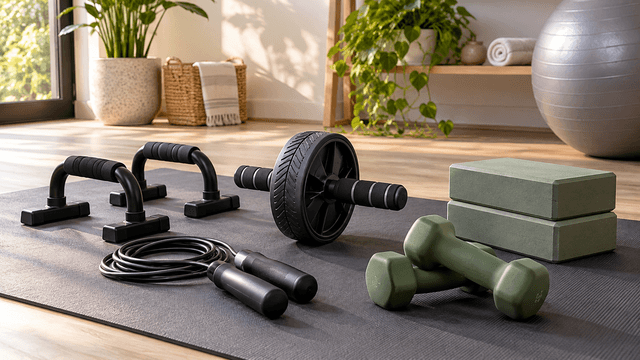
Other routines may benefit from a yoga mat, resistance bands or dumbbells.
Yoga Mat
A yoga mat can provide a comfortable surface for stretching and floor-based exercises.
Choose a mat according to thickness, grip, density and available space.
A mat is not a substitute for specialised flooring when heavy exercise equipment or impact activities require additional protection.
Resistance Bands
Resistance bands can provide adjustable exercise resistance without requiring large storage space.
Different formats include:
- Flat resistance bands
- Resistance tubes
- Mini-loop bands
- Long-loop bands
Choose the appropriate resistance for the movement rather than buying the strongest available band.
Dumbbells
Dumbbells can be useful for basic strength exercises.
However, beginners should select manageable weights and learn proper technique before increasing resistance.
Dumbbells are optional for many introductory home workouts.
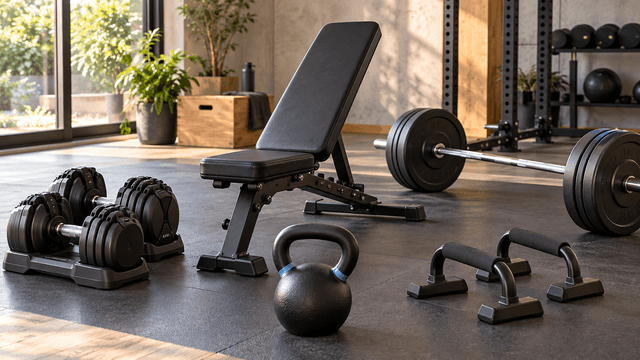
Exercise Bench
A bench may increase exercise variety but is not essential for every home routine.
Consider one only when your training programme requires it and you have adequate space.
Workout Timer
A basic phone timer or clock may be sufficient for interval training and rest periods.
A specialised fitness watch is not mandatory.
Are Resistance Bands Worth Keeping in a Gym Bag?
Resistance bands are compact and versatile.
They may be useful for certain warm-up movements, controlled strengthening exercises or workout variations.
However, not every session requires them.
If your gym already provides suitable resistance equipment, carrying additional bands may be unnecessary.
A small mini-loop band set may be convenient for certain lower-body movements, while longer bands can support other exercises.
Before including one in your bag, ask whether your workout actually uses it.
Avoid carrying damaged bands.
Inspect the material and attachments before every session.
Should Beginners Use Ankle Weights?
Ankle weights are wearable accessories that add external resistance to certain movements.
They may be appropriate for selected exercises when used with suitable technique.
However, they are not essential beginner equipment.
Adding ankle weights can change how forces act on the joints during movement.
For example, using ankle weights while walking or performing unfamiliar exercises may place additional demands on the lower limbs.
When Ankle Weights May Be Useful
Some controlled strengthening programmes use ankle weights for specific exercises.
They may also be used in rehabilitation settings under professional guidance.
When Beginners Should Be Careful
Avoid adding ankle weights simply because you want every movement to feel harder.
Start by learning the exercise without additional loading.
If using weights, follow the manufacturer’s instructions and appropriate training guidance.
Products such as Slovic Adjustable Ankle Weights 2kg Pair should be considered according to their exact weight configuration and intended use.
The product’s maximum weight does not mean every user should begin with that load.
Ankle weights are optional tools, not necessary workout essentials.
Do You Need Knee Supports for Gym Workouts?
Knee supports and sleeves are commonly used during exercise.
A knitted knee sleeve may provide a feeling of warmth, compression or support.
However, knee sleeves do not automatically prevent injuries.
Their suitability depends on the design, fit and individual circumstances.
A knee support should not be used as a substitute for proper exercise technique or medical evaluation.
When a Knee Sleeve May Be Considered
Some people prefer a sleeve during specific activities because it feels comfortable or provides mild compression.
Others may use one based on guidance from a qualified professional.
When to Avoid Self-Treatment
If you experience persistent knee pain, swelling, instability or reduced movement, seek appropriate assessment.
Buying a knee sleeve without understanding the cause of symptoms may delay suitable treatment.
For products such as Nivia Knitted Knee Support Pair, check size charts, material composition and care instructions.
Do not assume that a tighter sleeve provides better support.
What Should You Carry for Strength Training?
A strength-training kit does not require every accessory sold in fitness stores.
For many basic gym sessions, the essentials are:
- Suitable footwear
- Comfortable clothing
- Water bottle
- Towel
- Personal necessities
Additional equipment should match specific training requirements.
For example, some experienced lifters use wrist wraps or lifting straps during selected exercises.
However, these accessories are not mandatory for beginners.
Proper movement technique, progressive training and suitable recovery are more important than owning numerous accessories.
What Should You Carry for Cardio Workouts?
Cardio workouts may involve walking, running, cycling, rowing or other activities.
Your kit should reflect the activity and environment.
For Treadmill Walking or Running
Consider comfortable footwear, breathable clothing, drinking water and a towel.
Additional items may depend on exercise duration and gym facilities.
For Indoor Cycling
Comfortable clothing and hydration may be sufficient.
Specialised accessories depend on the cycling setup and personal preferences.
For Outdoor Exercise
Weather and environmental conditions matter more.
Depending on the activity, you may need sun protection, suitable footwear and appropriate visibility or safety equipment.
Do not automatically purchase equipment intended for outdoor sports when your actual routine is indoors.
What Should You Carry for Yoga or Stretching?
Yoga and stretching routines often need very little equipment.
A suitable mat and comfortable clothing may be enough.
Some practices may benefit from yoga blocks or straps.
Yoga Blocks
Yoga blocks can provide additional support or help make certain positions more accessible.
Choose a stable design appropriate to your practice.
Yoga Straps
A yoga strap may help with positioning during selected stretches.
Use one according to appropriate instruction rather than forcing a greater range of motion.
Towels
A small towel may be useful during longer sessions or warm conditions.
Remember that these accessories should support your practice, not become a requirement for participation.
How to Pack a Gym Bag Efficiently
A well-organised bag makes it easier to find belongings and reduces the chance of forgetting essential items.
Step 1: Prepare Your Workout Clothing
Pack clean clothes and appropriate footwear.
If you shower at the gym, include a change of clothes.
Step 2: Add Your Water Bottle
Check that the lid is closed properly.
If carrying a shaker, ensure its components are securely assembled.
Step 3: Pack Your Towel
A clean towel is useful for comfort and gym hygiene.
Step 4: Include Small Personal Items
Keep keys, access cards and other necessities in a secure pocket.
Avoid carrying unnecessary valuables.
Step 5: Add Exercise Accessories Only When Required
Resistance bands, wrist supports or ankle weights should be packed only when your session includes appropriate exercises using them.
Step 6: Keep Damp Clothing Separate
Use a suitable separate pouch or compartment for sweaty clothing when necessary.
Remove damp items promptly after returning home.
Gym Bag Packing Checklist
| Item | Priority | Main purpose |
|---|---|---|
| Workout clothing | Essential | Comfortable movement |
| Suitable shoes | Activity-dependent | Appropriate footwear |
| Water bottle | Essential for most sessions | Convenient hydration |
| Towel | Recommended | Sweat and hygiene |
| Change of clothes | Optional | Post-workout convenience |
| Protein shaker | Optional | Mixing powdered drinks |
| Resistance bands | Workout-dependent | Additional exercise resistance |
| Knee sleeve | Individual need | Compression or comfort |
| Ankle weights | Exercise-dependent | External resistance |
| Toiletries | Optional | Shower and personal care |
| Gym bag | Convenience item | Carrying belongings |
A checklist should make packing simpler, not encourage unnecessary purchases.
Common Mistakes When Buying Gym Accessories
1. Buying Everything Before Starting
Many beginners purchase equipment they rarely use.
Begin with the essentials and add accessories only when your training programme requires them.
2. Choosing a Bag Without Checking Capacity
A bag may look spacious in photographs but fail to accommodate your belongings.
Review dimensions and capacity before ordering.
3. Buying a Shaker Without Needing One
If you only drink water during exercise, a normal water bottle may be sufficient.
4. Using Support Accessories Without Understanding Their Purpose
Knee sleeves, wraps and other supports should not be treated as guaranteed injury-prevention tools.
5. Adding Too Much Resistance
Heavier ankle weights or stronger bands do not automatically produce better workouts.
Progress gradually while maintaining proper technique.
6. Ignoring Equipment Maintenance
Dirty drink containers, damp towels and worn resistance bands can create hygiene or safety concerns.
Maintain accessories according to the manufacturer’s instructions.
7. Prioritising Appearance Over Function
An expensive or fashionable accessory is not necessarily more useful than a simple, well-designed alternative.
How to Clean and Maintain Your Workout Accessories
Regular maintenance helps keep your fitness equipment hygienic and usable.
Water Bottles and Shakers
Clean drink containers after use according to the manufacturer’s instructions.
Pay attention to lids, seals and mixing components.
Allow all washable parts to dry appropriately.
Gym Bags
Remove damp towels and clothing promptly.
Wipe or wash the bag according to its care label.
Avoid storing wet items in enclosed compartments for extended periods.
Resistance Bands
Inspect bands for cracks, tears or signs of deterioration.
Clean and store them according to the manufacturer’s instructions.
Replace damaged bands.
Knee Sleeves and Fabric Supports
Follow washing and drying instructions.
Inspect elastic material and stitching for wear.
Ankle Weights
Check straps, seams and closures before use.
Ensure the weights remain securely fitted during exercises.
How to Compare Fitness Accessories Before Buying
Physical Glow readers may encounter products such as Lifelong Protein Shaker 700ml, Slovic Adjustable Ankle Weights, Nivia Knitted Knee Support, Nivia Gym Duffle Bag and Symactive Sports Bottle.
These products serve different purposes.
Lifelong Protein Shaker 700ml
A shaker format for people who regularly mix powdered drinks.
Compare the lid design, mixing components and cleaning instructions before purchasing.
Slovic Adjustable Ankle Weights 2kg Pair
A wearable resistance format for selected exercises.
Consider whether ankle loading is appropriate for your training programme.
Nivia Knitted Knee Support Pair
A knitted support accessory.
Check sizing and intended use rather than relying on appearance alone.
Nivia Basic Polyester Gym Duffle Bag 11L
A compact bag format suited to shoppers carrying a limited set of belongings.
Measure the required capacity before purchasing.
Amazon Brand Symactive Sports Bottle 800ml
A reusable hydration bottle format.
Compare capacity, material, lid security and ease of cleaning.
These examples illustrate different accessory categories. Physical Glow has not independently tested or ranked their performance.
Product specifications, prices and seller availability should be checked on current retailer listings.
How Much Should You Spend on Gym Accessories?
There is no fixed amount that every beginner needs to spend.
Your budget should reflect the equipment required for your actual workouts.
Start by identifying what you already own.
A reusable bottle, comfortable clothing and a basic towel may already be available at home.
Prioritise purchases that solve a clear problem.
For example:
- Buy a larger gym bag if your current one cannot hold your essentials.
- Consider a shaker if you regularly prepare powdered drinks.
- Add resistance bands if your workout programme requires them.
- Choose an appropriate yoga mat if floor-based exercise is uncomfortable.
- Avoid buying supports or wearable weights without a specific reason.
A smaller collection of useful equipment is often a better investment than a large collection of unused accessories.
Frequently Asked Questions
1. What should a beginner pack for the gym?
A beginner can start with comfortable workout clothing, appropriate shoes, a water bottle, a towel and necessary personal items. Additional accessories depend on the planned workout.
2. Do I need a protein shaker for every workout?
No. A protein shaker is optional and mainly useful for mixing powdered drinks. It is not required for exercise.
3. Is an 11-litre gym bag large enough?
It may be sufficient for a compact workout kit, but capacity depends on the size of your shoes, clothing, towel and bottle. Check dimensions before purchasing.
4. Should beginners use ankle weights?
Not automatically. Beginners should first learn appropriate movement technique. Ankle weights can add loading and should be used only when suitable for the exercise and individual.
5. Are knee supports necessary for gym workouts?
No. They are optional accessories and are not required for healthy individuals performing ordinary workouts. Persistent knee symptoms require appropriate assessment.
6. Can I exercise at home without equipment?
Yes. Many bodyweight exercises can be performed without specialised equipment, provided they are appropriate for your ability and physical condition.
7. Should I carry resistance bands to the gym?
Only if your workout programme includes exercises requiring them and suitable equipment is not already available.
8. Is a water bottle better than a protein shaker?
Neither is universally better. A bottle is convenient for ordinary hydration, while a shaker is useful when mixing powdered drinks.
9. How often should I clean my gym bag?
Remove damp clothing and towels after each use. Clean the bag as needed and according to its care instructions.
10. Do expensive gym accessories improve workout results?
Not necessarily. Training consistency, suitable exercise progression, recovery and technique matter more than the price of accessories.
Final Thoughts
A practical workout kit should make exercise easier, not more complicated.
For most gym sessions, comfortable clothing, suitable footwear, drinking water and basic hygiene items cover the essentials.
A gym bag can help organise belongings, while a protein shaker may be useful if you regularly mix powdered drinks.
Resistance bands, ankle weights and support accessories have specific purposes, but they are not mandatory for every workout.
Home training may require even fewer items, especially when your routine focuses on bodyweight movements.
Choose fitness accessories according to your actual exercise needs, not the number of products available online.
Start with a simple kit, maintain your equipment properly and add new items only when they provide a clear benefit.
The most effective fitness routine is built around consistent, appropriate training—not around how many accessories you own.
Physical Glow Editorial Note: This article provides general fitness education and buying guidance. Physical Glow has not independently tested the specific accessories mentioned. Product specifications and availability may change. Exercise suitability depends on individual health, experience and training goals. Some related buying guides and product pages may contain affiliate links, through which Physical Glow may earn a commission from qualifying purchases at no additional cost to readers.