Building a Simple Personal Care Routine That Works
Learn how to build a simple personal care routine you can follow consistently, with practical guidance on daily hygiene, grooming, skin and body care, simplicity and consistency. This beginner-friendly guide helps you make a clear, informed choice without unnecessary complexity.
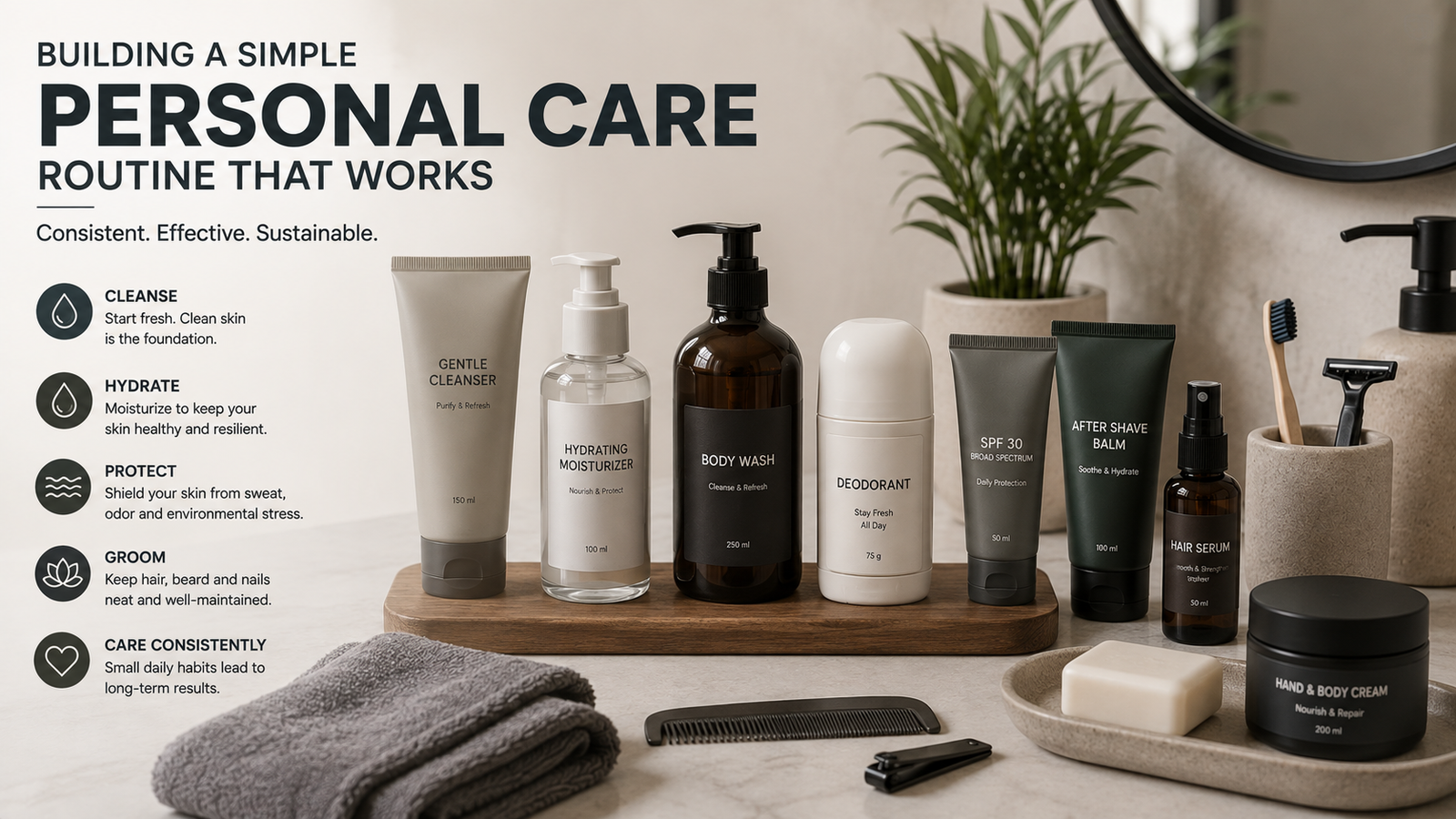
A personal care routine does not need ten products, complicated schedules or a bathroom shelf filled with things you rarely use.
For most people, a useful routine is much simpler.
It should help you consistently manage the basics:
- oral hygiene;
- bathing and body cleansing;
- underarm and odour care;
- skin moisturization where needed;
- hair and scalp hygiene;
- grooming;
- hand and nail care;
- clean clothing and towels;
- a few occasional tasks that do not need to happen every day.
The useful question is not:
“How many personal care products should I use?”
It is:
“Which basic care steps do I actually need, how often do I need them, and how can I organize them so they are easy to repeat?”
A good personal care routine should make everyday hygiene and grooming easier. It should not become another source of pressure, unnecessary spending or irritation from using too many products.
This guide explains how to build a straightforward routine around the things that matter most and adjust it for your skin, hair, climate and lifestyle.
What Counts as Personal Care?
Personal care is broader than skincare.
It can include:
- bathing;
- oral care;
- deodorant;
- hair washing;
- body moisturization;
- shaving or beard care;
- nail care;
- hand care;
- foot care;
- menstrual hygiene where relevant;
- grooming;
- clean clothing;
- towel and bedding hygiene.
Some of these are daily.
Others may be needed only:
- several times per week;
- weekly;
- occasionally.
The goal is not to perform every possible step every day.
The goal is to create the minimum effective routine you can maintain consistently.
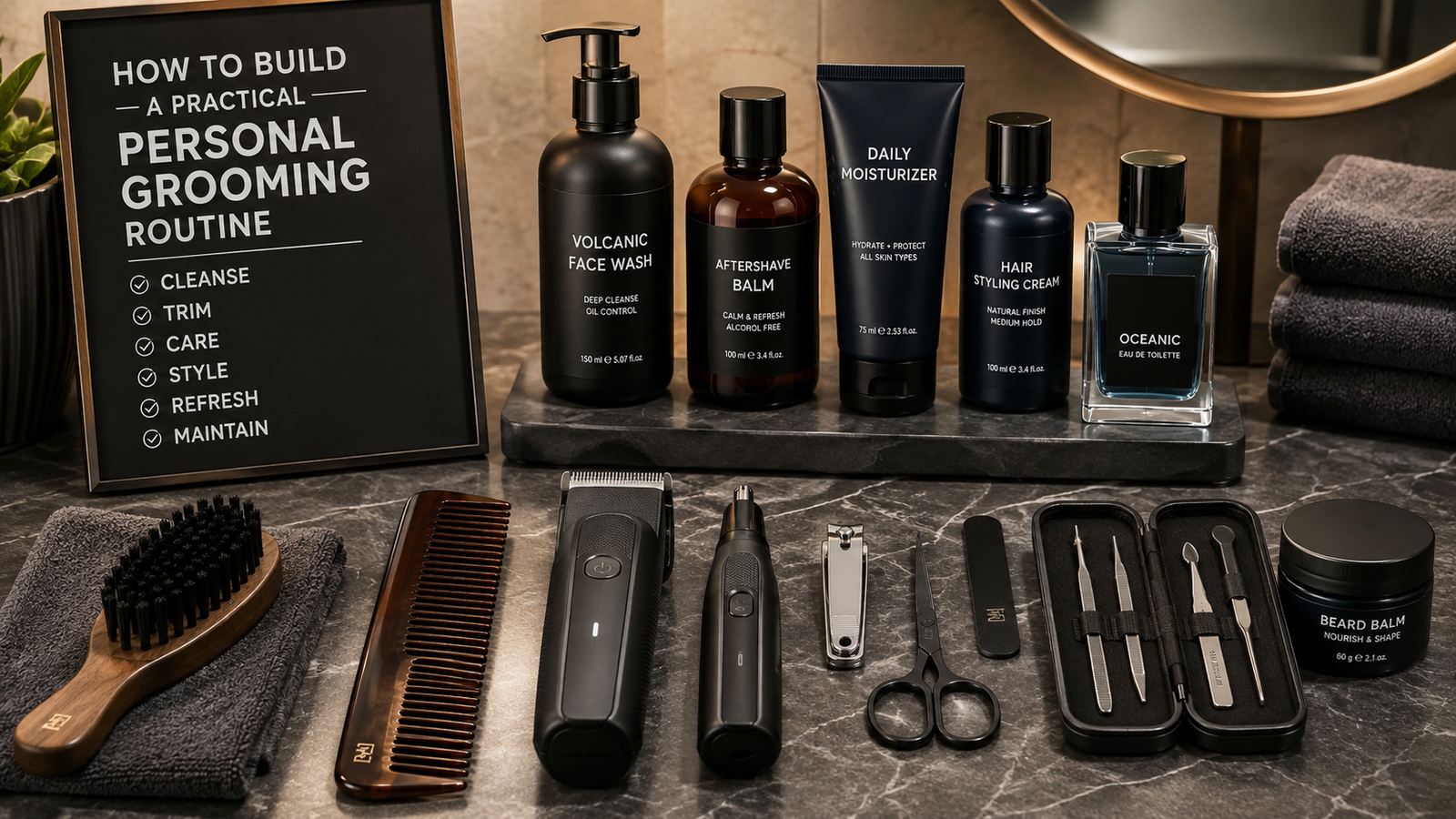
Start With Four Core Areas
A simple personal care routine can be organized into four areas:
- Clean
- Protect and moisturize
- Groom
- Maintain
This structure is easier to remember than building separate complicated routines for every part of the body.
1. Clean
Cleaning includes the essentials that remove:
- sweat;
- excess oil;
- food residue;
- odour;
- dirt;
- product buildup;
- microorganisms from important areas.
This includes:
- brushing your teeth;
- washing your hands;
- bathing;
- washing hair when needed;
- cleaning grooming tools.
But cleaning should be appropriate rather than excessive.
More washing is not automatically healthier.
2. Protect and Moisturize
After cleansing, some areas may need support.
Depending on your needs, this might include:
- body lotion;
- hand cream;
- lip balm;
- sunscreen on exposed skin;
- deodorant or antiperspirant.
Not everybody needs every product.
For example, someone with naturally comfortable body skin may not need heavy full-body moisturizer after every shower.
Someone with dry skin may benefit greatly from it.
3. Groom
Grooming is primarily about comfort, appearance and personal preference.
It may include:
- shaving;
- beard trimming;
- hair styling;
- nail trimming;
- eyebrow grooming;
- body-hair management.
There is no universal requirement to remove body hair or maintain a particular grooming style.
Choose according to:
- comfort;
- preference;
- work requirements;
- cultural context.
4. Maintain
Maintenance prevents products and tools from becoming hygiene problems themselves.
Examples include:
- changing towels;
- cleaning razors;
- replacing toothbrush heads;
- washing combs;
- drying shower accessories;
- cleaning trimmers;
- replacing worn personal-care products.
This part is easy to forget, but it can make the entire routine more hygienic.
Build a Simple Morning Routine
Your morning routine does not need to be long.
A practical structure might be:
- Brush teeth.
- Wash or rinse face as appropriate.
- Shower if that fits your schedule.
- Apply deodorant or antiperspirant.
- Moisturize areas that need it.
- Apply sunscreen to exposed skin when appropriate.
- Groom hair, facial hair or other areas as preferred.
That may be enough.
The exact sequence is less important than consistency.
Build a Simple Evening Routine
An evening routine can focus on removing the day’s buildup and preparing for sleep.
For example:
- Brush teeth and clean between teeth.
- Wash face if needed.
- Shower if this is your preferred bathing time.
- Remove sunscreen, sweat or heavy body products.
- Apply moisturizer to dry areas.
- Complete any occasional grooming task.
Again, this does not need to become a 30-minute ritual.
Daily vs Occasional Personal Care
One of the easiest ways to simplify your routine is to stop treating every task as daily.
| Frequency | Examples |
|---|---|
| Daily | Tooth brushing, hand washing, deodorant as needed |
| Daily or as needed | Bathing, body moisturizer |
| Several times weekly | Hair washing depending on scalp/hair |
| Weekly or as needed | Nail trimming, deeper grooming |
| Periodically | Replacing toothbrush heads, cleaning trimmers, checking products |
Frequency depends on the person.
The important point is to give each task an appropriate schedule.
Oral Care Should Be a Non-Negotiable Foundation
Oral care is one of the most important personal-care habits.
A basic routine generally includes:
- brushing twice daily with fluoride toothpaste;
- cleaning between teeth regularly;
- cleaning the tongue if preferred;
- regular dental check-ups according to individual need.
Do not make oral care complicated by constantly changing products.
Technique and consistency matter enormously.
Toothbrush Choice
Choose a toothbrush that:
- fits comfortably in your mouth;
- allows access to all teeth;
- has soft bristles in most circumstances.
Manual and electric toothbrushes can both work.
The better choice is the one you use properly and consistently.
Toothpaste
Fluoride toothpaste is an important part of routine cavity prevention for most people.
Specialized toothpastes may target:
- sensitivity;
- tartar;
- whitening;
- gum concerns.
Choose specialized products only when you have a matching need.
Interdental Cleaning
A toothbrush does not completely clean between teeth.
Options can include:
- dental floss;
- interdental brushes;
- other appropriate tools.
Which works best depends partly on:
- spacing;
- dental work;
- dexterity.
Persistent bleeding, pain or dental problems should be assessed by a dental professional rather than managed indefinitely by switching products.
Bathing: Clean Without Overdoing It
Bathing frequency varies based on:
- climate;
- exercise;
- sweat;
- occupation;
- skin type;
- personal preference.
Someone exercising outdoors in a hot climate may need more frequent showers than someone working indoors in cooler conditions.
The important thing is balancing cleanliness with skin comfort.
Focus Cleansing Where It Is Needed Most
Areas that commonly need deliberate cleansing include:
- underarms;
- groin;
- feet;
- areas with significant sweating;
- skin covered with sunscreen;
- visibly dirty areas.
You do not necessarily need aggressive scrubbing over every centimetre of skin.
Water Temperature Matters
Very hot water can make dry or sensitive skin feel worse.
Warm water is usually sufficient.
If your skin feels:
- tight;
- itchy;
- uncomfortable;
after showering, consider:
- lowering the temperature;
- reducing shower length;
- using a milder cleanser.
Choosing a Body Cleanser
A basic body wash or cleansing bar is enough for many people.
Choose according to:
- skin comfort;
- fragrance preference;
- dryness;
- sensitivity;
- specific concerns.
For normal skin, a straightforward cleanser may be all you need.
For dry skin, consider:
- creamier cleansers;
- mild formulations;
- less fragrance.
If you have a specific concern such as body acne, an active cleanser may be useful—but it should solve an actual problem rather than being added automatically.
Do You Need a Loofah or Bath Sponge?
No.
Hands can cleanse the body effectively.
Washcloths, sponges and loofahs are optional.
If you use them:
- avoid aggressive scrubbing;
- rinse them well;
- allow them to dry;
- clean or replace them regularly.
A damp shower accessory can become unhygienic if it never dries properly.
Deodorant and Antiperspirant
These products serve related but different functions.
Deodorant
Primarily helps manage odour.
Antiperspirant
Helps reduce sweating.
Many products perform both functions.
Choose based on whether your main concern is:
- odour;
- wetness;
- both.
If your underarms are sensitive, avoid assuming that stronger fragrance or stronger actives are always better.
Apply Deodorant to Clean, Dry Skin
For ordinary use, deodorant or antiperspirant generally works best when applied to clean, dry underarms.
If a product repeatedly causes:
- burning;
- itching;
- rash;
reconsider the formula.
Freshly shaved skin may also be more sensitive.
Body Moisturization: Use It Where You Need It
Not everyone needs a thick body cream every day.
But moisturizer can be particularly helpful if your skin:
- feels tight after showering;
- flakes;
- becomes rough;
- is frequently exposed to dry air.
Useful areas often include:
- arms;
- legs;
- elbows;
- knees;
- hands;
- feet.
A lightweight lotion may be enough for most of the body.
Richer cream can be reserved for very dry areas.
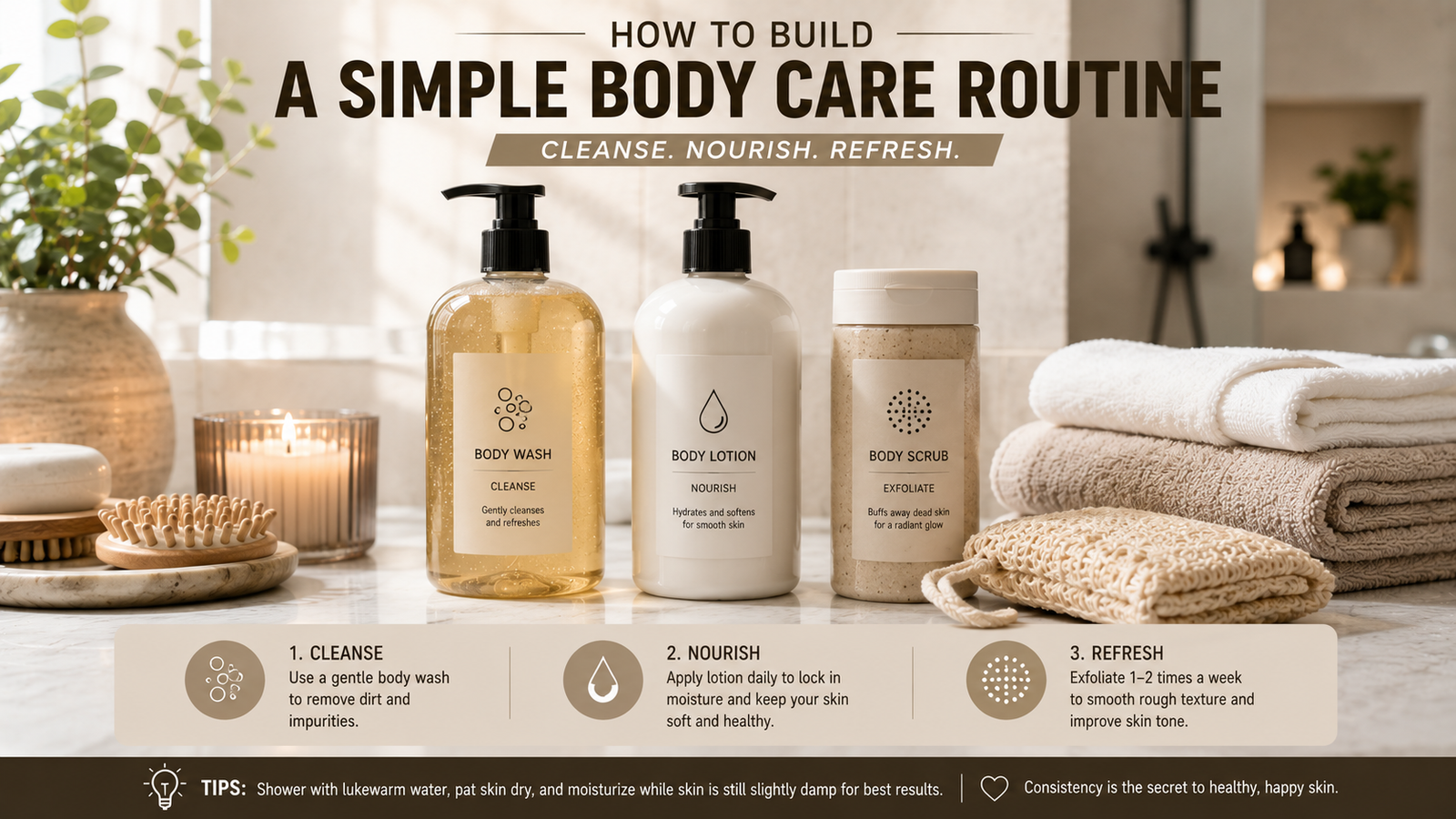
Apply Moisturizer After Bathing
A convenient time to moisturize is shortly after a shower.
You can:
- gently pat the skin dry;
- leave it slightly damp;
- apply lotion.
This can help reduce the feeling of dryness and makes the step easy to remember.
Do You Need Separate Products for Every Body Area?
Usually not.
You may see specialized products for:
- elbows;
- knees;
- feet;
- hands;
- neck;
- chest.
Sometimes specialization is useful.
But many people can simplify with:
- one general body moisturizer;
- one richer product for very dry areas.
Do not create five products where two will do the job.
Hand Care
Hands are washed frequently and can become dry.
A simple hand routine includes:
- appropriate hand washing;
- thorough drying;
- moisturizer if needed.
If you wash your hands many times per day because of work, consider keeping hand cream near:
- your desk;
- sink;
- bedside table.
Convenience improves consistency.
Foot Care
Feet are often ignored until there is a problem.
Basic care includes:
- washing;
- drying carefully, especially between toes;
- changing socks;
- allowing shoes to dry;
- trimming nails appropriately.
Very dry heels may benefit from:
- richer moisturizer;
- urea-containing foot cream.
Persistent:
- fungal-looking changes;
- pain;
- cracks;
- wounds;
deserve appropriate assessment, especially for people with diabetes or circulation problems.
Hair and Scalp Hygiene
Hair washing frequency varies widely.
You do not need to follow a fixed rule such as:
- shampoo every day;
- shampoo only once per week.
Instead, consider:
- scalp oiliness;
- sweating;
- hair texture;
- styling products;
- dandruff;
- exercise.
Oily Scalps
May need more frequent cleansing.
Dry or Curly Hair
May tolerate or prefer less frequent shampooing.
Heavy Styling Product Use
May require more deliberate cleansing to prevent buildup.
The scalp and hair lengths have different needs.
Clean primarily for the scalp while conditioning primarily for the lengths.
Shampoo the Scalp, Not Just the Hair
When shampooing:
- wet thoroughly;
- apply shampoo mainly to the scalp;
- massage gently with fingertips;
- rinse;
- let the lather run through the lengths.
Avoid aggressive scratching with fingernails.
Conditioner Belongs Mainly on the Lengths
Conditioner can help:
- softness;
- detangling;
- manageability.
Apply primarily to:
- mid-lengths;
- ends.
People with very short hair may need less.
Those with dry or textured hair may need more.
Dandruff Is Not Simply Poor Hygiene
Persistent dandruff does not necessarily mean you are not washing correctly.
If you experience:
- significant flakes;
- itching;
- redness;
- recurring scalp irritation;
an appropriate anti-dandruff routine may be more useful than simply shampooing harder.
Persistent or severe scalp problems may need professional evaluation.
Facial Care Can Stay Simple Too
Although facial skincare is its own larger topic, a basic personal-care routine does not need to become complicated.
A simple structure may include:
Morning
- gentle cleansing if needed;
- moisturizer;
- sunscreen.
Evening
- cleanser;
- moisturizer.
Additional treatments should address specific concerns.
A personal-care routine becomes difficult to maintain when every product is added “just in case.”
Sunscreen as Everyday Protection
When skin is exposed to meaningful daylight, sunscreen can be an important protective step.
Choose a product you can apply adequately and consistently.
Consider:
- SPF;
- broad-spectrum protection;
- skin type;
- texture;
- climate.
Sunscreen does not need to feel luxurious.
It needs to be comfortable enough that you actually use it.
Nail Care
Nails usually need straightforward maintenance.
That may include:
- regular trimming;
- keeping them clean;
- smoothing sharp edges;
- moisturizing dry cuticles.
Avoid cutting cuticles aggressively.
Cuticles help protect the nail area.
Keep Nail Tools Personal
Avoid casually sharing:
- nail clippers;
- cuticle tools;
- razors.
If tools are shared in professional grooming settings, they should be properly disinfected or sterilized according to the type of tool and local hygiene standards.
Shaving and Hair Removal
Hair removal is a preference, not a hygiene requirement.
If you shave, basic principles include:
- soften the hair with water;
- use adequate lubrication;
- use a clean, sharp razor;
- avoid excessive repeated passes;
- moisturize afterwards if needed.
A dull blade often causes more:
- pulling;
- irritation;
- repeated passes.
How Often Should You Replace a Razor?
There is no universal number of shaves.
Replace the blade when it becomes:
- dull;
- rusty;
- damaged;
- uncomfortable.
A razor that starts pulling hair instead of cutting cleanly is usually ready for replacement.
Beard and Facial Hair Care
A basic beard routine may include:
- washing;
- regular trimming;
- combing;
- moisturizer or beard product if needed.
You do not necessarily need:
- beard shampoo;
- beard conditioner;
- beard oil;
- beard balm;
- beard wax;
all at once.
Start with the problem.
If the skin underneath is dry, improve moisture.
If the beard is difficult to shape, consider a styling product.
Trimmers
When choosing or using a trimmer, prioritize:
- appropriate guards;
- easy cleaning;
- battery reliability;
- comfortable grip.
Clean hair from the blades regularly.
Follow instructions for:
- oiling;
- washing;
- blade replacement.
Do not share grooming tools without appropriate cleaning.
Menstrual Hygiene
For people who menstruate, personal care may include:
- pads;
- tampons;
- menstrual cups;
- period underwear.
There is no single best option for everyone.
Choose according to:
- comfort;
- flow;
- lifestyle;
- ability to change or clean the product appropriately.
Follow manufacturer instructions, especially regarding how long products should be worn.
Persistent unusual:
- pain;
- odour;
- discharge;
- irritation;
should not automatically be attributed to the hygiene product.
Intimate Hygiene: Keep It Simple
External genital areas generally do not require heavily fragranced specialty cleansers.
Overuse of:
- fragrance;
- strong soaps;
- internal cleansing products;
can cause irritation.
Routine gentle external hygiene is generally sufficient.
Avoid douching or internal cleansing practices marketed as necessary for freshness.
Persistent:
- itching;
- unusual discharge;
- strong change in odour;
- pain;
deserves appropriate medical assessment rather than stronger fragrance.
Clothing Is Part of Personal Care
Hygiene is not only about products applied to the body.
Clean clothing matters too.
Pay particular attention to:
- underwear;
- socks;
- workout clothes;
- clothing soaked with sweat.
Change damp clothing after exercise when practical.
Synthetic workout fabrics can sometimes retain odour.
Wash according to garment instructions and allow them to dry fully.
Towels Need Regular Washing
Towels repeatedly contact:
- skin;
- moisture;
- body oils.
Do not leave wet towels:
- bundled on the floor;
- permanently damp;
- hanging where they cannot dry.
Allow them to dry properly and launder them regularly.
You may want separate towels for:
- body;
- face;
- gym;
depending on your routine.
Pillowcases and Bedding Matter
Pillowcases collect:
- skin oil;
- sweat;
- hair products;
- saliva;
- environmental dust.
Regular laundering contributes to a cleaner personal-care environment.
You do not need to become obsessive about bedding.
Simply create a predictable schedule you can maintain.
Clean the Tools You Put Back on Your Body
Personal-care tools can accumulate:
- hair;
- skin oils;
- cosmetic residue;
- moisture.
This includes:
- combs;
- brushes;
- trimmer guards;
- makeup brushes;
- reusable razors;
- shower tools.
Set aside occasional time to clean them.
This is more useful than buying new tools while never maintaining the old ones.
Do Not Share Certain Personal-Care Items
Some items are better kept personal because they contact skin, blood or bodily fluids.
Examples include:
- toothbrushes;
- razors;
- nail tools;
- certain grooming devices.
Sharing increases hygiene risks.
Fragrance: Optional, Not Essential
Personal care products often use fragrance to create a feeling of:
- cleanliness;
- freshness;
- luxury.
But fragrance itself does not make you cleaner.
If you enjoy fragranced products and tolerate them, that is fine.
If your skin becomes:
- itchy;
- red;
- irritated;
simplifying fragrance exposure may help.
You do not need fragrance in:
- cleanser;
- body lotion;
- deodorant;
- hair products;
- perfume;
all at once.
Avoid Masking Hygiene Problems With Fragrance
If you notice persistent unusual odour, investigate the source.
Possible contributors can include:
- damp clothes;
- poorly dried shoes;
- retained fabric odour;
- dental problems;
- infections;
- excessive sweating.
Adding stronger fragrance may only hide the issue temporarily.
Build the Routine Around Your Climate
Climate changes personal-care needs.
Hot and Humid Conditions
You may need:
- more frequent showering;
- lighter moisturizers;
- better sweat management;
- more frequent clothing changes.
Cool or Dry Conditions
You may need:
- gentler bathing;
- richer moisturizer;
- more hand and lip care.
Your routine does not need to remain identical throughout the year.
Exercise Changes the Routine
If you exercise regularly, consider:
- shower timing;
- sweaty clothing;
- foot hygiene;
- scalp cleansing;
- hydration;
- recovery.
After a sweaty workout:
- change damp clothes;
- wash when practical;
- let shoes dry.
You do not necessarily need antibacterial products after every workout.
Basic cleansing is sufficient for many people.
Personal Care for Travel
Travel works better with a reduced routine.
Instead of carrying every full-size product, identify the essentials:
- toothbrush;
- toothpaste;
- deodorant;
- cleanser;
- moisturizer;
- sunscreen;
- basic hair products;
- required grooming items.
Travel-sized refillable containers can simplify packing.
Do not transfer products into unlabeled containers if you may forget what they contain.
Organize Products by Frequency
A useful bathroom setup is:
Daily products
Keep easily accessible:
- toothbrush;
- toothpaste;
- deodorant;
- cleanser;
- moisturizer.
Weekly products
Store nearby but not necessarily on the counter:
- nail tools;
- trimmer;
- hair mask;
- occasional exfoliant.
Rarely used products
Store elsewhere or reconsider whether you need them.
This reduces clutter and makes the daily routine easier.
Do Not Build a Routine Around Product Categories
A common mistake is thinking you need one product from every category.
For example:
- body wash;
- body scrub;
- body serum;
- body oil;
- lotion;
- body butter;
- body mist.
You may enjoy all of these, but they are not automatically necessary.
Start from your needs.
A simple routine might require only:
cleanser + moisturizer + deodorant
Everything else is optional.
Be Careful With Exfoliation
Body scrubs, acids and exfoliating tools can make skin feel smoother.
But too much exfoliation can create:
- irritation;
- redness;
- sensitivity;
- dryness.
Avoid automatically combining:
- exfoliating body wash;
- rough scrub;
- exfoliating gloves;
- acid lotion;
at the same time.
One controlled exfoliation method may be enough.
Patch Test New Products When Appropriate
If you have sensitive skin or a history of reactions, introduce new products carefully.
Do not change:
- body wash;
- lotion;
- deodorant;
- fragrance;
- shaving product;
all on the same day.
If irritation appears, you will not know which product caused it.
A simpler routine makes troubleshooting easier.
Watch Expiry and Product Condition
Some personal-care products carry:
- expiration dates;
- period-after-opening symbols.
Discard products that have clearly changed in:
- smell;
- texture;
- colour;
- consistency.
Do not continue using an obviously contaminated or degraded product simply because there is product left.
Avoid Stockpiling Too Much
Buying in bulk can save money for products you use consistently.
But stockpiling creates problems when:
- products expire;
- preferences change;
- formulas do not suit you;
- bottles create clutter.
Bulk buying makes the most sense for established staples.
How to Compare Personal-Care Value
Evaluate:
- price;
- pack size;
- amount used;
- frequency;
- whether the product replaces another step.
For products used daily, compare unit price where practical.
But value is not simply buying the cheapest bottle.
A product that:
- irritates your skin;
- leaks;
- requires excessive amounts;
may provide poor value despite a low purchase price.
Spend More Only Where It Improves Something Useful
Higher price may sometimes provide:
- better formulation;
- more comfortable texture;
- more durable grooming equipment;
- longer battery life;
- better packaging.
But premium branding alone does not improve hygiene.
For ordinary staples, effective options exist across many price ranges.
Common Personal Care Mistakes
Making the Routine Too Complicated
Too many steps reduce consistency.
Over-Cleansing
Frequent harsh cleansing can irritate skin and scalp.
Confusing Fragrance With Cleanliness
Smelling strongly scented is not the same as being clean.
Using Too Many Active Products
More exfoliating and treatment ingredients can create irritation.
Ignoring Tool Hygiene
Clean the tools you repeatedly use.
Keeping Products That Do Not Work
You do not need to finish every unsuitable product just because you bought it.
Copying Someone Else’s Routine Exactly
Different people have different:
- skin;
- scalp;
- climate;
- schedules.
Ignoring Persistent Symptoms
Do not keep changing cosmetic products for months if there may be an underlying health problem.
A Minimal Personal Care Routine
If you want the simplest possible starting point:
Morning
- Brush teeth.
- Shower or wash as needed.
- Apply deodorant/antiperspirant.
- Moisturize if needed.
- Apply sunscreen to exposed skin where appropriate.
- Groom as preferred.
Evening
- Brush teeth.
- Clean between teeth.
- Wash face/body as needed.
- Moisturize dry areas.
Weekly/Occasionally
- Trim nails.
- Groom facial/body hair as preferred.
- Clean personal-care tools.
- Replace/wash towels and bedding according to routine.
- Check supplies.
That is enough to form a strong foundation.
A Quick Personal Care Checklist
| Area | Basic priority |
|---|---|
| Teeth | Brush + interdental care |
| Body | Clean according to sweat/activity |
| Underarms | Deodorant or antiperspirant as needed |
| Skin | Moisturize if dry |
| Exposed skin | Sun protection where appropriate |
| Hair/scalp | Wash according to scalp and styling needs |
| Nails | Clean and trim |
| Grooming | Personal preference |
| Feet | Wash, dry, clean socks |
| Tools | Clean regularly |
| Towels/clothes | Wash and dry appropriately |
Before Buying Another Personal Care Product
Ask yourself:
- What specific problem will this solve?
- Do I already have a product doing the same thing?
- Will I use it regularly?
- Does my skin or scalp actually need it?
- Is this an essential step or an optional extra?
- Is the fragrance appropriate for me?
- Can I maintain the product hygienically?
- Does it simplify or complicate my routine?
- Is the pack size appropriate?
- Am I paying for useful performance or mostly branding?
If you cannot identify the purpose, consider waiting.
Frequently Asked Questions
How many personal care products do I need?
There is no required number. Most people can build a strong routine around a small set of products covering oral care, cleansing, deodorant, moisturization where needed and basic grooming.
Do I need to shower every day?
Bathing frequency depends on climate, activity, sweat and individual skin. Some people benefit from daily showers, while others may not require full-body cleansing every day.
Is body odour a sign of poor hygiene?
Not necessarily. Sweat, skin bacteria, clothing and individual biology influence odour. Persistent or unusual changes should be evaluated appropriately.
Do I need antibacterial body wash?
Usually not for routine everyday bathing unless there is a specific reason to use one.
Is deodorant necessary?
It is optional but useful for many people who want odour control. Antiperspirants additionally help reduce underarm sweating.
Should I moisturize my whole body every day?
Not necessarily. Apply moisturizer according to dryness and comfort. Dry skin may benefit from daily use.
How often should I wash my hair?
There is no universal schedule. Wash according to scalp oiliness, sweating, hair type and product buildup.
Does washing hair every day damage it?
Not automatically. Some scalps tolerate or require frequent cleansing. Choose an appropriate shampoo and conditioner for your routine.
How often should I replace my toothbrush?
Follow toothbrush or brush-head guidance and replace it when bristles become visibly worn or after the recommended period.
Is expensive toothpaste better?
Not necessarily. For most people, appropriate fluoride content, technique and consistency matter more than premium positioning.
Should I use body scrub every day?
Usually unnecessary. Excessive physical exfoliation can irritate the skin.
Do I need separate men’s and women’s personal care products?
Many products function similarly regardless of gender. Differences are often related to fragrance, packaging and marketing. Choose based on your actual needs.
Is body hair unhygienic?
No. Body-hair removal is primarily a personal or cultural preference. Hygiene depends on appropriate cleansing rather than whether hair is present.
How do I know if my routine is too complicated?
If you regularly:
- skip steps;
- forget which products to use;
- experience irritation;
- buy products serving the same purpose;
- feel that basic hygiene requires too much time;
simplify it.
When should I seek professional advice?
Seek appropriate medical or dental advice for persistent problems such as:
- unexplained rashes;
- severe itching;
- recurrent infections;
- significant hair loss;
- persistent scalp inflammation;
- bleeding or painful gums;
- tooth pain;
- unusual genital symptoms;
- non-healing skin changes.
Personal-care products should support routine hygiene, not delay appropriate treatment.
The Physical Glow Takeaway
A good personal care routine is built around consistent basics rather than maximum product use.
Start with oral hygiene, sensible bathing, deodorant or antiperspirant where needed, appropriate hair and scalp cleansing, moisturization for dry areas and basic grooming. Then add specialized products only when they solve a clear problem.
Keep daily essentials easy to reach, move occasional products out of the way, clean the tools you repeatedly use and adjust your routine according to climate, activity and individual needs.
You do not need a separate product for every body part, nor does strong fragrance, aggressive scrubbing or a long routine make personal care more effective.
The best routine is one that leaves you clean, comfortable and well cared for while remaining simple enough to follow every day.