How to Build a Practical Personal Grooming Routine
Learn how to build a practical personal grooming routine, with practical guidance on hair, facial grooming, nails, hygiene, tools and maintenance. This beginner-friendly guide helps you make a clear, informed choice without unnecessary complexity.
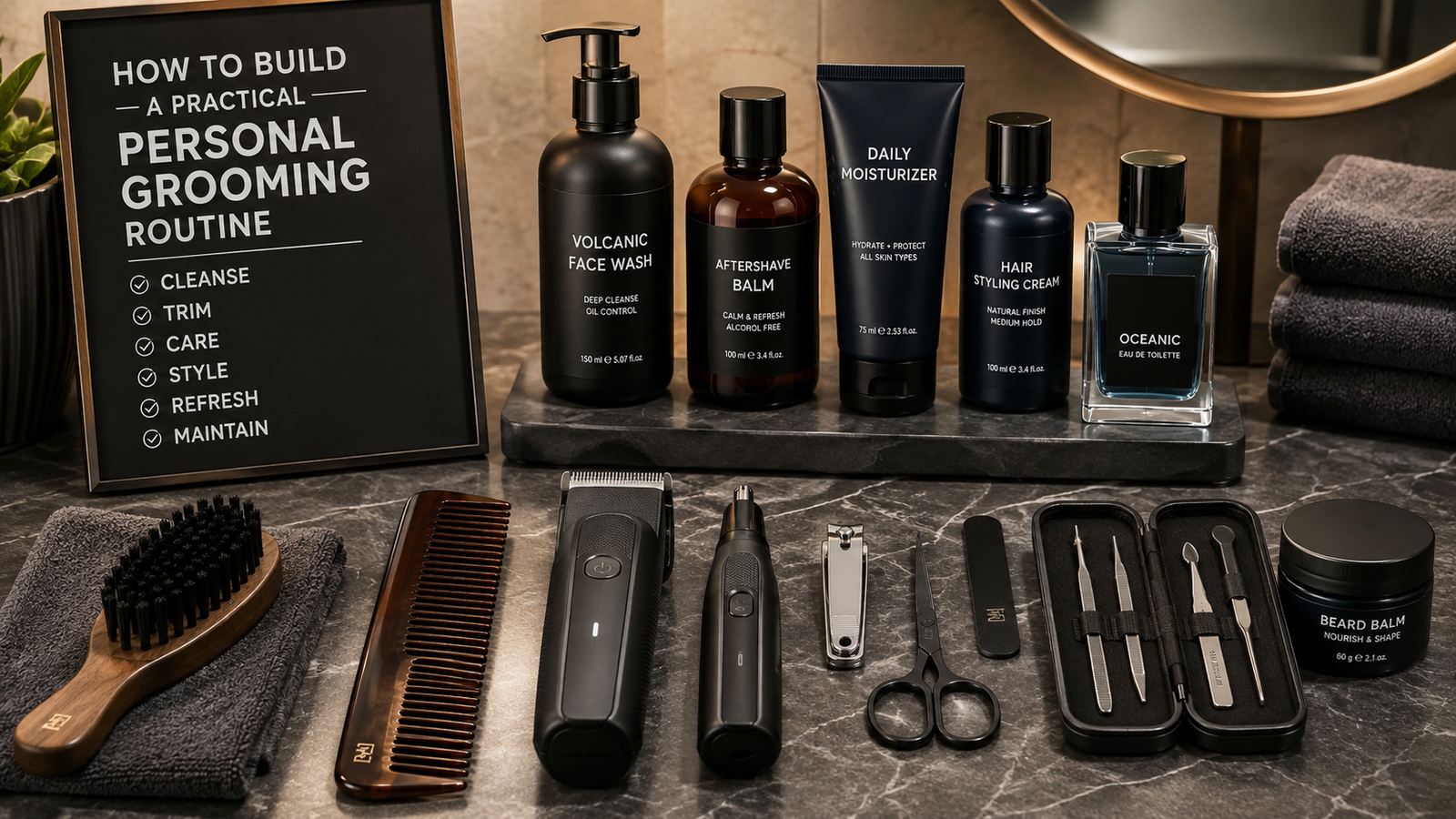
A good grooming routine should help you look neat, feel comfortable and maintain basic personal care without turning grooming into a complicated daily project.
For most people, grooming can be organized around a few areas:
- hair;
- facial hair;
- shaving or trimming;
- nails;
- eyebrows or other facial grooming;
- body hair if you choose to manage it;
- clean tools;
- simple maintenance.
The useful question is not:
“How many grooming products and tools should I own?”
It is:
“Which grooming tasks actually matter to me, how often do they need attention, and what is the simplest way to keep them under control?”
Someone who is clean-shaven may need a very different setup from someone maintaining a beard. Short hair may require frequent trimming but very little styling. Long hair may need less frequent cutting but more detangling and maintenance.
A practical grooming routine should reflect your appearance preferences, lifestyle, work requirements and the amount of time you realistically want to spend maintaining it.
Grooming Is Different From Hygiene
Grooming and hygiene overlap, but they are not the same thing.
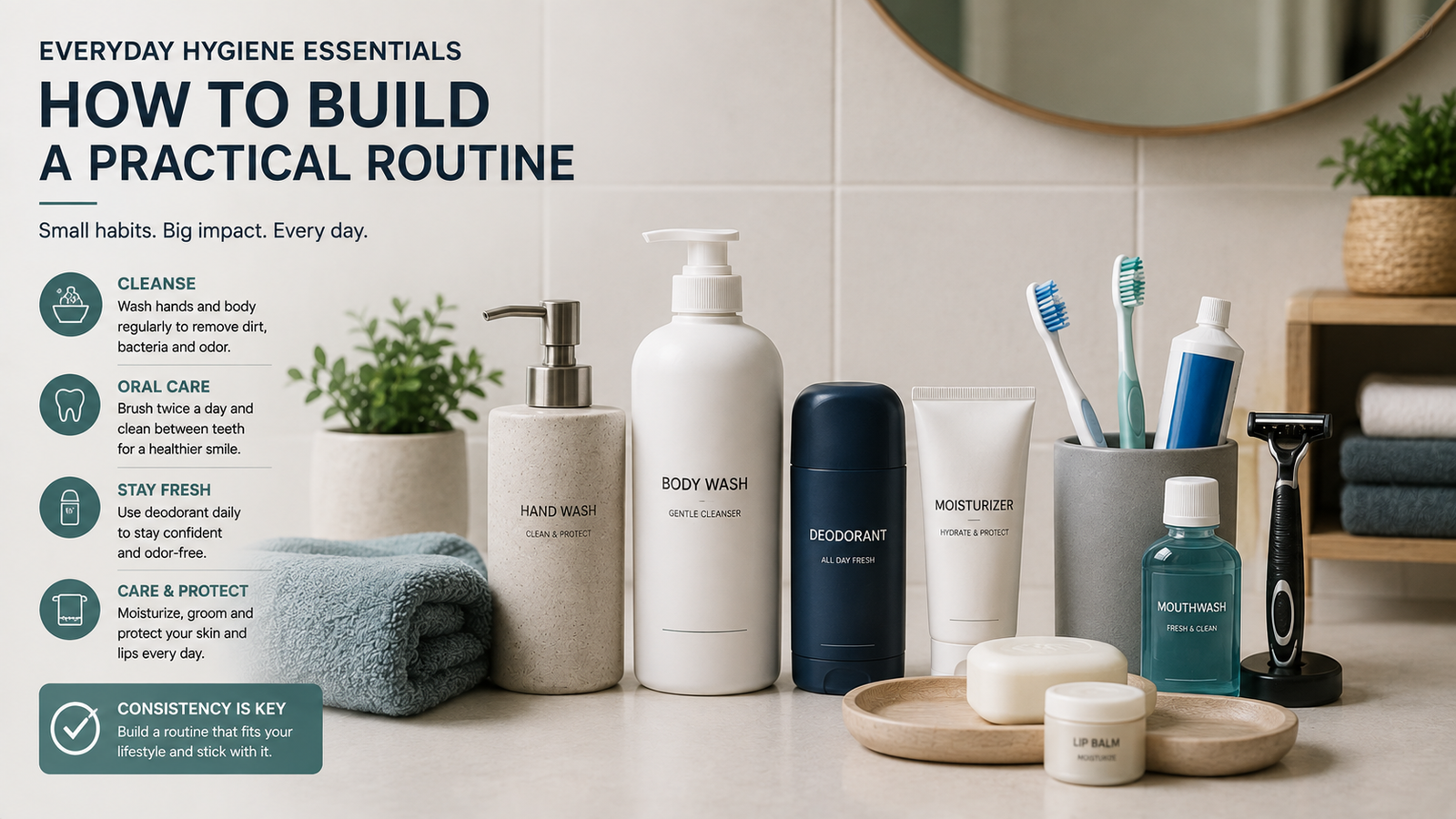
Hygiene primarily focuses on cleanliness and health-related habits such as:
- bathing;
- tooth brushing;
- hand washing;
- changing clean clothes.
Grooming is more about maintaining appearance and comfort.
It may include:
- trimming hair;
- shaving;
- shaping a beard;
- clipping nails;
- managing body hair;
- styling hair;
- tidying eyebrows.
You do not need to remove body or facial hair to be hygienic.
The amount of grooming you choose is largely personal.
Start With the Areas You Actually Maintain
Before buying equipment, decide which grooming categories apply to you.
A simple list might include:
- Hair
- Beard or facial hair
- Shaving
- Nails
- Eyebrows
- Body hair
- Grooming-tool maintenance
You may only need three of these.
There is no reason to create a seven-part routine if your preferences are simple.
Build Grooming Around Frequency
Not every grooming task belongs in a daily routine.
A practical schedule may look like this:
| Frequency | Typical grooming tasks |
|---|---|
| Daily | Comb/style hair, beard tidy-up if needed |
| Every few days | Shaving or beard trimming |
| Weekly | Nail inspection, detailed beard/hair maintenance |
| Every few weeks | Haircut, beard shaping, body-hair trimming as preferred |
| Periodically | Clean tools, replace blades, inspect trimmer |
Creating separate daily and occasional tasks prevents grooming from feeling more complicated than it really is.
Hair Grooming: Start With Your Haircut
A manageable hair routine begins with a haircut that suits:
- your hair texture;
- density;
- lifestyle;
- preferred styling effort.
A hairstyle that requires 20 minutes of styling every morning may not be practical if you want a low-maintenance routine.
Before choosing a style, ask:
- How often am I willing to get it trimmed?
- Do I use styling products?
- Do I regularly blow-dry?
- Does my hair naturally sit close to the desired style?
- How much time do I want to spend each morning?
The easier your haircut works with your natural hair, the simpler your routine becomes.
How Often Should You Get a Haircut?
There is no fixed schedule.
Frequency depends on:
- hairstyle;
- hair length;
- growth rate;
- how sharp you want the style to look.
Very short cuts may need regular maintenance because the shape becomes noticeable quickly.
Longer styles can often go much longer between trims.
A practical approach is to schedule a haircut when:
- the shape becomes difficult to manage;
- ends look noticeably uneven;
- styling takes more effort than usual.
Combs and Brushes
A basic grooming kit usually needs only one or two suitable tools.
Wide-Tooth Comb
Useful for:
- longer hair;
- curly hair;
- detangling;
- wet or damp hair where appropriate.
Fine or Medium-Tooth Comb
Useful for:
- shorter styles;
- precise parting;
- beard grooming.
Hair Brush
Brush type depends on:
- hair thickness;
- texture;
- styling needs.
You do not need a collection of specialized brushes unless each serves a clear purpose.
Avoid Aggressive Detangling
Pulling through tangles can contribute to:
- breakage;
- discomfort;
- hair damage.
For longer hair:
- begin near the ends;
- remove small tangles;
- gradually work upward.
If needed, use:
- conditioner;
- leave-in conditioner;
- detangling product.
Grooming should reduce damage, not create it.
Hair Styling Products
Common styling products include:
- creams;
- waxes;
- pomades;
- gels;
- clays;
- sprays.
Choose by the finish you want.
Hair Cream
Usually useful for:
- softer control;
- light smoothing;
- natural finish.
Wax or Pomade
Can provide:
- definition;
- hold;
- more polished styling.
Clay
Often gives:
- texture;
- stronger hold;
- more matte finish.
Gel
Can provide:
- strong hold;
- defined shape.
There is no best product type.
The right choice depends on:
- hair type;
- hairstyle;
- desired shine;
- required hold.
Use Less Styling Product First
One of the most common grooming mistakes is using too much product.
Start with a small amount.
You can always add more.
Excess styling product can make hair:
- greasy;
- stiff;
- heavy;
- difficult to wash.
It can also increase scalp buildup if repeatedly applied near the roots.
Beard Grooming
If you maintain facial hair, the routine depends on beard length.
Short Stubble
Usually requires:
- regular trimming;
- defined edges if preferred;
- clean trimmer.
Short Beard
May require:
- trimming;
- combing;
- occasional shaping;
- moisturizer if the skin underneath feels dry.
Longer Beard
May benefit from:
- regular washing;
- detangling;
- beard comb or brush;
- length trimming;
- targeted conditioning.
Do not assume every beard needs several specialized products.
Beard Oil: Do You Need It?
Beard oil can help:
- soften facial hair;
- improve appearance;
- reduce dry feel;
- condition skin underneath in some routines.
It is optional.
If your beard and skin already feel comfortable, you may not need it.
If using one:
- start with a small amount;
- spread through the beard;
- avoid leaving the area excessively greasy.
More oil does not produce a healthier beard.
Beard Balm
Beard balm usually provides more:
- hold;
- structure;
- surface control;
than a light oil.
It can be useful for longer beards or flyaways.
If your beard is short, a balm may simply add unnecessary weight.
Beard Shampoo vs Regular Shampoo
Specialized beard cleansers can be useful, but they are not automatically necessary.
The facial area may tolerate a gentler cleanser better than a strong scalp shampoo.
If a normal shampoo leaves your beard or skin feeling:
- tight;
- dry;
- itchy;
consider a milder product.
The goal is to clean without over-stripping the skin underneath.
Trimming a Beard
For a more predictable result:
- trim when the beard is clean and dry unless your device says otherwise;
- start with a longer guard than you think you need;
- reduce length gradually;
- work systematically;
- check symmetry before removing more hair.
You can always trim shorter.
You cannot immediately put hair back once too much is removed.
Define Neck and Cheek Lines Conservatively
Beard shaping is a preference.
If defining the neckline or cheek line:
- make small changes;
- follow natural growth;
- avoid creating a line much higher than necessary.
Over-shaping often creates more maintenance because small regrowth becomes visible quickly.
Choosing a Trimmer
A trimmer is one of the most useful grooming tools for people who maintain:
- beard;
- hair;
- body hair.
Important features include:
- useful guard lengths;
- reliable blade;
- comfortable grip;
- easy cleaning;
- reasonable battery life.
Extra features matter only if you use them.
Corded vs Cordless Trimmers
Cordless
Advantages:
- easier handling;
- portable;
- useful for travel.
Check:
- runtime;
- charging time;
- battery type.
Corded
Advantages:
- no battery limitation;
- reliable long sessions.
Potential drawback:
- less convenient movement.
For most everyday grooming, cordless models are usually more convenient.
Adjustable Guard vs Multiple Combs
Some trimmers use one adjustable guard.
Others provide several fixed comb attachments.
Adjustable Guard
Advantages:
- compact;
- quick length changes.
Fixed Guards
Advantages:
- simple;
- predictable lengths.
Neither design is universally better.
Choose whichever you are less likely to lose or misuse.
Blade Quality Matters
A good trimmer should cut hair cleanly rather than:
- pulling;
- catching;
- repeatedly missing strands.
If a trimmer begins pulling despite being clean and charged, the blade may need:
- cleaning;
- lubrication;
- replacement.
Follow the manufacturer’s instructions.
Clean Your Trimmer Regularly
Hair buildup around the blade can reduce performance.
After use:
- remove loose hair;
- brush the cutting area;
- rinse washable parts if allowed;
- let wet components dry thoroughly.
Do not immerse an electrical trimmer unless it is specifically designed for full washing.
Lubricating Trimmer Blades
Some trimmers require periodic blade oil.
Lubrication can help:
- reduce friction;
- maintain cutting performance;
- extend blade life.
Use only an appropriate lubricant and follow the manufacturer’s instructions.
Shaving: Build a Low-Irritation Routine
If you prefer a clean shave, technique matters as much as the razor.
A practical routine is:
- soften the hair;
- apply shaving lubricant;
- use a sharp blade;
- shave with light pressure;
- limit repeated passes;
- rinse;
- moisturize if needed.
The goal is to remove hair while minimizing skin irritation.
Prepare the Hair Before Shaving
Hair becomes easier to cut when hydrated.
Shaving:
- after a shower;
- after washing with warm water;
can make facial hair easier to remove.
There is usually no need for extremely hot water.
Shaving Cream, Gel or Foam
The primary purpose is lubrication.
A good product should help the razor glide without causing irritation.
Choose by:
- skin sensitivity;
- fragrance preference;
- texture;
- razor type.
Expensive shaving cream is not necessary if a simpler product provides adequate glide.
Shave With or Against Hair Growth?
Shaving with the direction of growth is generally less aggressive.
Shaving against the grain can produce a closer result but may increase:
- irritation;
- razor bumps;
- ingrown hairs;
for some people.
If you are prone to bumps, avoid chasing the closest possible shave.
Comfort is often more important than removing every fraction of a millimetre.
How Many Razor Passes Do You Need?
Usually fewer is better.
Repeatedly passing a blade over the same area increases friction.
If the razor is not cutting effectively:
- inspect the blade;
- improve lubrication;
- soften the hair more thoroughly.
Do not compensate for a dull blade by repeatedly scraping the skin.
Replace Blades When They Become Dull
There is no universal number of shaves per blade.
Replace when you notice:
- pulling;
- increased pressure required;
- rust;
- damaged edges;
- increasing irritation.
Blade lifespan depends on:
- hair thickness;
- frequency;
- razor type;
- storage.
Rinse and Dry the Razor
After use:
- rinse away hair;
- allow the razor to dry;
- store it away from constant moisture where possible.
Do not leave razors sitting permanently in pooled shower water.
Electric Shaver vs Manual Razor
Both can work well.
Electric Shaver
Potential advantages:
- fast;
- convenient;
- less need for shaving products;
- useful for frequent grooming.
Potential drawbacks:
- may not shave as closely;
- requires charging or power;
- heads need replacement.
Manual Razor
Potential advantages:
- close shave;
- inexpensive starting cost;
- widely available.
Potential drawbacks:
- greater irritation risk for some users;
- replacement blades;
- requires more preparation.
Choose based on skin tolerance and desired closeness.
Razor Bumps and Ingrown Hairs
If you regularly develop bumps after shaving:
- reduce shaving closeness;
- shave with hair growth;
- use fewer passes;
- avoid pressing hard;
- consider an electric trimmer rather than a blade.
Gentle exfoliation may help some people, but aggressive scrubbing can make inflammation worse.
Persistent or severe bumps may need dermatological advice.
Aftershave: Is It Necessary?
Traditional aftershaves often contain:
- fragrance;
- alcohol;
- cooling ingredients.
They can provide a fresh sensory experience but are not essential.
If your skin feels dry or irritated after shaving, you may prefer:
- simple moisturizer;
- fragrance-free aftershave balm.
Burning is not proof that an aftershave is disinfecting effectively.
Eyebrow Grooming
Eyebrow grooming can be kept very simple.
You may:
- leave them natural;
- trim unusually long hairs;
- remove isolated hairs;
- professionally shape them.
If trimming:
- brush hairs into position;
- trim conservatively;
- inspect before removing more.
Avoid cutting large sections quickly.
Small changes can alter eyebrow shape significantly.
Tweezers
Good tweezers should:
- align properly;
- grip individual hairs;
- be easy to clean.
Clean before and after use.
Do not dig deeply into the skin for hairs that are not accessible.
This can cause:
- inflammation;
- skin injury;
- infection.
Nose and Ear Hair
Visible nose or ear hair can be trimmed for cosmetic reasons.
A dedicated trimmer can make this easier.
Do not insert:
- scissors;
- trimmers;
deep into the ear canal or nostril.
Trim only visible, accessible hairs according to tool instructions.
These hairs have normal protective functions, so complete removal is unnecessary.
Nail Grooming
Nails generally require basic maintenance:
- keep them reasonably clean;
- trim when needed;
- smooth sharp edges;
- care for surrounding skin.
There is no health requirement for nails to be extremely short unless personal or occupational circumstances demand it.
How to Trim Fingernails
Use:
- clean nail clippers;
- nail scissors designed for the purpose.
Trim gradually.
If an edge feels sharp, use a file.
Avoid cutting so deeply that the skin underneath becomes exposed or painful.
Toenail Trimming
Toenails often benefit from a relatively straight-across cut rather than aggressively rounding deep into the corners.
Cutting too deeply can contribute to ingrown nails in susceptible people.
If you repeatedly experience:
- painful ingrown toenails;
- redness;
- swelling;
- infection;
seek appropriate professional care.
Cuticle Care
Cuticles help protect the area where the nail grows.
Aggressive cutting can create:
- small wounds;
- irritation;
- infection risk.
If cuticles are dry:
- moisturize;
- handle gently.
You do not need to remove them completely.
Nail Files
Nail files can smooth:
- rough edges;
- small snags.
Choose a file that is not excessively abrasive for your nails.
Use controlled movements rather than aggressively sawing the nail.
Keep Grooming Tools Personal
Avoid sharing items that may contact:
- skin;
- blood;
- body fluids.
This can include:
- razors;
- nail clippers;
- tweezers;
- certain trimmer attachments.
If tools must be shared, appropriate cleaning and disinfection become important.
Body-Hair Grooming
Body-hair removal is optional.
You may choose to:
- leave it natural;
- trim;
- shave;
- wax;
- use depilatory products.
The best method depends on:
- area;
- skin sensitivity;
- desired duration;
- comfort.
There is no universal hygiene benefit to completely removing body hair.
Body Trimmers
For areas where you want shorter hair without a completely smooth shave, a body trimmer can be useful.
Look for:
- appropriate guards;
- rounded blade design;
- waterproofing if needed;
- easy cleaning.
Use caution around:
- loose skin;
- sensitive areas.
Follow product instructions carefully.
Depilatory Creams
Depilatory products chemically break down hair near the skin surface.
They can work well for some people but may cause irritation.
Always:
- follow timing instructions;
- patch test where recommended;
- avoid leaving the product on longer than directed;
- keep away from areas not approved on the label.
More time does not mean better hair removal.
Waxing
Waxing removes hair from the root.
Results generally last longer than shaving, but the process can cause:
- pain;
- temporary redness;
- ingrown hairs.
Professional waxing may be preferable for difficult areas.
Do not wax over:
- irritated skin;
- wounds;
- sunburn.
Certain skincare medications or treatments may also make waxing unsuitable.
Grooming Sensitive Areas
Sensitive-area grooming deserves extra care because skin can be thinner and movement can make cutting easier.
If trimming:
- use a suitable guard;
- stretch loose skin carefully where necessary;
- work slowly;
- maintain good lighting.
Avoid using a tool for sensitive body areas unless its design and instructions support it.
Hair Removal Does Not Need to Be Perfect
Trying to remove every hair often leads to:
- repeated razor passes;
- excessive trimming;
- irritation.
A grooming routine should aim for the appearance you want while maintaining skin comfort.
Perfect smoothness is not required.
Grooming for the Workplace
Some jobs may have grooming expectations related to:
- appearance;
- safety;
- hygiene equipment.
For example, facial hair can affect the seal of certain respiratory protective equipment.
Follow workplace-specific safety requirements where applicable.
These should take priority over general style advice.
Grooming for Exercise
If you exercise frequently:
- keep tools clean;
- wash sweaty scalp/hair appropriately;
- avoid grooming irritated skin immediately after heavy sweating.
Freshly shaved skin can be more vulnerable to friction from:
- tight gym clothing;
- helmets;
- straps.
Plan grooming around your activities when possible.
Build a Grooming Kit, Not a Grooming Collection
A practical basic kit might contain:
- comb or brush;
- trimmer or razor;
- nail clippers;
- nail file;
- tweezers;
- one or two styling products.
That may be all you need.
Additional tools should solve specific problems.
A Basic Short-Hair Grooming Kit
You might need:
- comb;
- styling product;
- hair trimmer if self-maintaining;
- regular barber/hairdresser appointment.
That is enough.
A Basic Beard Grooming Kit
You might need:
- beard comb;
- trimmer;
- appropriate guards;
- simple cleanser;
- optional beard oil or balm.
Avoid buying several beard products before determining whether your beard actually needs them.
A Basic Clean-Shave Kit
You might need:
- razor or electric shaver;
- shaving lubricant if required;
- simple moisturizer.
An elaborate brush-and-bowl shaving system is optional, not required.
Tool Storage
Keep tools:
- dry;
- organized;
- easy to access.
Avoid storing metal grooming tools permanently in damp areas.
A simple container or drawer organizer can help prevent:
- rust;
- lost attachments;
- damaged blades.
Travel Grooming
For travel, reduce the routine to essentials.
Consider:
- compact trimmer;
- charging cable;
- comb;
- razor;
- nail clippers where travel rules permit;
- small styling product.
Check airline and baggage restrictions before travelling with blades or sharp tools.
Trimmer Battery Life
If you use an electric trimmer, battery reliability matters more than many extra features.
Useful considerations include:
- runtime;
- charging time;
- low-battery indicator;
- ability to use while plugged in where supported.
A device with 20 attachments is not useful if the battery constantly fails halfway through grooming.
Waterproofing
Some trimmers are:
- dry-use only;
- washable-head;
- fully waterproof.
Check the exact specification.
“Washable” does not always mean the entire device can be submerged.
This distinction matters for both:
- safety;
- durability.
USB Charging
USB charging can make travel easier.
USB-C can be particularly convenient if you already carry compatible chargers.
However, the charging connector should not be your main reason for choosing an otherwise inferior trimmer.
Avoid Cheap Tools That Pull Hair
A poorly performing trimmer can create:
- discomfort;
- uneven results;
- repeated passes;
- skin irritation.
If a device repeatedly pulls even after:
- cleaning;
- charging;
- lubrication;
consider replacing or servicing it.
How Much Should You Spend?
Spend according to:
- frequency of use;
- tool durability;
- replacement costs;
- features you genuinely need.
A trimmer used several times every week may justify spending more for:
- reliable battery;
- better blades;
- useful guards.
Tweezers used once per month do not necessarily need to be luxury-priced.
Consider Replacement Costs
Before buying grooming equipment, check:
- blade replacements;
- foil replacements;
- guard availability;
- proprietary chargers;
- batteries.
A low-priced shaver with very expensive replacement heads may cost more over several years than a better initial purchase.
Common Grooming Mistakes
Doing Everything Daily
Many grooming tasks need only occasional maintenance.
Buying Too Many Tools
One reliable trimmer can often replace several specialized devices.
Using Dull Blades
Dull blades increase pulling and repeated passes.
Pressing Too Hard
Whether shaving, trimming or combing, excessive force usually creates more irritation.
Ignoring Tool Cleaning
Hair and product residue reduce performance.
Using the Wrong Tool for the Area
A large hair clipper may not be appropriate for delicate body areas.
Chasing an Extremely Close Shave
For people prone to razor bumps, slightly less close can be much more comfortable.
Cutting Nails Too Deeply
This can cause pain and increase the risk of ingrown nails.
Copying Someone Else’s Routine
Your:
- hair;
- beard;
- skin;
- lifestyle;
may require completely different maintenance.
A Practical Weekly Grooming Routine
A low-maintenance routine could look like:
Daily
- comb/style hair;
- tidy facial hair if needed.
Every Few Days
- shave or trim beard according to preference.
Weekly
- inspect nails;
- trim where needed;
- clean trimmer;
- wash combs/brushes if necessary.
Every Few Weeks
- haircut;
- beard reshaping;
- body-hair maintenance if preferred.
This is only a framework.
Adjust it to your own growth patterns and preferences.
Before Buying a Grooming Tool
Ask yourself:
- Which task will this tool perform?
- Do I already own something that does it?
- How frequently will I use it?
- Is it suitable for the body area?
- Is it easy to clean?
- Are replacement blades available?
- What guard lengths are included?
- Is the battery sufficient?
- Is it actually waterproof?
- Where will I store it?
- Would a simpler manual tool work just as well?
Quick Grooming Decision Guide
| Grooming need | Practical starting point |
|---|---|
| Short hairstyle | Comb + suitable styling product |
| Beard maintenance | Trimmer + comb |
| Clean shave | Razor/electric shaver + lubrication |
| Stubble | Adjustable trimmer |
| Nail maintenance | Clippers + file |
| Eyebrow tidy-up | Tweezers + small grooming scissors if needed |
| Nose/ear hair | Dedicated safe trimmer |
| Body hair | Guarded body trimmer or preferred removal method |
| Travel | Compact multipurpose kit |
| Sensitive skin | Fewer passes + gentle products |
Frequently Asked Questions
How often should I groom?
It depends on the task. Hair styling may happen daily, shaving every few days, nails weekly or less often, and haircuts every few weeks.
Do I need a beard oil?
No. It can improve softness and comfort for some people, but it is optional.
Is an expensive trimmer better?
Not automatically. Reliable blades, useful guards, battery life and easy maintenance matter more than price alone.
How often should I replace razor blades?
Replace them when they become dull, damaged, rusty or begin pulling rather than cutting smoothly.
Is an electric shaver better for sensitive skin?
Some people find it gentler because it does not shave as close to the skin. Individual tolerance varies.
Should I shave against the grain?
It can produce a closer shave but may increase irritation or ingrown hairs in some people.
How do I prevent razor bumps?
Use a sharp blade, reduce pressure, avoid excessive passes and consider shaving with the direction of hair growth or using a trimmer.
Is body hair unhygienic?
No. Normal cleansing is what matters. Body-hair removal is primarily a preference.
Should men cut their cuticles?
Aggressive cuticle removal is unnecessary and may increase irritation or infection risk.
Can I share a trimmer?
It is better to keep grooming tools personal, particularly devices used on areas where skin may be nicked.
How do I know if a trimmer is waterproof?
Check the manufacturer’s exact specification. “Washable blades” may not mean the entire device is waterproof.
Do I need a separate trimmer for beard and body hair?
Not necessarily. A multipurpose trimmer can work if it includes appropriate attachments and is specifically designed for both uses.
Should I apply aftershave after every shave?
No. A simple moisturizer may be sufficient, particularly if fragranced or alcohol-heavy aftershaves irritate your skin.
Is grooming every day harmful?
Routine light grooming is generally fine, but repeated shaving, trimming or exfoliation can irritate the skin if done excessively.
When should a grooming problem be medically evaluated?
Seek appropriate advice for concerns such as:
- persistent razor bumps with significant inflammation;
- infected-looking skin;
- painful ingrown hairs;
- unexplained hair loss;
- nail discoloration or thickening that persists;
- wounds that do not heal;
- new or changing skin growths.
The Physical Glow Takeaway
A practical grooming routine is built around maintenance, not perfection.
Decide which areas you actually want to groom, then give each one an appropriate schedule. Hair, beard, shaving, nails and body-hair maintenance do not all need daily attention.
Use reliable tools, keep blades clean and sharp, trim gradually and avoid excessive pressure or repeated passes. Choose grooming products because they solve a specific problem rather than because an elaborate routine says you should own them.
Most importantly, separate grooming from hygiene. Facial hair, body hair and styling preferences are personal choices, not measures of cleanliness.
The best grooming routine is the one that keeps you neat, comfortable and confident while requiring only the amount of time and equipment you are realistically willing to maintain.