How to Choose Relaxation Products for Your Routine
Learn how to choose relaxation products that fit your routine, with practical guidance on purpose, sensory preferences, ease of use, maintenance and when simpler habits may be enough. This beginner-friendly guide helps you make a clear, informed choice without unnecessary complexity.
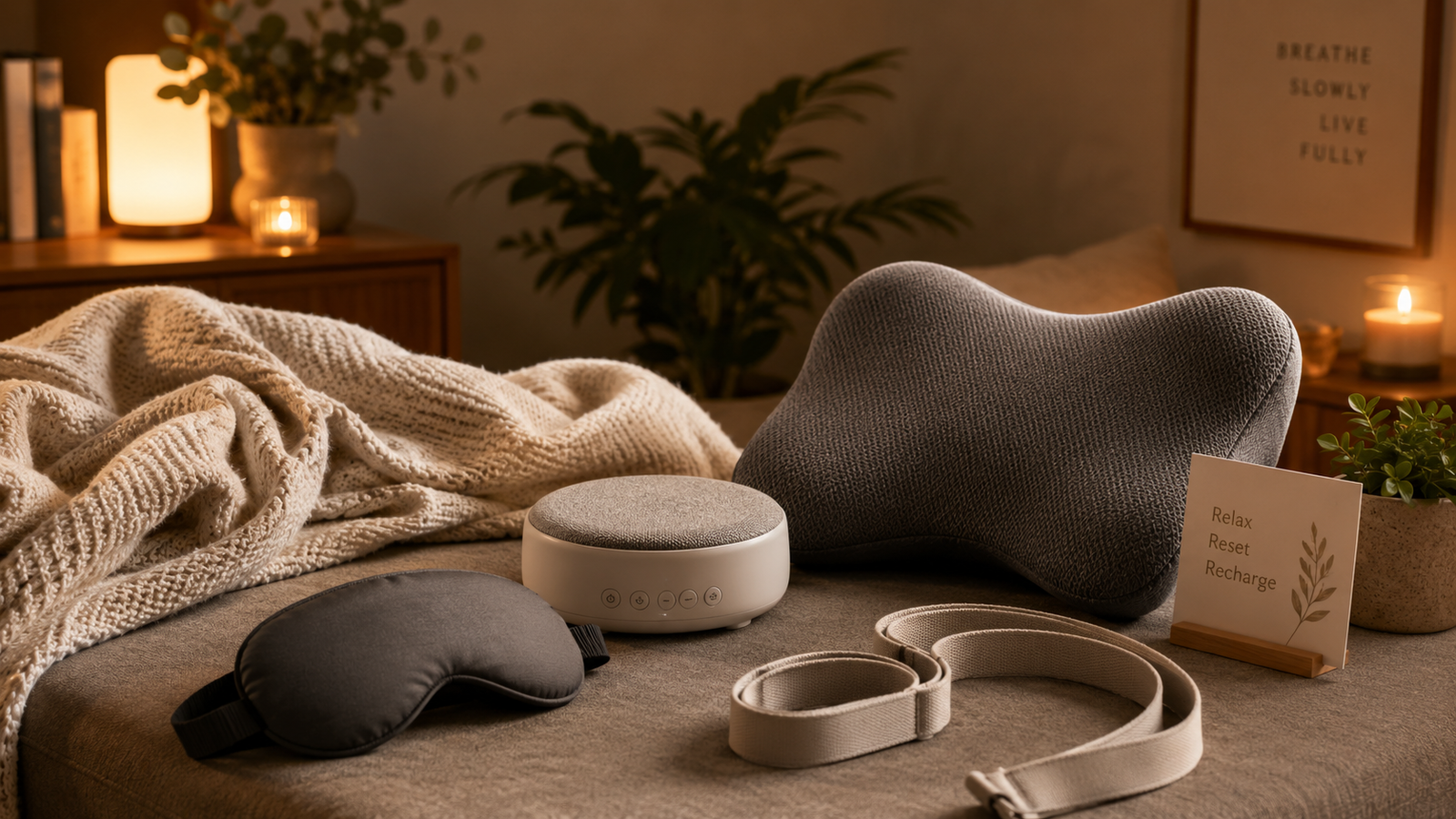
Relaxation products are often marketed as if reducing stress requires buying something.
You may see products designed around:
- calming sounds;
- soft lighting;
- warmth;
- massage;
- pressure;
- fragrance;
- breathing exercises;
- stretching;
- meditation;
- sleep preparation.
Some can genuinely make it easier to relax.
Others solve problems that could have been addressed just as effectively by:
- dimming the lights;
- taking a short walk;
- putting your phone away;
- stretching;
- reading;
- sitting quietly;
- taking a warm shower.
The useful question is therefore not:
“Which relaxation products should I own?”
It is:
“What prevents me from relaxing, and is there a simple product that makes that specific part of my routine easier?”
A good relaxation product should reduce friction.
It should not create:
- another complicated ritual;
- more charging;
- more cleaning;
- more clutter;
- more subscriptions;
- unrealistic expectations.
This guide explains how to identify what you actually need, compare different types of relaxation products, judge sensory preferences and avoid paying for features that do little to improve your routine.
Start With the Problem, Not the Product
Before shopping, identify what makes relaxation difficult.
For example:
Environmental Noise
You may struggle because of:
- traffic;
- neighbours;
- household noise;
- unpredictable sounds.
A sound-based product may help.
Excessive Light
Your bedroom or relaxation space may remain brighter than you prefer.
You may benefit from:
- better curtains;
- a sleep mask;
- dimmer lighting.
Physical Tension
After:
- exercise;
- desk work;
- travel;
you may primarily want physical comfort.
You might consider:
- massage tools;
- gentle heat;
- supportive cushions;
- simple stretching accessories.
Mental Overstimulation
You may struggle to switch off because you remain mentally engaged with:
- work;
- notifications;
- social media;
- news;
- planning.
Buying another device may not be the best first intervention.
A quieter routine may be more useful.
Difficulty Creating a Consistent Wind-Down Habit
In this case, a product can act as a routine cue.
For example:
dim lamp → quiet music → reading → bed
The product is useful because it helps establish consistency rather than because it possesses a unique relaxing property.
Relaxation Is Highly Individual
A product one person finds calming may irritate another person.
Some people relax with:
- complete silence.
Others prefer:
- steady background sound.
Some like:
- fragrance.
Others develop:
- headaches;
- irritation;
- nausea;
from strong scents.
Some find weighted pressure comforting.
Others feel:
- restricted;
- overheated.
That means relaxation products should be selected around sensory preference, not popularity.
Think About Your Sensory Preferences
Consider five broad sensory categories:
- Sound
- Light
- Touch and pressure
- Temperature
- Scent
You may be sensitive to one and enjoy another.
Understanding this helps prevent unnecessary purchases.
1. Sound-Based Relaxation Products
Sound products include:
- white-noise machines;
- sound machines;
- small speakers;
- nature-sound devices;
- guided-relaxation audio.
They can be useful when your environment contains inconsistent or distracting sound.
White Noise
White noise contains energy across a broad range of frequencies.
It creates a steady sound that can help mask sudden changes such as:
- doors closing;
- traffic;
- voices.
The important benefit is often sound masking, not the specific label “white noise.”
Pink and Brown Noise
Some machines also provide:
- pink noise;
- brown noise.
These differ in how sound energy is distributed across frequencies and may sound:
- softer;
- deeper;
- less hiss-like.
Which is more relaxing is largely personal.
You do not need a machine offering 40 sound profiles if you consistently use only one.
Nature Sounds
Common options include:
- rain;
- waves;
- wind;
- forest sounds.
Some people find these more pleasant than continuous artificial noise.
Others find repeating sound loops distracting.
If buying a dedicated device, check whether recordings:
- loop smoothly;
- contain noticeable repetition.
A tiny repeated bird call every 30 seconds can become more irritating than relaxing.
Volume Matters
A relaxation sound should not need to be loud.
If using background sound for:
- relaxation;
- sleep;
keep the volume comfortable.
The goal is to reduce distraction, not overwhelm the environment with another noise source.
Do You Need a Dedicated Sound Machine?
Not necessarily.
You may already have:
- a phone;
- smart speaker;
- normal speaker.
A dedicated machine becomes useful when it improves something specific such as:
- avoiding phone use at bedtime;
- simpler controls;
- continuous playback;
- reliable overnight operation.
If your existing equipment does the job without adding distraction, another device may be unnecessary.
2. Light-Based Relaxation Products
Lighting strongly affects the feel of an environment.
Relaxation lighting products may include:
- dimmable lamps;
- warm bedside lights;
- sunset-style lamps;
- low-level night lights.
A useful relaxation light should make the environment:
- comfortable;
- easy to navigate;
- less visually stimulating.
Brightness Control Matters More Than Decorative Effects
Prioritize:
- dimming;
- easy controls;
- appropriate placement.
A lamp offering:
- dozens of colours;
- animated effects;
- app-controlled scenes;
may add little if all you actually want is soft evening light.
Warm Evening Lighting
Many people find warmer, lower-intensity lighting more comfortable in the evening than bright overhead lighting.
You can often achieve this simply by using:
- a bedside lamp;
- lower brightness;
- indirect lighting.
There is no requirement to buy a specialized “wellness lamp.”
Avoid Creating Another Screen
Some smart lamps require you to open an app every time you want to:
- change brightness;
- set a timer;
- change colour.
If your objective is to reduce evening phone interaction, physical controls may actually be preferable.
3. Sleep Masks and Eye Masks
Eye masks can help create darkness when your environment cannot.
They may be useful for:
- travel;
- naps;
- early sunrise;
- rooms without blackout curtains;
- shared sleeping spaces.
The most important factors are generally:
- comfort;
- light blocking;
- strap design;
- eye clearance.
Flat vs Contoured Eye Masks
Flat Masks
Sit relatively close to the eyelids.
Advantages:
- simple;
- compact;
- lightweight.
Some users dislike pressure directly over the eyes.
Contoured Masks
Create space around the eyelids.
They may suit people who:
- dislike eye pressure;
- want more room to blink;
- wear eye makeup while travelling.
Neither format is universally better.
Comfort should decide.
Strap Design
Look for a strap that:
- stays in place;
- does not pull hair excessively;
- adjusts comfortably.
A mask that blocks light perfectly but wakes you because the strap is uncomfortable has failed its primary purpose.
Washability
Eye masks repeatedly contact:
- skin;
- sweat;
- skincare products.
Check whether they can be:
- machine washed;
- hand washed.
Easy maintenance matters more than luxury fabric marketing.
4. Weighted Blankets
Weighted blankets are designed to provide distributed pressure across the body.
Some people describe the sensation as:
- comforting;
- secure;
- calming.
Others find it:
- restrictive;
- hot;
- uncomfortable.
They are optional rather than essential relaxation products.
Weight Selection
Do not automatically choose the heaviest blanket available.
A blanket should feel:
- comfortable;
- easy to move under;
- easy to remove.
The common idea that every person needs an exact percentage of body weight should not be treated as an absolute rule.
Individual:
- comfort;
- mobility;
- blanket construction;
matter.
Temperature Is a Major Consideration
Weighted blankets can retain heat.
If you:
- sleep hot;
- live in a warm climate;
- dislike heavy bedding;
consider:
- breathable fabrics;
- lighter construction;
- alternative relaxation products.
Pressure is unlikely to feel relaxing if you are overheating.
Who Should Be Particularly Cautious?
A heavy blanket may not be suitable for someone who cannot easily:
- reposition it;
- remove it independently.
Additional caution may be appropriate for people with certain:
- mobility limitations;
- breathing conditions;
- medical circumstances.
Seek individualized professional advice if safety is uncertain.
5. Relaxation Cushions and Support Pillows
A cushion can improve comfort during:
- reading;
- meditation;
- stretching;
- sitting;
- floor-based relaxation.
The best one is not necessarily marketed as a wellness product.
A normal supportive cushion may work perfectly well.
Meditation Cushions
Meditation cushions can help raise the hips and make certain seated positions more comfortable.
Look at:
- height;
- firmness;
- width;
- cover material.
But you do not need to sit on the floor to meditate.
If a chair is more comfortable, use a chair.
Relaxation should not require forcing yourself into an uncomfortable posture.
Floor Cushions
A floor cushion may be useful if you regularly:
- stretch;
- read;
- meditate;
on the floor.
Make sure it supports the activity you actually do.
Very soft cushions can sometimes collapse too much to provide meaningful support.
6. Soft Textiles
Sometimes the most useful relaxation product is something very ordinary:
- soft blanket;
- comfortable robe;
- supportive cushion;
- clean bedding.
Comfort can make a relaxation environment feel more inviting.
You do not need a special “therapeutic” label for textiles to contribute to relaxation.
Fabric Matters
Choose according to:
- climate;
- texture preference;
- washability.
For warm environments, prioritize:
- breathability;
- lighter construction.
For cooler environments:
- warmth;
- softness;
may matter more.
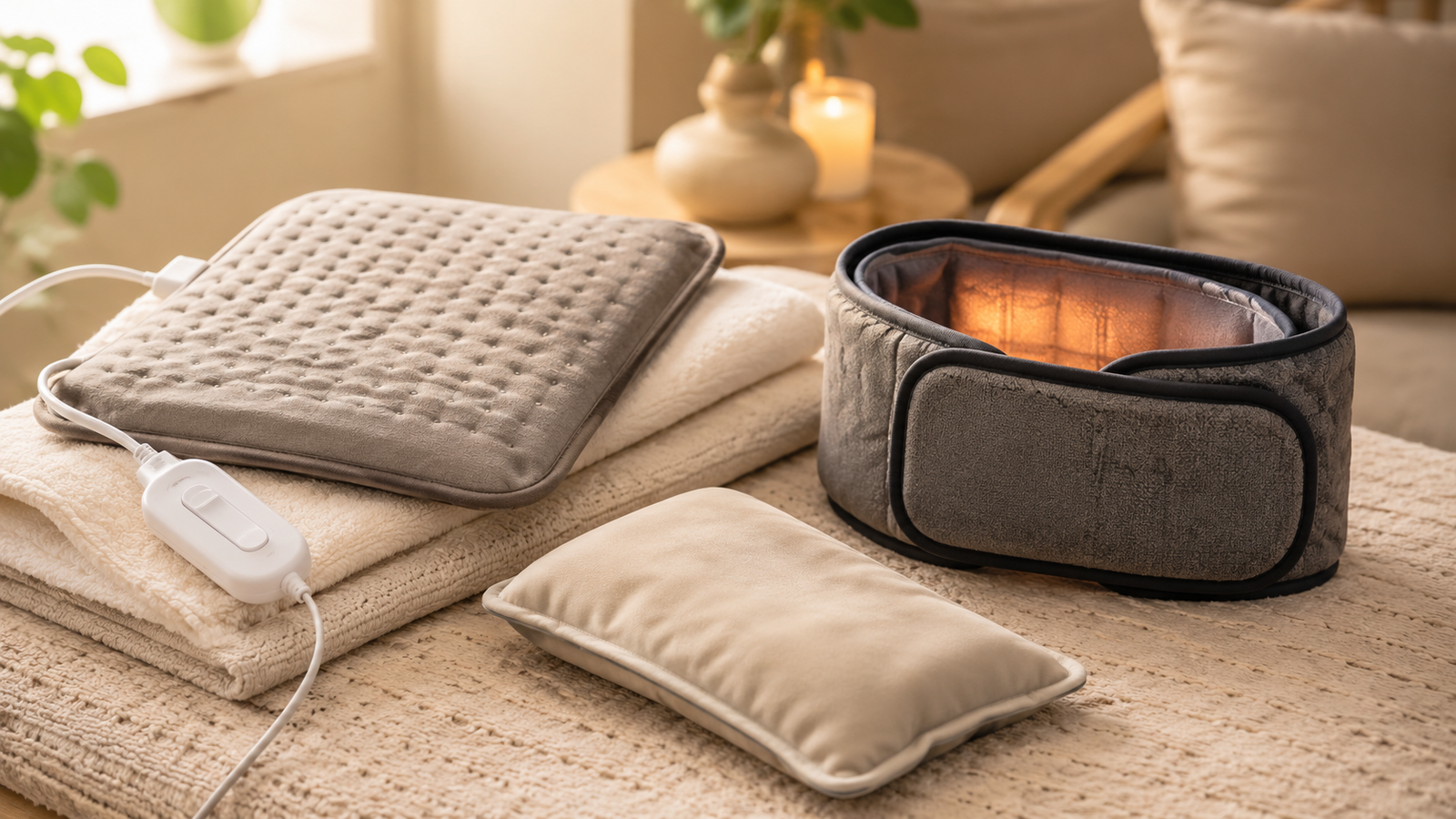
7. Heat-Based Relaxation Products
Warmth can be relaxing, particularly when muscles feel:
- stiff;
- tight;
- tired.
Options include:
- heating pads;
- hot-water bottles;
- reusable warm packs;
- warm baths.
Heat is primarily a comfort tool.
Use:
- moderate temperatures;
- appropriate session durations.
Do not turn relaxation heat into an endurance test.
Heat Does Not Need to Be Extreme
If you have to repeatedly move the product because it feels:
- burning;
- uncomfortable;
the temperature is too high.
A useful relaxation temperature should feel comfortably warm.
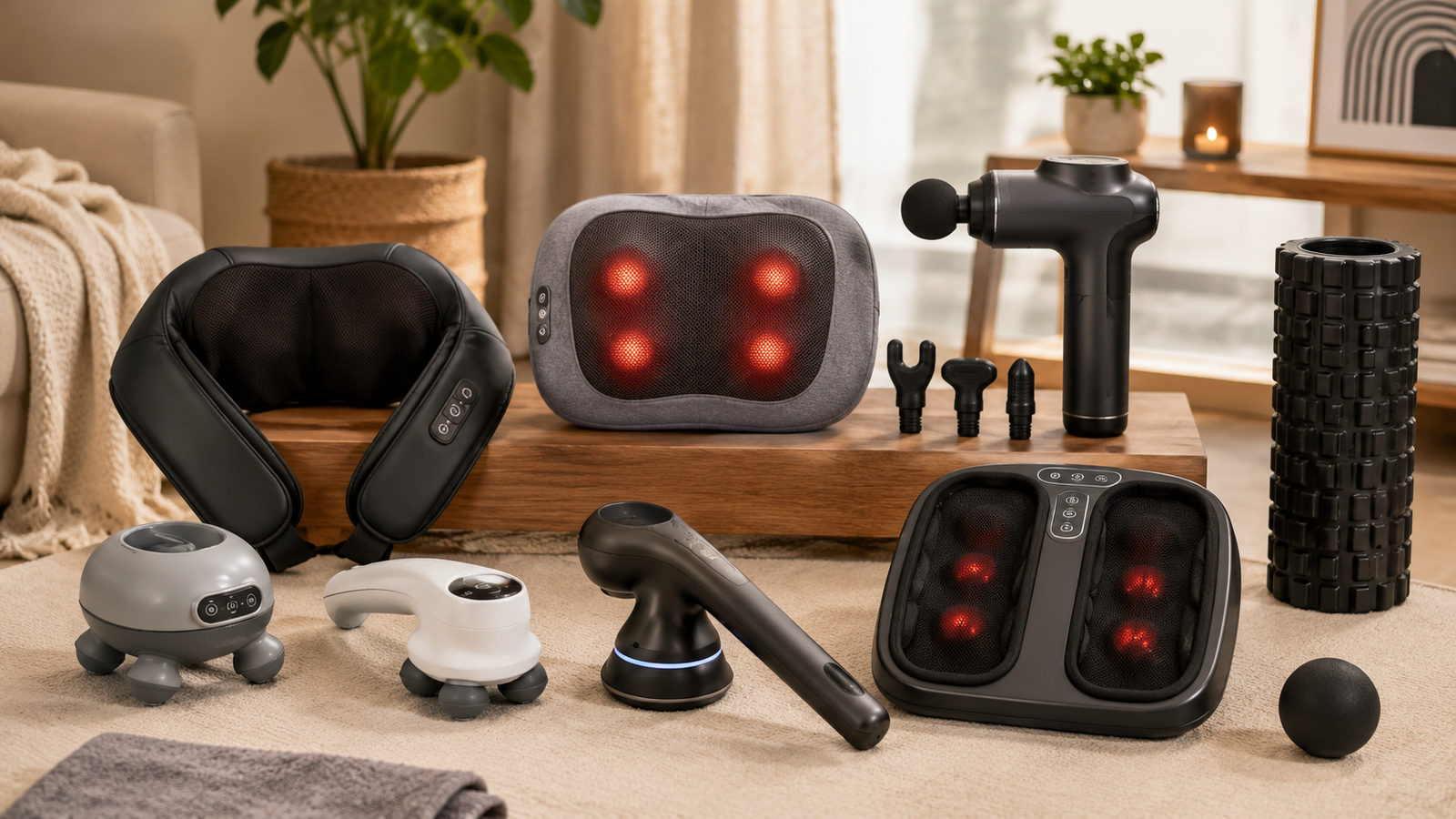
8. Massage and Self-Massage Products
Massage-related relaxation tools include:
- massage balls;
- rollers;
- handheld massagers;
- massage cushions;
- massage guns.
They vary enormously in intensity.
For Relaxation
You may prefer:
- slower kneading;
- vibration;
- gentle pressure.
For Fitness Recovery
You may prefer:
- targeted pressure;
- percussion;
- stronger massage.
Do not automatically buy a sports-focused massage gun if your main goal is quietly relaxing on the sofa.
Massage Should Not Be Painful
Firm pressure may be comfortable.
Sharp or severe pain is not a sign of a better massage.
Reduce intensity if you experience:
- pain;
- numbness;
- tingling;
- bruising.
Persistent symptoms should not be repeatedly suppressed with massage without understanding their cause.
9. Stretching Accessories
Simple products such as:
- yoga mats;
- stretching straps;
- blocks;
- massage balls;
can support a relaxing movement routine.
Their biggest advantage is usually practical:
they make certain positions easier or more comfortable.
You do not need a complex mobility system.
Gentle Movement Can Be Relaxing
A short routine might include:
- shoulder rolls;
- easy hip movement;
- gentle stretching;
- relaxed walking.
If a basic mat makes this more comfortable and encourages consistency, it can be a useful relaxation product.
Avoid Aggressive Stretching
Relaxation stretching should not feel like a flexibility competition.
Avoid:
- forcing range;
- bouncing aggressively;
- stretching through sharp pain.
The goal is to reduce tension rather than create another physical challenge.
10. Breathing Aids
Relaxation products sometimes include:
- breathing lights;
- pacing devices;
- expanding breathing tools;
- guided-breathing apps.
Their main function is usually to help you slow and structure breathing.
Do You Need a Breathing Device?
Probably not.
You can practice slow controlled breathing with:
- no equipment;
- a simple timer;
- guided audio.
A product becomes useful only if it makes the habit easier for you.
For example, a visual breathing light may help someone who finds it easier to follow a physical cue than count seconds.
Avoid Over-Breathing
Relaxation breathing should feel comfortable.
Trying to take:
- excessively deep;
- rapid;
- forceful;
breaths can make some people feel:
- light-headed;
- dizzy.
Return to normal breathing if that happens.
11. Meditation Apps and Devices
Meditation apps may offer:
- guided sessions;
- timers;
- breathing exercises;
- sleep stories;
- relaxation music.
They can be useful for beginners who want structure.
But consider whether the app:
- adds value;
- creates dependence on another subscription;
- requires more screen time than you want.
Free vs Paid Meditation Tools
Before subscribing, ask:
- Do I actually use guided meditation?
- Do I need hundreds of sessions?
- Would a simple timer work?
- Is free audio already enough?
A subscription is worthwhile only if you regularly use it.
12. Aromatherapy and Diffusers
Diffusers disperse fragrance into a room, often using essential oils.
Some people associate particular scents with:
- relaxation;
- comfort;
- bedtime.
The benefit may partly come from:
- preference;
- routine association;
- environment.
Do not treat essential oils as universal medical treatments.
Scent Is Extremely Personal
A scent that relaxes one person may give another:
- headache;
- nausea;
- respiratory irritation.
Start with very low intensity.
You do not need the room to smell strongly for fragrance to be noticeable.
Diffuser Types
Common formats include:
- ultrasonic water diffusers;
- passive aroma stones;
- reed diffusers.
Ultrasonic Diffuser
Uses water and ultrasonic vibration to create a fine mist.
Requires:
- filling;
- regular cleaning.
Passive Aroma Product
Usually simpler and requires no electricity.
May provide less control over intensity.
Choose based on whether you actually want another device to maintain.
Cleaning a Diffuser Matters
Water reservoirs can become unpleasant if repeatedly left:
- wet;
- dirty;
- filled with old oil residue.
Follow cleaning instructions.
Do not simply keep topping up the same water indefinitely.
Essential Oils and Pets
Some essential oils and methods of exposure can be problematic for certain pets.
If you have animals in the home:
- check veterinary guidance;
- provide ventilation;
- prevent access to concentrated oils.
Do not assume “natural” automatically means safe for every household member.
Essential Oils and Skin
Do not apply concentrated essential oils directly to the skin unless the product is specifically formulated and intended for that use.
Essential oils can cause:
- irritation;
- allergic reactions.
A room diffuser and topical oil are different products.
13. Candles
Candles can create:
- warm light;
- fragrance;
- a ritual cue.
But they also introduce:
- open flame;
- smoke;
- fire risk.
Never leave a candle:
- unattended;
- burning while asleep;
- close to bedding or curtains.
If the main goal is soft light, an electric lamp may be simpler and safer.
Flameless Candles
Battery-powered candles can provide:
- soft visual ambience;
without open flame.
They may be especially useful in:
- bedrooms;
- homes with children;
- environments where fire safety is a concern.
14. Relaxation Drinks and “Sleep” Beverages
Products marketed around relaxation may include:
- herbal teas;
- functional drinks;
- powdered mixes.
A warm caffeine-free drink can be part of a calming routine.
But evaluate health claims carefully.
A beverage does not become scientifically proven to:
- eliminate stress;
- treat anxiety;
- guarantee sleep;
because the packaging uses calming language.
Caffeine Matters More Than Many “Calming” Ingredients
If evening relaxation is difficult, consider your caffeine intake before buying specialized relaxation drinks.
Caffeine may come from:
- coffee;
- tea;
- energy drinks;
- cola;
- pre-workout products;
- chocolate.
Its effects can persist for hours.
Reducing late-day caffeine may provide more practical benefit than adding another nighttime product.
15. Journals and Writing Tools
Some people find writing helpful for clearing mental clutter.
A simple notebook can be used for:
- tomorrow’s tasks;
- thoughts;
- reminders;
- reflections.
The goal does not need to be producing a perfect journal entry.
You can simply write down the things your brain keeps trying to remember.
You Do Not Need a Specialized Wellness Journal
A plain notebook works.
Premium prompts and elaborate trackers are useful only if they make you more likely to use the practice.
Do not turn relaxation into another performance metric.
16. Digital Detox Products
You may see:
- timed phone boxes;
- app blockers;
- notification-control devices.
These can be useful when technology itself is the main barrier to switching off.
But begin with built-in tools such as:
- Do Not Disturb;
- app limits;
- charging the phone outside reach.
Buy physical restriction products only if simpler methods repeatedly fail.
17. Relaxation Furniture
Products may include:
- recliners;
- floor chairs;
- lounge cushions;
- footrests.
These can improve comfort if you have a dedicated relaxation space.
But furniture is a significant purchase.
Consider:
- support;
- dimensions;
- cleanability;
- available space.
A large chair that blocks half the room may create more stress than relaxation.
Build a Relaxation Environment Before Buying More Products
Your environment may already contain most of what you need.
Consider:
- reducing clutter;
- dimming harsh lights;
- controlling noise;
- adjusting room temperature;
- keeping the space comfortable.
A relaxation product works better when the environment itself supports its purpose.
Temperature and Relaxation
Being:
- too hot;
- too cold;
can make relaxation difficult.
Before buying specialized devices, consider basic adjustments such as:
- fan;
- blanket;
- ventilation;
- comfortable clothing.
Sometimes environmental comfort solves the problem.
Clutter Can Work Against the Routine
If your relaxation area contains:
- cables;
- boxes;
- several unused gadgets;
- exercise equipment;
- work materials;
adding another product may not improve it.
A small amount of organization can be more useful.
Relaxation Products for Desk Workers
If you spend much of the day sitting, your best evening products may support:
- physical comfort;
- reduced screen exposure;
- gentle movement.
Potentially useful options include:
- simple stretching mat;
- massage ball;
- warm pack;
- soft lamp.
But also address the underlying problem during the day.
Take:
- movement breaks;
- walking breaks;
- position changes.
A massager cannot undo an entire day of immobility.
Relaxation Products for People Who Exercise
After exercise, useful relaxation products may include:
- foam roller;
- massage ball;
- heating pack;
- comfortable stretching mat.
However, recovery priorities remain:
- sleep;
- food;
- hydration;
- sensible training.
Do not turn post-workout relaxation into a 60-minute equipment routine unless you genuinely enjoy it.
Relaxation Products for Travel
Travel disrupts familiar environments.
Compact products may therefore be particularly useful.
Examples:
- sleep mask;
- earplugs;
- small sound device;
- inflatable or compact support cushion.
Prioritize:
- low weight;
- easy cleaning;
- minimal charging.
Relaxation Products for Small Homes
If storage is limited, choose products with more than one useful role.
For example:
Blanket
Can provide:
- warmth;
- comfort.
Cushion
Can support:
- sitting;
- reading;
- meditation.
Yoga Mat
Can support:
- stretching;
- mobility;
- relaxation.
Avoid buying large specialized equipment that is difficult to store.
Relaxation Products for Shared Homes
In shared spaces, consider whether a product affects others.
For example:
- speakers create sound;
- diffusers add fragrance;
- lamps change lighting;
- massage devices create noise.
Headphones may solve one person’s sound preference without changing the room for everyone.
Fragrance needs particular consideration because household members may have very different tolerance.
Noise-Cancelling Headphones
Noise-cancelling headphones can reduce certain background sounds.
They may be useful for:
- travel;
- commuting;
- noisy homes.
But wearing headphones for relaxation is not comfortable for everyone.
Consider:
- pressure;
- heat;
- weight;
- battery life.
For sleeping, bulky headphones are usually less practical than:
- earplugs;
- appropriate background sound.
Earplugs
Simple earplugs can provide tremendous value in noisy environments.
Consider:
- fit;
- comfort;
- noise reduction;
- reusable vs disposable.
Do not insert them deeper than intended.
Reusable earplugs should be cleaned according to instructions.
Persistent ear pain or problems should be evaluated rather than managed by continually changing plugs.
Build a Relaxation Routine Before Building a Product Collection
Try creating a 20–30 minute wind-down routine using what you already own.
For example:
- Finish work.
- Dim lighting.
- Put phone notifications on silent.
- Take a warm shower.
- Stretch for five minutes.
- Read quietly.
After doing this consistently, identify what is still difficult.
Perhaps:
- traffic remains distracting;
- the room remains bright;
- your shoulders remain uncomfortable.
Then buy one product for that specific problem.
This is much more efficient than buying several things at once.
Use Products as Cues
Relaxation products can be particularly useful as behavioural cues.
For example:
turn on warm lamp = workday finished
or:
start sound machine = bedtime routine begins
Repeated cues can help make the routine more predictable.
The value is often not the technology itself.
It is the consistency it encourages.
Do Not Make Relaxation Another Performance Goal
A common mistake is tracking relaxation so aggressively that the routine itself becomes stressful.
You do not need to optimize:
- exactly how many minutes you meditated;
- precisely how calm you felt;
- how many stretching sessions you completed.
Relaxation should reduce demand.
It should not create another scoreboard.
How to Compare Product Quality
Once you know what type of product you need, compare practical details.
Look at:
- construction;
- comfort;
- adjustability;
- cleaning;
- noise;
- battery;
- warranty;
- replacement parts.
The most expensive product is not necessarily the best.
Ease of Use Is a Major Feature
Ask:
How many steps are required before I can use this?
For example, a relaxation device that requires:
- charging;
- connecting Bluetooth;
- opening an app;
- signing in;
- selecting a session;
may create more friction than:
press one button
Simple products often survive longer in real routines.
Setup Time
Products that require extensive setup tend to be used less.
This matters particularly when you are already:
- tired;
- stressed.
The best relaxation product should generally become usable in seconds.
Maintenance
Ask how the product needs to be maintained.
Possible requirements include:
- washing;
- wiping;
- charging;
- filling with water;
- replacing batteries;
- replacing filters;
- buying refills.
A product that requires constant maintenance may eventually be abandoned.
Cleaning
Products contacting:
- skin;
- sweat;
- bedding;
should be easy to clean.
Examples include:
- masks;
- cushions;
- blankets;
- massage attachments.
Removable washable covers are useful.
Consumables
Watch for recurring costs such as:
- fragrance oils;
- proprietary pads;
- subscriptions;
- replacement cartridges;
- disposable patches.
A ₹1,500 product requiring ₹500 of consumables every month is not really a ₹1,500 purchase.
Battery Life
Battery life matters for electronic products.
But do not automatically prioritize maximum runtime.
Ask:
- How long is one session?
- How often will I use it?
- Can it charge conveniently?
A device used 15 minutes per evening may not need an enormous battery.
Charging
Standard charging such as USB-C can be convenient.
However, charging convenience should not override:
- product quality;
- safety;
- comfort.
Smart Features
Relaxation products increasingly include:
- Wi-Fi;
- Bluetooth;
- apps;
- sleep tracking;
- automation;
- voice control.
These features can be useful if they remove effort.
They are not useful if they add:
- notifications;
- accounts;
- connection problems;
- subscriptions.
For a product whose purpose is relaxation, simplicity has unusual value.
Data Privacy
Connected wellness products may collect:
- account details;
- usage patterns;
- sleep-related information.
Check what information is genuinely necessary.
A lamp or sound machine does not necessarily need access to:
- contacts;
- precise location;
- unrelated phone data.
Grant only the permissions needed for the feature you use.
How Much Should You Spend?
Relaxation products exist across almost every price range.
Before paying more, determine what the premium actually buys.
Worthwhile improvements might include:
- greater comfort;
- quieter operation;
- safer temperature control;
- better durability;
- easier cleaning;
- longer warranty.
Less valuable additions may include:
- excessive presets;
- decorative screens;
- novelty app features.
Cost Per Use
A useful way to evaluate value is:
total cost ÷ realistic number of uses
A simple ₹800 eye mask used every night can provide greater practical value than a ₹20,000 relaxation device used three times.
Routine fit matters more than purchase price.
Start With the Cheapest Reliable Solution
If you are unsure whether a relaxation method suits you, test the concept simply.
For example:
Want Sound?
Try free background audio before purchasing a machine.
Want Darkness?
Test whether darkening the room helps before buying an expensive sleep system.
Want Massage?
Try a simple massage ball before buying a powered massager.
Want Meditation?
Try five minutes with a basic timer before purchasing a subscription.
Upgrade only once you know the habit is useful.
Watch for Exaggerated Claims
Relaxation marketing can involve claims such as:
- detoxifies;
- resets the nervous system instantly;
- balances hormones;
- removes cortisol;
- activates healing;
- improves circulation permanently;
- cures anxiety;
- guarantees deep sleep.
Treat claims like these cautiously.
A product can help create:
- comfort;
- routine;
- sensory relaxation;
without needing to make dramatic medical promises.
Relaxation Products Are Not Mental Health Treatment
Products can support a calming routine.
They are not substitutes for appropriate care when someone is experiencing:
- persistent anxiety;
- severe stress;
- depression;
- panic;
- prolonged sleep disturbance.
If symptoms substantially interfere with normal life, professional support may be more appropriate than continually adding wellness products.
Relaxation and Alcohol
Alcohol may initially feel relaxing because it can reduce alertness.
But subjective relaxation is not necessarily the same as healthy recovery or restorative sleep.
Using alcohol as a primary stress-management tool can create problems.
A good relaxation routine should ideally be something you can use consistently without creating new health risks.
Relaxation and Screens
Streaming, gaming and social media can all feel enjoyable.
But relaxation and stimulation are not identical.
Ask yourself:
Do I feel calmer afterwards, or simply distracted?
There is nothing inherently wrong with entertainment.
The point is to understand what your actual objective is.
If you want easier sleep, an hour of rapidly changing short-form content may not serve the same purpose as quieter activity.
Common Relaxation Product Buying Mistakes
Buying Before Identifying the Problem
Start with the stressor.
Buying Because the Product Is Trending
Popularity is not the same as personal fit.
Assuming More Technology Means Better Relaxation
Often the opposite is true.
Choosing Maximum Intensity
Relaxation massage, heat or sound does not need to be extreme.
Ignoring Sensory Preferences
Strong fragrance or pressure can make some users less relaxed.
Buying Several Products at Once
You will not know which one helped.
Ignoring Cleaning
Relaxation accessories still need hygiene.
Paying for Subscriptions You Stop Using
Check ongoing cost.
Creating a Complicated Routine
If relaxation requires 12 steps, it may become another obligation.
Treating Consumer Products as Medical Treatment
Know the limits of what the product can reasonably do.
Quick Relaxation Product Decision Guide
| Main problem | Simple option to consider |
|---|---|
| Environmental noise | Earplugs or sound machine |
| Too much light | Sleep mask or better curtains |
| Harsh evening lighting | Dimmable warm lamp |
| General muscle tension | Gentle stretching or self-massage |
| Local stiffness | Comfortable heat where appropriate |
| Difficulty sitting comfortably | Support cushion |
| Mental overactivity | Notebook, breathing or guided relaxation |
| Trouble establishing a routine | Simple consistent cue |
| Travel disruption | Sleep mask + earplugs |
| Strong screen habit | Phone settings before another device |
| Desire for fragrance | Low-intensity diffuser if tolerated |
| Want calming pressure | Weighted blanket if comfortable and suitable |
Before You Buy: Final Checklist
Ask yourself:
- What exactly is preventing me from relaxing?
- Is this mainly a sound, light, physical, temperature or mental issue?
- Could I solve the problem without buying anything?
- Does the product match my sensory preferences?
- Can I use it in less than a minute?
- Is it comfortable?
- Will it create noise that bothers others?
- Does it require frequent cleaning?
- Does it require refills or subscriptions?
- Where will I store it?
- Does it need charging?
- Am I likely to use the premium features?
- Are the health claims realistic?
- Could a simpler product do the same job?
- Will this make my routine easier—or more complicated?
A Simple Relaxation Routine Without Buying Anything
Before purchasing products, try:
Step 1 — End the Active Part of the Day
Stop:
- work;
- unnecessary admin;
- high-intensity exercise;
when practical.
Step 2 — Change the Environment
Reduce:
- bright lighting;
- unnecessary noise;
- notifications.
Step 3 — Add Gentle Movement
Try:
- short walk;
- comfortable stretching;
- easy mobility.
Step 4 — Choose a Low-Stimulation Activity
Examples:
- reading;
- music;
- conversation;
- simple breathing.
Step 5 — Keep the Routine Predictable
Repeat a similar sequence regularly.
After a week or two, you will have a much clearer idea of what product might genuinely improve the routine.
A Simple Product-Assisted Relaxation Routine
If products genuinely help, the routine might look like:
- Dim a warm bedside lamp.
- Put the phone on Do Not Disturb.
- Use gentle heat or self-massage if needed.
- Play quiet background sound.
- Read or practice slow breathing.
- Remove unnecessary devices when finished.
- Move into your normal sleep routine.
The goal is still simplicity.
How to Know Whether a Relaxation Product Is Working
Do not judge it by the first exciting evening.
After several weeks, ask:
- Am I actually using it?
- Does the routine feel easier?
- Do I look forward to using it?
- Does it reduce a real environmental problem?
- Is it comfortable?
- Is the maintenance reasonable?
- Would I replace it if it disappeared tomorrow?
That last question is particularly useful.
If the answer is no, the product may not be doing very much for you.
Frequently Asked Questions
Do relaxation products actually work?
Some can improve comfort or the environment in ways that make relaxation easier. Their usefulness depends heavily on the problem they are solving and personal preference.
Do I need relaxation products?
No. Many effective relaxation habits require no equipment.
What is the best relaxation product?
There is no universal best option. Identify whether your main barrier involves noise, light, physical discomfort, temperature or mental stimulation.
Are sound machines worth it?
They can be useful when inconsistent environmental noise is a genuine problem. If ordinary speakers already work well, a dedicated device may be unnecessary.
Are weighted blankets relaxing?
Some people enjoy distributed pressure, while others find weighted blankets hot or restrictive. Comfort and safe independent use are important.
Do I need an aromatherapy diffuser?
No. It is primarily useful if fragrance genuinely contributes to your relaxation routine.
Are essential oils proven to reduce stress?
Some aromas may be pleasant or associated with relaxation for certain people, but essential oils should not be treated as universal medical treatments for stress or anxiety.
Is a massage gun good for relaxation?
It can be, but people wanting gentle passive relaxation may prefer a quieter kneading or vibration massager.
Is heat good for relaxation?
Comfortable warmth can feel relaxing for many people. Use controlled temperatures and follow product safety instructions.
Do I need a meditation app?
No. An app can provide structure, but meditation can also be practiced using a simple timer or no equipment.
Is white noise better than nature sounds?
Not universally. Use whichever sound is comfortable and effectively masks distractions if that is your goal.
Are expensive relaxation products better?
Not necessarily. Ease of use, comfort and consistency usually matter more than premium positioning.
Should I buy a smart relaxation device?
Only if smart functionality genuinely reduces effort. Avoid paying for connectivity you will rarely use.
Can relaxation products help with anxiety?
They may support a calming environment or routine, but they should not replace appropriate professional care for persistent or significant anxiety.
Is alcohol a good way to relax before sleep?
Alcohol may feel sedating initially but can interfere with sleep quality and is not a good foundation for a relaxation routine.
How many relaxation products do I need?
Potentially none. If you do use products, one or two that solve clear problems are usually more valuable than a large collection.
What should I buy first?
Identify the largest obstacle.
If it is:
- light → consider a sleep mask;
- noise → consider earplugs or a sound solution;
- muscle discomfort → consider a simple recovery tool;
- overstimulation → start by changing the routine rather than buying equipment.
When should stress or relaxation problems be professionally assessed?
Consider appropriate professional support when stress, anxiety or sleep difficulties are:
- persistent;
- severe;
- worsening;
- affecting work or relationships;
- interfering substantially with normal daily life.
The Physical Glow Takeaway
The best relaxation product is usually the simplest one that solves a specific obstacle in a routine you already understand.
Start by identifying what actually prevents you from switching off. If the problem is noise, address noise. If it is light, create darkness. If it is muscular tension, consider gentle movement, heat or self-massage. If the problem is an overstimulated mind after hours of work and screen use, buying another connected device may not be the answer.
Pay particular attention to sensory preference. Sound, pressure, fragrance, warmth and lighting can be calming for one person and unpleasant for another.
Before buying anything, ask whether a simpler habit could solve the same problem. A short walk, warm shower, dimmer lighting, quiet reading or five minutes of comfortable breathing may be all you need.
When a product does make sense, prioritize:
clear purpose → comfort → simplicity → easy maintenance → realistic cost → consistent use.
A relaxation product earns its place when it makes switching off easier. It does not earn its place simply because it is marketed as wellness.