Cold Therapy Explained: When and How to Use It Safely
Learn what cold therapy is, when it may be useful and how to use it safely, with practical guidance on cold packs, timing, skin protection, recovery use and important limitations. This beginner-friendly guide helps you make a clear, informed choice without unnecessary complexity.
Cold therapy is one of the most familiar approaches to managing short-term pain and discomfort.
A cold pack is often the first thing people reach for after:
- bumping a knee;
- twisting an ankle;
- finishing a hard workout;
- experiencing local swelling;
- developing soreness after activity.
Cold can temporarily make an area feel:
- less painful;
- less sensitive;
- more comfortable.
But cold therapy is also frequently overused or used incorrectly.
Common mistakes include:
- putting ice directly on bare skin;
- leaving a cold pack on for too long;
- falling asleep with ice applied;
- using extreme cold because “colder must be better”;
- routinely icing every workout;
- continuing cold exposure after the skin becomes numb.
The useful question is therefore not:
“Should I ice every painful area?”
It is:
“What am I trying to achieve with cold, and can I use it for a short period without creating additional skin or tissue problems?”
Cold therapy is primarily a short-term comfort and symptom-management tool. It can be useful in appropriate situations, but it does not automatically accelerate healing, and it should not replace appropriate evaluation when an injury is significant.
This guide explains how cold therapy works, the main types of cold products, how to protect the skin, how long to use cold and when it may be better to avoid it.
What Is Cold Therapy?
Cold therapy involves deliberately lowering the temperature of a localized body area.
This may be done with:
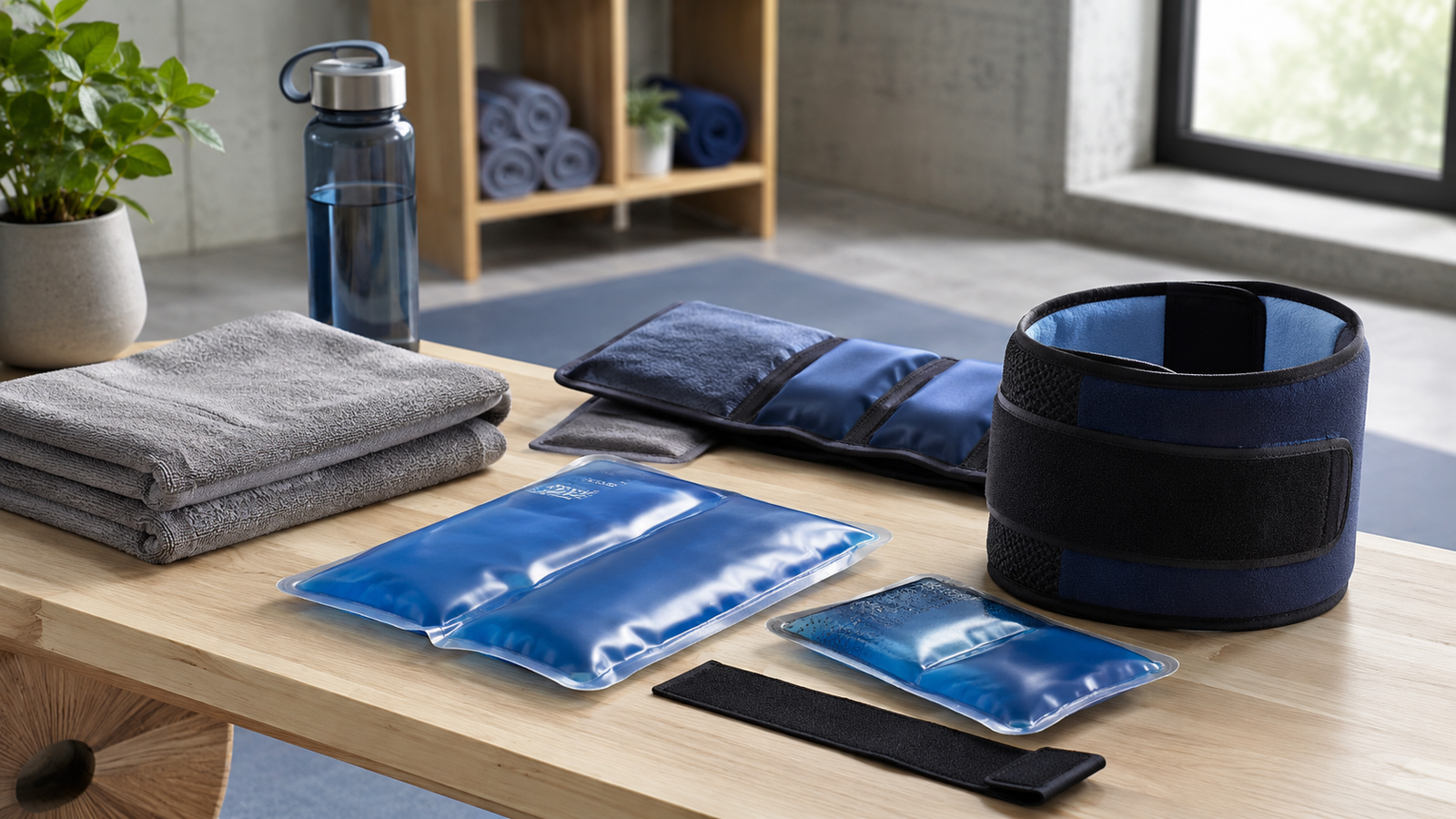
- reusable gel packs;
- flexible cold wraps;
- ice packs;
- frozen-gel sleeves;
- cold-compression products;
- cold-water immersion.
The medical term cryotherapy is sometimes used broadly for cold treatment.
However, consumer cold packs and whole-body cryotherapy chambers are very different interventions.
For ordinary home recovery, cold therapy usually means applying a cold pack or wrap to a specific area for a controlled period.
What Does Cold Therapy Actually Do?
When an area is exposed to cold, several temporary changes can occur.
Cold can:
- reduce skin temperature;
- decrease sensation;
- slow local nerve signalling;
- temporarily reduce pain perception;
- cause local blood vessels to constrict.
This is why an uncomfortable area may feel less painful after several minutes of cooling.
That can be genuinely useful.
But pain relief should not be confused with complete recovery.
Cold may reduce what you feel without immediately correcting the underlying cause.
Cold Therapy Is Mainly About Symptom Relief
This is one of the most important ideas to understand.
If you twist an ankle and applying a cold pack makes it hurt less, the cold has provided useful symptom relief.
It has not necessarily:
- repaired damaged tissue;
- restored stability;
- determined whether there is a fracture;
- made the joint ready for exercise again.
Use cold because temporary pain control is useful—not because numbness proves that healing has occurred.
When Cold Therapy May Be Useful
Cold can be considered for situations such as:
- short-term discomfort after a minor injury;
- localized soreness;
- some temporary swelling;
- post-exercise comfort;
- situations where reducing pain sensation makes rest easier.
It may be particularly useful during the early period after a minor injury when an area feels:
- sore;
- warm;
- irritated.
However, the severity and cause of the symptoms matter.
When You Should Not Simply Reach for Ice
Cold should not become a substitute for assessment.
Seek appropriate evaluation when an injury involves:
- severe pain;
- obvious deformity;
- inability to bear weight;
- inability to use the limb normally;
- significant swelling;
- major trauma;
- numbness;
- weakness;
- loss of function.
A cold pack can temporarily reduce pain even when an injury requires medical care.
Cold Does Not Need to Be Painfully Cold
The goal is controlled cooling.
It is not:
maximum cold for maximum time.
A cold pack should produce a strong cooling sensation without causing:
- burning;
- severe pain;
- prolonged numbness;
- skin injury.
If the cold becomes painful, remove it.
Never Assume Numbness Means Better Treatment
Many people think:
“I should keep icing until the area is completely numb.”
That is not a good target.
Numbness reduces your ability to judge whether the skin is being exposed to excessive cold.
Once sensation is significantly reduced, continued exposure can increase injury risk.
The Main Types of Cold Therapy Products
Common home options include:
- Reusable gel cold packs
- Flexible cold wraps
- Instant cold packs
- Homemade ice packs
- Cold-compression wraps
- Cold-water immersion
Each has different advantages.
1. Reusable Gel Cold Packs
Reusable gel packs are among the most practical options for home use.
They usually contain a gel that remains somewhat flexible after freezing.
Advantages
They are:
- reusable;
- inexpensive over time;
- easy to store;
- available in multiple sizes.
Some packs can also be used warm, making them useful for both heat and cold therapy.
What to Look For
A useful gel pack should remain flexible enough to conform around:
- knees;
- shoulders;
- ankles;
- thighs.
A completely rigid frozen block may be difficult to position.
2. Flexible Cold Wraps
Cold wraps combine a cold pack with:
- elastic material;
- straps;
- a sleeve.
They are useful when you want the cold source to stay in position without holding it.
Common designs target:
- knee;
- shoulder;
- ankle;
- elbow;
- back.
Advantages
They can provide:
- better fit;
- hands-free use;
- more consistent contact.
Limitations
A highly specialized wrap may work well for only one body area.
If you want one product for several areas, a simple flexible rectangular pack may provide better value.
3. Instant Cold Packs
Instant cold packs generate cooling through a chemical reaction when activated.
They do not require a freezer.
This makes them useful for:
- travel;
- sports bags;
- hiking;
- first-aid kits.
Main Advantage
They are available immediately even when refrigeration is unavailable.
Main Disadvantage
Most are:
- single-use;
- less economical for regular home use.
If you frequently use cold therapy at home, reusable packs generally make more sense.
4. Homemade Ice Packs
A simple ice pack can be created using:
- ice cubes;
- a sealed bag;
- protective cloth.
This can work perfectly well when used carefully.
The key issue is protecting the skin.
Do not place extremely cold ice directly against the skin for prolonged periods.
Frozen Vegetables
A bag of frozen peas has become a classic makeshift cold pack because it:
- conforms easily;
- contains many small frozen pieces.
It can work in an emergency.
If using food as a repeated cold pack, consider keeping it specifically for that purpose rather than repeatedly thawing and refreezing something you intend to eat.
5. Cold-Compression Wraps
Some products combine:
- cooling;
- external compression.
They may be used around areas such as:
- knees;
- ankles;
- shoulders.
Compression introduces another variable.
The wrap should not be so tight that it causes:
- tingling;
- numbness;
- colour changes;
- increased pain.
Cold plus excessive compression can make it more difficult to recognize problems with sensation or circulation.
6. Cold-Water Immersion
Cold-water immersion includes:
- ice baths;
- cold tubs;
- immersion of a limb.
This exposes a much larger body area than a normal cold pack.
It also produces a greater systemic response.
For most everyday injuries and recovery situations, whole-body cold immersion is unnecessary.
Ice Baths Are Not Required for Fitness Recovery
Ice baths have become strongly associated with athletic recovery.
They may temporarily help some people with:
- soreness;
- perceived fatigue.
But that does not mean every person who exercises needs them.
For ordinary recreational training:
- walking;
- food;
- hydration;
- sleep;
- sensible programming;
usually deserve much more attention.
Routine Cold Exposure After Strength Training
There is also an important distinction between:
reducing soreness
and
maximizing training adaptation.
Frequently using substantial cold exposure immediately after resistance training may not always be desirable when the primary goal is maximizing muscle and strength adaptation.
This does not mean an occasional cold pack is harmful.
It means there is little reason to automatically ice muscles after every strength session if there is no clear problem you are trying to solve.
Cold Therapy for Acute Injury: Think Beyond Old Rules
For years, sports-injury advice was often summarized with acronyms such as:
RICE — Rest, Ice, Compression, Elevation
Modern injury management is more nuanced.
Cold can still have a role in temporary pain relief, but it should not automatically become the central treatment for every injury.
Depending on the injury, recovery may eventually involve:
- appropriate movement;
- gradual loading;
- rehabilitation;
- strength restoration.
Keeping an injured area cold indefinitely does not replace those processes.
Use Cold for a Clear Reason
A useful way to think about cold is:
symptom → goal → controlled cold
For example:
Problem: painful minor ankle sprain
Goal: temporary pain relief
Tool: protected cold pack for a short session
That is more rational than:
“It hurts, therefore I must ice it continuously.”
Skin Protection Is Essential
A protective layer between the cold source and skin is one of the most important safety precautions.
Use something such as:
- thin towel;
- cloth sleeve;
- supplied fabric cover.
This is especially important with:
- frozen gel packs;
- ice.
Why Direct Ice Can Damage Skin
Very cold material placed directly against skin can remove heat rapidly.
Prolonged exposure can produce:
- cold burns;
- tissue injury;
- skin damage.
The risk increases when:
- the pack is extremely cold;
- pressure is applied;
- exposure continues for too long;
- sensation is reduced.
A barrier slows heat transfer and gives you better control.
How Thick Should the Protective Layer Be?
The layer should allow you to feel cooling while preventing intense direct contact.
A very thick towel may reduce cooling substantially.
A thin cloth or the manufacturer’s supplied cover is often enough.
Always follow the instructions for the specific product.
How Long Should You Apply Cold?
There is no single duration suitable for every product, body area and person.
A common practical principle is to use short, controlled sessions rather than prolonged continuous exposure.
Many home recommendations use periods somewhere around:
10–20 minutes
depending on:
- product;
- body area;
- individual tolerance.
Follow the specific instructions provided with your cold product or by your clinician.
Longer is not automatically better.
Why Time Limits Matter
Cold injury risk depends on:
- temperature;
- duration;
- skin protection;
- circulation;
- sensation.
A moderately cold pack left on for too long can still become problematic.
Do not treat the timer as a challenge to see how long you can tolerate the cold.
Allow the Skin to Return Toward Normal
After removing the cold pack:
- allow the skin to warm naturally;
- restore normal sensation;
- check the skin.
Do not continuously alternate one frozen pack with another without allowing recovery unless specifically advised.
What Should the Skin Look Like?
Mild temporary redness after cooling can occur.
More concerning signs include:
- very pale skin;
- blue or unusual colour changes;
- hard or waxy-looking skin;
- blistering;
- persistent numbness;
- significant pain.
Remove the cold immediately if you notice concerning changes.
Stop If Cold Becomes Painful
Cold often initially feels:
- intensely cool;
- uncomfortable.
But it should not become progressively painful.
Stop if you experience:
- burning;
- severe aching;
- excessive numbness;
- unusual tingling.
You do not need to tolerate extreme discomfort for cold therapy to be useful.
Do Not Fall Asleep With a Cold Pack
Falling asleep removes your ability to monitor:
- time;
- skin colour;
- sensation.
Do not leave frozen packs in place while sleeping.
Use cold during a period when you can remain aware of the treatment.
Cold Therapy for an Ankle Sprain
For a minor ankle injury, a cold pack may temporarily reduce discomfort.
A practical approach may include:
- Protect the skin with cloth.
- Apply the cold pack comfortably.
- Keep the session controlled.
- Remove it when the recommended time is reached.
- Monitor swelling and function.
However, seek assessment if there is:
- inability to walk;
- major swelling;
- severe tenderness;
- deformity;
- worsening pain.
Not every ankle injury is a simple sprain.
Cold Therapy for Knee Discomfort
A flexible cold pack or knee wrap may be easier to position than a rigid pack.
Avoid excessively tight straps.
Knee pain that is:
- persistent;
- associated with locking;
- associated with instability;
- significantly swollen;
deserves assessment rather than indefinite icing.
Cold Therapy for Shoulder Discomfort
A shaped shoulder pack can help maintain contact because the shoulder is difficult to cover with a flat pack.
Cold may provide temporary comfort after:
- activity;
- minor strain.
Persistent weakness or inability to raise the arm normally should be evaluated.
Cold Therapy for Back Pain
Cold can temporarily reduce pain sensation around some acute muscular discomfort.
But back pain has many possible causes.
Seek urgent assessment for symptoms such as:
- significant leg weakness;
- saddle-area numbness;
- bowel or bladder changes;
- fever with severe back pain;
- serious trauma.
A cold pack should never delay evaluation of warning signs.
Cold Therapy for Neck Pain
Use caution around the neck.
Avoid prolonged, extreme cooling around:
- front of neck;
- sensitive vascular structures.
For ordinary muscular discomfort, a gently cool pack may be used over appropriate muscular areas if suitable.
Persistent neck pain accompanied by:
- numbness;
- weakness;
- dizziness;
- severe headache;
requires appropriate evaluation.
Cold Therapy for Bruising
Cooling shortly after a minor bump may temporarily reduce:
- pain;
- discomfort.
However, significant unexplained bruising or rapidly increasing swelling should be assessed.
If you take medications that increase bleeding risk, substantial bruising deserves additional attention.
Cold Therapy for Muscle Soreness
Cold can make sore muscles feel temporarily more comfortable.
But delayed-onset muscle soreness generally improves with:
- time;
- light movement;
- sleep;
- appropriate nutrition.
You do not need to ice normal training soreness.
Cold Therapy After Running
Runners sometimes use cold around:
- knees;
- calves;
- ankles.
If a specific area feels irritated after training, brief cooling may provide comfort.
But recurring pain after every run should prompt a review of:
- training load;
- footwear;
- strength;
- technique;
- recovery.
Repeated icing can make the symptom quieter without addressing why it keeps occurring.
Cold Therapy After Strength Training
If you have a specific sore area and cold makes it feel better, occasional use may be reasonable.
But routinely applying cold to every trained muscle is usually unnecessary.
If your main goal is:
- hypertrophy;
- strength;
there is little reason to make aggressive immediate post-workout cooling a mandatory habit.
Cold Therapy for Headaches
Cold packs are sometimes used on the:
- forehead;
- back of the neck;
for comfort during certain headaches.
Use only gentle, protected cooling.
Severe or unusual headache symptoms—particularly those involving:
- neurological changes;
- fever;
- head injury;
- sudden extreme pain;
require appropriate medical evaluation.
Cold Therapy for Minor Burns
This is an area where people often make a dangerous mistake.
For minor thermal burns, cool running water is generally more appropriate than applying ice directly.
Ice can create additional tissue injury.
More serious burns require appropriate medical care.
Do not place frozen packs directly onto burned skin.
Cold Therapy for Insect Bites
A protected cool pack may help temporarily with:
- itching;
- local discomfort.
But seek urgent medical attention for signs of severe allergic reaction such as:
- difficulty breathing;
- swelling of face or throat;
- widespread severe symptoms.
Cold does not treat anaphylaxis.
Cold Therapy for Dental Pain
A cold pack placed externally against the cheek may temporarily reduce discomfort after certain dental procedures or injuries.
Do not place ice directly against gum tissue unless specifically instructed.
Persistent tooth pain usually needs dental treatment rather than repeated external cooling.
Cold Therapy and Swelling
Cold is often used with the goal of reducing swelling.
The relationship between swelling, inflammation and healing is more complex than simply:
swelling = bad.
Some inflammatory activity is part of the body’s normal response to injury.
The goal should not always be to eliminate every sign of inflammation.
Use cold primarily when temporary symptom control is useful and follow professional advice for significant injuries.
Cold Therapy Does Not “Stop Healing”
Another oversimplification is the claim that cold should never be used because inflammation is always beneficial.
Reality is more nuanced.
Controlled cold can provide useful pain relief.
What matters is avoiding the assumption that:
- more cold;
- longer cold;
- constant cold;
will produce faster healing.
Cold vs Heat
Both are comfort tools, but they generally create very different sensations.
| Situation | Cold may suit | Heat may suit |
|---|---|---|
| Fresh local discomfort | Often considered | Sometimes avoided initially |
| Significant warmth/swelling | May provide comfort | May feel worse |
| General muscle stiffness | Sometimes | Often preferred |
| Relaxation | Less common | Often preferred |
| Delayed muscle soreness | Optional | Optional |
| Before mobility work | Less commonly | Often more comfortable |
These are broad tendencies rather than rigid rules.
The underlying cause matters more than the table.
Should You Use Cold or Heat After Exercise?
Ask what you are trying to achieve.
If you want:
temporary relief of an irritated, sore area
cold may feel useful.
If you want:
general muscle relaxation and warmth
heat may feel better.
If you feel fine:
you may need neither.
Recovery does not require thermal therapy.
Alternating Heat and Cold
Contrast therapy alternates:
- hot;
- cold.
Some people enjoy this approach.
However, it is not necessary for most ordinary recovery routines.
The more complicated a recovery routine becomes, the less likely it may be to add meaningful benefit.
Use contrast therapy only if:
- you enjoy it;
- you can do it safely;
- you have a specific reason.
Cold Sprays
Cooling sprays and topical products may produce a cooling sensation.
They are not necessarily equivalent to applying a controlled cold pack.
Some products may simply create a sensory cooling effect through ingredients such as:
- menthol.
Do not confuse a sensation of coolness with substantial tissue cooling.
Menthol Is Not the Same as Ice
Menthol can activate sensory receptors that make the skin feel cool.
This can alter pain perception.
It does not necessarily lower tissue temperature in the same way as:
- ice;
- frozen gel pack.
Both can provide comfort, but they work differently.
Cold Therapy and Compression
Combining compression with cold can be convenient after certain sports injuries.
If using a cold-compression wrap, ensure it is not so tight that it causes:
- tingling;
- numbness;
- increased pain;
- pale or blue skin.
Remember that cold itself reduces sensation.
That makes it especially important not to overtighten the wrap.
Elevation
For certain swollen limb injuries, elevation may be suggested as part of short-term symptom management.
Again, the injury type matters.
Do not rely on:
cold + compression + elevation
as a substitute for appropriate rehabilitation when movement and loading become appropriate.
People With Reduced Sensation Need Extra Caution
Cold safety depends on being able to recognize:
- excessive cold;
- pain;
- skin changes.
People with reduced sensation may not receive normal warning signals.
This can occur with:
- peripheral neuropathy;
- nerve injury;
- certain neurological conditions.
If sensation is impaired, seek professional guidance before using strong cold therapy.
Diabetes and Cold Therapy
Some people with diabetes develop:
- reduced foot sensation;
- circulation problems.
This can make extreme cold harder to detect safely.
Be especially cautious about placing frozen products on:
- feet;
- lower legs;
if sensation or circulation is impaired.
Individual medical guidance may be appropriate.
Circulation Problems
Cold causes local blood vessels to constrict.
People with certain circulation disorders may therefore need to avoid or modify cold exposure.
Seek appropriate advice if you have:
- significant peripheral vascular disease;
- Raynaud’s phenomenon;
- known circulation problems.
Raynaud’s Phenomenon
Cold exposure can trigger blood-vessel constriction in people with Raynaud’s.
Symptoms may include fingers or toes changing:
- white;
- blue;
- red;
along with:
- numbness;
- pain.
Cold therapy may therefore be unsuitable for affected areas.
Cold Hypersensitivity
Some people develop unusual reactions to cold.
For example, cold urticaria can cause:
- hives;
- swelling;
after cold exposure.
If you experience abnormal skin reactions to cold, stop using the therapy and seek medical advice.
Open Wounds
Do not directly place potentially contaminated cold products over:
- open wounds;
- broken skin.
If cooling is medically appropriate around an injured area, use suitable barriers and follow wound-care guidance.
Skin Conditions
Be cautious when applying extreme cold over:
- eczema flares;
- inflamed skin;
- damaged skin.
Cold may sometimes feel soothing but can also irritate sensitive tissue.
The condition and skin integrity matter.
After Surgery
Post-surgical instructions often specify whether:
- cold;
- compression;
should be used.
Follow those instructions.
Do not independently increase:
- duration;
- pressure;
- cold intensity;
because the area feels painful.
Postoperative sensation may also be temporarily altered.
Pregnancy
Local cold-pack use may be appropriate in some situations during pregnancy, but pregnancy-related pain or swelling may have causes that deserve assessment.
Significant one-sided leg swelling, for example, should not simply be treated with a cold pack.
Seek appropriate medical guidance for unusual symptoms.
Older Adults
Older adults may have:
- thinner skin;
- reduced circulation;
- altered sensation.
This can increase cold-injury risk.
Use:
- protective layers;
- moderate exposure;
- careful monitoring.
Children
Children may have difficulty communicating:
- excessive cold;
- numbness.
Use age-appropriate cooling methods and supervise closely.
Never leave a young child unattended with an extremely cold pack.
Cold Therapy and Medications
Some medications or health conditions can affect:
- circulation;
- sensation;
- skin integrity.
If you are unsure whether cold therapy is appropriate, ask a healthcare professional.
How to Choose a Reusable Cold Pack
For most households, practical features include:
- flexibility when frozen;
- leak-resistant construction;
- washable cover;
- useful dimensions;
- secure seams.
A cold pack does not need advanced technology.
Size
Match the pack to the target area.
Small Pack
Useful for:
- wrist;
- hand;
- small local areas.
Medium Pack
Useful for:
- knee;
- ankle;
- shoulder.
Large Pack
Useful for:
- thigh;
- back;
- larger muscle areas.
Too large can be difficult to position.
Too small may not provide useful coverage.
Flexible Gel
Flexibility is especially useful around:
- joints;
- curved body areas.
Check whether the manufacturer says the pack remains pliable after freezing.
Some low-quality packs become almost completely rigid.
Protective Sleeve
A supplied fabric sleeve is convenient because it:
- protects skin;
- keeps the pack positioned;
- reduces the need to find a towel every time.
If no sleeve is provided, use your own cloth barrier.
Straps
A cold pack with straps can be helpful when you want:
- hands-free use;
- controlled positioning.
Make sure the straps allow adjustment without excessive compression.
Leak Resistance
Cold packs are repeatedly:
- frozen;
- bent;
- compressed.
Inspect them regularly.
Stop using a pack if:
- the seam splits;
- gel leaks;
- outer material cracks.
Do not place a leaking product against the skin.
Freezer Storage
Store reusable packs according to manufacturer instructions.
Avoid placing them:
- against sharp freezer objects;
- where they will be punctured.
If a pack freezes too hard for immediate use, allow it to become flexible enough to position comfortably before applying it.
Cleaning
Wipe reusable packs after use.
For sleeves:
- wash according to instructions;
- dry completely.
Do not put an unapproved gel pack into:
- washing machine;
- dishwasher.
Instant Cold Packs for Travel
Instant packs are useful additions to:
- car first-aid kits;
- hiking bags;
- sports bags.
Check expiration dates periodically.
Because they are typically single-use, replace activated packs after use.
Do Cold Packs Need to Be Expensive?
No.
The core job is simple:
provide controlled cooling safely.
Higher prices may sometimes provide:
- better flexibility;
- stronger seams;
- better wraps;
- reusable covers.
But a premium brand does not necessarily provide better symptom relief than a well-designed basic pack.
Cold Therapy Gadgets
Some recovery products add:
- powered cooling;
- circulating chilled water;
- compression pumps;
- app controls.
These systems may be useful in:
- structured rehabilitation;
- postoperative recovery;
- specific athletic settings.
For ordinary home recovery, they are often unnecessary.
Start with the simplest tool that solves the problem.
Whole-Body Cryotherapy Chambers
Whole-body cryotherapy involves brief exposure to extremely cold environments.
This is very different from placing a gel pack on a knee.
Claims around whole-body cryotherapy can be much broader than the evidence justifies.
For most people looking for ordinary exercise recovery or minor-injury comfort, there is no requirement to use extreme cold chambers.
Cold Showers
Cold showers are sometimes promoted for:
- recovery;
- energy;
- metabolism;
- immunity.
A cool or cold shower may feel stimulating, but it should not be treated as a universal medical or recovery intervention.
If you enjoy one, that is different from needing one.
Cold Plunges
Cold plunges have become popular as part of wellness routines.
They can produce a strong cardiovascular and respiratory response, particularly when the water is very cold.
Sudden immersion can cause:
- rapid breathing;
- increased heart rate;
- significant discomfort.
People with cardiovascular or other relevant medical conditions should seek guidance before adopting extreme cold immersion.
Do Not Use Competition as Your Safety Standard
Social media often turns cold exposure into a challenge:
- colder water;
- longer duration;
- more ice.
That is not a sensible therapeutic goal.
Recovery should not become an endurance test for cold tolerance.
What About “Brown Fat” and Metabolism?
Cold exposure can affect thermoregulation and metabolic processes.
But using ice packs or cold plunges as a weight-loss strategy is not a practical substitute for:
- nutrition;
- physical activity;
- long-term energy balance.
Be skeptical of cold-therapy products marketed primarily as fat-burning devices.
Can Cold Reduce Inflammation?
Cold can affect inflammatory processes and local physiology.
But inflammation is not simply something the body should eliminate.
Inflammation plays roles in:
- defence;
- tissue response;
- healing.
The purpose of home cold therapy should generally be symptom management rather than trying to suppress every inflammatory response.
Can Cold Speed Up Healing?
Cold may improve comfort.
That does not mean it necessarily makes all tissues heal faster.
Recovery from injury often requires:
- appropriate diagnosis;
- protection when needed;
- gradual movement;
- progressive loading;
- rehabilitation.
Do not measure healing by how numb the area feels.
Cold Therapy and Pain Medication
Cold may sometimes reduce discomfort enough that someone needs less reliance on other symptom-relief strategies.
But do not alter prescribed medication simply because cold helps.
Follow medical guidance.
A Simple Cold-Therapy Routine
For an appropriate minor injury or localized discomfort:
- Identify the area and reason for cooling.
- Wrap the cold pack in a thin protective cloth.
- Position it comfortably.
- Avoid excessive compression.
- Use for the recommended short duration.
- Remove the pack.
- Check skin colour and sensation.
- Allow the area to warm naturally.
- Stop if symptoms worsen.
That is usually enough.
Cold Therapy After a Minor Bump
For a minor bump:
- brief protected cooling may reduce discomfort.
Monitor for:
- rapidly increasing swelling;
- severe pain;
- inability to move normally.
If those develop, consider medical assessment.
Cold Therapy After a Hard Workout
If a particular muscle feels sore:
- First determine whether it is ordinary soreness or possible injury.
- Continue light movement as tolerated.
- Use a cold pack only if you find the cooling comfortable.
- Keep the exposure controlled.
- Prioritize normal recovery fundamentals.
There is no need to cold-treat the entire body automatically.
Recovery Fundamentals Still Come First
Even when cold helps, your recovery priorities remain:
- Appropriate rest
- Sleep
- Nutrition
- Hydration
- Sensible training progression
- Gradual return to normal movement
Cold belongs below these fundamentals.
Common Cold Therapy Mistakes
Applying Ice Directly to Skin
Use a protective layer.
Leaving It On Too Long
Longer is not automatically better.
Falling Asleep With a Cold Pack
Always remain able to monitor the skin.
Treating Complete Numbness as the Goal
Excessive numbness is a warning, not a success metric.
Strapping the Pack Too Tightly
Cold plus excessive compression can create additional problems.
Icing Every Workout
Most exercise recovery does not require cold therapy.
Using Cold to Ignore a Significant Injury
Temporary pain relief does not mean the injury is minor.
Using Extreme Whole-Body Cold Without Considering Risk
More extreme exposure does not automatically produce greater benefit.
Repeatedly Cooling an Area With Poor Sensation
This increases cold-injury risk.
Quick Cold Therapy Decision Guide
| Situation | Practical approach |
|---|---|
| Minor local discomfort | Protected reusable cold pack |
| Small area | Compact gel pack |
| Knee/ankle | Flexible wrap |
| Sports bag | Instant cold pack |
| Large muscle | Larger flexible gel pack |
| Travel | Instant pack or portable gel pack |
| Ordinary workout soreness | Cold optional |
| Significant fresh injury | Assessment may be more important |
| Reduced sensation | Extra caution/professional guidance |
| Circulation disorder | Seek individualized advice |
Before Buying a Cold-Therapy Product
Ask yourself:
- What exact area will I cool?
- Why am I using cold?
- Do I need reusable or single-use?
- Does the pack remain flexible when frozen?
- Is the size appropriate?
- Does it include a protective cover?
- Do I need straps?
- Can I control compression?
- Is it easy to clean?
- Is the pack durable and leak resistant?
- Could a simple basic pack do the same job?
- Do I have a condition that makes cold exposure less safe?
Frequently Asked Questions
Is cold therapy good for injuries?
Cold can temporarily reduce pain and may be useful for some minor acute injuries. It should not replace appropriate assessment and rehabilitation when the injury is significant.
How long should I use a cold pack?
Follow the product or professional guidance. Short controlled sessions—often around 10–20 minutes depending on the situation—are generally preferable to prolonged exposure.
Should I put ice directly on my skin?
No. Use a protective cloth, sleeve or other appropriate barrier.
Should the area become numb?
Significant numbness is not the goal. Remove the cold if sensation becomes excessively reduced.
Can I sleep with an ice pack?
No. Sleeping prevents you from monitoring the duration and condition of your skin.
Can I use cold therapy every day?
It may be used when appropriate, but daily cold therapy is not required for general health or recovery.
Is cold good for muscle soreness?
It may temporarily reduce soreness for some people, but ordinary post-exercise soreness generally resolves through time and normal recovery.
Should I ice after every gym workout?
No. Routine icing after every workout is unnecessary for most recreational exercisers.
Is an ice bath better than a cold pack?
They serve different purposes. A cold pack targets a small area, while immersion exposes much more of the body. Most everyday recovery situations do not require an ice bath.
Are cold plunges necessary for recovery?
No. They are optional and produce stronger whole-body responses than localized cooling.
Cold or heat for tight muscles?
General muscular tightness often feels better with heat and gentle movement. Cold may be preferred when a specific area feels acutely sore or irritated.
Can cold reduce swelling?
Cold can influence local blood flow and may temporarily affect swelling, but swelling management depends on the type and severity of injury.
Can cold therapy speed healing?
Cold may help symptoms, but faster healing is not guaranteed. Appropriate movement, rehabilitation and time remain important.
Can people with diabetes use cold packs?
People with reduced sensation or circulation problems need additional caution. Individual medical guidance may be appropriate.
Can I use a cold pack on varicose veins?
People with significant vascular or circulation problems should seek individualized advice before applying strong cold therapy.
Can cold therapy cause burns?
Yes. Excessive cold exposure can injure skin and tissue, particularly when ice or frozen packs are applied directly or for prolonged periods.
What should I do if my skin becomes white or very numb?
Remove the cold source immediately and allow the area to warm naturally. Seek medical advice if abnormal colour, pain, blistering or numbness persists.
Can I use cold on a burn?
Do not place ice directly on a thermal burn. Cool running water is generally more appropriate for minor burns, while significant burns require medical care.
Who should be particularly cautious with cold therapy?
Extra caution is appropriate for people with:
- reduced sensation;
- significant circulation disorders;
- Raynaud’s phenomenon;
- cold hypersensitivity;
- certain vascular conditions;
- compromised skin.
When should I seek medical care rather than relying on cold therapy?
Seek appropriate assessment for:
- severe pain;
- major swelling;
- inability to use or bear weight on a limb;
- visible deformity;
- significant trauma;
- persistent numbness;
- weakness;
- symptoms that continue to worsen;
- suspected fracture;
- signs of infection.
The Physical Glow Takeaway
Cold therapy can be a useful short-term comfort tool, particularly when a minor injury or irritated area is painful and temporary cooling makes it easier to rest.
Use it carefully:
protect the skin → use moderate cold → keep sessions short → monitor sensation and skin colour → allow the area to warm between applications.
Avoid placing ice directly on bare skin, leaving cold packs on for prolonged periods or using numbness as a measure of effectiveness.
For exercise recovery, cold is optional. It may temporarily reduce soreness, but sleep, nutrition, hydration, appropriate training and gradual movement remain more important. There is also little reason to automatically use aggressive cold exposure after every strength workout simply because it has become popular in recovery culture.
Most importantly, do not let symptom relief hide the seriousness of an injury. If pain, swelling, weakness or loss of function is significant, the right next step may be assessment—not a colder pack.