Understanding Recovery & Relaxation: A Practical Guide
Learn how recovery and relaxation fit into a balanced wellness routine, with practical guidance on rest, physical recovery, relaxation methods, sleep, stress and consistency. This beginner-friendly guide helps you make a clear, informed choice without unnecessary complexity.
Recovery is often treated as something that happens only after a hard workout.
Relaxation is often treated as something separate—an occasional massage, quiet evening or wellness product used when stress becomes overwhelming.
In practice, the two are closely connected.
Your body needs periods of lower physical and mental demand to adapt to exercise, maintain performance, support sleep and prevent everyday fatigue from continuously accumulating.
Recovery can involve:
- sleep;
- nutrition;
- hydration;
- lower-intensity movement;
- rest between demanding workouts;
- managing training volume;
- reducing unnecessary physical strain;
- mental downtime.
Relaxation can support that process by helping you move out of a constantly stimulated state and create conditions that make rest easier.
The useful question is therefore not:
“Which recovery product should I buy?”
It is:
“What kind of recovery do I actually need, and which simple habits or tools will make it easier to get consistently?”
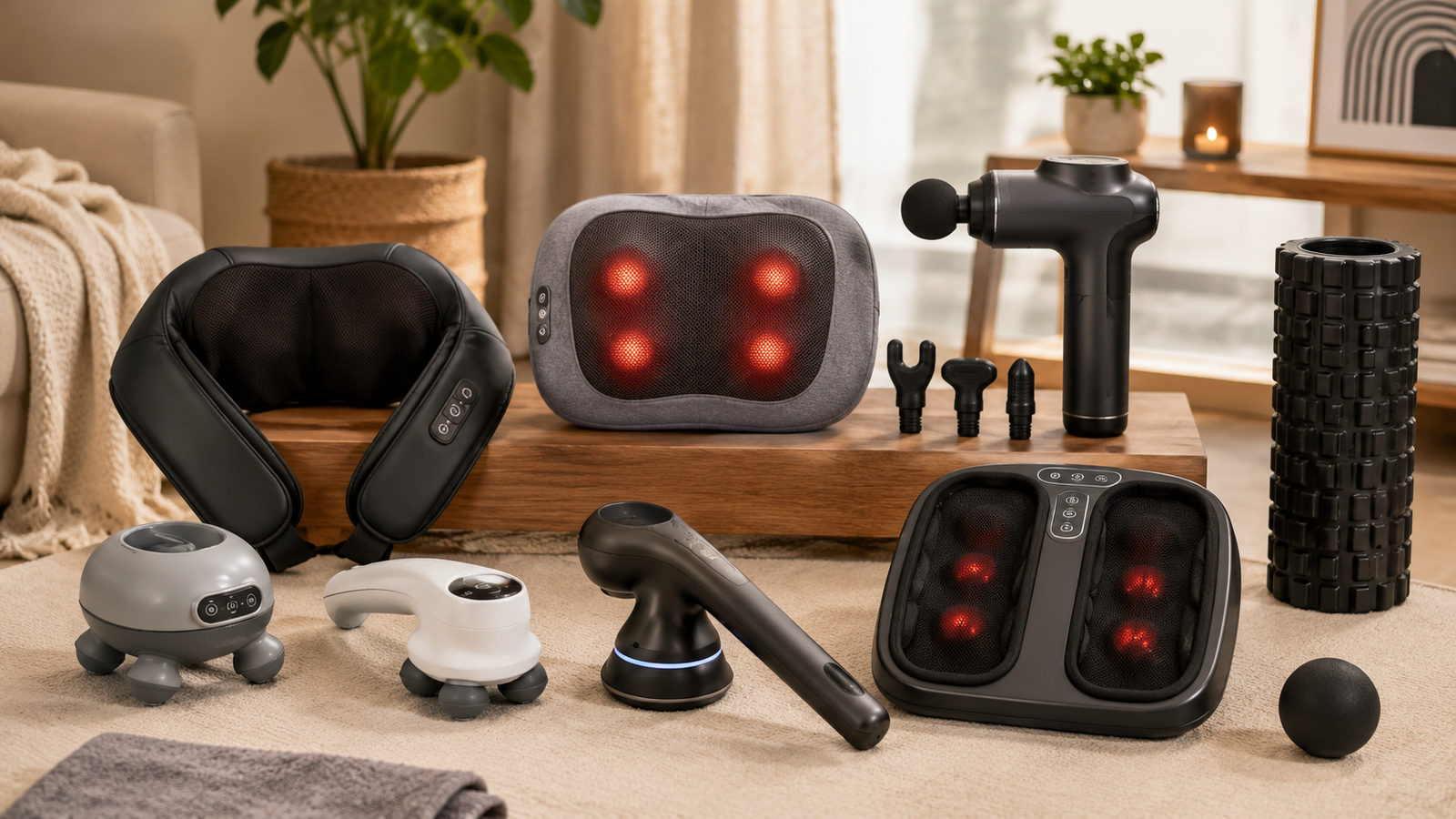
Massage guns, foam rollers, heat packs, cold therapy and massagers can all have a place. But none of them replaces adequate sleep, sensible training, nutrition or rest.
This guide explains how recovery works, what relaxation can realistically contribute, how to recognize when you may need more recovery and where popular recovery tools fit into a practical routine.
What Does Recovery Actually Mean?
Recovery is the process of returning from physical or mental demand toward a state where you are ready to perform effectively again.
After exercise, the body may need time to:
- replenish energy stores;
- repair exercise-related tissue stress;
- restore fluid balance;
- recover from nervous-system demand;
- reduce temporary soreness and fatigue.
Recovery does not mean doing nothing at all.
It can include:
- complete rest;
- sleep;
- walking;
- gentle mobility;
- light exercise;
- food and hydration.
The correct approach depends on what you are recovering from.
A demanding strength session may require a different recovery strategy from:
- a long run;
- poor sleep;
- several stressful workdays;
- a recreational walk.
Recovery Is Not the Same as Eliminating Soreness
Muscle soreness is one possible sign of training stress, but it is not a complete measure of recovery.
You can have:
- little soreness while still being fatigued;
- substantial soreness while remaining otherwise well recovered.
Likewise, reducing soreness temporarily does not necessarily mean the underlying recovery process has been accelerated dramatically.
For example, massage or heat may make you feel better, which can be useful, without instantly restoring muscle tissue to its pre-exercise state.
That distinction helps keep expectations realistic.
The Foundations of Recovery
Most effective recovery routines begin with a few fundamentals:
- Sleep
- Appropriate food intake
- Hydration
- Sensible training load
- Rest or lower-intensity activity
- Stress management
Recovery devices should come after these.
1. Sleep: The Most Important Recovery Tool
Sleep affects nearly every aspect of recovery.
Adequate sleep supports:
- physical restoration;
- cognitive function;
- mood;
- coordination;
- training performance;
- appetite regulation;
- learning and memory.
Repeatedly sleeping too little while relying on recovery gadgets is unlikely to produce the same result as improving sleep itself.
Build Sleep Into the Training Plan
If you train regularly, sleep should be considered part of the program rather than something that happens around it.
Useful habits include:
- consistent sleep and wake times where practical;
- a dark bedroom;
- comfortable temperature;
- reducing unnecessary noise;
- a wind-down period before bed.
You do not need a perfect sleep routine every night.
Consistency over time matters more.
2. Nutrition and Recovery
Exercise creates energy and nutrient demands.
A practical recovery diet usually begins with:
- sufficient total energy;
- adequate protein;
- carbohydrates appropriate to activity;
- fruits and vegetables;
- overall dietary variety.
You do not need a specialized “recovery food” after every workout.
For many people, an ordinary balanced meal is enough.
Protein and Recovery
Protein supports maintenance and repair of body tissues.
People who train regularly generally benefit from distributing adequate protein across the day rather than relying entirely on one very large serving.
Food sources can include:
- dairy;
- eggs;
- fish;
- poultry;
- meat;
- soy;
- lentils;
- beans;
- other protein-rich foods.
Protein supplements can be convenient, but they are not mandatory.
Carbohydrates and Recovery
Carbohydrates help replenish glycogen used during activity.
They become particularly relevant when:
- training volume is high;
- sessions are long;
- you train again within a relatively short period;
- endurance exercise is involved.
Someone performing a short recreational workout may not require a specialized high-carbohydrate recovery strategy.
Match intake to training demand.
3. Hydration
Fluid losses increase with sweating.
Recovery should include replacing enough fluid to restore normal hydration.
Needs vary with:
- climate;
- session duration;
- intensity;
- sweat rate.
Plain water is sufficient for many ordinary workouts.
Electrolytes may become more relevant after:
- prolonged activity;
- very heavy sweating;
- exercise in significant heat.
Do not automatically add electrolyte products to every recovery routine.
Urine Colour and Hydration
Urine colour can provide a rough indication of hydration in some situations, but it is not a perfect medical measure.
Aim for normal fluid intake rather than trying to produce completely clear urine all day.
Overhydration is not a recovery advantage.
4. Training Load
You cannot “recover” effectively from a training plan that continually exceeds what your body can tolerate.
Exercise creates stress.
Adaptation occurs when stress is followed by enough recovery.
A useful sequence is:
training stimulus → recovery → adaptation
If the next intense session arrives before you are adequately recovered, fatigue can accumulate.
More Training Is Not Always Better
Progress does not require:
- maximum intensity every day;
- constant soreness;
- exhaustion after every session.
A sensible program usually alternates:
- harder sessions;
- easier sessions;
- rest.
Beginners particularly benefit from leaving enough time for their bodies to adapt.
5. Rest Days
A rest day does not mean that all movement must stop.
It may involve:
- ordinary walking;
- light household activity;
- gentle stretching;
- relaxed mobility.
The key is that the activity does not create another substantial training load.
For some people, complete rest feels best.
For others, light movement feels more comfortable.
Active Recovery
Active recovery describes low-intensity movement performed between demanding training sessions.
Examples include:
- easy walking;
- gentle cycling;
- light swimming;
- easy mobility work.
The purpose is not to sneak in another hard workout.
Intensity should remain low enough that the activity leaves you feeling refreshed rather than more fatigued.
How Do You Know You Need More Recovery?
No single sign is perfect.
Look for patterns.
Possible signs that training demand may be exceeding recovery include:
- persistent fatigue;
- declining performance;
- repeated unusually poor workouts;
- lingering soreness;
- reduced motivation;
- disrupted sleep;
- irritability;
- feeling unusually heavy during training.
One difficult day does not necessarily mean there is a problem.
But a pattern lasting over time deserves attention.
Persistent Pain Is Different From Normal Recovery
Normal post-exercise discomfort is usually:
- temporary;
- relatively diffuse;
- manageable.
Pain that is:
- sharp;
- severe;
- localized;
- associated with swelling;
- worsening;
- affecting normal movement;
should not simply be labelled “soreness.”
Recovery devices are not appropriate substitutes for assessing a potential injury.
Relaxation and Recovery
Relaxation does not directly replace food, sleep or training rest.
Its value is that it can help reduce mental and physical tension and create better conditions for recovery behaviours.
A relaxation routine might include:
- quiet breathing;
- a warm shower;
- gentle stretching;
- reading;
- low-intensity walking;
- meditation;
- massage;
- calm music.
The best method is the one that genuinely helps you feel calmer rather than becoming another task you must complete perfectly.
Mental Stress Counts Too
Physical training is not the only source of stress.
Your overall load can include:
- work pressure;
- poor sleep;
- travel;
- family responsibilities;
- illness;
- emotional stress.
A workout that normally feels manageable may feel much more demanding during a stressful week.
That does not necessarily mean fitness has suddenly declined.
Sometimes the recovery problem is not the training program alone—it is the combination of training and everything else happening around it.
Build Flexible Training Around Real Life
When total stress is unusually high, it can be reasonable to adjust training by:
- reducing volume;
- lowering intensity;
- shortening a session;
- replacing hard exercise with easier movement;
- taking an additional rest day.
Consistency does not mean ignoring fatigue.
Long-term consistency often improves when the program can adapt to real life.
Massage for Recovery and Relaxation
Massage can feel:
- relaxing;
- soothing;
- helpful for temporary muscle soreness;
- useful for reducing the sensation of stiffness.
Options include:
- professional massage;
- manual self-massage;
- massage balls;
- foam rollers;
- massage guns;
- handheld massagers.
The main practical benefit is often comfort.
Do not assume that deeper or more painful massage produces better recovery.
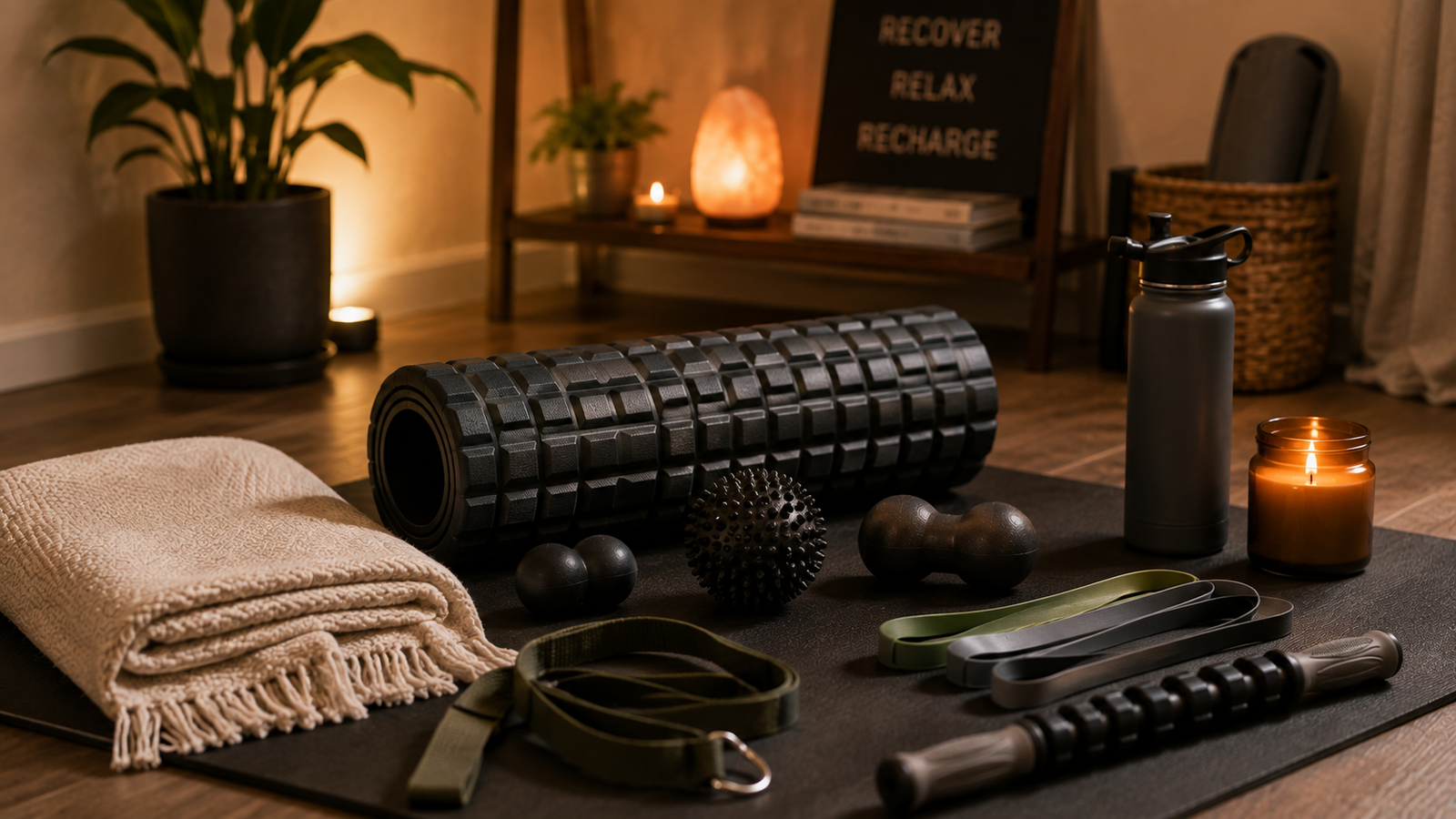
Foam Rolling
Foam rolling is a simple form of self-massage.
It may temporarily improve:
- comfort;
- perceived tightness;
- range of motion.
Common areas include:
- quadriceps;
- hamstrings;
- calves;
- glutes;
- upper back.
How Hard Should You Foam Roll?
Pressure should be tolerable.
You do not need to:
- grimace through severe pain;
- create bruising;
- spend long periods on one painful point.
Move slowly and adjust pressure with your body position.
Avoid aggressive rolling over:
- joints;
- bony areas;
- acute injuries.
Massage Balls
Massage balls provide more concentrated pressure than a foam roller.
They can be useful around areas such as:
- feet;
- glutes;
- upper back.
Because pressure is more focused, it is easier to overdo it.
Start gently.
Avoid rolling directly over:
- the spine;
- joints;
- areas of significant swelling or injury.
Massage Guns
Massage guns use rapid percussion.
They may help people who prefer powered self-massage.
Useful situations can include:
- warming up larger muscles;
- temporary relief of stiffness;
- post-exercise relaxation.
They do not need to be used at maximum speed.
Start with:
- low intensity;
- short duration;
- large muscle areas.
Avoid using them directly over:
- bones;
- joints;
- the front of the neck;
- injured tissue.
Heat Therapy
Heat is commonly used for:
- muscle tightness;
- stiffness;
- relaxation.
Options include:
- heating pads;
- reusable heat packs;
- warm showers;
- warm baths.
Heat can make an area feel more comfortable and may help relaxed movement.
When Heat May Be Useful
Heat often makes sense for:
- general muscle tightness;
- chronic-feeling stiffness;
- relaxation before gentle movement.
Use moderate temperatures.
A recovery tool should feel comfortably warm—not painfully hot.
Heat Safety
Avoid:
- sleeping on active heating pads unless specifically designed for that use;
- applying excessive heat;
- using heat over areas with impaired sensation without appropriate guidance.
Use a protective layer where recommended.
If the skin becomes:
- painful;
- intensely red;
- numb;
stop.
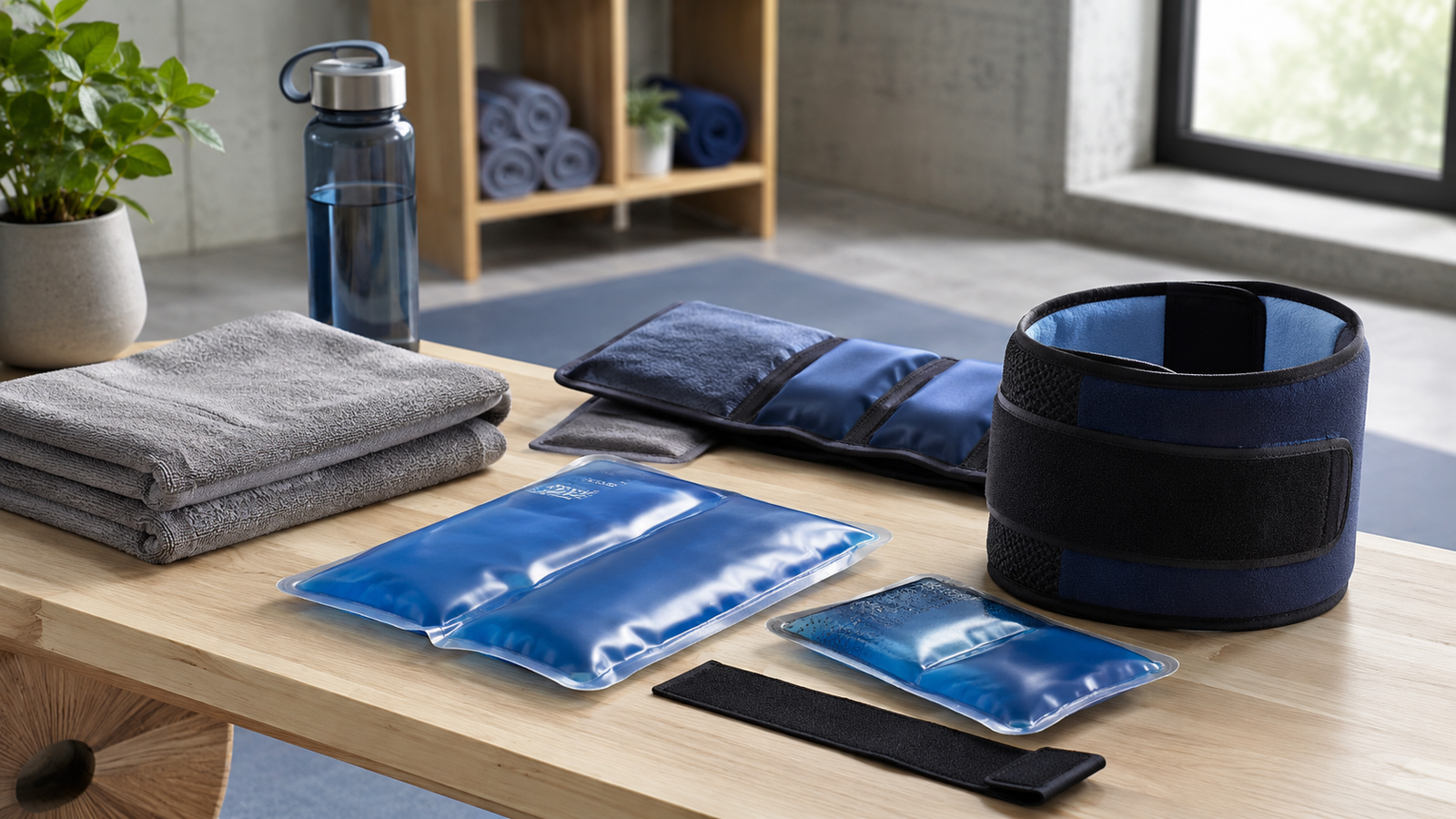
Cold Therapy
Cold packs are often used after:
- minor acute injuries;
- hard exercise;
- localized soreness.
Cold can temporarily reduce:
- pain sensation;
- local discomfort.
However, routine cold exposure is not required after every workout.
Cold Is Not Automatically Better Recovery
If your only goal is reducing soreness, cold may feel useful.
But recovery is more complicated than minimizing every inflammatory response after training.
You do not necessarily need an ice bath after ordinary exercise.
Use cold therapy because it solves a particular problem—not because recovery culture says every athlete needs it.
Cold-Pack Safety
Use:
- a cloth;
- sleeve;
- protective layer;
between very cold packs and bare skin.
Avoid prolonged exposure.
Stop if you experience:
- excessive numbness;
- skin pain;
- unusual colour changes.
Ice Baths and Cold-Water Immersion
Cold-water immersion is popular in sports and wellness culture.
Some people use it to:
- reduce soreness;
- feel refreshed;
- manage perceived fatigue.
But it is not essential for most recreational exercisers.
There can also be downsides to habitual cold exposure immediately after certain types of strength training if maximizing adaptation is the goal.
For everyday fitness, there is rarely a need to make ice baths a mandatory recovery ritual.
Sauna and Heat Exposure
Saunas may provide:
- relaxation;
- a pleasant post-exercise experience.
They also increase sweating.
That means hydration becomes important.
A sauna does not “detox” the body in the way many marketing claims suggest.
Sweating primarily helps regulate body temperature.
Sauna Safety
Avoid prolonged or extreme heat exposure if you feel:
- dizzy;
- weak;
- unwell.
Alcohol and intense heat can be an unsafe combination.
People with certain cardiovascular or other health conditions should seek appropriate guidance before using high-heat environments regularly.
Stretching for Recovery
Gentle stretching can feel good after exercise or during rest days.
It may help maintain or improve flexibility when practiced consistently.
But aggressive stretching of already sore tissue is not necessarily useful.
Stretching should feel controlled.
You do not need to force a muscle into pain to improve mobility.
Static Stretching
Static stretching involves holding a position.
It may be useful:
- after training;
- in separate mobility sessions;
- as part of relaxation.
Hold positions at a comfortable intensity.
Avoid bouncing aggressively into the stretch.
Mobility Work
Mobility involves more than passive stretching.
It can include:
- controlled joint movement;
- active range-of-motion exercises;
- movement preparation.
On a recovery day, mobility work should remain light enough that it does not become another hard training session.
Walking as Recovery
Walking is one of the simplest recovery tools available.
It can:
- provide light movement;
- reduce prolonged sitting;
- help you feel less stiff;
- provide mental relaxation.
You do not need special equipment beyond comfortable footwear.
An easy walk may provide more practical benefit than buying another recovery device you rarely use.
Breathing and Relaxation
Slow, controlled breathing can provide a simple transition from a busy day or demanding workout into a calmer state.
A basic approach might involve:
- sit or lie comfortably;
- breathe naturally;
- gradually slow the breath;
- avoid forcing very deep breaths;
- continue for several minutes.
The goal is comfort, not producing unusual sensations.
If breathing exercises make you dizzy, return to normal breathing.
Meditation
Meditation can support:
- relaxation;
- attention;
- stress management.
You do not need:
- special cushions;
- apps;
- complicated techniques.
A short period of quiet attention can be enough.
If guided audio helps you maintain the practice, use it.
The best relaxation routine is the one you can repeat.
Reading and Low-Stimulation Activities
Recovery does not need to look like a wellness treatment.
Simple activities can help create downtime:
- reading;
- listening to music;
- quiet conversation;
- light gardening;
- an easy evening walk.
If a relaxation routine requires extensive preparation and expensive equipment, it may be less sustainable than something much simpler.
Screen Time and Relaxation
Phones and television can feel relaxing, but highly stimulating content may keep some people mentally engaged late into the evening.
You do not necessarily need a complete digital detox.
Instead, consider whether your evening screen use:
- delays bedtime;
- makes it difficult to stop;
- increases mental stimulation.
If so, reduce it selectively.
Relaxation Products: When Are They Worth It?
Products can be worthwhile when they solve a clear problem.
Examples:
Sleep mask
Useful if unwanted light interferes with sleep.
White-noise machine
Useful if environmental sounds disturb you.
Heating pad
Useful if you regularly benefit from local warmth.
Foam roller
Useful if you enjoy self-massage.
Massage gun
Useful if powered massage makes recovery more convenient.
The product should serve the routine.
The routine should not be invented to justify the product.
Compression Garments
Compression garments may be used during or after exercise.
Some athletes use them for:
- comfort;
- perceived recovery;
- swelling management.
For ordinary recreational exercise, they are optional.
Medical compression garments are different and may require professional fitting or recommendations.
Do not assume a tight fitness sleeve provides the same function as medical-grade compression.
Recovery Boots
Pneumatic compression boots inflate around the legs in cycles.
They are increasingly marketed for:
- athletic recovery;
- circulation;
- soreness.
They can feel relaxing and may be useful for certain users.
But they are relatively:
- expensive;
- bulky;
- specialized.
For many recreational exercisers, simpler strategies such as:
- sleep;
- walking;
- adequate nutrition;
provide a stronger foundation.
Recovery Supplements
Products marketed for recovery may include:
- protein powders;
- amino acids;
- magnesium;
- electrolyte mixes;
- herbal products.
Do not treat the word “recovery” on the label as proof that supplementation is necessary.
Start by determining whether your diet or activity creates an actual need.
Protein Supplements
Protein powder can be useful because it is:
- convenient;
- portable;
- easy to quantify.
But ordinary food can also meet protein needs.
Use a supplement to solve a convenience or intake problem—not because recovery requires a shake immediately after every workout.
Magnesium
Magnesium is sometimes marketed for:
- muscle recovery;
- relaxation;
- sleep.
Magnesium is an essential nutrient, but taking more than you need does not automatically improve recovery.
Supplements can cause side effects and may interact with certain conditions or medications.
Do not add supplements casually simply because a recovery product is popular.
Electrolytes
Electrolyte products can be useful when substantial sweating creates significant fluid and salt losses.
For an ordinary short workout in comfortable conditions, water and normal meals may be sufficient.
Match the product to the situation.
Alcohol and Recovery
Alcohol can interfere with several aspects of recovery, particularly when consumed in larger amounts.
Potential issues include:
- sleep disruption;
- impaired hydration;
- poorer nutrition choices;
- reduced training readiness.
If recovery and performance are priorities, alcohol should not be treated as a recovery tool simply because it feels relaxing.
Relaxation and physiological recovery are not always the same thing.
Rest vs Laziness
Rest is part of a productive training program.
A planned recovery day is not a failed workout.
Likewise, reducing training because you are genuinely unwell or excessively fatigued is not a lack of discipline.
Long-term fitness depends on being able to train consistently across:
- weeks;
- months;
- years.
Recovery supports that consistency.
Do Beginners Need Special Recovery Techniques?
Usually not.
Beginners often need the basics most:
- adequate rest between demanding sessions;
- enough sleep;
- food;
- hydration;
- sensible progression.
There is little reason to buy an advanced recovery system before establishing the training routine itself.
A beginner may benefit more from:
two or three well-planned workouts + good rest
than:
daily hard exercise + several recovery devices
Recovery for Strength Training
After resistance training, priorities generally include:
- sufficient time before heavily training the same muscles again;
- adequate protein and energy;
- sleep;
- hydration.
Light mobility or walking can be added for comfort.
You do not need to eliminate every sign of soreness.
Recovery for Cardio Training
Cardio recovery depends heavily on:
- intensity;
- duration;
- frequency.
An easy walk may require almost no special recovery.
A long endurance session may require more attention to:
- carbohydrates;
- fluids;
- electrolytes;
- rest.
Treat all cardio sessions according to their actual demand.
Recovery After a New Workout
New exercises commonly cause more soreness because the body is not accustomed to them.
This does not necessarily mean the workout was unusually effective.
If soreness is substantial:
- keep moving gently;
- allow recovery time;
- avoid repeating the same high stress immediately;
- resume progressively.
As your body adapts, the same workout often causes less soreness.
That is normal.
Delayed-Onset Muscle Soreness
Delayed-onset muscle soreness, often called DOMS, typically appears after unfamiliar or demanding exercise.
It may become noticeable:
- later the same day;
- the following day;
- sometimes 24–48 hours afterwards.
Common characteristics include:
- muscle tenderness;
- stiffness;
- discomfort during movement.
It generally improves over time.
Soreness Is Not a Score
Do not judge workout quality by how sore you become.
A well-designed training program can produce progress without severe soreness.
Constantly chasing soreness may encourage:
- excessive volume;
- unnecessary exercise changes;
- poor recovery.
Training performance and long-term progression are more useful indicators.
When Soreness May Not Be Normal
Seek appropriate evaluation if discomfort includes:
- severe swelling;
- extreme weakness;
- inability to use the limb normally;
- unusually dark urine after extreme exercise;
- severe or worsening pain.
Do not simply try to massage or stretch through severe symptoms.
Travel and Recovery
Travel can affect recovery through:
- poor sleep;
- long sitting;
- dehydration;
- schedule disruption.
Simple strategies include:
- walking periodically;
- maintaining normal hydration;
- prioritizing sleep;
- reducing training intensity temporarily.
You do not need to maintain your full recovery routine while travelling.
Focus on the fundamentals.
Recovery During Illness
Exercise while ill should be approached carefully.
If you have:
- fever;
- significant fatigue;
- chest symptoms;
- vomiting;
- systemic illness;
rest may be more appropriate than trying to maintain the training schedule.
Recovery tools cannot override illness.
Return to exercise gradually as you recover and follow medical advice when appropriate.
A Simple Daily Relaxation Routine
You do not need an hour-long wellness routine.
Try something such as:
After Work or Training
- 5–10 minutes of easy walking;
- shower;
- normal meal;
- quiet evening.
Before Bed
- reduce unnecessary stimulation;
- gentle stretching if enjoyable;
- read or listen to something calming;
- keep the bedroom comfortable.
This can provide a reliable transition into rest without needing specialized products.
A Simple Post-Workout Recovery Routine
For an ordinary recreational workout:
- Cool down naturally.
- Drink according to thirst.
- Eat a normal balanced meal.
- Continue light everyday movement.
- Sleep adequately.
- Train again according to your program.
Optional additions might include:
- gentle stretching;
- foam rolling;
- heat;
- massage.
They are extras, not the foundation.
When Recovery Tools Make Sense
A recovery product is worth considering when:
- you already have the basics in place;
- the tool solves a recurring problem;
- you enjoy using it;
- it fits your budget;
- it is easy to maintain.
For example:
A massage gun may make sense if you regularly use self-massage and want greater convenience.
It makes less sense if you expect it to compensate for five hours of sleep.
When Recovery Tools Are Probably Unnecessary
Think twice when:
- you are new to exercise and still establishing basics;
- the product makes vague detox claims;
- you have no specific problem to solve;
- a simpler tool performs the same job;
- you are sacrificing sleep or nutrition to afford recovery products.
Recovery should not become another competitive consumer category.
Build a Recovery Hierarchy
A useful way to prioritize is:
Level 1 — Essentials
- sleep;
- food;
- hydration;
- sensible training.
Level 2 — Supportive Habits
- walking;
- mobility;
- relaxation;
- appropriate rest days.
Level 3 — Optional Tools
- foam rollers;
- massage balls;
- heat packs;
- cold packs.
Level 4 — Convenience/Premium Tools
- massage guns;
- powered massagers;
- compression systems.
Always secure Level 1 before worrying about Level 4.
Common Recovery Mistakes
Treating Recovery as a Product Category
Recovery is primarily a biological process supported by habits.
Training Hard Every Day
More training without adequate adaptation can reduce performance rather than improve it.
Chasing Soreness
Soreness is not required for progress.
Sleeping Too Little
No recovery gadget compensates fully for chronic inadequate sleep.
Using Maximum Massage Pressure
More pain does not mean more benefit.
Stretching Aggressively When Very Sore
Gentle movement is usually more appropriate than forcing range.
Using Ice Automatically After Every Workout
Cold therapy is optional and should solve a specific need.
Assuming Relaxation Equals Recovery
Something can feel relaxing without providing every physiological recovery requirement.
Ignoring Mental Stress
Training capacity can change when life stress rises.
Treating Persistent Pain as Normal Soreness
Know when discomfort requires assessment.
Quick Recovery Decision Guide
| Situation | Start with |
|---|---|
| General training fatigue | Sleep + training review |
| Mild muscle soreness | Light movement + time |
| Feeling stiff | Gentle mobility or easy walking |
| Local muscle tightness | Heat/self-massage if comfortable |
| Want targeted pressure | Massage ball |
| Broad muscle self-massage | Foam roller |
| Prefer powered massage | Massage gun |
| Acute local discomfort | Appropriate cold use where suitable |
| High mental stress | Relaxation + sleep routine |
| Repeated poor performance | Review overall recovery/training load |
| Severe or unusual pain | Appropriate professional assessment |
Before Buying a Recovery Product
Ask yourself:
- What specific problem am I trying to solve?
- Am I sleeping enough?
- Is my training volume appropriate?
- Am I eating and drinking adequately?
- Would simple walking or mobility work achieve the same result?
- Is this product supported by realistic claims?
- Will I use it consistently?
- Can I control the intensity?
- Is there a simpler alternative?
- Does it fit my budget?
- Am I trying to treat an injury with a consumer recovery device?
Frequently Asked Questions
How many rest days do I need?
There is no universal number. It depends on training intensity, volume, fitness level and how your program distributes stress.
Is muscle soreness necessary for progress?
No. You can gain strength, fitness or muscle without becoming very sore after every session.
Should I exercise when I am sore?
Mild soreness may allow normal or modified activity. Severe soreness or pain may justify additional recovery. Consider what muscles and movements are affected.
Does foam rolling improve recovery?
It may help reduce perceived soreness or stiffness and temporarily improve range of motion. It is an optional supportive tool.
Is a massage gun better than a foam roller?
Not universally. A massage gun provides powered localized percussion, while a foam roller provides broad self-applied pressure. Choose based on preference and use.
Should I use heat or cold for recovery?
They serve different purposes. Heat may feel useful for stiffness and relaxation, while cold can temporarily reduce pain and soreness. Neither is required after every workout.
Are ice baths necessary?
No. Most recreational exercisers do not need routine ice baths.
Is walking good for recovery?
Easy walking can be a useful low-intensity recovery activity because it provides movement without substantial additional training stress.
Should I stretch when sore?
Gentle stretching may feel comfortable. Avoid forcing painful range of motion.
Do I need a protein shake after every workout?
No. Protein needs can be met through normal food. A shake is mainly a convenient protein source.
Do electrolyte drinks improve recovery?
They can be useful after significant sweating or prolonged exercise, but they are not necessary after every workout.
Does magnesium improve recovery?
Magnesium is an essential nutrient, but supplementation is not automatically beneficial if intake is already adequate. Do not treat it as a universal recovery requirement.
Can massage remove lactic acid?
The common idea that post-workout soreness is caused by lactic acid remaining trapped in muscles is inaccurate. Exercise-related lactate is cleared relatively quickly, while delayed soreness occurs through different processes.
Is sleeping more useful than recovery gadgets?
For someone who is consistently sleep-deprived, improving sleep will usually be a much more fundamental recovery intervention than adding another recovery device.
How do I know whether I am overtraining?
True overtraining syndrome is more complex than feeling tired after several workouts. Persistent performance decline, prolonged fatigue and other symptoms deserve review by an appropriate professional rather than self-diagnosis from one bad training week.
When should I see a professional?
Seek appropriate evaluation for:
- severe pain;
- significant swelling;
- weakness;
- numbness;
- inability to use a body part normally;
- symptoms after significant injury;
- fatigue that remains unexplained or persistent.
The Physical Glow Takeaway
Effective recovery starts with sleep, appropriate nutrition, hydration and a training plan that gives your body enough time to adapt.
Walking, light mobility, stretching, massage, heat and cold can all support comfort when used appropriately. Tools such as foam rollers, massage balls, massage guns and powered massagers can make those strategies more convenient, but they remain optional.
Relaxation also matters—not because a quiet evening magically repairs muscle tissue, but because reducing unnecessary physical and mental stimulation can make it easier to sleep, rest and return to training ready to perform.
Avoid measuring recovery by soreness alone, and do not assume the most painful massage, coldest ice bath or most expensive device produces the best result.
Build your recovery hierarchy in the right order:
sleep → food and hydration → sensible training → light movement and relaxation → optional tools.
Once those foundations are in place, recovery products can be useful additions. Without them, the same products are often little more than expensive attempts to solve problems that simpler habits could address first.