How to Choose a Massager for Relaxation and Recovery
Learn how to choose a massager for relaxation and recovery, with practical guidance on massage style, target area, intensity, portability and comfort. This beginner-friendly guide helps you make a clear, informed choice without unnecessary complexity.
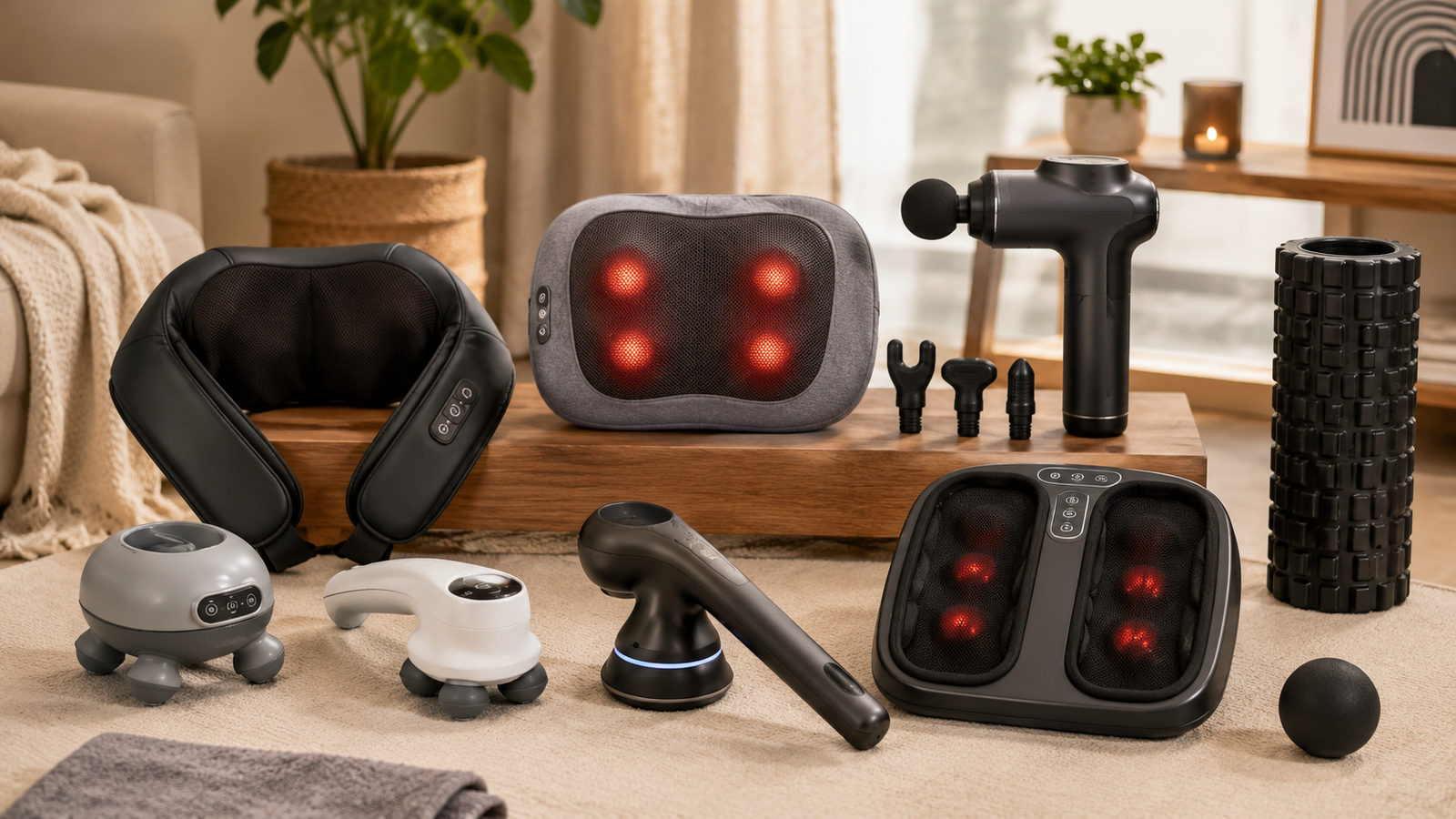
Home massagers range from simple handheld devices to heated cushions, vibrating pads and compact neck-and-shoulder units.
They are commonly marketed for:
- relaxation;
- muscle comfort;
- post-workout recovery;
- stiffness;
- tension after long periods of sitting;
- general self-massage.
The challenge is that these products can feel very different even when they appear to serve the same purpose.
One massager may use:
- vibration;
while another uses:
- rotating kneading nodes;
- percussion;
- compression;
- heat;
- rolling mechanisms.
Some are designed primarily for the:
- neck;
- shoulders;
- lower back;
- feet;
while others are intended for general use.
The useful question is therefore not:
“Which massager is the most powerful?”
It is:
“Which type of massage sensation fits the area I want to use it on, the amount of pressure I enjoy and the way I realistically plan to use the device?”
A good massager should make relaxation or self-massage easier. It should not create pain, require complicated setup or promise to correct medical problems that need proper assessment.
This guide explains the major types of home massagers, the features that actually matter, how to choose by body area and how to use them safely.
What Can a Home Massager Realistically Do?
A massager can provide mechanical stimulation to muscles and surrounding soft tissue.
Depending on its design, this may help you temporarily feel:
- less tense;
- more relaxed;
- more comfortable;
- less stiff.
Some types may also temporarily improve how freely an area feels during movement.
That can make a massager useful after:
- exercise;
- a long workday;
- extended periods of sitting;
- travel;
- ordinary physical activity.
But a massager should not be treated as a device that automatically:
- heals injuries;
- corrects posture;
- removes toxins;
- repairs damaged tissue;
- treats nerve compression;
- eliminates the need for rehabilitation.
Its main role is usually comfort and convenience.
Start With the Body Area
The first buying decision should be where you intend to use the device.
Common areas include:
- neck and shoulders;
- upper back;
- lower back;
- thighs;
- calves;
- feet;
- arms.
A device designed for the feet may be awkward on the shoulders.
A heavy handheld massager may be powerful but difficult to use on your own upper back.
Start with the area before comparing features.
The Main Types of Home Massagers
Home massagers can be divided into several broad categories:
- Handheld massagers
- Kneading or shiatsu-style massagers
- Massage cushions
- Neck-and-shoulder massagers
- Vibration massagers
- Percussion massagers
- Foot massagers
- Massage mats and seat pads
Each provides a different experience.
1. Handheld Massagers
Handheld massagers are manually positioned against the body.
They may use:
- vibration;
- rotating heads;
- tapping;
- percussion.
Their biggest advantage is flexibility.
You can move them across:
- thighs;
- calves;
- shoulders;
- arms.
Advantages
They are often:
- versatile;
- easy to store;
- relatively affordable;
- useful for targeted massage.
Limitations
You have to hold the device.
This can become tiring if it is:
- heavy;
- strongly vibrating;
- used for long sessions.
If you mainly want to relax without actively holding a tool, a cushion-style device may suit you better.
2. Kneading or Shiatsu-Style Massagers
These devices use rotating nodes that press and move against the body.
They are often designed to imitate the sensation of:
- thumbs;
- fingers;
- kneading massage.
They can provide a stronger, slower sensation than simple vibration.
Common formats include:
- neck wraps;
- back cushions;
- foot units.
Who May Prefer Them?
They can appeal to people who prefer:
- deeper pressure;
- rhythmic kneading;
- hands-free massage.
However, people who are sensitive to pressure may find them too aggressive.
What Does “Shiatsu” Mean on a Consumer Massager?
The term is commonly used in product marketing to describe rotating kneading nodes.
That does not mean the device reproduces professional shiatsu therapy.
Treat it as a description of the mechanical massage style rather than a guarantee of a particular therapeutic effect.
3. Massage Cushions
Massage cushions are designed to sit against:
- a chair;
- sofa;
- bed headboard;
depending on the product.
They often use rotating nodes to massage:
- lower back;
- upper back;
- shoulders.
Their major benefit is convenience.
You can often sit and relax without holding the device.
Good for
- desk workers;
- evening relaxation;
- people who dislike holding a massager;
- localized back massage.
Limitations
A cushion is less versatile than a handheld device.
Its shape determines where it works best.
Check whether you can reposition it for the areas you want to reach.
4. Neck-and-Shoulder Massagers
These typically wrap around the neck and shoulders.
Some have:
- arm loops;
- straps;
- handles;
that let you adjust pressure manually.
They often use rotating kneading nodes and may include heat.
Advantages
They can be convenient for:
- upper shoulder muscles;
- trapezius area;
- general relaxation after desk work.
Important Limitation
The neck contains sensitive anatomical structures.
Do not assume that every painful or stiff-feeling neck area should be subjected to aggressive mechanical pressure.
Avoid direct heavy pressure over:
- the front of the neck;
- sides of the neck;
- cervical spine.
Use the device only as instructed.
Persistent neck symptoms accompanied by:
- numbness;
- weakness;
- dizziness;
- pain radiating into the arm;
need appropriate assessment rather than stronger massage.
5. Vibration Massagers
Vibration massagers create rapid small movements.
They usually feel less deep than:
- kneading;
- percussion.
They can be useful for people who primarily want:
- gentle stimulation;
- relaxation;
- light muscle comfort.
Advantages
They may be:
- lightweight;
- simple;
- relatively quiet;
- easier for sensitive users.
Limitations
People wanting deep pressure may find pure vibration too mild.
6. Percussion Massagers
Percussion devices rapidly move an attachment in and out against the muscle.
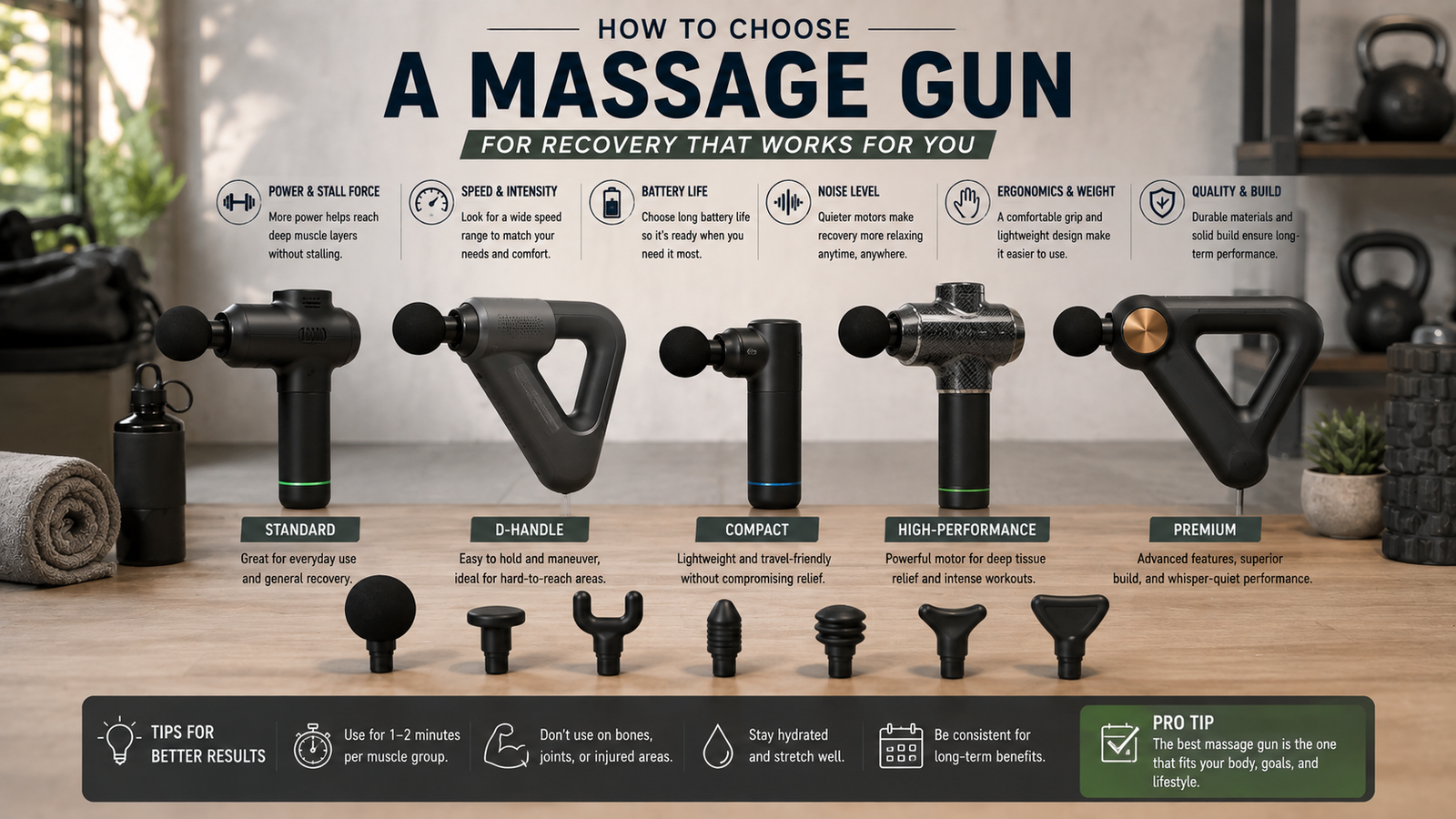
Massage guns are the most familiar example.
They provide more focused mechanical pressure than many general-purpose massagers.
They can be useful for:
- large muscle groups;
- fitness recovery;
- targeted self-massage.
However, if your main objective is sitting quietly and relaxing, a massage cushion may be more comfortable than a percussion device.
7. Foot Massagers
Foot massagers may combine:
- kneading;
- rolling;
- compression;
- heat;
- vibration.
They are specifically designed around the shape of the feet.
Some cover only the soles.
Others surround part of the foot.
Useful for
People who spend long periods:
- standing;
- walking;
- working on their feet.
The main benefit is often relaxation and comfort after activity.
Foot Massagers and Reduced Sensation
People with reduced foot sensation need particular caution.
If you cannot reliably feel:
- excessive heat;
- pressure;
- skin injury;
a powered foot massager may create risks you do not immediately notice.
This is particularly relevant for people with certain neurological, vascular or metabolic conditions.
Seek appropriate professional guidance if sensation is impaired.
8. Massage Mats and Seat Pads
Massage mats or chair pads cover a larger area.
Depending on the model, they may provide:
- vibration;
- rolling;
- kneading;
- heat.
They can be convenient for:
- longer relaxation sessions;
- home-office chairs;
- recliners.
But they also require more:
- storage;
- setup;
- space.
If you live in a small home, a compact cushion may be easier to maintain.
Which Massage Mechanism Should You Choose?
Different mechanisms produce different sensations.
| Massage type | Typical feel |
|---|---|
| Vibration | Gentle, surface-level stimulation |
| Kneading | Slow, deeper rotating pressure |
| Rolling | Moving pressure along an area |
| Percussion | Rapid, targeted mechanical pressure |
| Compression | Squeezing pressure |
| Heat | Warmth added to massage |
Choose according to preference rather than assuming deeper pressure is always more effective.
Pressure Level Matters
One of the most important considerations is whether you can control massage intensity.
Useful adjustments may include:
- low;
- medium;
- high;
or several numbered levels.
A device with only one aggressive pressure level may be uncomfortable for:
- beginners;
- smaller users;
- sensitive areas.
For shared households, a wider intensity range is especially useful.
Stronger Is Not Automatically Better
A massager should generally create:
- firm but tolerable pressure;
- relaxation;
- comfortable stimulation.
It should not cause:
- sharp pain;
- bruising;
- numbness;
- worsening symptoms.
If you automatically tense your muscles against the device, the pressure may be too high.
Heat: Useful but Optional
Many home massagers include heating elements.
Heat can make massage feel:
- more soothing;
- more relaxing;
- less intense.
It may be particularly pleasant for general muscular stiffness.
But heat is not necessary for the massager to function.
What to Look for in Heated Massagers
Useful features include:
- separate heat control;
- moderate temperature;
- automatic shut-off;
- overheat protection.
It is better if heat can be turned:
on or off independently
rather than being permanently linked to the massage function.
Heat Safety
Avoid prolonged high heat.
Do not use heated devices:
- over areas with reduced sensation;
- on damaged skin;
- where product instructions advise against it.
Stop if the area becomes:
- painfully hot;
- unusually red;
- numb.
Automatic Shut-Off
Automatic shut-off is one of the more useful features on a home massager.
Many products stop after approximately:
- 10;
- 15;
- 20 minutes.
This helps prevent:
- excessively long sessions;
- unnecessary heating;
- forgetting the device is running.
A timer is more practically useful than many decorative smart features.
Direction Control
Kneading devices may allow the rotating heads to change direction.
For example:
- clockwise;
- counterclockwise;
- automatic alternating direction.
This can make repeated massage feel less monotonous.
It is useful, but not essential.
Adjustable Speed
Some rotating or vibrating devices offer multiple speeds.
This can help you match:
- sensitive areas;
- muscle size;
- desired intensity.
Again, you do not need 20 speeds.
A few clearly different settings are usually enough.
Adjustable Pressure
Some massagers control pressure electronically.
Others depend on your body position.
For example, with a massage cushion:
- leaning back harder increases pressure;
- sitting more lightly reduces pressure.
With a neck massager, you may pull the handles to increase pressure.
Consider whether that method will be comfortable for you.
Ergonomics Matter
A handheld massager can have excellent performance but still be unpleasant to use if the handle is poor.
Check:
- weight;
- balance;
- grip diameter;
- control placement;
- vibration transmitted into the hand.
For people with:
- wrist discomfort;
- reduced grip strength;
- hand arthritis;
a heavy handheld design may be unsuitable.
A hands-free cushion may be easier.
Weight
Weight becomes particularly important during longer self-massage sessions.
A device used for:
- shoulders;
- upper back;
can quickly fatigue the arm.
If possible, prioritize a massager that is comfortable to hold for at least several minutes.
Do not judge weight solely by briefly picking it up.
Corded vs Cordless
Massagers may be:
- mains powered;
- battery powered;
- rechargeable.
Each has advantages.
Corded Massagers
Advantages:
- continuous power;
- no battery degradation;
- useful for home-only use.
Limitations:
- need nearby outlet;
- cable can restrict position;
- less convenient for travel.
Cordless Massagers
Advantages:
- easier positioning;
- portable;
- fewer cables.
Limitations:
- battery eventually needs charging;
- battery capacity may decline with age.
If you expect to use the device mostly on a sofa near a power outlet, corded operation may be perfectly acceptable.
Battery Life
For rechargeable massagers, think in terms of actual sessions.
If you use the device for 15 minutes at a time, even a battery lasting two hours provides approximately eight sessions before charging.
Extraordinary battery specifications may not matter.
Check:
- runtime;
- charging time;
- battery indicator.
Noise Level
Noise matters because massagers are often used during:
- television;
- reading;
- evening relaxation.
A loud motor can undermine the relaxing experience.
Consider noise particularly if:
- you live with other people;
- you plan to use it late at night;
- you want to use it while watching something.
A Quieter Device May Be Worth More Than a Stronger One
Specifications such as motor power look impressive on paper.
But a massager you avoid because it is:
- loud;
- heavy;
- inconvenient;
has little practical value.
Comfort and usability should outweigh headline numbers.
Device Size
Consider where the product will live.
A full-size seat massager may require:
- a dedicated chair;
- large cupboard space.
A compact cushion may fit easily:
- under a bed;
- in a cabinet.
A small handheld unit may fit in:
- a drawer.
Storage affects whether a product becomes part of your routine or eventually becomes clutter.
Washable or Removable Covers
If a device repeatedly contacts:
- skin;
- sweat;
- clothing;
cleanability matters.
Useful features include:
- removable covers;
- washable sleeves;
- wipeable surfaces.
Check exactly which parts can be cleaned.
Do not immerse electrical components unless the product is specifically designed for it.
Fabric Quality
Massage cushions and wraps frequently use:
- mesh;
- synthetic leather;
- fabric covers.
Look for:
- durable stitching;
- breathable contact areas;
- materials that are easy to wipe.
A comfortable surface is particularly important because rotating nodes can already create significant pressure.
Massage Node Size and Number
Manufacturers may highlight the number of rotating nodes.
More nodes do not automatically create better massage.
What matters is:
- their placement;
- how they contact the body;
- whether the movement feels comfortable.
Four well-positioned nodes may feel better than a larger number arranged poorly.
Massage Direction
Some devices reverse direction automatically.
This can provide variation and prevent one repeated movement pattern from becoming uncomfortable.
It is a nice convenience feature, but not a primary buying criterion.
Adjustable Width
Certain back or foot massagers allow the distance between massage nodes to change.
This can improve fit for different:
- body sizes;
- shoulder widths;
- foot sizes.
This feature can be particularly useful when several people will use the same device.
Remote Controls
Larger seat or cushion massagers may include:
- wired remote;
- wireless remote;
- control panel.
The important thing is that controls remain easy to reach during use.
A remote is useful if otherwise you would have to:
- stand up;
- twist awkwardly;
to change settings.
App Connectivity
Some newer massagers connect to mobile apps.
They may offer:
- guided programs;
- timers;
- intensity selection.
This is optional.
Ask whether opening an app makes relaxation:
- easier;
or simply adds:
- pairing;
- accounts;
- software dependence.
For many people, physical controls are simpler.
Preset Programs
Preset massage programs may automatically vary:
- speed;
- direction;
- pressure.
This can be useful for hands-free use.
But presets should not replace manual control.
You should still be able to stop or lower the intensity immediately.
How to Choose a Massager for the Neck and Shoulders
Prioritize:
- moderate adjustable pressure;
- soft enough contact;
- easy positioning;
- automatic shut-off.
Avoid products that force aggressive pressure directly against the cervical spine.
For upper shoulder muscles, gentle kneading may be more comfortable than strong percussion.
How to Choose a Massager for the Back
Massage cushions or seat pads can work well because you do not have to hold them.
Look for:
- adjustable positioning;
- appropriate node spacing;
- intensity control.
A major limitation is fit.
A cushion may line up perfectly for one person but sit too high or low for another.
Adjustability helps.
Lower-Back Massagers
For the lower back, a compact cushion can be convenient.
But pain in the lower back can have many causes.
Do not assume repeatedly applying pressure is the correct response to:
- severe back pain;
- leg weakness;
- numbness;
- bowel or bladder changes;
- pain following trauma.
These require appropriate assessment.
Leg Massagers
For large muscles such as:
- thighs;
- calves;
you may prefer:
- handheld vibration;
- percussion;
- compression.
If your main goal is post-exercise self-massage, a handheld device generally offers greater control.
Calf Massage Requires Some Caution
Unexplained calf pain or swelling should not automatically be massaged.
Symptoms such as:
- swelling on one side;
- warmth;
- significant tenderness;
may require urgent medical evaluation because of possible vascular causes.
Do not use a massager over a suspected blood clot.
Foot Massagers
Look at:
- maximum foot size;
- opening dimensions;
- heat;
- intensity;
- washable liners.
Foot size is an important specification often overlooked.
A highly rated device is not useful if your feet do not fit comfortably.
Compression Foot Massagers
Some units use inflatable chambers to squeeze the:
- feet;
- ankles.
This creates a very different sensation from rotating massage nodes.
Compression may feel:
- relaxing;
- snug.
People with certain vascular or circulation conditions should seek guidance before using strong compression.
When a Simple Manual Tool May Be Better
Not every relaxation need requires electricity.
Alternatives include:
- massage ball;
- foam roller;
- manual massage stick.
These offer:
- no battery;
- little maintenance;
- lower cost;
- direct control.
If you only want occasional muscle pressure, a manual tool may offer better value.
Massager vs Massage Gun
These categories overlap but tend to serve somewhat different preferences.
General Massager
Often better for:
- relaxation;
- longer passive sessions;
- neck or back comfort;
- sitting while using the device.
Massage Gun
Often better for:
- targeted muscular work;
- exercise recovery;
- precise pressure;
- large muscle groups.
Choose according to how you want the massage to feel.
Massager vs Foam Roller
A foam roller:
- costs less;
- needs no power;
- provides broad pressure.
A powered massager:
- requires less physical effort;
- may be more relaxing;
- can be easier for people with mobility limitations.
The simpler option is not inherently inferior.
Massager vs Professional Massage
A home device provides:
- convenience;
- repeatability;
- lower cost per session.
A qualified professional can provide:
- individualized pressure;
- different techniques;
- human judgement.
A device cannot evaluate symptoms or adjust with the sophistication of an experienced practitioner.
Can a Massager Replace Physiotherapy?
No.
Physiotherapy may involve:
- assessment;
- diagnosis;
- movement rehabilitation;
- strength work;
- graded exercise;
- education.
A consumer massager provides mechanical stimulation.
These are not equivalent.
When Should You Use a Massager?
A massager may fit into your routine:
- after work;
- after exercise;
- during a rest day;
- before gentle mobility;
- as part of an evening relaxation routine.
Use it when it makes you feel better.
There is no requirement to use it on a fixed schedule.
How Long Should You Use It?
Follow the manufacturer’s instructions.
Many powered massagers include automatic shut-off after a relatively short session.
Longer is not necessarily better.
Avoid prolonged intense pressure on one area.
Do You Need to Use It Every Day?
No.
Some people enjoy frequent massage.
Others use it only:
- after demanding activity;
- when stiff;
- occasionally for relaxation.
Routine use is optional.
Can You Use a Massager Before Exercise?
Gentle massage may help some people feel more comfortable before movement.
However, it should not replace an appropriate warm-up.
If preparing for exercise, follow massage with:
- dynamic movement;
- activity-specific preparation.
Can You Use a Massager After Exercise?
Yes, provided you use it appropriately.
It may help with:
- relaxation;
- perceived stiffness;
- general comfort.
But post-exercise recovery still depends more fundamentally on:
- sleep;
- nutrition;
- hydration;
- sensible training load.
Avoid Massaging Acute Injuries
Do not aggressively massage an area with:
- acute swelling;
- suspected fracture;
- severe bruising;
- muscle tear;
- fresh injury.
Temporary numbness or comfort does not mean the tissue is ready for activity.
Avoid Broken or Irritated Skin
Do not use powered massage directly over:
- wounds;
- infections;
- significant rashes;
- burns;
- inflamed skin.
Mechanical pressure may worsen irritation.
Varicose Veins
Avoid aggressive direct pressure over:
- prominent;
- painful;
varicose veins.
People with significant vascular conditions should seek individualized advice about massage devices.
Blood-Clot Risk
Do not massage an area where a clot may be present.
People with:
- known clotting disorders;
- recent deep-vein thrombosis;
- certain vascular conditions;
should seek medical guidance before using strong mechanical massage.
Anticoagulant Medication
People using medications that increase bleeding risk may bruise more easily.
Strong massage may therefore require additional caution.
Seek individualized medical advice when relevant.
Reduced Sensation
If you cannot reliably feel:
- pressure;
- pain;
- heat;
a powered massager may create injury without an obvious warning.
This can be particularly relevant in the feet.
Professional guidance may be appropriate.
Pregnancy
Pregnancy can affect:
- circulation;
- body positioning;
- tissue sensitivity.
If pregnant, seek appropriate guidance about:
- safe areas;
- intensity;
- device use.
Do not assume that every commercial massager is automatically suitable during pregnancy.
Medical Devices
If you have an implanted electronic medical device, check:
- device guidance;
- massager instructions;
- medical advice where appropriate.
This becomes particularly relevant with products combining:
- electrical stimulation;
- heat;
- strong vibration.
Is a Painful Massage More Effective?
No.
Massage may involve firm pressure, but severe pain is not a goal.
Reduce intensity if you experience:
- sharp pain;
- numbness;
- tingling;
- bruising.
A recovery or relaxation tool should leave the area feeling better rather than injured.
Common Marketing Claims to Treat Cautiously
Be skeptical of claims that a massager can:
- detoxify the body;
- permanently improve circulation;
- break down fat;
- remove cellulite;
- correct the spine;
- cure chronic pain;
- dissolve scar tissue;
- accelerate healing dramatically.
A massager can create mechanical pressure and may provide temporary comfort.
That is already a useful function without exaggerated claims.
Do Massagers Improve Circulation?
Mechanical massage can temporarily affect local blood flow.
But this is not the same as treating:
- vascular disease;
- poor circulation caused by medical conditions.
Do not use broad circulation claims as a substitute for medical evaluation.
Can a Massager Remove Cellulite?
Massage may temporarily change the appearance of skin because of:
- tissue compression;
- fluid shifts.
It does not permanently remove the structural causes of cellulite.
Be cautious with products built primarily around dramatic cellulite-removal claims.
Can a Massager “Break Knots”?
The idea of muscle “knots” is often used informally to describe:
- tight;
- tender;
- uncomfortable;
areas.
Massage may make those areas feel better.
But do not assume a mechanical node is literally breaking apart a physical knot.
Painful or persistent symptoms can have multiple causes.
Portability
If you travel frequently, look for:
- compact dimensions;
- low weight;
- rechargeable battery;
- storage case.
A large heated cushion may be excellent at home but impractical for travel.
Home Use vs Travel Use
For primarily home use, consider:
- comfort;
- hands-free operation;
- larger contact area.
For travel, prioritize:
- light weight;
- compact size;
- simple charging.
Trying to find one device that does everything may lead to compromises.
Warranty
Powered massagers contain:
- motors;
- gears;
- electrical components;
- batteries;
- heating elements.
Warranty matters.
Check:
- duration;
- local service;
- replacement support;
- return policy.
This becomes more important as price increases.
Durability
Look for signs of practical construction:
- strong stitching;
- secure attachments;
- reliable cable connections;
- stable controls.
A cheap product that becomes noisy or stops rotating within a few months may offer poor value.
Cleaning and Hygiene
Clean the device according to manufacturer instructions.
For cushions:
- wipe contact surfaces;
- wash removable covers if allowed.
For handheld devices:
- wipe massage heads;
- remove sweat and oils.
Do not spray cleaning solution directly into:
- motors;
- vents;
- charging ports.
Shared Massagers
If several people use the same device, clean contact surfaces between users where appropriate.
This is especially relevant for:
- foot massagers;
- direct-skin attachments.
Removable washable liners can be useful for shared foot devices.
Cost and Value
Home massagers can vary from inexpensive handheld devices to premium multi-function systems.
Compare value based on:
- massage mechanism;
- build quality;
- intensity control;
- comfort;
- heat;
- noise;
- battery;
- warranty.
Do not compare purely by number of features.
When a Budget Massager May Be Enough
A simple model can provide excellent value if you mainly want:
- vibration;
- light kneading;
- occasional relaxation.
You may not need:
- apps;
- dozens of modes;
- sophisticated displays.
When Paying More May Make Sense
Higher spending may be worthwhile when it improves:
- motor smoothness;
- ergonomics;
- pressure control;
- noise;
- heat safety;
- build quality;
- warranty.
These are more useful than decorative technology.
Cost Per Use
Consider how often the device will realistically be used.
A ₹6,000 massager used several times per week for years may provide strong value.
A ₹2,000 device used twice and then stored permanently does not.
The best value comes from matching the product to an established routine.
Common Massager Buying Mistakes
Buying the Strongest Device
Maximum pressure is unnecessary for many users.
Ignoring the Body Area
Choose the design for where you actually want massage.
Buying a Heavy Handheld Device
Holding weight becomes tiring quickly.
Assuming Heat Is Essential
It is a comfort feature, not a requirement.
Ignoring Noise
A noisy device may ruin a relaxation routine.
Expecting Medical Treatment
Consumer massagers do not replace diagnosis or rehabilitation.
Using Too Much Pressure
Pain is not evidence of effectiveness.
Buying Too Many Functions
Several meaningful controls are better than dozens of rarely used modes.
Ignoring Storage
Large massage devices can become clutter.
Quick Massager Decision Guide
| Your goal | Type to consider |
|---|---|
| General relaxation | Vibration or kneading massager |
| Neck/shoulder comfort | Neck-and-shoulder wrap |
| Lower-back relaxation | Massage cushion |
| Hands-free use | Cushion or seat pad |
| Exercise recovery | Handheld/percussion device |
| Gentle massage | Vibration massager |
| Firmer pressure | Kneading device |
| Foot relaxation | Dedicated foot massager |
| Travel | Compact handheld massager |
| Shared household | Adjustable-intensity device |
Before You Buy: Final Checklist
Ask yourself:
- Which body area will I use it on?
- Do I prefer vibration, kneading or percussion?
- How much pressure do I enjoy?
- Can intensity be adjusted?
- Is heat optional?
- Does it have automatic shut-off?
- Is it comfortable to hold or position?
- Is it too heavy?
- How noisy is it?
- Is it corded or rechargeable?
- How long does the battery last?
- Can I clean the contact surfaces?
- Where will I store it?
- Is the warranty adequate?
- Am I paying for useful comfort or unnecessary features?
- Do I have symptoms that should be evaluated instead of repeatedly massaged?
Frequently Asked Questions
Are home massagers good for recovery?
They can support temporary comfort, relaxation and perceived stiffness. They are optional tools rather than substitutes for sleep, nutrition and appropriate training.
What type of massager is best for relaxation?
Many people prefer vibration or kneading devices because they can provide steady massage without requiring intense pressure.
Is a massage cushion good for back pain?
A cushion may provide temporary muscular comfort, but persistent or significant back pain should not automatically be treated with a massager.
Are neck massagers safe?
They can be used appropriately on suitable muscular areas when manufacturer guidance is followed. Avoid aggressive pressure over the front and sides of the neck or directly over the spine.
Is heat necessary in a massager?
No. It can make massage feel more relaxing but is optional.
How long should I use a massager?
Follow product instructions. Many devices automatically stop after approximately 10–20 minutes.
Can I use a massager every day?
Some people can use gentle massage regularly, but daily use is not necessary.
Should massage hurt?
Firm pressure can feel intense, but sharp or severe pain is a reason to reduce pressure or stop.
Is vibration better than kneading?
Neither is universally better. Vibration is generally gentler, while kneading often produces deeper pressure.
Is a massager better than a massage gun?
For passive relaxation, a general massager may be more comfortable. For targeted exercise-related self-massage, a massage gun may provide more control.
Is a foot massager worth buying?
It can be useful if foot relaxation is a regular part of your routine and the unit fits comfortably. It is not necessary for foot health.
Can people with diabetes use foot massagers?
People with diabetes may sometimes have reduced foot sensation or circulation concerns. If either is present, professional guidance is appropriate before using strong pressure or heat on the feet.
Can a massager remove muscle knots?
Massage may temporarily make tight or tender muscular areas feel better, but the idea of mechanically breaking apart “knots” is oversimplified.
Can a massager improve circulation?
Massage can temporarily affect local blood flow, but it should not be treated as a therapy for vascular disease.
Can I use a massager on an injury?
Avoid aggressive massage over acute injuries, significant swelling, severe bruising or suspected fractures or tears.
Is a cordless massager better?
It is more convenient and portable, but corded models can provide reliable continuous power for home use.
Do I need multiple massage attachments?
Not necessarily. A few useful options are generally enough.
When should I avoid self-massage and seek medical advice?
Seek appropriate evaluation for symptoms such as:
- severe or worsening pain;
- significant swelling;
- numbness;
- weakness;
- pain after serious injury;
- unexplained one-sided calf swelling;
- persistent symptoms that repeatedly return.
The Physical Glow Takeaway
Choose a home massager according to the body area you want to use it on, the massage sensation you actually enjoy and how easily the device fits into your routine.
Vibration is generally useful for gentler stimulation. Kneading devices can provide deeper, more focused pressure. Cushions and neck wraps make passive relaxation easier, while handheld and percussion devices offer greater control for targeted muscle work.
Prioritize adjustable intensity, comfortable positioning, manageable weight, reasonable noise, automatic shut-off and easy cleaning before paying for long lists of modes or app-connected features.
Most importantly, keep expectations realistic. A massager can make tired or tense-feeling muscles more comfortable and can provide a convenient way to relax, but it cannot replace appropriate exercise, recovery, sleep or medical care when symptoms require assessment.
The most useful massager is therefore not necessarily the strongest or most sophisticated one. It is the one that provides comfortable, controllable massage in the area you actually want to treat—and is convenient enough that you will genuinely use it.