How to Choose Heat Therapy Products for Everyday Recovery
Learn how to choose heat therapy products for everyday recovery and comfort, with practical guidance on product type, heat settings, target area, timer features and safe everyday use. This beginner-friendly guide helps you make a clear, informed choice without unnecessary complexity.
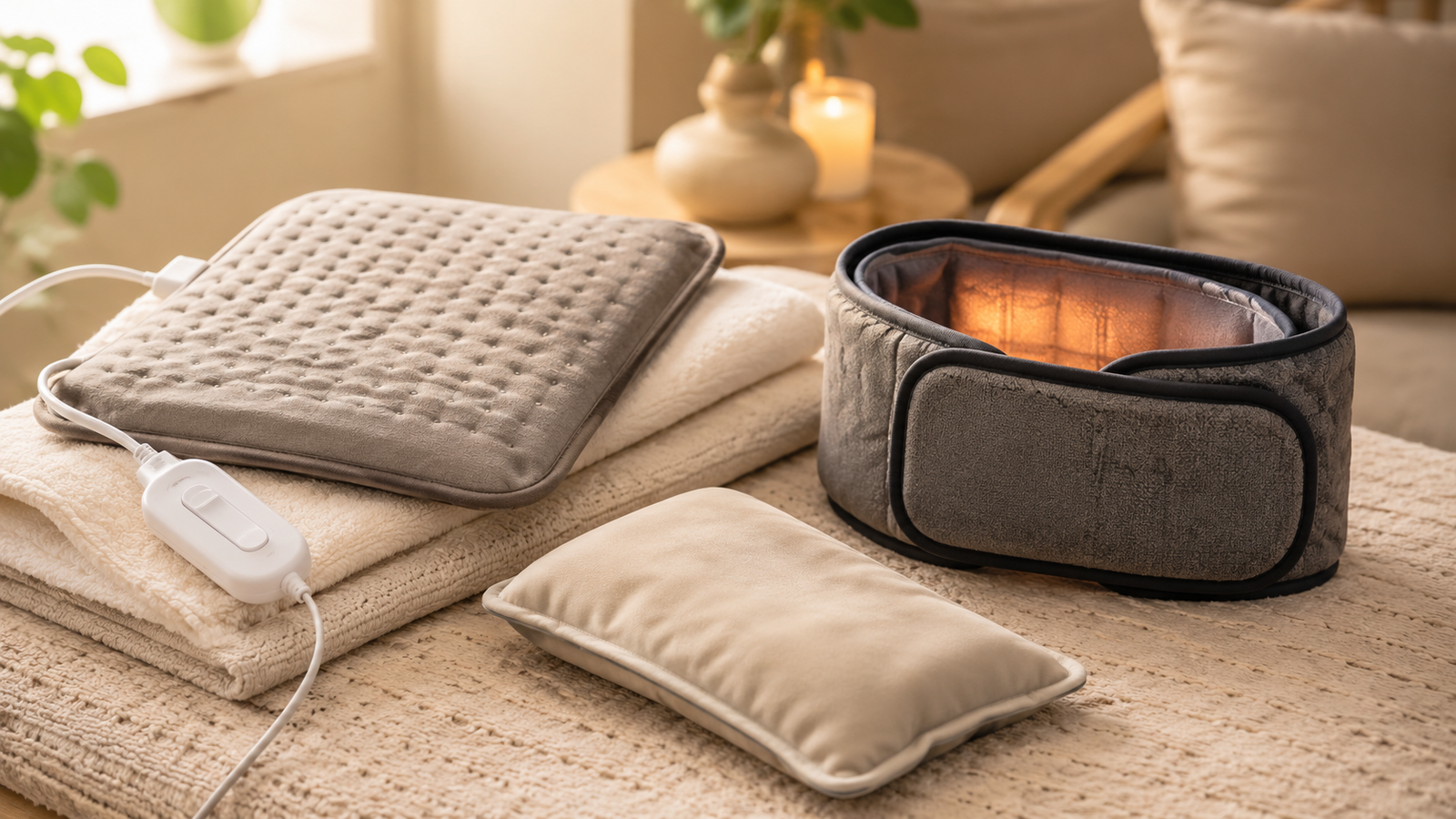
Heat therapy is one of the simplest recovery and comfort tools available.
It can be used through products such as:
- electric heating pads;
- reusable microwaveable heat packs;
- hot-water bottles;
- heated wraps;
- heated cushions;
- wearable heat belts.
People commonly reach for heat when muscles feel:
- stiff;
- tight;
- tired;
- uncomfortable after activity;
- tense after sitting for long periods.
Warmth can feel relaxing and may temporarily make movement more comfortable.
But heat therapy products vary considerably in:
- temperature control;
- size;
- shape;
- heating method;
- timer settings;
- portability;
- safety features.
The hottest product is not automatically the best one.
The useful question is:
“Which type of controlled heat can comfortably cover the area I want to use it on without making the routine inconvenient or increasing burn risk?”
A good heat-therapy product should provide comfortable, controllable warmth. It should not need to become painfully hot to feel effective.
This guide explains the main types of heat-therapy products, which features actually matter, when heat may be useful and how to use it safely as part of an everyday recovery routine.
What Is Heat Therapy?
Heat therapy means applying controlled warmth to part of the body.
Common sources include:
- electric heating pads;
- warm packs;
- hot-water bottles;
- warm towels;
- heated wraps;
- warm baths or showers.
The purpose is usually to make an area feel:
- warmer;
- more relaxed;
- less stiff;
- temporarily more comfortable.
Heat can also make gentle movement or stretching feel easier for some people.
It should be viewed primarily as a comfort and symptom-management tool, not as something that automatically repairs an injury.
What Does Heat Actually Do?
Applying warmth can cause local blood vessels near the skin and superficial tissues to widen temporarily.
Heat can also affect:
- sensory perception;
- muscle relaxation;
- tissue comfort.
That can make an uncomfortable area feel easier to move.
But statements such as:
- “heat removes toxins”;
- “heat heals damaged muscles instantly”;
- “heat permanently improves circulation”;
go beyond what an ordinary consumer heat product can realistically promise.
Heat can be useful without exaggerated explanations.
Heat Therapy Is Not the Same as Recovery
This distinction matters.
Heat may make an area feel better.
Actual recovery still depends on factors such as:
- sleep;
- appropriate activity;
- nutrition;
- hydration;
- sufficient time between demanding workouts.
A heating pad cannot compensate for:
- chronic sleep deprivation;
- repeated overtraining;
- untreated injury.
Think of heat as supportive comfort, not the foundation of recovery.
When Heat May Be Useful
Heat is often used for situations involving:
- general muscular stiffness;
- tight-feeling muscles;
- tension after prolonged sitting;
- comfortable warming before gentle movement;
- everyday muscular aches;
- relaxation.
For example, someone who spends a long day at a desk may enjoy gentle warmth around the:
- shoulders;
- upper back;
- lower back.
Someone after exercise may use heat later if muscles feel stiff.
When Heat May Not Be the First Choice
Heat is not automatically appropriate for every painful area.
Be cautious around:
- fresh injuries;
- significant acute swelling;
- actively bleeding areas;
- severe inflammation;
- open wounds;
- skin infections;
- areas where sensation is reduced.
If an area is:
- newly injured;
- markedly swollen;
- very hot;
- significantly bruised;
adding more heat may not be sensible without appropriate guidance.
When symptoms are severe or uncertain, assessment matters more than choosing a heating product.
Start With the Area You Want to Heat
The first buying decision should be target area.
A large rectangular heating pad may work well for:
- back;
- thighs;
- abdomen.
A contoured wrap may work better around:
- neck;
- shoulders;
- knees.
A small reusable pack may be better for:
- localized areas.
Match the shape to the area rather than assuming the largest product is automatically best.
The Main Types of Heat Therapy Products
Common options include:
- Electric heating pads
- Microwaveable heat packs
- Hot-water bottles
- Heated wraps
- Wearable heating belts
- Heated cushions
- Disposable heat patches
- Warm baths and showers
Each offers a different balance of:
- control;
- portability;
- convenience;
- duration.
1. Electric Heating Pads
Electric heating pads are among the most convenient home heat-therapy products.
They typically include:
- heating elements;
- temperature controls;
- power cord;
- timer or automatic shut-off.
They can provide relatively consistent heat for an extended session.
Advantages
Electric pads may offer:
- adjustable temperature;
- even heating;
- repeatable use;
- automatic shut-off;
- large coverage.
Limitations
They require:
- electricity;
- access to a socket;
- attention to cord placement.
They also need more safety consideration than a simple warm towel because prolonged electrical heat can cause burns if used incorrectly.
Who Might Prefer an Electric Heating Pad?
It may suit someone who frequently uses heat at home for:
- back comfort;
- shoulder tension;
- general muscle stiffness;
- relaxation.
If heat is only used occasionally, a simpler reusable pack may be enough.
2. Microwaveable Heat Packs
Microwaveable packs usually contain materials designed to retain warmth.
Fillings may include:
- grains;
- gels;
- other heat-retaining materials.
They are heated for a specific amount of time according to product instructions.
Advantages
They are usually:
- cordless;
- inexpensive;
- portable around the home;
- simple.
Limitations
Temperature gradually decreases.
There can also be uneven heating if the pack is:
- overheated;
- folded;
- heated incorrectly.
Follow the heating instructions exactly.
Microwave Heating Needs Care
Do not simply add more microwave time because the pack does not feel hot enough.
Overheating can cause:
- burns;
- product damage;
- scorching;
- leakage in some designs.
Check:
- microwave wattage guidance;
- heating duration;
- whether the pack needs repositioning during heating.
Heat in small increments only if manufacturer instructions allow it.
3. Hot-Water Bottles
Hot-water bottles are traditional and simple.
They are useful for:
- general warmth;
- relaxation;
- localized comfort.
Advantages include:
- no electricity during use;
- inexpensive replacement;
- simple construction.
But water temperature and bottle condition matter.
Do Not Fill a Hot-Water Bottle With Boiling Water
Extremely hot water increases burn risk and may damage some bottles.
Follow the manufacturer’s temperature instructions.
Also:
- inspect the bottle regularly;
- check the stopper;
- look for cracks;
- replace deteriorated products.
A protective cover provides an additional barrier between the bottle and skin.
4. Heated Wraps
Heated wraps are designed to conform to particular areas.
Common versions include:
- shoulder wraps;
- neck wraps;
- knee wraps;
- lumbar wraps.
They can provide better contact than a flat pad because the material follows body contours.
When a Wrap Makes Sense
A shaped wrap can be useful when a flat pad constantly:
- slips;
- folds;
- fails to contact the target area.
But fit matters.
A wrap that is:
- too tight;
- too small;
- poorly shaped;
may be less comfortable than a basic heating pad.
5. Wearable Heat Belts
Wearable heating products can attach around areas such as:
- lower back;
- abdomen.
Some are:
- electric;
- battery-powered;
- chemically activated.
The advantage is mobility.
You may be able to:
- sit;
- walk around;
- continue light activity.
But do not assume the ability to wear the product means it is appropriate for continuous all-day use.
Follow the time and temperature instructions.
6. Heated Cushions
Heated cushions combine:
- padding;
- sometimes massage;
- heat.
They can be useful for people who want relaxation while:
- sitting;
- reading;
- watching television.
Consider whether you actually need both functions.
If you already own:
- a massager;
- a heating pad;
a combined product may duplicate equipment.
7. Disposable Heat Patches
Disposable heat patches use chemical reactions to generate warmth.
They can be useful for:
- commuting;
- travel;
- situations without electricity.
Some attach to:
- clothing;
- specialized wraps;
- skin depending on product design.
Never assume all patches can be placed directly on bare skin.
Follow the label instructions.
Advantages of Disposable Heat
They can be:
- portable;
- discreet;
- long-lasting;
- convenient.
Disadvantages
They create ongoing costs and waste.
If you use heat frequently at home, a reusable product may offer better long-term value.
8. Warm Baths and Showers
You do not necessarily need a specialized product to use warmth for relaxation.
A warm shower or bath can provide broad warmth to:
- back;
- shoulders;
- legs.
This can be especially useful when:
- several areas feel stiff;
- you want overall relaxation.
The downside is that water temperature is less targeted and prolonged very hot bathing can contribute to:
- dizziness;
- dry skin;
- discomfort.
Keep the temperature comfortable rather than extreme.
Dry Heat vs Moist Heat
You may see products marketed as providing either:
- dry heat;
- moist heat.
Dry Heat
Common examples:
- electric heating pad;
- hot-water bottle;
- some heat patches.
Moist Heat
Examples may include:
- warm damp towel;
- certain microwaveable pads;
- steam or warm bath.
Some people prefer moist warmth because it feels more comfortable.
Others prefer dry heat because it is:
- cleaner;
- easier;
- less messy.
For ordinary home comfort, preference and convenience may matter more than trying to identify one universally superior method.
Temperature Control Is One of the Most Important Features
For an electric product, adjustable temperature is highly useful.
Look for several clearly different levels such as:
- low;
- medium;
- high.
You do not need 20 temperature levels.
The important feature is having a comfortable low setting.
People often focus on maximum heat when shopping, but minimum usable heat may matter more.
Why the Lowest Setting Matters
Recovery or relaxation heat should generally feel:
warm and comfortable
rather than:
extremely hot
A product that begins at an aggressive temperature may be difficult to use safely.
A good low setting is particularly useful for:
- longer relaxation sessions;
- sensitive users;
- gradual warming.
Maximum Temperature Is Not a Quality Metric
A manufacturer advertising an unusually high maximum temperature does not automatically offer a better product.
Very high temperatures can increase:
- burn risk;
- discomfort;
- skin irritation.
Temperature control is more useful than maximum heat.
Automatic Shut-Off
Automatic shut-off is one of the best safety features for an electric heating product.
Common timer periods may include:
- 30 minutes;
- 60 minutes;
- 90 minutes;
- 2 hours.
Exact options vary.
The feature reduces the likelihood of leaving the heater on unintentionally.
Choose a Timer That Fits Your Routine
If you mainly use heat for short sessions, a shorter timer may be ideal.
If you use it while relaxing in the evening, a longer selectable timer may be more convenient.
The important thing is that the device does not encourage indefinite unattended heating.
Do Not Defeat the Timer
Some users repeatedly restart heating pads after automatic shut-off.
Occasionally extending a session may be permitted by product instructions, but continually overriding the timer defeats part of its safety purpose.
If you routinely feel that you need many hours of heat every day, the underlying symptoms may deserve assessment.
Size Matters
Heating pads vary considerably in dimensions.
Smaller pads may work for:
- shoulder;
- localized muscle areas.
Larger pads may work better for:
- back;
- thighs.
Do not buy based on the photo alone.
Check actual dimensions.
Bigger Is Not Always Better
A very large pad may:
- bunch;
- fold;
- become difficult to position.
If you want heat for one shoulder, a giant back pad may be unnecessarily cumbersome.
Choose enough coverage for the target area without excessive material.
Shape Matters Too
Some products include:
- curved edges;
- shoulder contours;
- neck collars;
- straps.
These can improve contact.
But a specialized shape reduces versatility.
A rectangular pad can often be used on:
- back;
- thigh;
- calf;
- shoulder.
If you want one product for several areas, simpler shapes may provide better value.
Flexibility
A heating pad should conform comfortably to the body.
A very stiff product can leave gaps, particularly around:
- shoulders;
- knees;
- hips.
Check whether the pad remains flexible when heated.
Soft fabric construction can improve comfort.
Fabric and Cover Material
Heating pads may use:
- fleece-like fabric;
- microfiber;
- cotton-blend covers;
- synthetic textiles.
Comfort matters if the pad directly contacts clothing or skin.
Look for:
- soft texture;
- washable cover;
- secure seams.
Removable and Washable Covers
Cleaning is important because heat products can collect:
- sweat;
- skin oil;
- lotion.
A removable washable cover is useful.
For electric products, check exactly what can be washed.
Some allow:
- removable cover washing only.
Others may allow careful washing of the pad after disconnecting the controller.
Never assume an electrical heating product is washable without checking instructions.
Cord Length
For plug-in heating pads, cord length affects usability.
Consider the distance between:
- your bed or sofa;
- nearest socket.
A short cord may encourage unsafe extension arrangements.
Do not run electrical cords where they create:
- trip hazards;
- crushing;
- repeated bending.
Controller Placement
The temperature controller should be easy to reach.
Poor controller placement may force you to:
- twist;
- sit up;
- reach behind furniture.
Simple controls are preferable.
Backlit Controls
A small illuminated controller can be useful at night.
But the light should not be so bright that it becomes distracting in a dark bedroom.
This is a convenience feature rather than an essential one.
Cordless Heating Pads
Rechargeable heat products offer mobility.
They can be useful for:
- travel;
- sitting away from outlets;
- moving around the home.
But batteries introduce trade-offs.
Consider:
- runtime;
- charging time;
- battery weight.
A wired pad may provide more reliable continuous heating for home use.
Battery Runtime
Do not judge battery life in isolation.
If the product automatically shuts off after 30 minutes, a battery lasting several sessions may be more than sufficient.
Very large batteries can make wearable heat products:
- heavier;
- bulkier.
Choose according to actual use.
USB-Powered Heating Products
Some compact heaters use USB power.
These can be convenient, but verify:
- required power output;
- charger compatibility;
- heating performance.
Do not assume every USB charger is suitable simply because the connector fits.
Follow manufacturer electrical specifications.
Heat Distribution
A good product should provide reasonably even warmth.
Poor products may develop:
- hot spots;
- cold areas;
- inconsistent temperature.
Hot spots are particularly concerning because small areas of concentrated heat can increase burn risk.
If the pad feels dramatically hotter in one small location, stop using it and inspect the product.
Can You Fold a Heating Pad?
Only if the manufacturer specifically says it can be folded during use.
Folding some electric heating pads can:
- concentrate heat;
- damage internal wiring;
- create hot spots.
A flexible product should normally be draped or positioned according to instructions rather than tightly folded.
Can You Lie on Top of a Heating Pad?
This depends on the product, but many conventional pads should not be trapped underneath body weight.
Body pressure can:
- concentrate heat;
- restrict heat dissipation;
- damage heating elements.
Follow the instructions.
Do not assume a standard pad can be used like a heated mattress pad.
Heated Mattress Pads Are Different
Products specifically designed to heat a bed are built differently from small therapeutic heating pads.
If warmth during sleep is your goal, use equipment specifically designed for:
- bedding;
- overnight use;
and follow its safety instructions.
Do not improvise by sleeping on a small recovery heating pad.
Should You Sleep With a Heating Pad?
Generally, do not fall asleep with an ordinary heating pad unless the product is explicitly designed and approved for that use.
During sleep you may not notice:
- excessive heat;
- prolonged skin exposure;
- device movement.
Automatic shut-off helps, but it should not be treated as permission to ignore product instructions.
Heat Can Cause Burns Without Feeling Extremely Hot
Burn risk is affected by both:
- temperature;
- duration.
Moderate heat applied for a very long period can still damage skin.
This is why controlled session duration matters.
Watch the Skin
After using heat, mild temporary warmth or redness can occur.
Stop using the product if the skin becomes:
- intensely red;
- painful;
- blistered;
- unusually discoloured.
Repeated heat exposure to the same area for long periods can also cause persistent skin changes.
Do not ignore them.
Heat Therapy for Muscle Stiffness
For ordinary muscle stiffness, a simple sequence can be:
- Apply comfortable heat.
- Allow the muscle to warm.
- Follow with gentle movement.
- Stop if symptoms worsen.
Heat may help make movement feel more comfortable.
The goal is not to heat the area until it becomes numb.
Heat Before Exercise
Some people enjoy warmth before:
- stretching;
- mobility work;
- activity.
It can help an area feel less stiff.
But heat does not replace a proper warm-up.
For exercise, you still need:
- gradual movement;
- activity-specific preparation.
A heated muscle is not automatically prepared for heavy loading.
Heat After Exercise
Heat can be used after exercise when the goal is:
- relaxation;
- comfort;
- managing stiffness.
It is optional.
You do not need to heat every muscle after every workout.
If you feel comfortable without it, there is no recovery requirement to add heat.
Heat for Delayed Muscle Soreness
When muscles feel sore after unfamiliar or demanding exercise, comfortable heat may make them feel:
- less stiff;
- easier to move.
Other useful strategies include:
- time;
- light movement;
- adequate sleep;
- normal nutrition.
Severe or unusual soreness should not simply be covered up with heat.
Heat for Lower-Back Discomfort
Many people use heat for nonspecific lower-back muscular discomfort.
A pad may provide temporary comfort.
However, back pain has many possible causes.
Seek appropriate assessment if symptoms include:
- significant weakness;
- numbness;
- loss of bladder or bowel control;
- severe trauma;
- fever;
- rapidly worsening pain.
Heat should not delay evaluation of warning symptoms.
Heat for Neck and Shoulder Tension
A flexible pad or shoulder wrap may feel useful after:
- desk work;
- prolonged sitting;
- general muscular tension.
Use comfortable warmth.
Do not apply extreme heat around the neck.
If neck discomfort is associated with:
- arm weakness;
- persistent numbness;
- severe headache;
- dizziness;
- significant injury;
seek appropriate assessment.
Heat for Menstrual Cramps
Many people find local warmth around the lower abdomen helpful for menstrual discomfort.
Options may include:
- hot-water bottle;
- heating pad;
- wearable wrap.
Use controlled temperature and follow product instructions.
Severe, unusual or progressively worsening pelvic pain should not simply be managed indefinitely with heat.
Heat for Arthritis or Joint Stiffness
Some people find warmth helps an area feel less stiff.
However, heat may not be ideal over a joint that is:
- acutely swollen;
- hot;
- significantly inflamed.
Because different conditions behave differently, persistent joint symptoms should be discussed with an appropriate healthcare professional.
Heat for Chronic Pain
Heat may be one component of comfort management for certain ongoing conditions.
But a person needing heat:
- every day;
- for many hours;
- at increasingly high temperatures;
should consider whether the underlying problem needs reassessment.
A consumer device should support a care plan, not replace one.
Heat vs Cold Therapy
Heat and cold provide different sensations and may suit different situations.
A simplified comparison:
| Situation | Heat may fit | Cold may fit |
|---|---|---|
| General muscle stiffness | Often | Sometimes |
| Relaxation | Often | Less commonly |
| Tight-feeling muscles | Often | Sometimes |
| Fresh swelling | Usually not first choice | Often considered |
| General post-workout comfort | Optional | Optional |
| Warm-up before gentle movement | Can be useful | Usually less useful |
This is not a rigid medical rule.
The specific cause of symptoms matters.
Can You Alternate Heat and Cold?
Some people use contrast approaches that alternate:
- warmth;
- cold.
For ordinary home recovery, this is usually unnecessary.
Do not create a complicated contrast routine unless:
- you enjoy it;
- it has a clear purpose;
- you can use it safely.
Simple heat or cold alone may be sufficient.
Heat and Massage Together
Some massagers include heat.
This can feel relaxing because it combines:
- mechanical pressure;
- warmth.
However, combining two sensations can make it harder to recognize when intensity becomes excessive.
Start with lower settings.
You do not need:
- maximum massage;
- maximum heat;
at the same time.
Heat and Stretching
Warmth followed by gentle stretching may feel comfortable.
But heat can temporarily make an area feel more flexible, which can tempt people to stretch more aggressively.
Do not force range simply because the area feels warm.
Move gradually and stay within comfortable limits.
Heat and Exercise Injuries
Do not assume that every exercise injury needs heat.
A newly injured area with:
- swelling;
- severe pain;
- significant bruising;
- inability to use the limb normally;
deserves appropriate assessment.
A heating pad cannot determine whether you have:
- a strain;
- ligament injury;
- fracture;
- another problem.
People With Reduced Sensation Need Extra Caution
Heat safety depends partly on being able to feel when something is too hot.
People with reduced sensation may not notice excessive temperature.
This can occur with certain:
- neurological conditions;
- nerve injuries;
- metabolic conditions.
If sensation is impaired, seek professional guidance before applying strong local heat.
Diabetes and Heat Therapy
Some people with diabetes can develop reduced sensation or circulation problems, particularly in the feet.
That means hot:
- foot baths;
- heating pads;
- heated foot products;
can carry additional burn risk.
If you have reduced sensation or known circulation issues, seek individualized guidance rather than judging temperature only by feel.
Circulation Problems
People with significant vascular conditions should be cautious with heat.
If you have known:
- circulation problems;
- vascular disease;
ask an appropriate clinician whether local heating is suitable.
Open Wounds and Skin Conditions
Avoid placing heating products directly over:
- open wounds;
- active skin infections;
- severe rashes;
- burns.
Heat can:
- increase discomfort;
- complicate skin irritation.
Wait until the area is appropriate for heat or seek guidance.
Pregnancy
Local heat may be used in some circumstances during pregnancy, but avoiding excessive increases in body temperature is important.
If using a heating product during pregnancy:
- use moderate temperature;
- avoid prolonged exposure;
- discuss regular or strong heat use with an appropriate healthcare professional.
High-heat environments such as very hot tubs involve different considerations from a small local heating pad.
Fever and Heat
If you already have a fever or feel systemically unwell, adding significant external heat is generally not a recovery strategy.
Rest, hydration and appropriate medical guidance are more relevant.
Heat After Surgery
Do not apply heat to a recent surgical area unless your healthcare team has said it is appropriate.
Postoperative tissues may have:
- altered sensation;
- swelling;
- healing incisions.
Follow the recovery instructions you were given.
Medication and Heat
Some medications or medical conditions can affect:
- sensation;
- circulation;
- temperature regulation.
If you are unsure whether strong local heat is appropriate, ask a qualified healthcare professional.
Heat Patches and Skin Sensitivity
Adhesive heat patches may cause:
- irritation;
- redness;
- adhesive reactions.
If your skin reacts:
- remove the product;
- clean the area gently;
- stop further use if irritation persists.
Do not place a new patch repeatedly on already irritated skin.
Children and Heat Therapy
Heating devices should not be treated like ordinary toys or blankets.
Young children may have difficulty:
- communicating excessive heat;
- moving the product away.
Use age-appropriate products and follow manufacturer restrictions.
Adult supervision may be necessary.
Elderly Users
Older adults may have:
- thinner skin;
- altered sensation;
- circulation differences.
A lower heat setting and shorter controlled use may be more appropriate.
Again, individual health factors matter.
How Long Should You Use Heat?
There is no universal session length for every heat product.
Product instructions vary according to:
- heating method;
- temperature;
- design.
Many people use heat for relatively short, controlled sessions rather than continuous exposure.
Follow the specific device guidance.
If you become:
- uncomfortable;
- excessively hot;
- numb;
stop earlier.
Do Not Judge Heat by How Long You Can Tolerate It
The goal is not to see how long you can keep a heating pad in place.
Once the area feels comfortably warm and relaxed, additional prolonged heating may provide little extra practical value.
Heat Should Feel Comfortable
A useful heat level typically feels:
- warm;
- soothing;
- sustainable.
It should not require you to:
- grit your teeth;
- repeatedly lift the pad because it burns;
- place several towels underneath because it is too hot.
If that happens, reduce the setting.
Can You Use a Heating Pad Every Day?
Some people use mild heat regularly.
Frequency matters less than:
- temperature;
- session length;
- skin condition;
- underlying reason.
If you need increasingly frequent heat because symptoms are becoming worse, investigate the cause rather than simply increasing usage.
Heat Therapy and Sleep
Heat may form part of an evening relaxation routine.
For example:
heat session → gentle movement → remove pad → prepare for sleep
This is different from keeping an ordinary heating pad active throughout the night.
Use the warmth to help relax, then put the product away.
Portability
If you want heat primarily at home, an electric pad may be ideal.
For:
- office;
- commuting;
- travel;
you may prefer:
- disposable heat patch;
- rechargeable wrap;
- microwaveable pack where a microwave is available.
Choose according to where the product will actually be used.
Storage
Heating products should be stored:
- dry;
- away from excessive heat;
- without damaging internal wiring.
Do not tightly crease electrical pads.
Keep hot-water bottles away from conditions that may degrade their material.
Inspect Electrical Pads Regularly
Stop using an electric heating pad if you notice:
- exposed wiring;
- damaged power cord;
- loose connection;
- burn marks;
- unusual smell;
- inconsistent heating.
Do not try to continue using a visibly damaged heating device because “most of it still works.”
Inspect Reusable Packs
Reusable heat packs can eventually:
- leak;
- split;
- degrade.
Discard damaged packs.
Do not heat a leaking or compromised pack.
Cleaning
Follow the exact cleaning instructions.
For electric pads:
- disconnect power;
- detach controller where designed;
- wash only according to instructions;
- ensure completely appropriate drying before reconnecting.
For hot-water bottles and reusable packs:
- wipe surfaces;
- clean removable covers.
Good maintenance can extend product life.
How Much Should You Spend?
Heat therapy does not need to be expensive.
A simple:
- hot-water bottle;
- microwaveable pack;
may provide enough warmth for occasional use.
Paying more can make sense when it improves:
- temperature control;
- even heating;
- size;
- automatic shut-off;
- durable construction;
- washable cover;
- warranty.
When a Budget Product May Be Enough
If you only occasionally want warmth after:
- exercise;
- a long workday;
a basic reusable heat pack may be sufficient.
There is little reason to buy an expensive electronic device if it will be used once every few months.
When an Electric Pad May Be Worth It
An electric pad may provide better value if you use heat:
- several times per week;
- for a relatively large area;
- at home.
Adjustable temperature and automatic shut-off can significantly improve convenience.
Premium Features Worth Considering
Potentially useful premium features include:
- more even heat distribution;
- precise temperature controls;
- longer warranty;
- better fabric;
- larger dimensions;
- improved timer control.
Less important features may include:
- smartphone apps;
- excessive temperature presets;
- decorative displays.
A heat pad rarely needs Bluetooth to perform its main job well.
Warranty
Electrical heat products contain:
- wiring;
- heating elements;
- controllers.
Check:
- warranty length;
- return policy;
- local service.
This is particularly important for higher-priced electric models.
Common Heat Therapy Buying Mistakes
Choosing the Hottest Product
Maximum temperature is not the goal.
Ignoring Automatic Shut-Off
This is one of the most useful safety features.
Buying the Wrong Size
Measure the area you actually want to cover.
Ignoring Fit
A shoulder wrap and flat back pad serve different purposes.
Assuming Heat Treats Every Injury
Fresh swelling or significant injury may need a different approach.
Sleeping on a Standard Heating Pad
Use products only as designed.
Folding an Electric Pad
This may create unsafe heat concentration unless specifically permitted.
Using Heat for Too Long
Duration matters as well as temperature.
Ignoring Reduced Sensation
If you cannot accurately judge temperature, burns can occur more easily.
Paying for Unnecessary Technology
Reliable temperature control matters more than an app.
Quick Heat Therapy Product Guide
| Your priority | Product to consider |
|---|---|
| General home use | Electric heating pad |
| Occasional use | Reusable microwaveable pack |
| Low-cost warmth | Hot-water bottle |
| Shoulder/neck area | Contoured heated wrap |
| Lower back while moving | Wearable heat belt |
| Travel | Disposable or rechargeable heat product |
| Large area | Large flexible heating pad |
| No electrical outlet | Microwaveable pack/hot-water bottle |
| Adjustable temperature | Electric heating pad |
| Simple relaxation | Warm shower/bath |
Before You Buy: Final Checklist
Ask yourself:
- What exact area do I want to heat?
- How often will I use the product?
- Do I need electricity-free use?
- What are the temperature settings?
- Is there a comfortable low setting?
- Does it have automatic shut-off?
- Can I select the timer duration?
- Is the size appropriate?
- Does it conform comfortably to the target area?
- Can the cover be washed?
- Is the power cord long enough?
- Is it designed to be folded or wrapped?
- Can it safely be used in the position I want?
- Is there a warranty?
- Do I have reduced sensation or circulation concerns?
- Am I treating ordinary stiffness or trying to manage an injury that needs assessment?
A Simple Heat Therapy Routine
For ordinary muscular stiffness or relaxation, a practical routine might be:
- Position the heat product comfortably.
- Begin with a low or moderate setting.
- Allow the area to warm gradually.
- Keep the session within product instructions.
- Remove the heat.
- Follow with gentle movement if comfortable.
- Stop if symptoms worsen.
There is no need to progress automatically to the highest temperature.
Heat Therapy for Desk Workers
If you feel stiff after prolonged sitting:
- Get up and walk first.
- Move the shoulders, back and hips gently.
- Use comfortable heat if an area still feels tense.
- Review your workstation and sitting pattern.
A heating pad may make desk-related tension feel better, but it cannot replace regular movement.
Heat Therapy After Training
For ordinary post-workout stiffness:
- Allow your body to cool normally.
- Hydrate and eat appropriately.
- Use heat later if you find it comfortable.
- Continue normal light movement.
- Prioritize sleep.
Heat is one optional part of the routine—not the recovery process itself.
Frequently Asked Questions
Is heat therapy good for muscle recovery?
Heat can help muscles feel more relaxed and less stiff, but overall recovery still depends primarily on sleep, nutrition, hydration, time and sensible training.
Is a heating pad good for sore muscles?
It can provide temporary comfort for many forms of ordinary muscular soreness or stiffness. Severe or unusual pain should be evaluated appropriately.
Should I use heat immediately after an injury?
Not automatically. Significant fresh swelling, bleeding or acute injury may make heat inappropriate. The type and severity of injury matter.
How hot should a heating pad be?
Comfortably warm rather than painfully hot. Use the product’s lower settings initially and follow its temperature guidance.
How long should I use a heating pad?
Follow the manufacturer’s instructions. Avoid prolonged continuous heat simply because it feels pleasant.
Can I sleep with a heating pad?
Do not sleep with an ordinary heating pad unless the manufacturer specifically states that the product is designed for that use.
Can I lie on a heating pad?
Many traditional pads are not designed to be trapped under body weight. Follow the product instructions.
Can I fold a heating pad?
Only if the manufacturer explicitly permits it. Folding can concentrate heat and potentially damage some electric pads.
Is moist heat better than dry heat?
Not universally. Both can provide comfortable warmth. Practical differences in convenience and personal preference often matter more for ordinary home use.
Is a hot-water bottle as effective as an electric heating pad?
For simple local warmth, it may provide all the comfort you need. Electric pads mainly add more consistent temperature and easier control.
Is a microwaveable heat pack safe?
It can be when heated exactly according to instructions. Overheating creates burn and product-damage risks.
Can heat help lower-back stiffness?
Many people find it temporarily comfortable for nonspecific muscular stiffness. Persistent or severe back symptoms require appropriate assessment.
Can heat help neck tension?
Gentle warmth around appropriate muscular areas may feel relaxing. Avoid extreme temperatures and seek assessment for persistent or neurological symptoms.
Can I use heat before stretching?
Warmth may make stretching feel more comfortable, but you should still stretch gently rather than forcing greater range.
Heat or cold: which is better?
Neither is universally better. Heat is commonly used for stiffness and relaxation, while cold may be used for certain acute discomfort or swelling situations. The cause of the problem matters.
Can I alternate heat and cold?
Some people do, but contrast therapy is not necessary for most everyday recovery routines.
Can people with diabetes use heating pads?
People with reduced sensation or circulation problems need additional caution because they may not recognize excessive heat. Individual medical guidance may be appropriate.
Can I use a heating pad every day?
Regular mild use may be reasonable for some people, but persistent symptoms that require increasingly frequent heating should be investigated.
Does heat improve circulation?
Heat can temporarily increase local blood flow, but this should not be interpreted as treatment for vascular disease or circulation disorders.
Does heat remove toxins?
No. Heat may increase sweating or local blood flow, but ordinary heat therapy should not be marketed or used as a detoxification treatment.
When should I seek medical advice instead of using heat?
Seek appropriate evaluation for symptoms including:
- severe or worsening pain;
- significant swelling;
- numbness;
- weakness;
- pain after significant trauma;
- unexplained redness or warmth;
- open wounds;
- signs of infection;
- persistent symptoms that are not improving.
The Physical Glow Takeaway
The best heat-therapy product is one that provides comfortable, controllable warmth to the area you actually want to treat without encouraging excessive temperature or prolonged use.
For occasional use, a microwaveable heat pack or hot-water bottle may be all you need. For frequent home use, an electric heating pad can provide greater convenience through adjustable temperature, even heating and automatic shut-off. Contoured wraps can be useful when you need better fit around a specific body area.
Prioritize:
target area → appropriate size → controllable temperature → automatic shut-off → comfort → easy maintenance.
Do not choose a product simply because it reaches the highest temperature, and do not assume more heat means faster recovery.
Use heat mainly for comfort, stiffness and relaxation when appropriate, keep sessions controlled and pay particular attention to safety if sensation or circulation is reduced.
Most importantly, remember that heat belongs after the fundamentals. It can make recovery feel more comfortable, but sleep, appropriate activity, nutrition, hydration and adequate recovery time remain far more important than any heating pad or wrap.