Everyday Hygiene Essentials: How to Build a Practical Routine
Learn how to build an everyday hygiene routine around practical essentials, with practical guidance on hand hygiene, bathing, oral care, clothing, personal items and consistency. This beginner-friendly guide helps you make a clear, informed choice without unnecessary complexity.
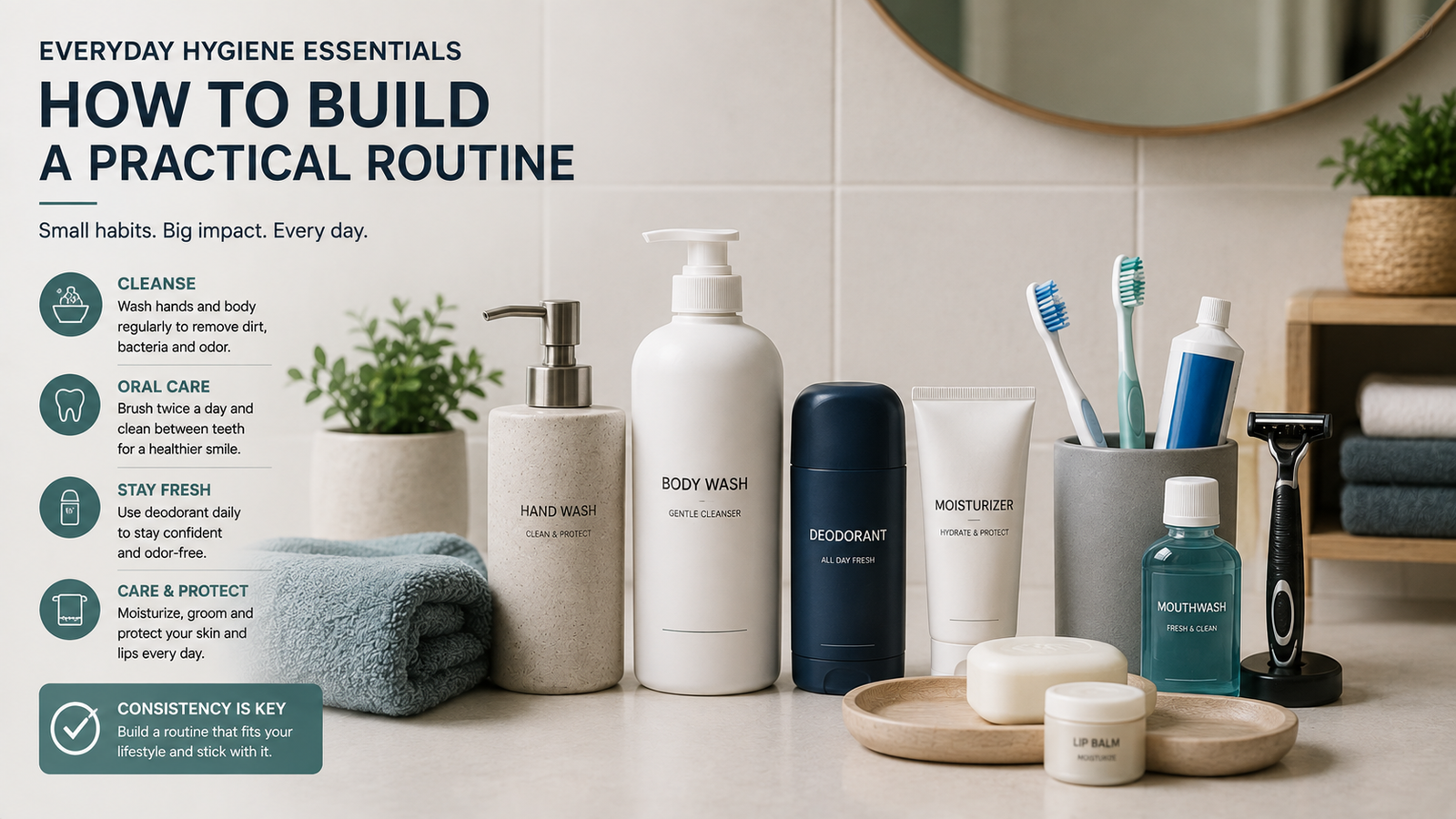
Good hygiene does not require a complicated collection of products.
For most people, the essentials are simple:
- clean your hands when needed;
- bathe according to activity, climate and comfort;
- maintain oral hygiene;
- manage sweat and body odour;
- wear clean clothing;
- keep towels and grooming tools clean;
- wash food-preparation surfaces appropriately;
- maintain basic bathroom and bedroom hygiene.
The useful question is not:
“How many hygiene products should I use?”
It is:
“Which habits actually reduce dirt, sweat, odour and contamination, and how can I make them easy enough to repeat consistently?”
A practical hygiene routine should help you stay clean and comfortable without excessive washing, aggressive disinfecting or constantly adding stronger products.
Hygiene Is Mostly About Habits
Products matter, but routine matters more.
An expensive antibacterial body wash cannot compensate for:
- rarely washing hands;
- rewearing heavily sweaty clothes;
- using damp towels for too long;
- neglecting oral care;
- leaving grooming tools dirty.
Likewise, strong fragrance does not automatically mean good hygiene.
A useful hygiene routine focuses on cleaning the right areas at the right time.
The Main Areas of Everyday Hygiene
A simple routine can be divided into:
- Hand hygiene
- Oral hygiene
- Bathing and body cleansing
- Underarm and odour management
- Hair and scalp hygiene
- Foot hygiene
- Clothing and laundry
- Towels and bedding
- Personal-care tools
- Food and kitchen hygiene
- Bathroom hygiene
You do not need to manage all of these with specialized products.
Basic methods usually work well.
1. Hand Hygiene
Hand washing is one of the most important everyday hygiene habits.
Hands frequently touch:
- phones;
- door handles;
- public surfaces;
- food;
- faces;
- other people.
That makes them an easy way to transfer microorganisms.
When Should You Wash Your Hands?
Important situations include:
- before preparing food;
- before eating;
- after using the toilet;
- after handling raw meat;
- after coughing, sneezing or blowing your nose;
- after handling rubbish;
- after caring for someone who is ill;
- after touching animal waste;
- when hands are visibly dirty.
You do not need to wash your hands every few minutes without a reason.
Frequent unnecessary washing can contribute to dryness and irritation.
How to Wash Hands Properly
A practical method is:
- Wet hands.
- Apply soap.
- Rub palms, backs of hands, between fingers and around nails.
- Continue for roughly 20 seconds.
- Rinse thoroughly.
- Dry with a clean towel or appropriate hand dryer.
The mechanical action of washing matters.
Simply putting soap on the palms and immediately rinsing is less effective.
Soap vs Antibacterial Soap
For routine hand washing, ordinary soap is sufficient in most household situations.
You generally do not need antibacterial hand soap for everyday use.
The important factors are:
- adequate washing;
- good coverage;
- appropriate timing.
Hand Sanitizer
Alcohol-based hand sanitizer can be useful when soap and water are not available.
It is especially convenient during:
- travel;
- commuting;
- shopping;
- public transport.
Apply enough to cover the hands and rub until dry.
However, sanitizer is not ideal when hands are:
- visibly dirty;
- greasy;
- contaminated with certain substances.
In those cases, proper washing is preferable.
Dry Hands From Frequent Washing
If frequent hand washing causes dryness:
- use a mild soap;
- avoid excessively hot water;
- apply hand cream.
People who wash hands repeatedly for work may benefit from keeping moisturizer beside the sink.
Cracked skin can become painful and uncomfortable.
2. Oral Hygiene
A practical oral routine usually includes:
- brushing twice daily;
- fluoride toothpaste;
- cleaning between teeth;
- dental assessment when needed.
Good oral hygiene helps manage:
- plaque;
- food residue;
- breath;
- gum health;
- cavity risk.
Mouthwash can be useful for some people, but it does not replace brushing and interdental cleaning.
Morning and Night Matter Most
A simple schedule:
Morning
- brush teeth;
- clean tongue if preferred.
Night
- clean between teeth;
- brush thoroughly;
- avoid unnecessary eating afterwards.
Consistency matters more than continually changing toothpaste or toothbrush brands.
3. Bathing and Body Cleansing
Bathing frequency depends on:
- weather;
- exercise;
- occupation;
- sweat;
- skin type.
In hot and humid conditions or after exercise, daily showering may be practical.
In cooler or less active conditions, some people may need less intensive cleansing.
The goal is to remove:
- sweat;
- dirt;
- body odour;
- sunscreen;
- accumulated product.
Focus on High-Need Areas
Areas that generally deserve deliberate cleansing include:
- underarms;
- groin;
- feet;
- areas with heavy sweating;
- skin covered with sunscreen or dirt.
You do not need to aggressively scrub the entire body every time you shower.
Avoid Excessively Hot Water
Very hot showers can contribute to:
- skin dryness;
- tightness;
- irritation.
Warm water is enough for hygiene.
If your skin becomes uncomfortable after every shower, consider:
- shorter showers;
- lower temperature;
- milder cleanser.
Do You Need Body Wash Every Time?
Not necessarily over every body area.
If you take multiple showers in one day—for example after exercise—you may use a milder or more targeted cleansing approach for some of them.
More detergent does not automatically mean better hygiene.
4. Underarm Hygiene and Odour
Body odour is influenced by:
- sweat;
- skin bacteria;
- clothing;
- individual biology.
Basic underarm care may include:
- washing;
- drying;
- deodorant;
- antiperspirant if sweat reduction is desired.
Deodorant
Primarily helps manage odour.
Antiperspirant
Helps reduce sweating.
Many products combine both.
Choose based on the problem you actually have.
Fragrance Does Not Replace Cleaning
Applying fragrance over heavy sweat is not the same as washing.
If possible:
- clean the area;
- dry it;
- apply deodorant.
This usually works better than repeatedly layering perfume or body spray.
5. Hair and Scalp Hygiene
Hair washing frequency should be based on:
- scalp oiliness;
- sweat;
- hair texture;
- product buildup;
- exercise.
There is no universal correct schedule.
Oily Scalp
May need more frequent washing.
Dry or Curly Hair
May tolerate less frequent shampooing.
Heavy Styling Product Use
May require more deliberate cleansing.
The goal is a comfortable scalp, not following an arbitrary number of wash days.
Shampoo Primarily for the Scalp
Apply shampoo mainly where oil and sweat accumulate:
- scalp;
- roots.
Massage gently with fingertips.
Avoid scratching aggressively with nails.
Conditioner is generally more useful on:
- mid-lengths;
- ends.
Persistent Scalp Problems
Dandruff, itching or redness are not always caused by poor hygiene.
If symptoms persist despite appropriate washing, consider:
- targeted anti-dandruff care;
- professional evaluation if severe.
Do not keep increasing shampoo strength indefinitely.
6. Foot Hygiene
Feet spend hours inside shoes and socks, which can create a warm, moist environment.
Basic foot hygiene includes:
- washing;
- drying thoroughly;
- changing socks;
- letting footwear dry.
Pay special attention between the toes.
Dry Between the Toes
Moisture remaining between the toes can create discomfort and may encourage fungal problems.
After bathing:
- dry carefully;
- avoid leaving feet damp inside socks.
Change Socks Regularly
Change socks:
- daily;
- after heavy sweating;
- after exercise.
If your feet sweat heavily, breathable socks and rotating shoes may help.
Let Shoes Dry
Avoid wearing the same damp shoes repeatedly if they have not dried.
After exercise:
- remove insoles if appropriate;
- allow airflow;
- avoid leaving shoes sealed inside a gym bag.
Persistent odour can sometimes be more related to footwear than the feet themselves.
Footwear and Fungal Concerns
If you develop:
- peeling;
- persistent itching;
- cracked skin between toes;
- changes to toenails;
consider appropriate treatment or medical advice rather than simply applying more deodorizing spray.
7. Clean Clothing
Clothing absorbs:
- sweat;
- body oil;
- skin cells;
- environmental dirt.
Some garments need washing more frequently than others.
Usually Wash After Each Wear
Examples include:
- underwear;
- socks;
- heavily sweaty workout clothing.
May Be Worn More Than Once
Depending on use:
- jeans;
- jackets;
- outer layers.
Use common sense based on:
- sweat;
- odour;
- visible dirt.
Workout Clothes Need Special Attention
Synthetic workout clothing can retain:
- sweat;
- odour;
- bacteria-associated residue.
After exercise:
- change clothes;
- allow them to dry if they cannot be washed immediately;
- avoid leaving them balled up in a sealed bag.
Wash according to garment instructions.
Do Not Overuse Fragrance to Hide Laundry Odour
If clothes still smell immediately after washing, the issue may involve:
- detergent buildup;
- insufficient drying;
- washing-machine cleanliness;
- fabric retaining odour.
Adding stronger fragrance may only mask it.
8. Towels
Towels remain damp after use and therefore need proper drying.
Hang them where air can circulate.
Avoid:
- leaving them on the floor;
- keeping them folded while wet;
- storing damp towels in closed containers.
Wash them regularly according to household use.
Separate Towels When Useful
You may prefer separate towels for:
- body;
- face;
- gym.
This is a personal choice rather than a strict requirement.
The main issue is keeping towels clean and dry.
9. Bedding Hygiene
Sheets and pillowcases collect:
- sweat;
- skin oils;
- hair products;
- dead skin cells;
- dust.
A regular laundering schedule supports a cleaner sleep environment.
Frequency can depend on:
- sweating;
- climate;
- whether pets sleep on the bed;
- personal preference.
You do not need to wash bedding every day.
Consistency matters more than extreme frequency.
Pillowcases
Pillowcases may benefit from more frequent washing if you:
- sweat heavily;
- use hair products;
- have oily skin;
- allow pets on the bed.
Again, there is no one schedule that suits everyone.
Allow Bedding to Dry
Do not trap damp bedding under:
- blankets;
- covers;
for long periods.
If bedding becomes wet from:
- sweat;
- spills;
- humidity;
allow it to dry properly.
10. Grooming Tools
Tools used repeatedly on the body can accumulate:
- hair;
- oil;
- product residue;
- skin debris.
Examples include:
- combs;
- brushes;
- razors;
- trimmers;
- nail clippers;
- tweezers.
Clean them periodically.
Razors
After shaving:
- rinse thoroughly;
- remove trapped hair;
- let the razor dry.
Replace blades when they become:
- dull;
- rusty;
- damaged.
Do not continue using a blade simply because it still technically cuts.
Trimmers
Clean loose hair from:
- blades;
- guards;
- body.
Follow manufacturer guidance for:
- rinsing;
- lubrication;
- blade replacement.
Combs and Hairbrushes
Remove accumulated hair regularly.
Wash them when product and oil buildup become visible.
Check whether the material is suitable for soaking before putting the entire brush in water.
Nail Tools
Nail clippers and similar tools should be:
- kept clean;
- dried properly;
- stored appropriately.
Avoid sharing them casually, particularly if skin can be nicked.
11. Personal Items You Should Not Share
Certain items are better kept personal.
Examples include:
- toothbrushes;
- razors;
- nail tools;
- some grooming attachments.
These may contact:
- saliva;
- skin;
- blood.
Sharing can increase hygiene risk.
12. Phone Hygiene
Phones are handled constantly and placed on:
- tables;
- desks;
- public surfaces.
Clean your phone according to the manufacturer’s recommendations.
Avoid:
- soaking it;
- spraying liquid directly into openings.
You do not need to disinfect it obsessively after every touch.
Periodic cleaning is a reasonable habit.
13. Kitchen Hygiene
Everyday hygiene extends beyond personal care.
Food-preparation hygiene is important because contaminated surfaces or foods can contribute to illness.
Key habits include:
- wash hands before cooking;
- separate raw and ready-to-eat foods;
- clean preparation surfaces;
- refrigerate food appropriately;
- wash utensils.
Raw Meat
When handling raw:
- poultry;
- meat;
- seafood;
avoid contaminating:
- cooked food;
- vegetables;
- utensils used for ready-to-eat food.
Wash hands and surfaces appropriately afterwards.
Cutting Boards
You may use:
- separate boards;
- careful cleaning between uses.
The important point is preventing cross-contamination.
Replace cutting boards when they become excessively damaged and difficult to clean.
Kitchen Cloths and Sponges
Kitchen sponges and cloths can remain damp and accumulate food residue.
To improve hygiene:
- rinse them;
- allow them to dry;
- clean or replace them regularly.
Do not use a visibly dirty sponge indefinitely.
Refrigerator Hygiene
Check periodically for:
- spoiled food;
- spills;
- expired items.
Clean spills promptly.
Store foods so raw products do not drip onto ready-to-eat foods.
14. Bathroom Hygiene
Bathrooms naturally experience:
- moisture;
- soap residue;
- body products;
- microorganisms.
The most important habit is preventing prolonged dampness.
Use:
- ventilation;
- exhaust fans;
- open windows where appropriate.
Clean High-Use Areas
Regularly clean:
- toilet;
- sink;
- shower surfaces;
- taps;
- handles.
You do not need to sterilize the bathroom after every use.
Routine cleaning is usually enough.
Prevent Mould
If you notice:
- persistent condensation;
- black spots;
- musty smell;
address the moisture problem.
Cleaning visible mould without correcting humidity or leaks may only provide temporary improvement.
15. Menstrual Hygiene
For people who menstruate, common products include:
- pads;
- tampons;
- menstrual cups;
- period underwear.
Follow the manufacturer’s guidance for:
- changing;
- cleaning;
- duration of use.
Wash hands before and after handling menstrual products.
Menstrual Cups
Reusable menstrual cups need appropriate:
- washing;
- storage;
- cleaning according to product instructions.
Do not simply rinse and store them wet in a sealed container indefinitely.
Avoid Excessive Intimate Cleansing
The external genital area generally does not need heavily fragranced cleansers.
Strong products can cause irritation.
Avoid:
- douching;
- internal cleansing;
- heavily scented products marketed as necessary for freshness.
Persistent changes in:
- discharge;
- smell;
- pain;
- itching;
should be assessed appropriately rather than masked with fragrance.
16. Hygiene During Illness
When someone at home is ill, basic hygiene becomes especially important.
Useful measures may include:
- regular hand washing;
- cleaning frequently touched surfaces;
- avoiding sharing personal items;
- washing contaminated textiles appropriately.
Follow condition-specific medical or public-health guidance when needed.
You Do Not Need to Disinfect Everything Constantly
Routine cleaning and targeted disinfection are different.
Disinfectants may be useful when:
- someone is ill;
- a surface is contaminated;
- there is a specific infection concern.
Using powerful disinfectants everywhere every day is usually unnecessary.
Never Mix Cleaning Chemicals
This is a critical safety rule.
Do not mix products such as:
- bleach;
- ammonia;
- acids;
- toilet cleaners;
unless the manufacturer explicitly states they are designed to be combined.
Dangerous gases can form.
More chemicals do not mean better hygiene.
17. Hygiene in Public Places
When outside the home:
- wash or sanitize hands when appropriate;
- avoid touching your face unnecessarily after visibly dirty surfaces;
- avoid sharing personal grooming items;
- drink from clean containers.
You do not need to become afraid of every public surface.
Reasonable habits are enough.
18. Travel Hygiene
Useful travel essentials can include:
- toothbrush;
- toothpaste;
- deodorant;
- hand sanitizer;
- clean underwear;
- small personal-care kit.
For longer trips, consider:
- laundry access;
- towel hygiene;
- clean storage for grooming products.
Keep wet items separate from clean clothing.
19. Gym Hygiene
At the gym:
- change sweaty clothing;
- use a clean towel if needed;
- avoid sharing personal bottles;
- clean personal equipment;
- shower after heavy sweating where practical.
For communal showers:
- keep feet reasonably clean and dry;
- consider suitable footwear if appropriate.
Do not leave sweaty gear sealed in a bag for days.
20. Hygiene Does Not Mean Eliminating All Microorganisms
Microorganisms are naturally present:
- on skin;
- in the mouth;
- throughout the environment.
Healthy hygiene aims to reduce harmful contamination and remove dirt—not sterilize the body.
Trying to eliminate every microorganism can lead to:
- excessive washing;
- skin irritation;
- unnecessary disinfectant use.
Cleanliness should be proportionate to risk.
Avoid Hygiene Overcorrection
Some people respond to concerns about cleanliness by:
- washing excessively;
- showering repeatedly;
- using strong disinfectants on skin;
- scrubbing aggressively.
This can create:
- dryness;
- dermatitis;
- irritation;
- damaged skin barrier.
Hygiene should support health, not injure the skin.
Fragrance vs Hygiene
A product smelling:
- floral;
- citrus;
- minty;
- strongly “clean”;
does not prove that it removes contamination better.
Fragrance is a sensory feature.
You can be hygienically clean without smelling strongly perfumed.
“Natural” Does Not Automatically Mean Safer
Natural cleaning and hygiene products may still contain:
- fragrances;
- essential oils;
- acids;
- irritating compounds.
Evaluate products based on:
- function;
- formulation;
- correct use.
Do not assume plant-derived means harmless.
Common Everyday Hygiene Mistakes
Washing Hands Too Quickly
Good coverage and adequate washing time matter.
Showering With Extremely Hot Water
This can irritate dry skin.
Reusing Sweaty Clothing
Especially underwear, socks and workout clothing.
Keeping Damp Towels Folded
Allow them to dry fully.
Ignoring Grooming Tools
Clean tools that repeatedly contact skin and hair.
Sharing Razors or Toothbrushes
Keep them personal.
Masking Odour With Fragrance
Identify and clean the source.
Using Disinfectant Everywhere
Target disinfection where it is actually useful.
Mixing Household Chemicals
Never mix cleaning products casually.
Assuming More Scrubbing Means More Hygiene
Aggressive friction can damage skin.
A Simple Morning Hygiene Routine
A practical morning could be:
- Brush teeth.
- Shower or wash according to need.
- Dry thoroughly.
- Apply deodorant or antiperspirant.
- Put on clean underwear and clothing.
- Wash hands before preparing or eating food.
That covers most basics.
A Simple Evening Hygiene Routine
At the end of the day:
- Wash hands on returning home where appropriate.
- Change out of dirty or sweaty clothes.
- Shower if needed.
- Brush teeth and clean between them.
- Put wet towels where they can dry.
- Place dirty clothing in the appropriate laundry area.
Again, simple habits do most of the work.
A Weekly Hygiene Maintenance Routine
Once per week—or according to household need—consider:
- laundering bedding;
- changing towels;
- cleaning grooming tools;
- checking bathroom moisture;
- cleaning reusable bottles;
- inspecting shoes and workout gear;
- clearing spoiled food from the refrigerator.
This prevents small hygiene tasks from accumulating.
Quick Everyday Hygiene Guide
| Area | Basic habit |
|---|---|
| Hands | Wash at important times |
| Teeth | Brush twice daily + interdental cleaning |
| Body | Bathe according to sweat/activity |
| Underarms | Clean + deodorant/antiperspirant as needed |
| Hair/scalp | Wash according to oil/sweat/product buildup |
| Feet | Wash, dry, clean socks |
| Clothes | Change sweaty/soiled garments |
| Towels | Wash regularly and dry fully |
| Bedding | Launder on a consistent schedule |
| Tools | Clean razors, trimmers, brushes and nail tools |
| Kitchen | Prevent cross-contamination |
| Bathroom | Clean routinely and manage moisture |
Before Buying Another Hygiene Product
Ask yourself:
- What specific hygiene problem does this solve?
- Would normal soap or cleaning already address it?
- Do I need antimicrobial action?
- Is fragrance being marketed as hygiene?
- Could this product irritate my skin?
- Will I use it correctly?
- Does it add a genuinely useful step?
- Am I solving a problem or simply adding more products?
Frequently Asked Questions
How often should I shower?
It depends on activity, sweat, climate and skin type. Daily bathing can be appropriate for many people, particularly in hot weather or after exercise, but not every shower needs aggressive full-body cleansing.
Do I need antibacterial soap?
For routine household hand and body washing, ordinary soap is sufficient in many situations.
Is hand sanitizer as good as washing?
Alcohol-based sanitizer is useful when hands are not visibly dirty and washing is unavailable. Soap and water are preferable when hands are visibly soiled.
Do I need to wash my hair every day?
Not necessarily. Frequency should match scalp oiliness, sweating, hair texture and styling-product use.
Is body odour caused by being dirty?
Not always. Sweat interacts with skin bacteria, and clothing and individual biology also matter.
Should I change underwear every day?
Clean underwear should generally be changed regularly and after significant sweating or soiling.
How often should towels be washed?
There is no universal interval. Wash them regularly and sooner if they remain damp, smell or become visibly dirty.
Can I reuse workout clothes?
Heavily sweaty workout clothes are best washed before being worn again.
Do I need to disinfect my phone every day?
Usually not. Regular cleaning according to the manufacturer’s instructions is sufficient for ordinary use.
Should I share a razor with my partner?
It is better not to share razors because they can cause small skin cuts and contact bodily fluids.
Does strong body spray prevent body odour?
It can mask odour temporarily but does not replace washing or deodorant.
Are loofahs hygienic?
They can be used, but they need proper rinsing, drying and replacement. They are not required for effective bathing.
Is intimate wash necessary?
Usually not for routine external hygiene. Gentle cleansing is generally sufficient, and heavily fragranced products may cause irritation.
How can I keep shoes from smelling?
Allow them to dry, rotate footwear if possible, wear clean socks and clean the feet regularly.
When does a hygiene problem need medical advice?
Seek appropriate evaluation for persistent:
- unusual body odour;
- skin infections;
- severe itching;
- recurrent fungal problems;
- painful dental symptoms;
- unusual genital symptoms;
- wounds that do not heal.
The Physical Glow Takeaway
Good everyday hygiene is built around consistent basic habits, not stronger products or more frequent disinfecting.
Wash your hands at meaningful times, maintain oral care, bathe according to activity and climate, keep sweat-prone areas clean, wear clean clothing and give towels, bedding and personal tools enough attention to remain hygienic.
Avoid confusing fragrance with cleanliness or assuming that antibacterial and disinfecting products are necessary for every task. Ordinary soap, water, appropriate laundry and routine cleaning handle most everyday hygiene needs very effectively.
Most importantly, keep the routine proportionate. Clean enough to stay comfortable and reduce unnecessary contamination without damaging your skin through excessive washing or turning ordinary daily life into a constant sterilization exercise.
A practical hygiene routine should feel simple, repeatable and almost automatic—because the habits that work consistently are usually more important than the products surrounding them.