How to Choose Sleep Accessories That Support Better Rest
Learn how to choose sleep accessories that support a more comfortable sleep environment, with practical guidance on your main sleep problem, comfort, light, noise, temperature and practical usefulness. This beginner-friendly guide helps you make a clear, informed choice without unnecessary complexity.
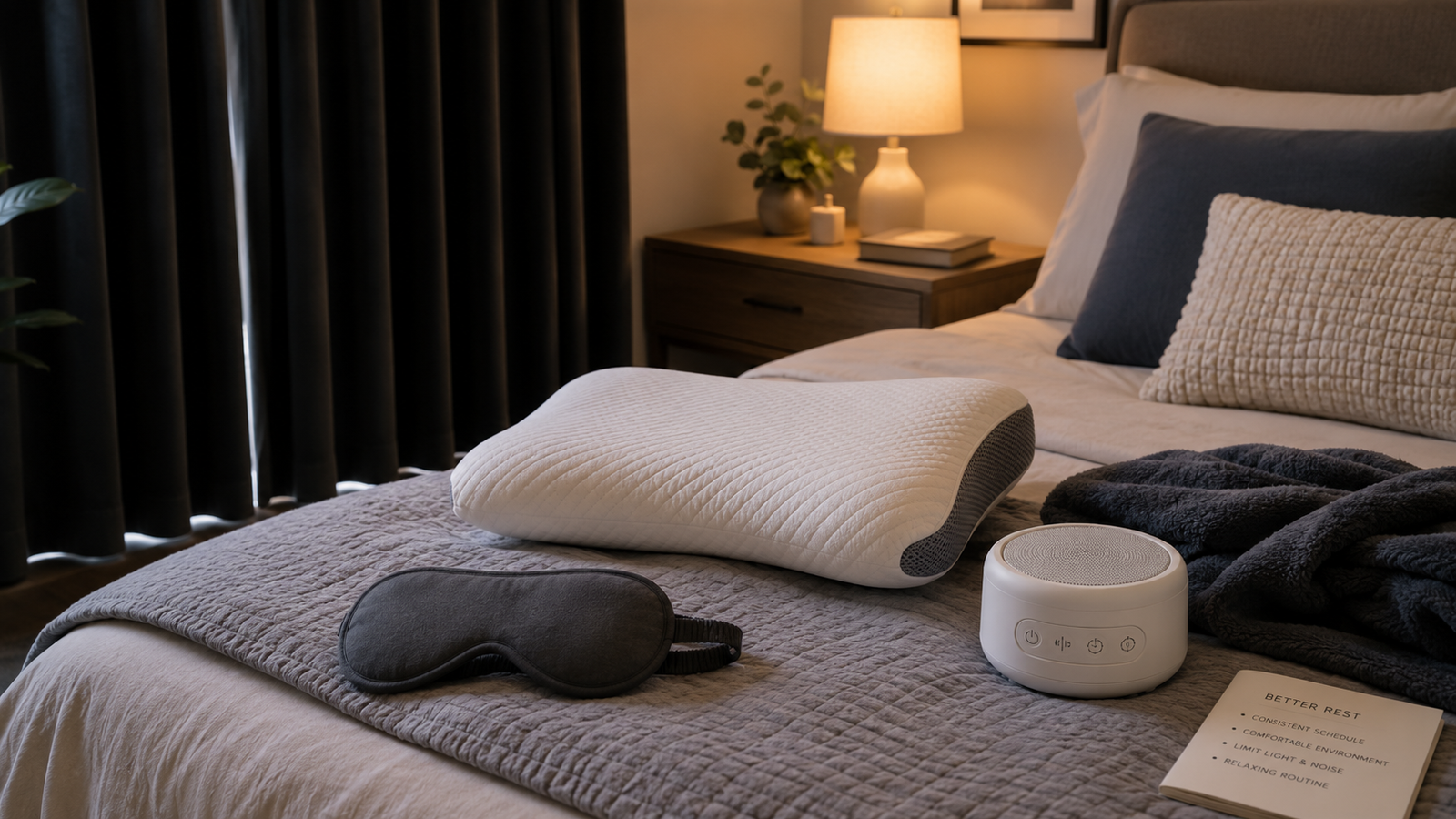
Sleep accessories can make a bedroom more comfortable, darker, quieter and easier to settle into.
Common options include:
- sleep masks;
- supportive pillows;
- blackout curtains;
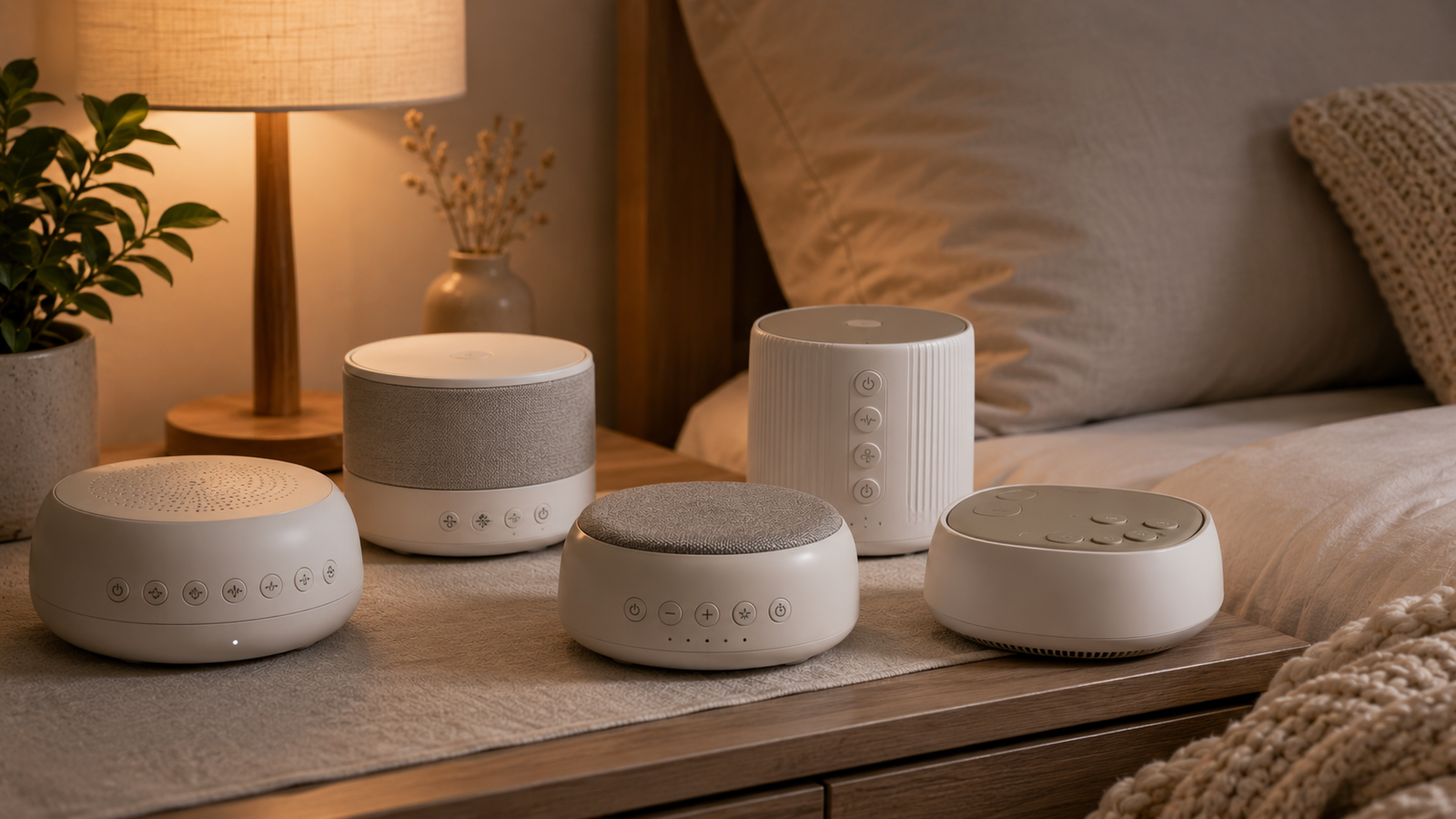
- white-noise machines;
- earplugs;
- cooling or warming bedding;
- mattress toppers;
- body pillows;
- bedside lighting;
- humidifiers;
- sleep trackers.
Some can solve genuine problems.
But none of them can compensate for:
- consistently sleeping too little;
- an irregular sleep schedule;
- late caffeine;
- heavy alcohol use;
- untreated sleep problems;
- spending hours on your phone instead of going to bed.
That makes the most useful question:
“What is actually interfering with my sleep, and which accessory directly addresses that problem?”
If unwanted light wakes you early, a sleep mask or blackout curtain may help.
If traffic interrupts sleep, earplugs or steady background sound may be useful.
If your pillow leaves you uncomfortable every morning, changing the pillow may make sense.
But buying several sleep products simply because they are marketed for better rest can create:
- clutter;
- expense;
- complicated routines;
- unrealistic expectations.
This guide explains how to choose practical sleep accessories by starting with your actual sleep environment and prioritizing the features that meaningfully improve comfort.
Start With the Sleep Problem
Before shopping, identify the problem you want the product to solve.
Ask whether your main issue is:
Light
Examples:
- streetlights;
- early sunrise;
- hallway light;
- a partner using lights.
Possible solutions:
- sleep mask;
- blackout curtains;
- better blinds.
Noise
Examples:
- traffic;
- neighbours;
- barking dogs;
- household activity.
Possible solutions:
- earplugs;
- white-noise machine;
- fan;
- better window sealing.
Physical Comfort
Examples:
- uncomfortable pillow;
- pressure points;
- bedding that is too hot;
- insufficient support.
Possible solutions:
- appropriate pillow;
- mattress topper;
- different bedding;
- body pillow.
Temperature
Examples:
- sleeping too hot;
- feeling too cold;
- night sweating.
Possible solutions:
- lighter bedding;
- breathable sheets;
- fan;
- appropriate blanket.
Dry Air
Possible solutions may include:
- measuring room humidity;
- humidifier if the air is genuinely too dry.
Difficulty Winding Down
This may be less about equipment.
Consider first:
- reducing screen use;
- dimming lights;
- reading;
- consistent bedtime routine.
A product should solve a clearly identified barrier.
Sleep Accessories Are Support Tools
A sleep accessory can improve the conditions for sleep.
It cannot force sleep to happen.
For example:
A sleep mask can create darkness.
It cannot correct:
- a 2 AM bedtime when you need to wake at 6 AM.
A white-noise machine can mask traffic.
It cannot compensate for:
- large amounts of evening caffeine.
A better pillow can improve comfort.
It cannot treat:
- significant sleep apnoea.
Keep the hierarchy clear:
sleep opportunity and habits → environment → accessories
rather than accessories first.
Build the Bedroom Before Buying Gadgets
Before purchasing anything, inspect the room.
At bedtime, ask:
- Is it dark enough?
- Is the temperature comfortable?
- Is noise disturbing?
- Is the mattress comfortable?
- Is the pillow comfortable?
- Is the room unnecessarily cluttered?
- Are device lights distracting?
- Is the air excessively dry or humid?
Some problems can be fixed without buying specialized sleep equipment.
For example:
- turn off unnecessary lights;
- move a bright clock;
- use a fan you already own;
- change blanket thickness;
- reposition the bed;
- close a door;
- reduce phone notifications.
Accessories make sense after simple environmental changes have been considered.
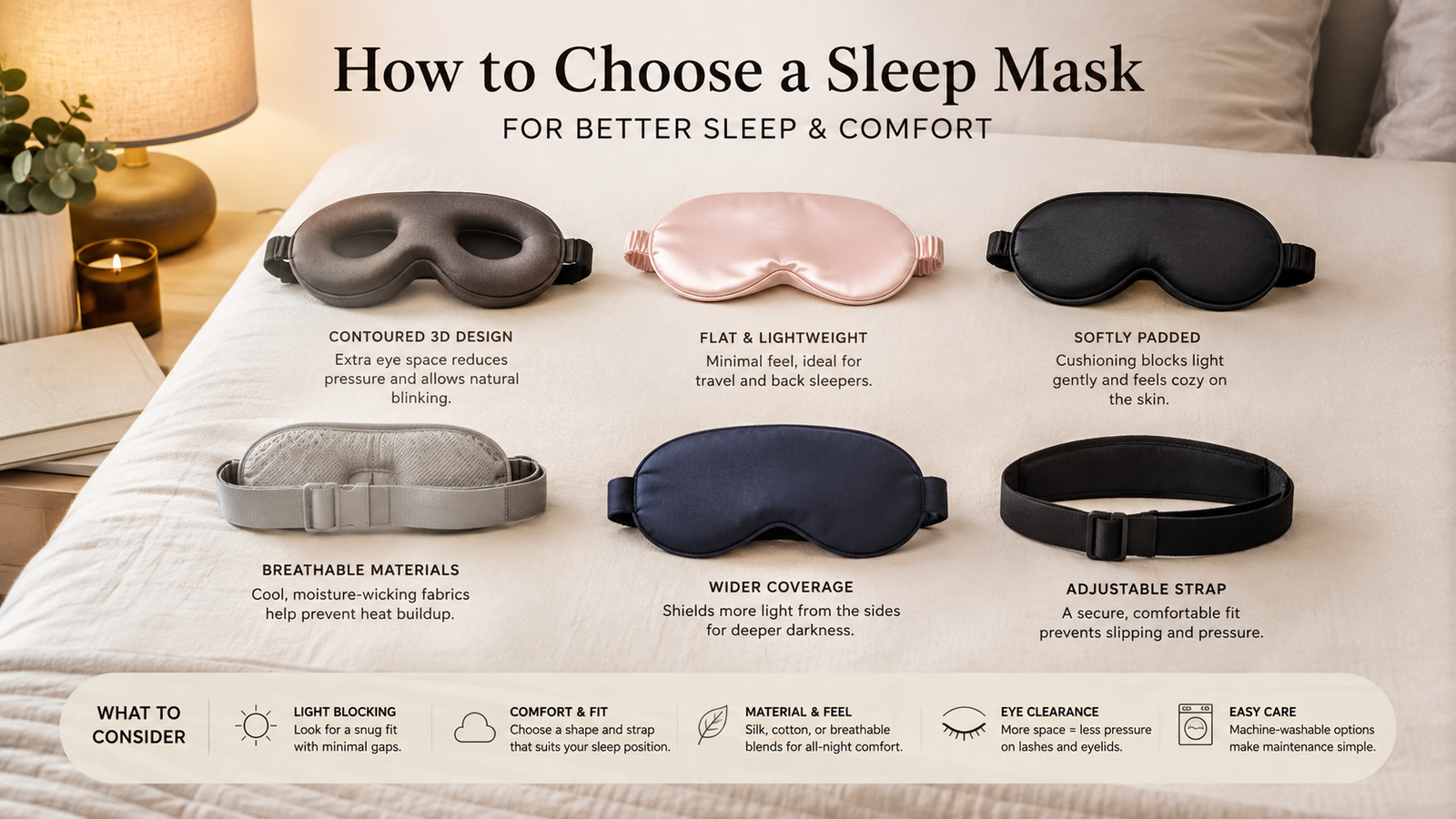
1. Sleep Masks
Sleep masks are one of the simplest sleep accessories.
They can be useful when:
- curtains do not completely block light;
- you travel;
- a partner uses lights;
- sunrise occurs before you want to wake;
- you need to sleep during daylight hours.
The main job is straightforward:
block unwanted light without becoming uncomfortable.
Flat vs Contoured Sleep Masks
Flat Sleep Masks
These sit relatively close to the eyes.
Advantages:
- simple;
- lightweight;
- compact;
- usually inexpensive.
Potential drawback:
Some people dislike pressure against:
- eyelids;
- eyelashes.
Contoured Sleep Masks
These create recessed spaces around the eyes.
They may suit people who:
- dislike eyelid pressure;
- want room to blink;
- have longer eyelashes.
They can be slightly bulkier.
Neither design is universally better.
Comfort determines the right choice.
Light Blocking
A good mask should minimize gaps around:
- nose;
- cheeks;
- sides.
A mask may look thick and luxurious but still allow significant light around the nose.
Fit matters more than fabric thickness alone.
Strap Design
A strap should:
- hold the mask securely;
- remain comfortable;
- avoid pulling hair excessively.
Look for:
- adjustability;
- soft edges;
- secure fastener.
An overly tight mask may create:
- pressure;
- marks;
- headaches.
A loose mask may move during sleep.
Material
Common materials include:
- cotton;
- synthetic fabrics;
- satin-like materials;
- silk.
The most important factors are:
- comfort;
- breathability;
- washability.
Premium fabric does not automatically improve light blocking.
Washability
Sleep masks repeatedly contact:
- facial skin;
- sweat;
- skincare products;
- hair.
Choose one you can clean easily.
Check whether it requires:
- hand washing;
- machine washing.
A mask that is too delicate to maintain may become inconvenient.
Weighted Sleep Masks
Some masks contain light weighting.
Some users enjoy the additional pressure.
Others find it uncomfortable.
Do not assume weighted designs are automatically more relaxing.
Avoid excessive pressure around the eyes.
Comfort should remain the priority.
Cooling and Gel Sleep Masks
Gel masks may be:
- cooled;
- used for temporary comfort around the eyes.
These are somewhat different from ordinary sleep masks.
If chilled:
- follow product directions;
- avoid extreme cold;
- avoid falling asleep with a product not intended for overnight use.
A cooling mask should not be confused with a basic light-blocking sleep mask.
2. Blackout Curtains
If unwanted light is a persistent bedroom problem, blackout curtains can provide a more permanent solution than wearing a mask.
They may be useful for:
- shift workers;
- bedrooms facing streetlights;
- early sunrise;
- urban environments.
Blackout vs Room-Darkening
These terms may not mean the same thing.
Room-Darkening Curtains
Reduce substantial light but may still allow some through.
Blackout Curtains
Are designed to block much more light.
However, light can still enter around:
- curtain edges;
- top;
- bottom.
Installation matters.
Curtain Width Matters
For better light control, curtains often need to extend beyond the window edges.
A curtain exactly matching the glass width may allow significant light around the sides.
Consider:
- wider coverage;
- adequate length;
- curtain overlap.
Thermal Curtains
Some blackout curtains also claim thermal benefits.
They may help reduce:
- heat entering through windows;
- heat loss in cooler weather.
But they cannot replace appropriate:
- ventilation;
- air conditioning;
- heating;
when room temperature itself is a major problem.
Sleep Mask or Blackout Curtains?
Choose based on your situation.
| Situation | More practical option |
|---|---|
| Travel | Sleep mask |
| Rental where curtains cannot be replaced | Sleep mask |
| Permanent bedroom light problem | Blackout curtains |
| Partner needs light | Sleep mask |
| Shift work at home | Blackout curtains + optional mask |
| Occasional light problem | Sleep mask |
You may use both if needed.
3. Earplugs
Earplugs can be one of the most cost-effective sleep accessories for noise.
They may help with:
- traffic;
- snoring partner;
- neighbours;
- hotel noise;
- household activity.
Common types include:
- foam;
- silicone;
- reusable molded styles.
Foam Earplugs
Foam plugs are:
- inexpensive;
- widely available;
- highly compressible.
They are inserted after being rolled into a smaller shape, then expand.
Fit and insertion technique greatly affect how much noise they reduce.
Silicone Earplugs
Some silicone earplugs sit:
- at;
- or around;
the ear canal opening rather than deeply inside.
They may be comfortable for people who dislike traditional foam plugs.
Reusable Earplugs
Reusable models may be more economical for regular use.
Check:
- cleaning instructions;
- replacement guidance;
- fit.
A reusable product still requires appropriate hygiene.
Noise Reduction Rating
Some earplugs list a noise-reduction rating.
This can help compare products, but real-world performance depends on:
- fit;
- insertion;
- ear shape.
A theoretically high-rated plug used incorrectly may reduce less noise than a comfortable, well-fitted product.
Comfort for Side Sleepers
If you sleep on your side, bulky earplugs can press against the pillow.
Look for:
- low-profile design;
- softer material.
Comfort across an entire night is more important than maximum laboratory noise reduction.
Do Not Insert Earplugs Too Deeply
Follow product instructions.
Do not push an object deep into the ear canal simply to achieve greater noise blocking.
If earplugs cause:
- pain;
- persistent irritation;
- discharge;
- hearing changes;
stop using them and seek appropriate assessment.
Earplug Hygiene
Reusable earplugs should be:
- cleaned;
- dried;
- stored properly.
Disposable plugs should be replaced as appropriate.
Do not repeatedly reuse visibly dirty disposable earplugs indefinitely.
4. White-Noise Machines
White-noise machines provide continuous background sound.
Their main practical purpose is often to reduce the contrast between:
quiet environment
and:
sudden external sound.
That can make noises such as:
- traffic;
- doors;
- voices;
less noticeable.
White Noise Is Not the Only Option
Many machines offer:
- white noise;
- pink noise;
- brown noise;
- rain;
- waves;
- fan sounds.
There is no universally superior sound.
Choose whichever:
- feels comfortable;
- effectively masks the specific noise bothering you.
Volume Control
A sound machine should offer gradual volume adjustment.
The goal is not to drown out everything at maximum volume.
Use the lowest comfortable volume that does the job.
Continuous Playback
For sleep, continuous playback can be useful.
Some devices have:
- timers;
- continuous mode.
If environmental noise persists throughout the night, a timer shutting the machine off after 30 minutes may not help.
Choose according to your environment.
Sound Loop Quality
Poor devices may use short recorded loops.
You may eventually notice:
- repeating waves;
- identical bird calls;
- obvious resets.
That can become distracting.
Look for:
- seamless looping;
- generated continuous sound.
Dedicated Machine vs Phone
A phone can play sleep sounds.
A dedicated device may still be worthwhile if it allows you to:
- keep the phone away from bed;
- avoid notifications;
- avoid opening apps;
- start sound with one button.
If the phone already works well without disrupting your routine, another device may be unnecessary.
Fan as Background Sound
A normal fan can provide:
- airflow;
- steady noise.
If that already masks disruptive sounds, you may not need a dedicated white-noise machine.
5. Pillows
A pillow is less of a gadget and more of a core sleep accessory.
Its primary purpose is to support a comfortable relationship between the:
- head;
- neck;
- shoulders;
- mattress.
The best pillow depends partly on:
- sleeping position;
- body size;
- shoulder width;
- mattress firmness.
There is no universally perfect pillow.
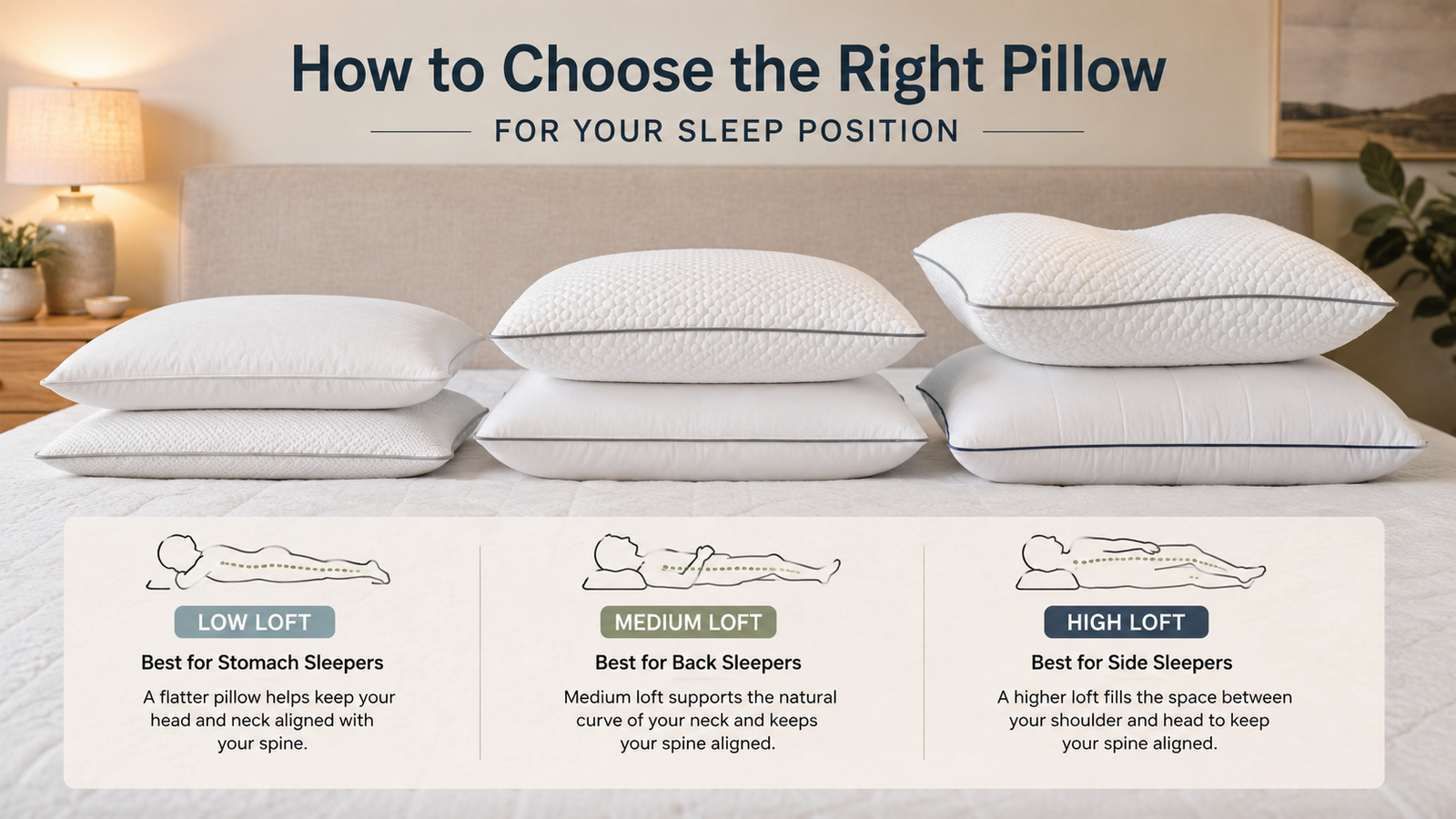
Pillow Loft
Loft means pillow height or thickness.
Too high or too low can make the neck feel uncomfortable.
Side Sleepers
Side sleepers often need enough loft to fill the distance between:
- mattress;
- head;
created by shoulder width.
Broad shoulders or a firmer mattress may require greater loft.
Back Sleepers
Back sleepers often need moderate support.
A very high pillow may push the head too far forward.
Stomach Sleepers
Stomach sleepers often prefer:
- lower loft;
- softer support;
because the head is already turned to one side.
Some may use a very thin pillow or none under the head.
Individual comfort still matters.
Adjustable Pillows
Adjustable pillows allow filling to be:
- removed;
- added.
This can be useful when you are unsure of the exact loft needed.
It can also accommodate changing preferences.
The trade-off is additional maintenance.
Memory Foam
Memory-foam pillows can provide:
- contouring;
- relatively stable support.
Potential drawbacks may include:
- heat retention;
- slower response;
- initial odour in some products.
Whether you like the sensation is highly personal.
Latex
Latex pillows often feel:
- resilient;
- springier;
- less deeply conforming.
They may retain shape well.
But they can be:
- heavier;
- more expensive.
Fibre Fill
Synthetic or natural fibre pillows may provide:
- softer feel;
- easier compression.
They may flatten over time and require:
- fluffing;
- replacement.
Again, no fill material is automatically best.
“Orthopaedic” Pillows
The term may be used broadly in marketing.
A contoured pillow may feel useful for some people.
But the label does not guarantee that the pillow:
- treats neck pain;
- corrects posture;
- suits your anatomy.
Judge:
- comfort;
- height;
- support.
6. Body Pillows
Body pillows can provide additional support for:
- side sleepers;
- people who like to hug a pillow;
- positioning between the knees.
They may make some positions more comfortable.
They are optional.
Knee Pillows
Small contoured pillows are often placed:
- between the knees for side sleeping;
- beneath the knees for back sleeping.
You can often achieve similar positioning using an ordinary pillow.
A specialized knee pillow is useful only if its shape:
- stays in place;
- improves comfort.
Pregnancy Pillows
Pregnancy pillows can provide extensive body support.
Shapes may include:
- C;
- U;
- full-length designs.
They can help support:
- abdomen;
- legs;
- back;
depending on preference.
But they are large.
Consider:
- bed size;
- storage;
- heat;
- washability.
7. Mattress Toppers
A mattress topper changes the feel of an existing mattress.
Common types include:
- memory foam;
- latex;
- fibre;
- wool-like materials.
A topper can be useful if your mattress is structurally sound but feels:
- slightly too firm;
- uncomfortable at pressure points.
A Topper Cannot Repair a Failed Mattress
If the mattress has:
- major sagging;
- broken support;
- large depressions;
adding a topper may only hide the problem temporarily.
A topper changes surface comfort.
It does not rebuild the underlying support system.
Thickness
Toppers can range from thin comfort layers to several centimetres thick.
Thicker is not automatically better.
More thickness can change:
- body sink;
- spinal position;
- heat retention.
Choose according to the specific issue you are trying to solve.
Cooling Claims
Many foam products advertise cooling through:
- gel;
- perforations;
- special covers.
Some construction changes can affect temperature feel, but do not assume a “cooling gel” label guarantees a dramatically cooler night.
Consider the whole setup:
- mattress;
- topper;
- sheets;
- blanket;
- room temperature.
8. Bedding for Temperature Control
Sleep accessories can help regulate thermal comfort.
Options include:
- lightweight sheets;
- breathable blankets;
- heavier winter duvets;
- moisture-managing sleepwear.
The goal is simple:
avoid waking because you are too hot or too cold.
Breathable Bedding
In warm climates, look for bedding that feels:
- lightweight;
- breathable;
- comfortable against skin.
No material guarantees zero sweating.
Room temperature and humidity remain important.
Heavy Blankets
A heavy duvet may be comfortable in cold weather but uncomfortable in warmer conditions.
Consider seasonal bedding rather than expecting one blanket to work perfectly all year.
Cooling Blankets
Some products use fabrics designed to feel:
- smooth;
- cool to touch.
These can improve comfort for some people.
But they cannot continuously remove unlimited body heat.
If the room is excessively hot, environmental cooling may matter more.
Electric Blankets
Electric blankets can warm a bed in colder environments.
Important features include:
- temperature control;
- automatic shut-off;
- overheat protection.
Follow manufacturer instructions.
Do not use a damaged heated blanket with:
- broken wiring;
- scorched areas;
- malfunctioning controls.
9. Weighted Blankets
Weighted blankets create distributed pressure.
Some users find this sensation:
- comforting;
- relaxing.
Others find it:
- too warm;
- restrictive.
They are not required for good sleep.
Do Not Automatically Buy by Body-Weight Formula
Simple rules such as:
“Choose exactly 10% of your body weight”
are commonly repeated.
But individual:
- mobility;
- preference;
- blanket design;
- temperature;
also matter.
The blanket should be easy to:
- reposition;
- remove independently.
Safety Comes Before Pressure
A weighted blanket may be inappropriate when a person cannot safely move or remove it.
Additional caution may be appropriate with certain:
- mobility;
- respiratory;
- health limitations.
Seek individualized guidance if uncertain.
10. Bedside Lighting
A simple bedside lamp can support the transition to sleep by allowing you to avoid bright overhead lighting.
Useful features include:
- dimming;
- warm light;
- easy physical controls.
You do not necessarily need:
- colour-changing scenes;
- Wi-Fi;
- app integration.
Smart Lighting
Smart lights can be useful if they automatically:
- dim in the evening;
- brighten gradually in the morning.
But they also introduce:
- apps;
- accounts;
- connectivity.
Only pay for automation if it makes the routine easier.
Sunrise Alarm Clocks
Sunrise alarms gradually increase light before wake time.
They may be useful for people who:
- wake before sunrise;
- dislike abrupt alarms;
- struggle during darker seasons.
They do not guarantee easier waking for everyone.
Alarm Sound Still Matters
Some sunrise clocks also include a backup sound alarm.
This is useful if waking at a specific time is important.
Do not rely solely on gradual light until you know it wakes you reliably.
11. Humidifiers
A humidifier can add moisture to dry indoor air.
It may be worth considering if:
- measured humidity is low;
- dry air contributes to discomfort.
Potential complaints might include:
- dry nose;
- dry throat;
- dry-feeling skin.
But a humidifier should not be bought automatically because sleep is poor.
Measure Humidity First
Too much humidity can contribute to:
- condensation;
- mould;
- dust-mite conditions.
Use a simple hygrometer if necessary.
The goal is comfortable humidity—not maximum moisture.
Cleaning Is Essential
A humidifier that is not maintained can become a hygiene problem.
Choose one that is easy to:
- empty;
- wash;
- dry;
- descale.
Maintenance is more important than decorative mist effects.
12. Air Purifiers
An air purifier can help reduce certain airborne particles when equipped with appropriate filtration.
It may be useful where there are genuine issues involving:
- pollen;
- airborne particles;
- some pet allergens.
But it is not a universal sleep accessory.
If your bedroom air is already comfortable and clean, a purifier may provide little noticeable sleep benefit.
Noise at Night
For bedroom use, check:
- sleep mode;
- low fan noise;
- display-light controls.
An excellent purifier that sounds too loud to sleep beside is poorly matched to the room.
13. Sleep Trackers
Sleep tracking may come from:
- watches;
- rings;
- mattress sensors;
- bedside devices.
These can estimate patterns such as:
- sleep duration;
- bedtime;
- wake time;
- nighttime movement.
They are primarily tracking accessories, not treatments.
Do Not Overinterpret Sleep Stages
Consumer trackers may estimate:
- light sleep;
- deep sleep;
- REM sleep.
These estimates should not be treated like a clinical sleep study.
A change from:
1 hour 12 minutes deep sleep
to:
58 minutes
does not necessarily mean something went wrong.
Look at Long-Term Patterns
Sleep trackers can be more useful for questions such as:
- Am I sleeping longer after moving bedtime earlier?
- Does late alcohol coincide with poorer estimated sleep?
- Am I keeping a consistent wake time?
Use the data for behavioural trends rather than precision diagnosis.
Know When to Stop Tracking
If the tracker makes you:
- anxious;
- constantly inspect scores;
- worry about sleep stages;
- distrust how rested you actually feel;
consider taking a break.
Sleep should not become another metric you need to optimize every morning.
14. Phone Charging Stations
This sounds unrelated to sleep, but it can be a practical sleep accessory.
A charging location away from the bed can reduce:
- nighttime scrolling;
- notification checking;
- morning phone use before getting up.
Sometimes changing where the phone lives improves sleep habits more than buying a specialized sleep gadget.
Alarm Clock Instead of Phone
If you keep the phone beside the bed only because you need an alarm, a simple alarm clock can remove that excuse.
This can make it easier to leave the phone:
- across the room;
- outside the bedroom.
You do not need an expensive smart alarm for this.
15. Bedside Clocks
If using a clock, consider whether the display is:
- bright;
- distracting.
A dimmable display is useful.
If you repeatedly check the time during insomnia, consider turning the clock away.
Constant calculation of remaining sleep can increase frustration.
16. Sleep Headphones
Some accessories combine:
- soft headbands;
- flat speakers.
They may be used for:
- music;
- guided relaxation;
- sleep sounds.
These can be useful if you want private audio without conventional headphones pressing against the ears.
Comfort Matters for Side Sleepers
Speaker position should not create pressure against the ear when lying on the side.
Check:
- band thickness;
- speaker size;
- washability;
- battery location.
Avoid Excessive Volume
Audio played directly near the ears should remain at a comfortable level.
Do not increase volume unnecessarily because you are trying to drown out severe environmental noise.
17. Mouth Taping Products
Mouth-taping products are increasingly marketed for sleep.
This category deserves significant caution.
Claims may involve:
- encouraging nasal breathing;
- reducing snoring;
- improving sleep.
But snoring and mouth breathing can sometimes be associated with:
- nasal obstruction;
- sleep-disordered breathing;
- obstructive sleep apnoea.
Simply taping the mouth does not identify the underlying problem.
Do Not Use Mouth Tape as a Substitute for Assessment
If you have:
- loud snoring;
- gasping;
- witnessed breathing pauses;
- excessive daytime sleepiness;
seek appropriate evaluation.
A consumer tape product should not be used to conceal symptoms of possible sleep apnoea.
18. Nasal Strips
Nasal strips mechanically pull outward on the skin around the nose.
They may make nasal airflow feel easier for some people.
They may help where nasal passage narrowing contributes to discomfort.
But they do not treat obstruction deeper in the airway.
Persistent snoring or breathing symptoms still require proper assessment.
19. Anti-Snoring Pillows and Devices
Many products claim to reduce snoring through:
- positioning;
- head elevation;
- neck support.
Some positional changes may help certain people.
But snoring has multiple causes.
Do not purchase repeated anti-snoring gadgets while ignoring:
- witnessed breathing pauses;
- choking;
- severe daytime sleepiness.
Those signs deserve medical assessment.
20. Aromatherapy and Sleep
Some people enjoy:
- subtle fragrance;
- calming scent;
during the wind-down period.
Products may include:
- diffusers;
- pillow sprays;
- scented candles.
Fragrance can become a useful routine cue.
But it is optional.
Avoid Strong Fragrance
More scent is not more relaxing.
Excess fragrance can cause:
- headaches;
- irritation;
- respiratory discomfort.
If you enjoy scent, use a low intensity.
Pillow Sprays
A pillow spray mainly changes the sensory experience of bedding.
It should not be treated as a product that directly induces sleep through medical action.
If you enjoy the fragrance and tolerate it, it can be part of a routine.
Candles
Candles may create a relaxing atmosphere before bed.
But open flame introduces obvious safety risks.
Always extinguish candles before:
- lying down to sleep;
- leaving the room.
For bedside ambience, a dim lamp may be simpler and safer.
21. Bedside Fans
A fan may solve several problems simultaneously:
- temperature;
- air movement;
- background noise.
It is one of the most practical sleep accessories in warm environments.
Look for:
- low-noise settings;
- stable construction;
- easy cleaning;
- adjustable airflow.
Do Not Aim Strong Airflow Directly at Yourself If Uncomfortable
Some people wake with:
- dry eyes;
- dry nose;
- throat discomfort;
when strong airflow is directed continuously toward the face.
Adjust:
- fan direction;
- speed;
- distance.
22. Cooling Mattress Pads
Some premium products actively cool the bed using:
- circulating water;
- air;
- electronic systems.
These can help people who genuinely struggle with overheating.
However, they can be:
- expensive;
- complex;
- dependent on maintenance.
Before considering one, try:
- cooler room temperature;
- lighter bedding;
- breathable sheets;
- fan.
Use technology after simpler measures fail.
23. Heated Mattress Pads
Heated mattress pads can be useful in colder environments.
They warm the sleeping surface rather than relying solely on room heating.
Look for:
- adjustable temperature;
- automatic shut-off;
- separate zones where relevant.
Use only products designed specifically for bedding and follow all safety instructions.
24. Smart Beds and Connected Sleep Systems
At the premium end, sleep systems may track or adjust:
- temperature;
- firmness;
- sleep position;
- sleep metrics.
These can be useful for specific preferences.
But they are not required for high-quality sleep.
Before spending heavily, determine whether the system solves a problem that cannot be addressed more simply.
Do Not Confuse Complexity With Better Sleep
A system with:
- app;
- sensors;
- AI sleep score;
- automatic temperature;
- smart alarm;
may sound impressive.
But if your real problem is:
you stay awake on your phone until 1:30 AM
technology is unlikely to solve the fundamental issue.
Prioritize Accessories by Impact
A practical priority order is:
Level 1 — Core Comfort
- suitable mattress;
- comfortable pillow;
- appropriate bedding.
Level 2 — Environment
- light control;
- noise control;
- temperature.
Level 3 — Specific Problem Solvers
- sleep mask;
- earplugs;
- white-noise machine;
- humidifier where genuinely needed.
Level 4 — Tracking and Premium Technology
- wearables;
- active cooling systems;
- smart sleep devices.
Most people do not need Level 4 to sleep well.
How to Evaluate Sleep Accessory Value
Consider:
- how often it will be used;
- how much the current problem affects sleep;
- whether the product directly solves the issue;
- maintenance;
- durability.
A ₹1,000 sleep mask used every night may offer much better practical value than a ₹20,000 gadget used occasionally.
Cost Per Use
A useful calculation is:
purchase price ÷ expected number of uses
For a product used every night over several years, spending somewhat more for:
- comfort;
- durability;
may make sense.
For something you are unsure about, start simpler.
Trial Periods Matter for Pillows and Bedding
You cannot always judge sleep comfort after:
- five minutes;
- one night.
If available, consider:
- return policies;
- trial periods.
This is particularly relevant for:
- pillows;
- mattress toppers;
- mattresses.
Product Reviews: What to Look For
User reviews can reveal practical problems that specifications may not show.
Look for repeated comments about:
- comfort;
- durability;
- noise;
- heat;
- fit;
- cleaning;
- battery failure.
Be cautious about focusing only on average star ratings.
A recurring design complaint may matter more than the difference between:
4.4 stars
and:
4.6 stars.
Maintenance
Before buying, ask what the product requires.
Examples:
Sleep Mask
- washing.
White-Noise Machine
- almost no maintenance.
Humidifier
- frequent cleaning and water management.
Smart Tracker
- charging.
Active Cooling System
- potentially cleaning, water refilling and software.
Maintenance burden affects long-term value.
Washability
Sleep products frequently contact:
- skin;
- sweat;
- hair products.
Look for removable washable covers on products such as:
- pillows;
- weighted blankets;
- body pillows.
Check instructions before machine washing.
Battery Dependence
Electronic sleep products can fail at inconvenient times if batteries are low.
Consider whether you prefer:
- mains power;
- rechargeable battery;
- replaceable batteries.
For a bedside device used every night, mains power may be perfectly practical.
Bright Status Lights
An electronic sleep product can paradoxically introduce more bedroom light.
Check whether LEDs can be:
- dimmed;
- turned off.
This is particularly important for:
- humidifiers;
- purifiers;
- chargers;
- white-noise machines.
App Dependence
Ask whether the product can still perform its basic function without a phone.
For example, a white-noise machine should ideally not require you to unlock your phone every night simply to turn it on.
Physical controls are often valuable at bedtime.
Subscription Costs
Some connected sleep products require subscriptions for:
- advanced reports;
- sound libraries;
- coaching;
- analytics.
Calculate the ongoing cost.
A ₹10,000 device plus ₹5,000 per year is materially different from a one-time ₹10,000 purchase.
Privacy
Sleep devices may collect personal data such as:
- sleep schedules;
- heart rate;
- movement;
- breathing estimates.
Before connecting a device, consider:
- what is collected;
- whether an account is required;
- whether you can delete data;
- whether data can be exported.
Do not grant unnecessary app permissions simply because a product is categorized as wellness.
Common Sleep Accessory Buying Mistakes
Buying Before Identifying the Problem
Start with what is disturbing sleep.
Buying Several Products at Once
You will not know which one helped.
Assuming Expensive Means Better
Comfort and fit are highly individual.
Choosing a Pillow by Marketing Label
“Orthopaedic” or “premium” does not guarantee suitability.
Buying a Humidifier Without Measuring Humidity
Too much moisture can create other problems.
Using Tracking Data as a Diagnosis
Consumer sleep trackers are not clinical sleep studies.
Using Gadgets to Treat Snoring Without Assessing Warning Signs
Possible sleep apnoea needs proper evaluation.
Ignoring Maintenance
A dirty humidifier or sleep mask is not an improvement.
Buying Smart Features You Never Use
Connectivity adds value only when it reduces effort.
Trying to Fix Poor Habits With Equipment
No accessory can create enough sleep time if you keep delaying bedtime.
Quick Sleep Accessory Decision Guide
| Sleep problem | Accessory to consider |
|---|---|
| Too much light | Sleep mask / blackout curtains |
| Traffic or environmental noise | Earplugs / sound machine |
| Uncomfortable pillow | Different loft/support |
| Mattress slightly too firm | Mattress topper |
| Sleeping too hot | Lighter bedding / fan |
| Sleeping too cold | Warmer bedding |
| Dry bedroom air | Humidifier if humidity is genuinely low |
| Airborne particles | Suitable air purifier if relevant |
| Difficulty leaving phone alone | Separate alarm clock / charging station |
| Want sleep data | Tracker, with realistic expectations |
| Daytime sleeping | Blackout curtains + sleep mask |
| Travel sleep | Sleep mask + earplugs |
| Snoring with breathing symptoms | Medical assessment, not another gadget |
A Minimal Sleep Accessory Setup
For many people, a practical bedroom needs only:
- comfortable mattress;
- suitable pillow;
- appropriate bedding;
- adequate light control;
- manageable noise;
- comfortable room temperature.
That is enough.
Optional accessories can then solve specific remaining problems.
A Setup for Light Sleepers
If you wake easily because of the environment:
- blackout curtain or sleep mask;
- earplugs or low-volume background noise;
- phone on Do Not Disturb.
You may not need anything more sophisticated.
A Setup for Hot Sleepers
Start with:
- lighter bedding;
- breathable sleepwear;
- fan;
- appropriate room cooling.
Only consider expensive cooling systems if simple environmental changes do not work.
A Setup for Shift Workers
Shift workers may benefit more than most from environmental sleep accessories.
Consider:
- blackout curtains;
- sleep mask;
- earplugs;
- steady background sound;
- Do Not Disturb settings.
The purpose is to create nighttime-like sleep conditions during daylight hours.
A Setup for Travel
Keep the kit small:
- sleep mask;
- comfortable earplugs;
- optional neck pillow;
- normal sleep clothing if practical.
Avoid travelling with several bulky sleep devices unless you know you rely on them.
Before Buying Any Sleep Accessory
Ask yourself:
- What exact problem is disrupting my sleep?
- Is the problem behavioural or environmental?
- Can I solve it without buying anything?
- Will this product directly address the problem?
- Is it comfortable enough for all-night use?
- Does it create noise, light or heat of its own?
- Is it easy to clean?
- Does it require charging?
- Does it require an app?
- Is there a subscription?
- Will I realistically use it every night?
- Are the health claims realistic?
- Do my symptoms suggest I need professional assessment instead?
Frequently Asked Questions
Do sleep accessories actually improve sleep?
They can when they solve a genuine environmental or comfort problem. Their usefulness depends on what is disrupting your sleep.
What sleep accessory should I buy first?
Start with the largest identifiable problem. If light is disturbing you, address light. If noise is the problem, address noise. If comfort is the problem, examine the pillow, mattress and bedding.
Is a sleep mask worth using?
It can be very useful when unwanted light interferes with sleep, particularly during travel or daytime sleeping.
Are blackout curtains better than a sleep mask?
For a permanent bedroom light problem, blackout curtains can improve the whole room. A sleep mask is cheaper and more portable.
Are earplugs safe to sleep in?
They can be appropriate when used and cleaned correctly. Stop if they cause pain or persistent ear irritation.
Is white noise good for sleeping?
It can help mask unpredictable environmental noise. Keep it at a comfortable volume.
Which noise colour is best for sleep?
There is no universal winner. White, pink, brown or nature sounds may suit different people.
What type of pillow is best?
The ideal pillow depends on sleeping position, body dimensions, mattress firmness and personal comfort.
Do side sleepers need thicker pillows?
Often, because the pillow needs to fill the space created by the shoulder, but exact loft depends on the individual.
Is memory foam better for sleeping?
Not universally. Some people enjoy its contouring, while others prefer more responsive materials.
Are weighted blankets good for sleep?
Some people find them relaxing. Others find them hot or restrictive. They are optional.
Do cooling blankets really work?
Some fabrics can feel cooler and improve comfort, but they cannot compensate completely for an excessively hot room.
Is a mattress topper worth buying?
It can be useful for changing surface comfort when the underlying mattress is still structurally sound.
Can a topper fix a sagging mattress?
No. It may temporarily soften the surface but cannot repair failed mattress support.
Should I buy a humidifier for sleep?
Only if the room is genuinely dry and additional humidity would address a specific comfort problem. Measure humidity first.
Does an air purifier improve sleep?
It may help when airborne particles or allergens are a real environmental issue. It is not a universal sleep requirement.
Are sleep trackers worth it?
They can be useful for observing broad patterns. Avoid treating estimated sleep stages as precise medical measurements.
Can sleep trackers diagnose sleep apnoea?
Consumer wearables may flag patterns, but diagnosis requires appropriate medical evaluation.
Are anti-snoring devices worth buying?
Some positional or nasal products may help certain people, but persistent loud snoring, gasping or breathing pauses should be professionally evaluated.
Is mouth taping good for sleep?
It should not be treated as a general solution to snoring or mouth breathing. Breathing symptoms may reflect underlying nasal or sleep-related problems that deserve assessment.
Do I need a sunrise alarm?
No, but some people find gradual morning light more comfortable than an abrupt alarm, particularly when waking before natural sunrise.
Do expensive sleep products work better?
Not necessarily. A well-fitting ₹1,000 sleep mask or pillow adjustment can solve a problem more effectively than an expensive connected device.
When should I stop buying sleep accessories and seek professional help?
Seek appropriate assessment if you experience:
- persistent insomnia;
- loud habitual snoring;
- witnessed breathing pauses;
- gasping or choking during sleep;
- excessive daytime sleepiness;
- persistent morning headaches;
- significant restless-leg symptoms;
- sleep problems that materially affect daily functioning.
The Physical Glow Takeaway
Choose sleep accessories by starting with the problem that is actually interfering with your rest.
If unwanted light is the issue, consider a sleep mask or blackout curtains. If unpredictable noise wakes you, earplugs or steady background sound may help. If comfort is the problem, examine your pillow, mattress and bedding. If the room is too hot or dry, address the environment before buying complicated sleep technology.
Prioritize accessories in this order:
comfort → darkness → noise control → temperature → specific environmental problems → optional tracking technology.
Avoid building a bedroom full of gadgets without first protecting enough time for sleep and establishing reasonable sleep habits.
A sleep accessory earns its place when it makes the bedroom more comfortable, quieter, darker or easier to settle into. It does not need an app, subscription or long list of wellness claims to do that well.
The best sleep setup is usually the simplest combination of habits and accessories that removes the obstacles between you and consistent, comfortable rest.