Massage Gun vs Shiatsu Massager: Which Is Better for Recovery or Relaxation?
Compare massage guns and Shiatsu-style massagers by sensation, target area, hands-on effort, portability and comfort to decide which format fits your routine.
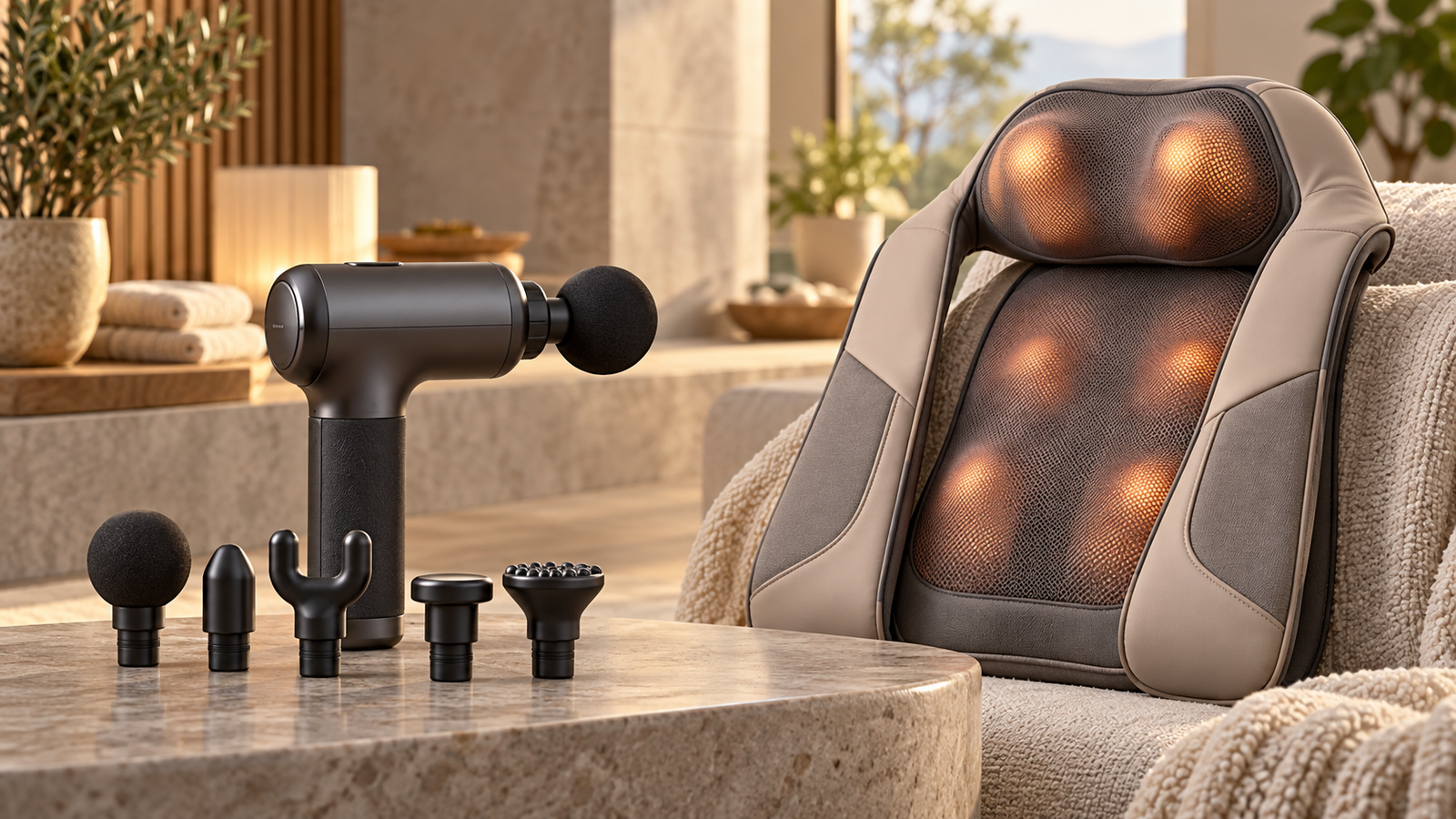
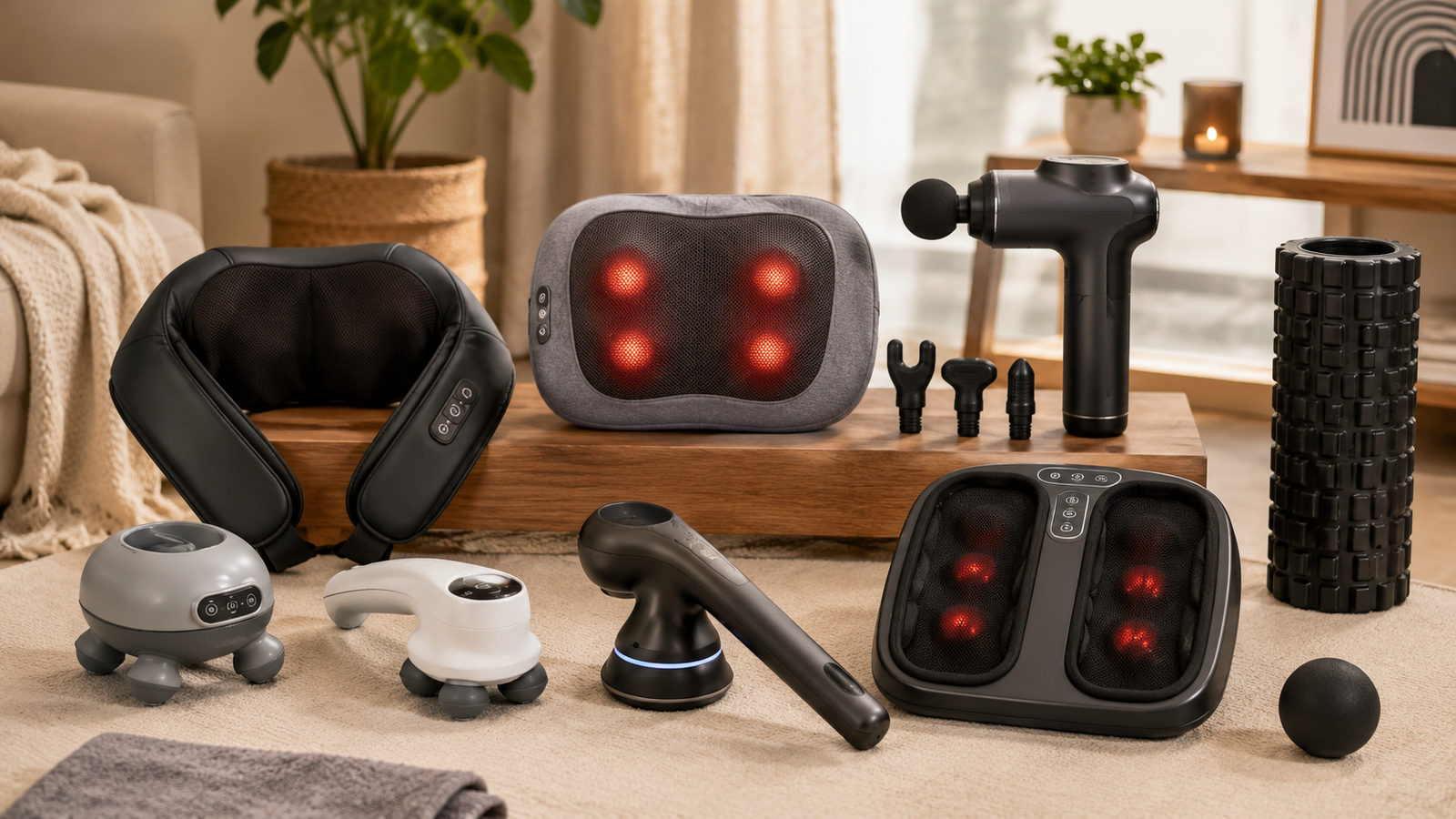
Massage guns and Shiatsu-style massagers are both popular home-wellness devices, but they create very different sensations and are designed for different types of use.
A massage gun delivers rapid percussion through a handheld attachment.
A Shiatsu massager generally uses rotating or kneading nodes and is often designed for areas such as:
- Neck
- Shoulders
- Upper back
- Lower back
- Feet
The better choice depends on whether you want targeted handheld control, hands-free relaxation, portability or a device designed around one specific body area.
This guide explains the practical differences between massage guns and Shiatsu massagers so you can decide which format better fits your routine.
What Is a Massage Gun?
A massage gun is a handheld device that uses rapid back-and-forth movement to create percussion against the body.
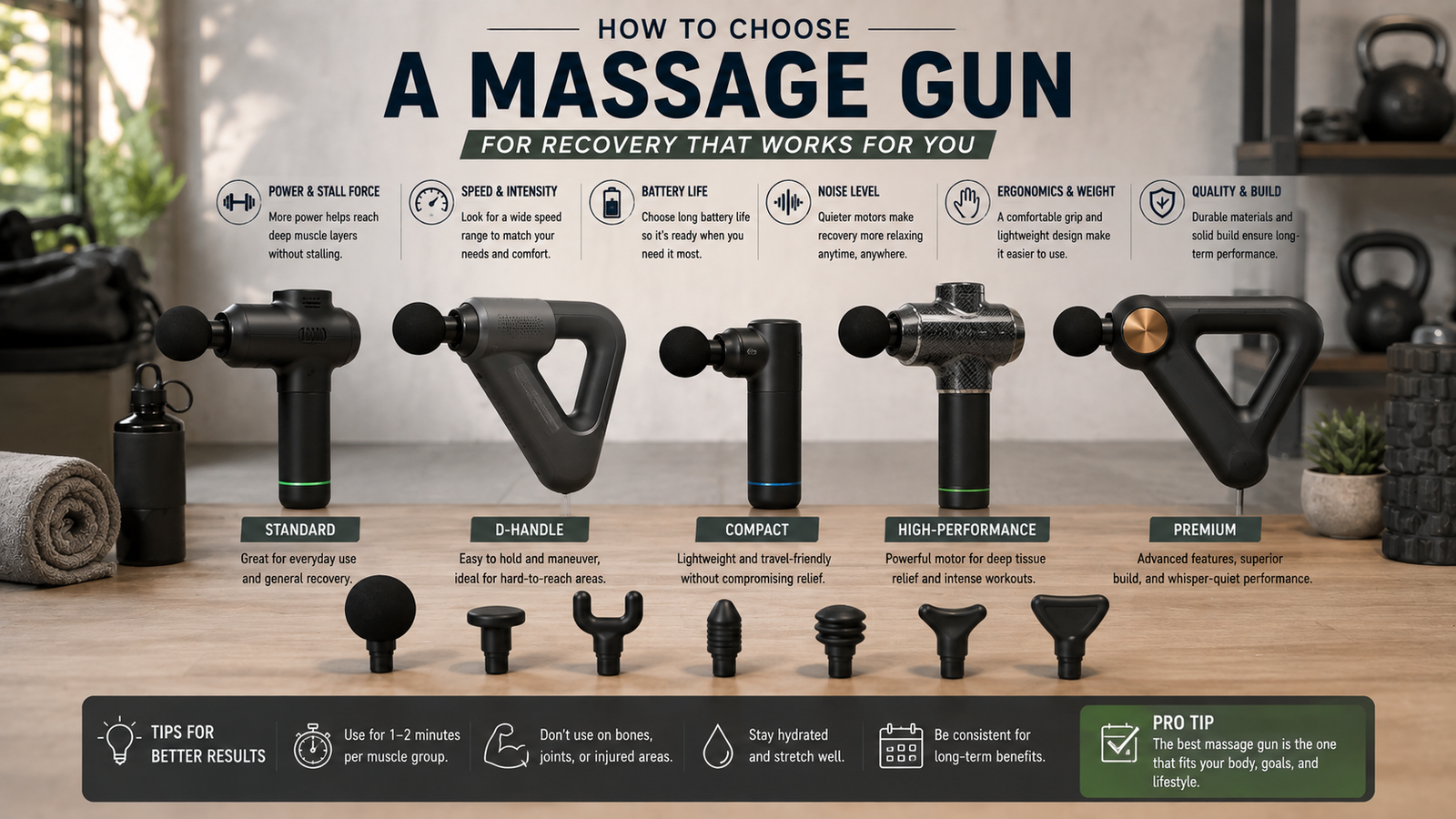
Most models include several interchangeable attachment heads.
Common attachments include:
- Round ball
- Flat head
- Bullet head
- Fork-shaped head
- Soft cushion head
Some models also provide several speed or intensity settings.
The user controls:
- Where the device is placed
- How long it stays in one area
- How much pressure is applied
- Which attachment is used
This makes a massage gun highly flexible, but it also means you need to actively hold and guide the device.
What Is a Shiatsu Massager?
A Shiatsu-style massager is usually designed around rotating or kneading massage nodes.
Depending on the product, it may be made for:
- Neck and shoulders
- Back
- Seat
- Feet
- Multiple body areas
Many models are designed to rest against the body while the internal nodes move automatically.
Some include:
- Heat
- Direction control
- Speed adjustment
- Multiple massage modes
Compared with a massage gun, Shiatsu devices are usually more hands-free.
Massage Gun vs Shiatsu Massager: Main Difference
The biggest difference is the massage mechanism.
Massage Gun
Uses:
- Rapid percussion
- Short repeated pulses
- Handheld positioning
Shiatsu Massager
Uses:
- Rotating nodes
- Kneading movement
- More stationary positioning
These sensations are not interchangeable.
Someone who enjoys percussion may not enjoy kneading, and vice versa.
Which Feels More Intense?
A massage gun can feel more intense because the percussion is concentrated into a smaller contact area.
Intensity depends on:
- Speed setting
- Attachment type
- Pressure
- Body area
A Shiatsu massager can also feel strong, especially if:
- The nodes press deeply
- You lean heavily into the device
- It is used on a sensitive area
Intensity is not automatically a sign of effectiveness.
Comfort and appropriate use matter more.
Which Gives You More Control?
The massage gun gives you more direct control.
You can choose:
- Exact location
- Pressure
- Attachment
- Speed
- Duration
This makes it useful if you want to focus on one muscle area at a time.
For example:
- Calves
- Quadriceps
- Glutes
- Upper back
- Shoulders
A Shiatsu massager usually gives less precise control because the nodes follow a fixed movement pattern.
However, that can also make it easier to use.
Which Is More Hands-Free?
Shiatsu massagers usually win here.
A neck or back massager can often be positioned against the body and allowed to work without continuous hand movement.
A foot massager may require almost no active effort once your feet are positioned.
Massage guns, in contrast, require you to:
- Hold the device
- Move it
- Control pressure
- Change areas manually
If relaxation is your main priority, hands-free use may be more important than precision.
Which Is Better for Muscle Recovery?
A massage gun may appeal more to people who want to target specific muscle groups after training.
It can be used on areas such as:
- Quads
- Hamstrings
- Calves
- Glutes
- Upper back
However, a massage gun should not be treated as a medical recovery device.
It does not replace:
- Rest
- Appropriate training load
- Sleep
- Nutrition
- Rehabilitation
- Professional treatment when required
It is better viewed as an optional comfort and recovery tool.
Which Is Better for Relaxation?
A Shiatsu-style massager may be more convenient for general relaxation.
Reasons include:
- Hands-free use
- Continuous kneading
- Heat on some models
- Stable positioning
- Less need for active control
A neck-and-shoulder or back massager can be useful when you want to sit and relax rather than actively operate a device.
Which Is Better for the Neck and Shoulders?
This depends on preference.
A Shiatsu neck massager may provide:
- Kneading
- Fixed positioning
- Heat
- Hands-free use
A massage gun provides more precise placement but requires caution around the neck.
Avoid using strong percussion directly over:
- Front of the neck
- Spine
- Bony structures
- Sensitive areas
For neck discomfort, conservative use and correct placement are more important than high intensity.
Which Is Better for the Back?
A Shiatsu back massager may be more practical because you can position it behind you.
A massage gun can work for reachable areas, but it may be difficult to use comfortably on your own mid-back.
If you need another person to reach certain areas, some of the portability advantage disappears.
For independent home use, a back cushion or Shiatsu-style device may be easier.
Which Is Better for the Feet?
A dedicated foot massager is usually more convenient than a massage gun for general foot relaxation.
Foot massagers may include:
- Kneading
- Compression
- Heat
- Fixed positioning
A massage gun can be used on some soft tissue areas around the feet and calves, but it requires much more care because the feet contain many small bones and sensitive structures.
Do not use strong percussion directly over bony areas.
Which Is Better for the Calves and Legs?
Massage guns are generally easier to use on:
- Calves
- Quads
- Hamstrings
- Glutes
because these areas are accessible and relatively large.
A Shiatsu-style device may still work depending on its design, but many are built primarily for:
- Neck
- Back
- Feet
The massage gun is therefore usually more versatile for multiple leg areas.
Massage Gun Attachments
Attachment heads affect how the device feels.
Round Ball Head
Often used as a general-purpose option for larger muscle groups.
Flat Head
Provides a broader contact surface.
Bullet Head
Creates highly concentrated pressure.
This should be used carefully because it can feel very intense.
Fork Head
Often designed to apply pressure around, rather than directly over, certain structures.
The safest approach is to follow the manufacturer’s instructions for each attachment.
Massage Gun Speed Settings
Massage guns may offer several speed levels.
More speed settings do not automatically mean better quality.
A useful device should allow you to choose a comfortable intensity.
Start low.
Increase only if:
- The sensation remains comfortable
- There is no pain
- You maintain good control
Using maximum speed simply because it is available is unnecessary.
Shiatsu Massage Nodes
Shiatsu massagers often use several rotating nodes.
The nodes may:
- Rotate clockwise
- Rotate counter-clockwise
- Change direction automatically
- Move in pairs
Some products have larger or smaller nodes.
The number of nodes does not by itself tell you whether the massage will feel better.
Position and pressure matter just as much.
Heat Function
Many Shiatsu massagers include heat.
Heat may add comfort and relaxation.
However, it should not be treated as proof that the device is treating an injury.
Use heat cautiously.
Avoid excessive heat if you have:
- Reduced sensation
- Circulation problems
- Skin irritation
- Acute swelling
Follow the manufacturer’s limits for duration and temperature.
Do Massage Guns Have Heat?
Some newer massage guns include heated attachments, but many standard models do not.
Percussion and heat should be considered separate features.
If heat is important to you, a Shiatsu-style massager may offer it more commonly.
Portability
Massage guns are usually more portable.
Many include:
- Carrying case
- Rechargeable battery
- Compact attachments
- USB or dedicated charger
This makes them easier to use:
- At the gym
- While travelling
- At work
- In different rooms
Larger Shiatsu devices are more likely to stay at home.
Battery vs Plug-In Operation
Massage guns are often rechargeable.
Shiatsu massagers may use:
- Plug-in power
- Car adapter
- Rechargeable battery
Plug-in devices are suitable for stationary use.
Battery-powered devices offer more flexibility.
Consider where you actually plan to use the product.
Noise
Massage guns can create noticeable mechanical noise because of their rapid motor movement.
Some models are significantly quieter than others.
Shiatsu massagers also produce mechanical sound, but the kneading movement is often slower.
If you plan to use the device:
- While watching television
- In bed
- In a shared room
noise may matter more than you expect.
Weight and Ergonomics
Massage-gun weight matters because you need to hold the device.
A heavy gun may become tiring during longer sessions.
Look at:
- Handle shape
- Balance
- Weight
- Grip texture
- Button placement
An extremely powerful device that is uncomfortable to hold may be less useful than a lighter one you actually use consistently.
Which Is Easier to Use?
A Shiatsu massager is generally easier for passive use.
Position it, turn it on and adjust the intensity if available.
Massage guns require more judgement.
You need to decide:
- Where to use it
- How long
- How much pressure
- Which attachment
- Which speed
For users who want simplicity, Shiatsu can be easier.
Can a Massage Gun Be Used Before Exercise?
Some people use gentle percussion briefly before training as part of a warm-up routine.
The goal should not be to aggressively massage the muscles.
A warm-up should still include movement appropriate to the activity.
A massage gun should not replace:
- Gradual movement
- Sport-specific warm-up
- Appropriate mobility
Can a Massage Gun Be Used After Exercise?
It may be used after training for comfort.
However, do not use strong percussion on:
- Acute injuries
- Areas with significant swelling
- Fresh bruises
- Severe pain
Normal training soreness and an actual injury are not the same thing.
If you suspect injury, seek appropriate assessment.
Can Shiatsu Massage Be Used After Exercise?
Yes, it can be used for relaxation after exercise if the area is comfortable and there is no acute injury.
It may appeal to people who prefer slower kneading rather than percussion.
Again, it should not be treated as treatment for structural injury.
Which Is Better for DOMS?
Delayed-onset muscle soreness can occur after unfamiliar or demanding exercise.
Both types of massagers may provide temporary comfort.
But they do not eliminate the basic recovery process.
Useful recovery still includes:
- Time
- Sleep
- Appropriate movement
- Training progression
Severe or unusual pain should not automatically be labelled DOMS.
Can Massage Devices Improve Blood Circulation?
Massage can temporarily influence local sensation and blood flow, but consumer devices should not be marketed or treated as treatment for circulation disorders.
If you have a diagnosed circulation problem, seek medical advice before using strong massage devices.
Can Massage Guns Break Up Scar Tissue?
Claims about “breaking up scar tissue” are often oversimplified.
A consumer massage gun should not be used as a substitute for rehabilitation or professional soft-tissue management.
Post-surgical areas, scars and injuries may require individual guidance.
Are Massage Guns Safe Over the Spine?
Direct percussion over the spine is generally not the intended use.
Massage guns are usually better suited to larger soft-tissue areas.
Avoid strong pressure directly over:
- Vertebrae
- Kneecaps
- Ankles
- Elbows
- Other prominent bones
Always follow the manufacturer’s safety instructions.
Are Shiatsu Massagers Safe for the Spine?
A back massager may sit around the spinal area, but the pressure should primarily be applied to surrounding soft tissue.
Do not intentionally force hard nodes directly into the spine.
Position the device as directed.
Who Should Be Careful With Massage Devices?
People with certain conditions may need professional advice before using strong massage devices.
Examples include:
- Blood-clotting disorders
- History of deep-vein thrombosis
- Significant circulation problems
- Neuropathy
- Reduced sensation
- Recent surgery
- Fractures
- Severe osteoporosis
- Acute injuries
If you are unsure whether massage is appropriate for a medical condition, speak with a qualified healthcare professional.
Do Not Use Over Injured Areas
Avoid massage directly over:
- Open wounds
- Fresh bruises
- Acute swelling
- Suspected fractures
- Severe inflammation
- Areas of unexplained pain
Do not use pain as a test of whether the device is working.
Massage Gun Session Length
Longer is not necessarily better.
Use the manufacturer’s recommended session duration.
For a massage gun, shorter periods over individual muscle areas are usually more practical than holding it in one place for an extended time.
Keep the device moving unless the manufacturer states otherwise.
Shiatsu Massager Session Length
Many Shiatsu products include automatic shut-off timers.
This may help prevent excessively long sessions.
Follow the stated session recommendations.
If the area becomes:
- Numb
- Painful
- Irritated
- Overheated
stop using the device.
More Pressure Is Not Better
One of the most common massage-gun mistakes is pressing harder because the device feels less intense than expected.
The motor is already creating rapid percussion.
Excess pressure can make the experience uncomfortable and may cause bruising.
Use enough contact to keep the device stable.
Do not force it deep into the body.
Should Massage Hurt?
Massage may feel firm or intense, but sharp pain should not be treated as normal.
Stop if you experience:
- Sharp pain
- Numbness
- Tingling
- Sudden weakness
- Burning sensation
- Increasing pain
A wellness device should not require you to tolerate severe discomfort.
Massage Gun vs Shiatsu Massager for Relaxation
Choose a Shiatsu massager if you prefer:
- Slower kneading
- Hands-free use
- Heat
- Neck or back relaxation
- Sitting while the device works
Choose a massage gun if you prefer:
- Targeted percussion
- Greater control
- Multiple body areas
- Adjustable attachment heads
- Portability
Massage Gun vs Shiatsu Massager for Athletes
A massage gun may be more convenient for active users because it can be used on multiple large muscle groups.
For example:
- Quads after cycling
- Calves after running
- Glutes after strength training
- Upper back after pulling exercises
But it should not replace an appropriate training and recovery program.
Massage Gun vs Shiatsu Massager for Office Workers
A Shiatsu neck-and-shoulder or back massager may be more convenient for people who spend long periods sitting.
It can be used while:
- Sitting on a chair
- Relaxing at home
- Watching television
However, repeated neck or back discomfort can also be related to:
- Workstation setup
- Lack of movement
- Training habits
- Medical issues
A massager may provide temporary comfort without addressing the underlying cause.
Massage Gun vs Foot Massager
If your main goal is foot relaxation, a dedicated foot massager may be more convenient.
It can provide:
- Kneading
- Compression
- Heat
without requiring you to hold a device.
A massage gun is more versatile across the body but less convenient specifically for the feet.
Which Is Better for Older Adults?
This depends on the individual.
A Shiatsu device can be easier because it requires less gripping and manual control.
However, older adults may also have:
- Reduced sensation
- Fragile skin
- Osteoporosis
- Circulation concerns
- Medical conditions
Intensity should therefore be conservative.
Medical advice may be appropriate before using strong massage equipment.
Common Massage Gun Buying Factors
When choosing a massage gun, consider:
Weight
A lighter device is easier to hold.
Battery Life
Long battery life is useful if you travel or use it frequently.
Speed Range
Several practical levels are more important than an extremely high maximum speed.
Attachment Heads
Choose attachments you are likely to use.
Noise
Quieter operation makes regular use more pleasant.
Grip Design
A comfortable handle reduces hand fatigue.
Warranty
Motorised devices can develop mechanical issues, so support matters.
Common Shiatsu Massager Buying Factors
Consider:
Target Area
Is it designed for:
- Neck
- Back
- Feet
- Whole body?
Node Position
Fixed node placement may not fit every body equally well.
Heat
Decide whether this is important to you.
Intensity Adjustment
Some devices allow more control than others.
Power Source
Check whether it requires permanent access to an outlet.
Cover Material
A removable or washable cover can improve hygiene.
Common Massage Gun Mistakes
Using Maximum Speed Immediately
Start lower.
Staying in One Spot Too Long
Keep the device moving appropriately.
Using It Directly on Bone
Focus on suitable soft-tissue areas.
Pressing Extremely Hard
Percussion does not need extra force.
Using It on an Injury
Pain and swelling should not automatically be massaged.
Assuming Soreness Means It Worked
More soreness after use is not a sign of a better session.
Common Shiatsu Massager Mistakes
Leaning Too Hard Into the Nodes
More body weight can dramatically increase pressure.
Using Heat for Too Long
Follow the recommended limits.
Placing the Nodes Directly Over Bone
Adjust the device position.
Falling Asleep on the Device
Do not extend use beyond the recommended session simply because you are relaxed.
Ignoring Persistent Pain
A massager can temporarily change sensation but should not delay evaluation of ongoing symptoms.
Can You Own Both?
Yes.
They serve different purposes.
A massage gun can be useful for:
- Targeted muscle areas
- Post-workout comfort
- Portability
- Quick sessions
A Shiatsu massager can be useful for:
- Passive relaxation
- Neck and back use
- Hands-free sessions
- Heat
Someone who regularly trains and also wants an evening relaxation device may find value in both.
But most people do not need both.
Start by identifying your main use case.
Massage Gun vs Shiatsu Massager: Quick Comparison
Choose a Massage Gun If You Want:
- Targeted percussion
- Multiple attachment heads
- Greater control
- Portability
- Use across several muscle groups
- A device suited to active recovery routines
Choose a Shiatsu Massager If You Want:
- Kneading massage
- Hands-free use
- Heat on compatible models
- Neck or back relaxation
- A more stationary home device
- Less active control
Which One Is Better for You?
Ask yourself five questions.
1. Where Will You Use It Most?
For legs and multiple muscle groups, a massage gun may make more sense.
For neck, back or feet, a targeted Shiatsu device may be easier.
2. Do You Want to Hold the Device?
If no, choose a hands-free format.
3. Do You Prefer Percussion or Kneading?
This is a personal preference.
4. Is Portability Important?
Massage guns usually have the advantage.
5. Do You Want Heat?
Shiatsu devices offer this feature more commonly.
Frequently Asked Questions
Is a Massage Gun Better Than a Shiatsu Massager?
Not universally.
A massage gun offers more targeted control and portability.
A Shiatsu massager offers more hands-free kneading and often heat.
Can a Massage Gun Replace a Massage Therapist?
No.
A consumer device cannot evaluate injuries, movement problems or medical conditions.
Can Shiatsu Massage Help With Muscle Tightness?
It may temporarily help the area feel more relaxed, but persistent tightness may have other causes.
Can I Use a Massage Gun Every Day?
It may be used regularly if you follow the manufacturer’s guidance and avoid excessive intensity or duration.
Daily use does not mean every session should be aggressive.
Can I Use a Shiatsu Massager Every Day?
Possibly, if the manufacturer allows it and use remains comfortable.
Follow session limits and stop if you develop irritation or pain.
Is Heat Better for Recovery?
Heat can feel relaxing, but it is not automatically superior for recovery and should not be treated as a medical treatment.
Can Massage Guns Cause Bruising?
Excessive pressure, long sessions or aggressive use can contribute to bruising.
Reduce intensity and stop if bruising occurs.
Which Is Better for Back Pain?
Neither should be treated as a diagnosis or treatment for unexplained back pain.
A Shiatsu massager may be easier to position on the back, while a massage gun may be difficult to use independently.
Persistent or severe back pain should be professionally evaluated.
When to Seek Medical Advice
A massage device is not appropriate for every type of discomfort.
Seek professional assessment if you experience:
- Severe pain
- Persistent pain
- Unexplained swelling
- Numbness
- Tingling
- Weakness
- Pain following significant injury
- Chest pain
- Symptoms that continue to worsen
Do not repeatedly massage symptoms that you do not understand.
Final Takeaway
Massage guns and Shiatsu massagers are designed for different styles of home massage.
A massage gun is usually the better choice when you want:
- Precise control
- Percussion
- Portability
- Multiple muscle groups
- Active post-workout use
A Shiatsu massager may be better when you want:
- Slower kneading
- Hands-free relaxation
- Neck or back use
- Heat
- A stationary home-wellness device
Neither device is automatically more effective simply because it feels stronger.
The best choice is the one that matches your preferred sensation, target area and routine while being used within safe, comfortable limits.
Most importantly, use either device as a comfort or wellness tool rather than a substitute for appropriate diagnosis or treatment when pain is persistent, severe or unexplained.